Live exteriors of the U.S. Supreme Court as it hears birthright citizenship case
YouTube · NgJeeY25Icw
Quick Read
Summary
Takeaways
- ❖The 14th Amendment's birthright citizenship clause is a direct legacy of post-Civil War reconstruction, intended to grant citizenship to formerly enslaved people and prevent a permanent underclass.
- ❖Legal experts and civil rights groups assert that the Supreme Court's 1898 *Wong Kim Arc* decision definitively settled the issue, making current challenges moot and politically motivated.
- ❖Opponents of birthright citizenship, often associated with 'America First' sentiments, advocate for restricting citizenship based on parental immigration status, which critics argue is discriminatory and unconstitutional.
Insights
114th Amendment's Foundational Role in Birthright Citizenship
The 14th Amendment, ratified in 1868, explicitly states, 'All persons born or naturalized in the United States and subject to the jurisdiction thereof, are citizens of the United States and of the State wherein they reside.' This clause was a direct result of the Civil War, intended to grant citizenship to formerly enslaved people and prevent the creation of a permanent underclass. Speakers emphasized its historical context as a 'rebirthing of America' and a 'reconstruction amendment' that guaranteed birthright citizenship to anyone born in the nation.
Bishop William Barber II stated, 'The 14th Amendment was the rebirthing of America... this reconstruction amendment guaranteed birthright citizenship to anyone born in this nation.' Cecilia Wong (ACLU Legal Director) highlighted that the rule was 'enshrined in the 14th amendment to put it out of the reach of any government official to destroy.'
2The Precedent of *Wong Kim Arc v. United States*
The 1898 Supreme Court case *Wong Kim Arc v. United States* affirmed that the 14th Amendment guarantees birthright citizenship to children born in the U.S. to non-citizen parents. Norman Wong, a descendant of Wong Kim Arc, highlighted his great-grandfather's fight as defining what it means to be American and transforming the 14th Amendment into a 'living promise.' Legal advocates argued that this decision precludes parental domicile requirements and is a controlling rule that should not be overturned.
Norman Wong stated, 'In 1898, he won his case before the United States Supreme Court affirming the 14th amendment that guarantees citizenship to those born on US soil. That decision helped define what it means to be an American.' Cecilia Wong, ACLU Legal Director, argued that the government is 'not asking you to overrule Monamp Park. That is a fatal concession because Wankar's controlling rule of decision precludes their parental doicile requirement.'
3Threat of a 'Second-Class Citizen' System
Advocates warned that ending birthright citizenship would create a system of 'second-class citizens,' denying basic human rights and protections to children born in the U.S. based on their parents' immigration status. This would lead to mental health issues, family separation, and a sense of not belonging for millions of American-born children, pushing black and brown communities 'back into the shadows.'
Vosa, a CASA member, shared her personal fear of her citizen daughter being separated from her or not having the same rights, stating, 'To imagine that she may not have the same rights even though she was born in this country.' Anthony Romero (ACLU Executive Director) stated, 'If President Trump has his way, he will create secondass citizens.'
4Defense of the 14th Amendment as a Bulwark Against Authoritarianism
Speakers framed the defense of birthright citizenship as a stand against authoritarian tendencies and a rejection of 'replacement theory.' They argued that attempts to allow a president to arbitrarily decide citizenship are 'unamerican' and 'dangerous,' echoing historical exclusions based on race and nationality. The 14th Amendment represents the nation's commitment to a multi-racial democracy and equal protection under the law.
Jana Nelson (NAACP Legal Defense Fund) stated, 'We will not let someone who pedals in replacement theory, someone who believes that only white males should have power... rewrite our constitution.' Senator Alex Padilla asserted, 'Donald Trump and his allies wants to be able to select who's a citizen and who's not. He wants to be able to pick who gets to be an American and who doesn't. It's wrong. It's unamerican and it's dangerous.'
Bottom Line
The challenge to birthright citizenship is viewed by some as a 'cutting edge of authoritarianism,' where targeting migrants becomes a tool for broader autocratic control.
This perspective suggests that the current legal battle has implications beyond immigration policy, potentially signaling a wider erosion of democratic norms and constitutional protections if executive power is allowed to redefine fundamental rights.
Advocacy groups can leverage this framing to mobilize a broader coalition, uniting civil liberties advocates with those concerned about democratic backsliding, thereby increasing public and political pressure to uphold the 14th Amendment.
The historical context of the 14th Amendment, particularly its role in granting citizenship to formerly enslaved people and preventing a permanent underclass, is a central and powerful argument used by defenders of birthright citizenship.
This historical anchoring refutes arguments that birthright citizenship is a modern 'loophole' or unintended consequence, instead positioning it as a deliberate and essential component of post-Civil War reconstruction and civil rights.
Educators and communicators can emphasize this historical lineage to strengthen public understanding and support for birthright citizenship, connecting it to core American values of equality and justice rather than solely an immigration issue.
Lessons
- Engage with civil rights organizations like the ACLU, NAACP Legal Defense Fund, CASA, and LULAC to support their ongoing efforts to defend birthright citizenship and other civil liberties.
- Educate yourself and others on the historical context and legal precedents of the 14th Amendment, particularly the *Wong Kim Arc* case, to understand its foundational role in American law.
- Participate in civic actions and advocacy, such as contacting elected officials or joining rallies, to voice support for birthright citizenship and oppose policies that create a 'second-class citizen' system.
Notable Moments
The stark contrast between pro-birthright citizenship chants like 'We will never abandon the children' and counter-protester chants like 'Illegal got to go' and 'America First,' highlighting the deep societal division.
This demonstrates the polarized nature of the debate, with passionate arguments on both sides, and the challenge of finding common ground on fundamental issues of national identity and immigration.
ACLU Legal Director Cecilia Wong's confident address after arguing the case inside the Supreme Court, predicting a definitive win, possibly 7-2.
This moment provided a sense of optimism and validation for the advocates, suggesting that the legal arguments presented were strong and resonated with the justices, despite the political pressures.
Speakers repeatedly highlighting that former President Trump was present in the courtroom, directly observing the arguments against his administration's stance.
This detail underscores the high-stakes political nature of the case and the perceived attempt by Trump to influence the court, while also allowing advocates to directly address his policies and alleged motivations.
Quotes
"The 14th Amendment, all persons born or naturalized in the United States are citizens of the United States. If you're born here, you are a citizen. Couldn't be more clear."
"If the Supreme Court chooses to overturn birthright citizenship after 158 years, then we would have to climb on top of that building and erase those words equal protection under the law. We might as well replace it with gold letters that says Trump court, not Supreme Court, Emperor's Court, King's Court. But today we come to say it's our court. It's the people's court."
"Birthright citizenship is not just a legal principle. It's a statement about who we are as a nation. It affirms that America is not defined by bloodlines or exclusion but shared values and equal rights."
"If President Trump has his way, he will create second-class citizens. If President Trump has his way, we will have a country where anyone who is born here of immigrant parents will be relegated to a lower status and denied basic rights because of their citizenship of their parents."
"The 14th Amendment is the dividing line between this country's worst era and the multi-racial democracy that we hope to be."
Q&A
Recent Questions
Related Episodes

HOT TOPICS | WARNING: Donald Trump's Iran War Chaos Has Hit the Point of No Return!
"Don Lemon delivers a scathing critique of Donald Trump's recent actions, framing them as desperate, unconstitutional attempts to consolidate power, undermine democracy, and distract from economic and foreign policy failures, all while questioning his mental stability."
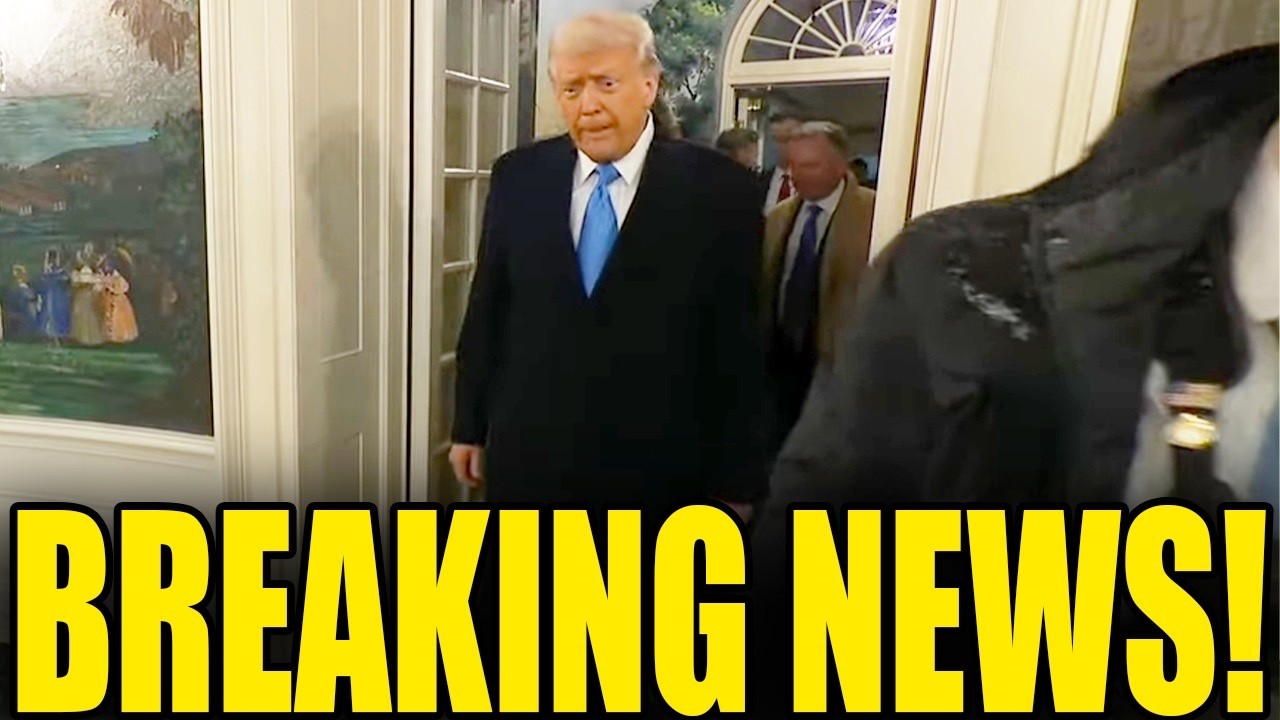
SHOCK BREAKING: SHOCKED TRUMP STORMS OUT OF SUPREME COURT IN RAGE!
"This episode dissects Donald Trump's contentious Supreme Court appearance regarding birthright citizenship, the growing disillusionment of right-wing figures like Alex Jones with Trump, and the political fallout from Kristi Noem's husband's alleged cross-dressing scandal."
Don Lemon, Georgia Fort Arrested Over Church Protest. Press Freedom on the Line Under Trump.
"The Trump administration's arrest of journalists Don Lemon and Georgia Fort for covering a church protest is framed as a direct assault on press freedom and a calculated distraction from the release of damaging Epstein files."

Trump DOJ REACHES NEW LOW Trying to SAVE Trump
"Professor Aziz Huck dissects the foundational principles of the rule of law, revealing how modern political partisanship and the Justice Department's 'weaponization fund' challenge core constitutional mechanisms and legal predictability."