THE SECRET LIFE OF BEES (2008) Movie Reaction! | Dakota Fanning | Queen Latifah | Jennifer Hudson
YouTube · Nr9CVUmSj-4
Quick Read
Summary
Takeaways
- ❖The film's poster was misleading, hinting at a lighter tone than its heavy themes of loss, abuse, and racial injustice.
- ❖Hosts praised Gina Prince-Bythewood's patient directorial style, which allows actors to convey deep emotion and thought without constant dialogue.
- ❖The character of T-Ray (Lily's father) is noted for his complex, layered portrayal, making him more than a one-dimensional villain.
- ❖May's character, an empath, highlights the emotional toll of carrying the 'weight of the world' and the importance of a supportive environment.
- ❖The film's use of a 2.39 aspect ratio and anamorphic lenses enhances the 'fantasy land' feel, highlighting the beauty of the environment even in a contained setting.
- ❖The narrative explores different forms of love—maternal, familial, romantic—and the idea that love is imperfect but essential for survival.
- ❖The movie's ending reinforces the theme of finding family and belonging, with Lily discovering multiple 'mothers' who provide love and support.
Insights
1Gina Prince-Bythewood's Signature Directorial Patience
The hosts consistently praise director Gina Prince-Bythewood for her patient and deliberate filmmaking style. They note that she allows scenes to unfold, giving actors space to convey emotions and thoughts without constant dialogue, which deepens character and emotional impact. This contrasts with what they call 'masturbatory' indie films that are slow without purpose.
Jabby states, 'She allows her actors to act, she there's a lot of patience I can feel in her style.' Michael adds, 'She gives it room to breathe all the scenes like it takes its time and the pacing is slower, but it's not ungodly slow.'
2The Complexity of T-Ray's Character
The hosts discuss the nuanced portrayal of Lily's father, T-Ray. Initially presented as abusive, his character is later revealed to be deeply wounded by his wife's departure and death. This layering prevents him from being a simple villain, showing how past trauma can transform a person.
Jabby observes, 'His character is interestingly layered cuz like I don't like him but also it seems like he's trying in his own messed up way to protect her.' Later, Michael notes, 'You can still see the complexity of like the love he had for her and he still really cared for her.'
3The Power of Found Family and Maternal Love
A central theme of the film, as highlighted by the hosts, is Lily's journey to find a new family and experience maternal love from the Boatwright sisters. This challenges the conventional idea of family and emphasizes the importance of chosen relationships and support systems.
Michael concludes, 'The final ending line of the whole movie is, you know, am better off here with all these mothers. I have more mothers than I know what to do with, basically.'
4Filming Style Enhances 'Fantasy Land' Narrative
The hosts discuss the director's choice of a 2.39 aspect ratio and anamorphic lenses. They conclude that this technical decision, unusual for a drama, serves to create a 'fantastical forest' or 'fantasy land' feeling, immersing the viewer in the idyllic, almost magical environment of the Boatwright home, despite the harsh realities of the outside world.
Michael notes, 'I think it was to highlight the beauty of the environment... it's what creates that feeling that we were talking about of this like fantasy land, this fantastical forest that we've stepped into.'
Key Concepts
Layered Character Development
The hosts discuss how characters like T-Ray are not purely evil but possess complex motivations and past traumas, making them more realistic and compelling. This model emphasizes avoiding one-dimensional portrayals for richer storytelling.
Pacing for Emotional Resonance
Gina Prince-Bythewood's directorial approach of 'allowing scenes to breathe' and trusting actors to convey emotion non-verbally is identified. This model suggests that slower, deliberate pacing can deepen emotional impact and character understanding, rather than being 'slow for the sake of being slow.'
Escapism vs. Realism in Film
The hosts contrast 'The Secret Life of Bees' (a 'magical tale' with an idyllic setting) with Prince-Bythewood's other films ('Love and Basketball,' 'Disappearing Acts') which felt more like 'fly on the wall' realism. This model explores how different stylistic choices impact audience engagement and the perceived 'realness' of a story.
Lessons
- When crafting narratives, prioritize 'allowing emotions to breathe' by giving scenes space and trusting actors to convey depth non-verbally, rather than relying solely on dialogue.
- Explore the complexities of seemingly 'evil' characters by revealing their past traumas or motivations, creating layered portrayals that resonate more deeply with an audience.
- Consider how technical filmmaking choices, such as aspect ratio and lens selection, can significantly contribute to the emotional tone and thematic 'world-building' of a story.
Quotes
"Some people rather die than forgive. And June is one of them."
"People have no idea about the complicated life going on inside a beehive."
"It's ironic how white people hate us so much when so many of them been raised by black women."
"Love like that can't exist in a hateful time. But she made me love her anyway. There is no perfect love lately and there's no perfect person. Just imperfect people trying to love one another for their imperfections."
"The older you get, the more you realize your parents are just doing their best."
Q&A
Recent Questions
Related Episodes

RED, WHITE & ROYAL BLUE Movie Reaction! | First Time Watch | Nicholas Galitzine, Taylor Zakhar Perez
"CinePals hosts react to 'Red, White & Royal Blue,' praising its witty writing and visual storytelling while critiquing certain plot pacing and character agency issues."
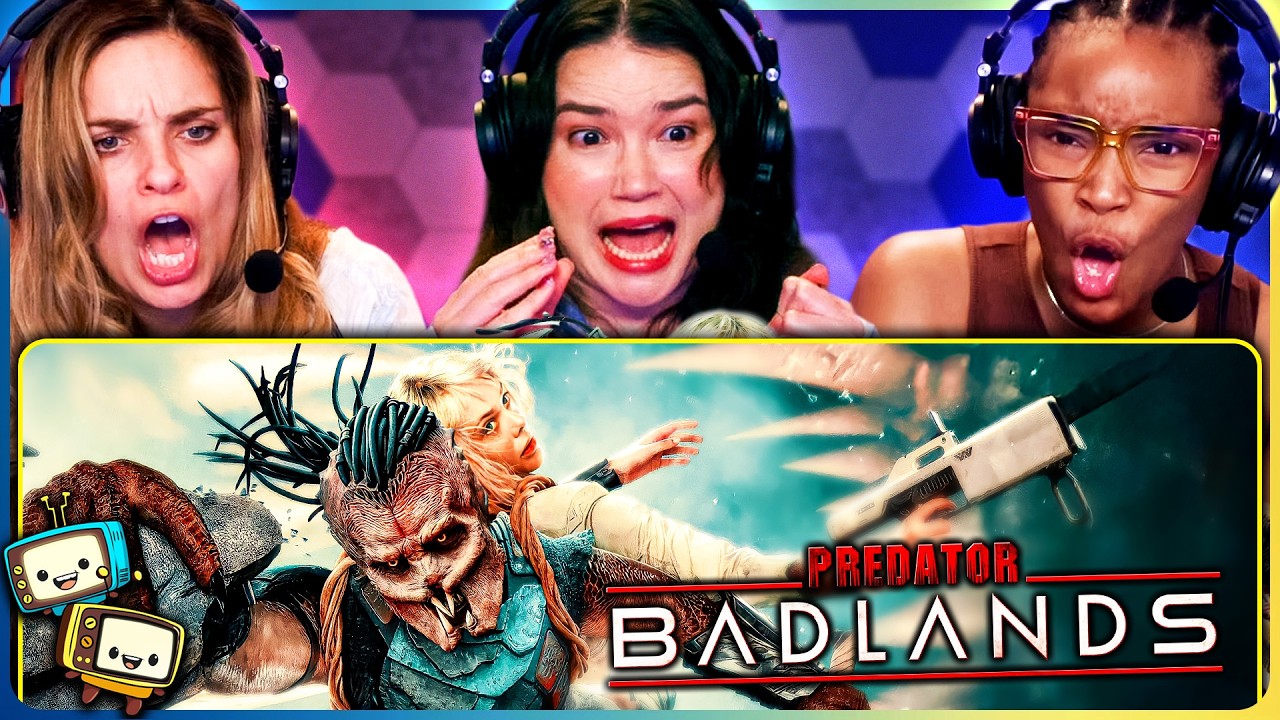
PREDATOR: BADLANDS Movie Reaction! | First Time Watch | Dimitrius Schuster-Koloamatang, Elle Fanning
"This 'Predator: Badlands' reaction unpacks how the film redefines the Predator narrative, focusing on an underdog protagonist, complex family dynamics, and a unique 'Predator as prey' planet, all while seamlessly integrating the Wayland-Yutani Corporation."

JUMANJI: WELCOME TO THE JUNGLE Movie Reaction! | First Time Watch! | Dwayne Johnson | Jack Black
"CinePals hosts Michael Boost and Viven Day dissect Jumanji: Welcome to the Jungle, praising its fresh take on the classic, standout performances, and immersive world-building while offering gamer-specific critiques."
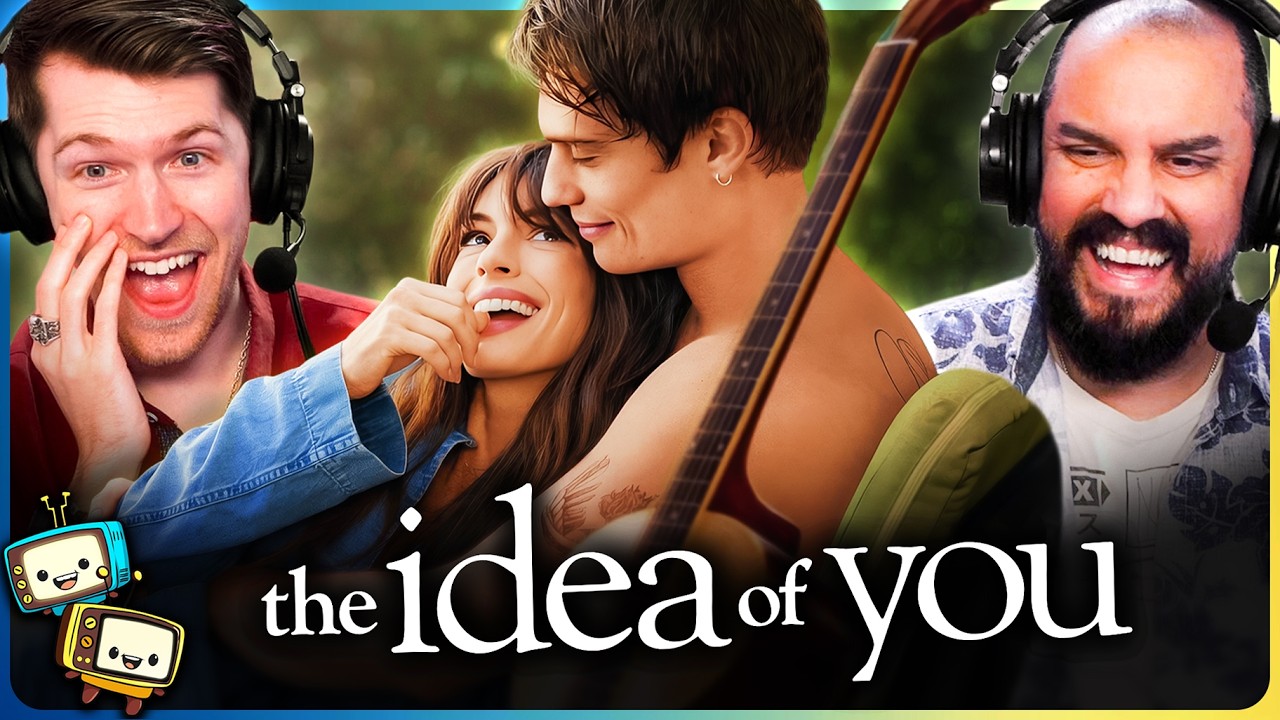
THE IDEA OF YOU (2024) Movie Reaction! | First Time Watch! | Anne Hathaway | Nicholas Galitzine
"CinePals hosts react to 'The Idea of You,' praising Anne Hathaway and Nicholas Galitzine's chemistry while dissecting the film's realistic portrayal of age-gap relationships and the intense scrutiny of celebrity romance."