BREAKING: Ballistic Missiles INTERCEPTED; Iran Targets Hormuz; Lebanon Tensions FLARE | TBN Israel
YouTube · O2809ZPFMvc
Quick Read
Summary
Takeaways
- ❖The Strait of Hormuz agreement is failing due to conflicting interpretations: Iran claims control, while the US insists on freedom of navigation.
- ❖Iran is using drone attacks on ships and delaying mine clearing to force compliance with its preferred shipping routes.
- ❖Lebanon's government is attempting to reassert state control over Hezbollah, leading to internal clashes and continued Israeli military presence.
Insights
1Strait of Hormuz Agreement Collapse and Escalation
A recent agreement intended to halt fighting and reopen the Strait of Hormuz is collapsing due to differing interpretations. Iran views the clause of 'no fees for 60 days' as a de facto recognition of its control, allowing it to mandate ship registration through its Revolutionary Guards and dictate passage routes. The US, in cooperation with Oman, established alternative passages to ensure freedom of navigation, leading Iran to attack ships using these routes. This culminated in US strikes on Iranian military communication and drone facilities, followed by Iranian ballistic missile and drone launches towards US bases in Kuwait and Bahrain.
The agreement stated no fees for 60 days (). Iran created a passage requiring registration through Revolutionary Guards (). The US and Oman created alternative passages (). Iran attacked ships in the Omani passage (). US Central Command struck Iranian drone storage and communication facilities (, ). Revolutionary Guards launched missiles at Ali El Salam air base in Kuwait and US Fifth Fleet HQ in Bahrain (, ).
2Lebanese Internal Struggle Against Hezbollah
Lebanon is experiencing deep internal divisions over a framework agreement with Israel. While the government and army see it as an opportunity to strengthen the state and control weapons, Hezbollah and its allies oppose it, warning of civil war. The Lebanese army has begun to confront Hezbollah supporters, signaling a shift in the state's willingness to challenge the terrorist organization's power, despite continued Israeli military operations in southern Lebanon.
The framework agreement with Israel deepens internal divisions (). Lebanese leadership replaced 'Thank You Iran' signs with 'Lebanon First' (). Hezbollah supporters burned these signs (). The Lebanese army confronted violent Hezbollah motorcycle marches (). IDF continues offensive activities against Hezbollah in southern Lebanon (, ).
3Hamas Reorganization in Gaza and Global Iranian Terror Network
Intelligence officials warn that Hamas is actively reorganizing for war in Gaza, producing weapons, recruiting new members, and rebuilding underground infrastructure, viewing ceasefires as opportunities to rearm. Concurrently, Iran's Revolutionary Guards have established secret terror cells in Gulf States targeting American forces and are implicated in plots to assassinate Jewish community leaders in Europe, demonstrating a wide-reaching, multi-front strategy.
Hamas is reorganizing for war in Gaza, producing explosives, recruiting youth, and rebuilding tunnels (). Revolutionary Guards established secret cells in Iraq to attack Gulf States (). Trial opened in Germany for suspects acting on behalf of Revolutionary Guards to assassinate Jewish community head (, ).
Key Concepts
Strategy of Incremental Pressure
Iran consistently signs agreements to alleviate immediate pressure, then systematically tests boundaries through small, escalating actions (drones, threats, demands) without fully breaking the agreement, aiming to achieve strategic objectives over time. This 'death by a thousand cuts' approach avoids direct, large-scale confrontation while gradually shifting the balance of power.
Diplomacy with a Gun on the Table
Iran combines diplomatic overtures, such as proposing new regional security structures, with simultaneous military provocations (missile launches, drone attacks). This tactic aims to negotiate from a position of perceived strength, using military actions to create leverage and influence the terms of any dialogue.
Lessons
- Monitor global oil prices and shipping insurance rates, as continued instability in the Strait of Hormuz could cause significant market fluctuations.
- Recognize that 'agreements' in the Middle East, particularly with Iran, may be interpreted differently by each party, leading to renewed conflict rather than lasting peace.
- Understand that regional conflicts are interconnected: actions in the Strait of Hormuz, Lebanon, and Gaza are part of a broader Iranian strategy to exert influence and challenge existing power structures.
Notable Moments
Iran's Revolutionary Guards published footage of missiles prepared for launch with a threatening message against Donald Trump and American forces.
This act was not merely a military response but a deliberate psychological warfare tactic aimed at the US leadership and public, highlighting Iran's intent to project power and intimidate.
The Lebanese army confronted Hezbollah supporters during violent motorcycle marches, a departure from past inaction.
This signifies a potential shift in Lebanon's internal power dynamics, where the state is attempting to reassert authority over Hezbollah, challenging the organization's long-held dominance.
Quotes
"The latest clashes are in effect a violation of the 14th clause agreement signed less than two weeks ago. An agreement that was meant to end the war and reopen the straight of moose to international trade."
"Trump wants to look strong, but he also knows that every day of fire in Homus can send fuel prices in the United States soaring. And that is exactly what Iran is trying to exploit."
"Iran is not fighting only over money from ships. It is fighting over the very ability to tell the world nothing moves in the Gulf without us being part of it."
"Agreements without real demilitarization becomes a ceasefire that allows the enemy to reorganize."
Q&A
Recent Questions
Related Episodes

Patrick Henningsen: Hezbollah JUST Fired Back at Israel - Iran Vows to “Crush” All Attacks
"Patrick Henningsen argues that the US and Israel initiated an illegal war against Iran, driven by Trump's incompetence and Israeli influence, leading to an inevitable escalation with severe global economic repercussions."

BREAKING: Iran Threatens To END Talks; U.S. Vows Retaliation; Hezbollah Collapsing? | TBN Israel
"Iran is leveraging Hezbollah and the Strait of Hormuz to manipulate US negotiations, while Israel asserts its right to dismantle Hezbollah's eroding but still dangerous infrastructure in Lebanon, independent of international talks."

🚨 THEY F*CKED AROUND FOR THE LAST TIME 😭😭😭
"This episode unleashes a torrent of highly opinionated commentary on the US-Iran deal, Israel's role, and a scathing critique of 'leftist' policies and immigration, particularly highlighting the UK grooming gang report as evidence of Western societal decay."
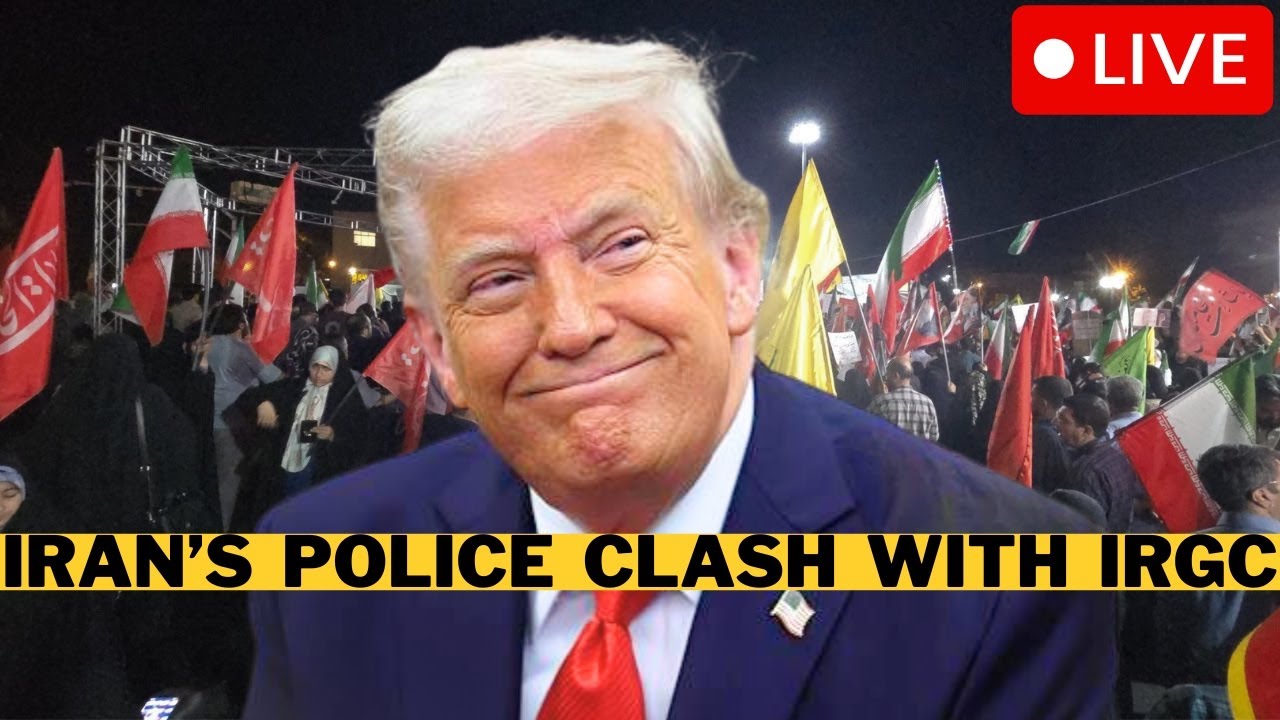
BREAKING: Protests ERUPT In Iran Over IRGC Surrendering To Trump - Infighting Clashes In Tehran
"Iran is experiencing severe internal infighting and protests as hardline IRGC elements clash with government figures over a perceived 'surrender' to the US, while mainstream Western media misrepresents the situation."