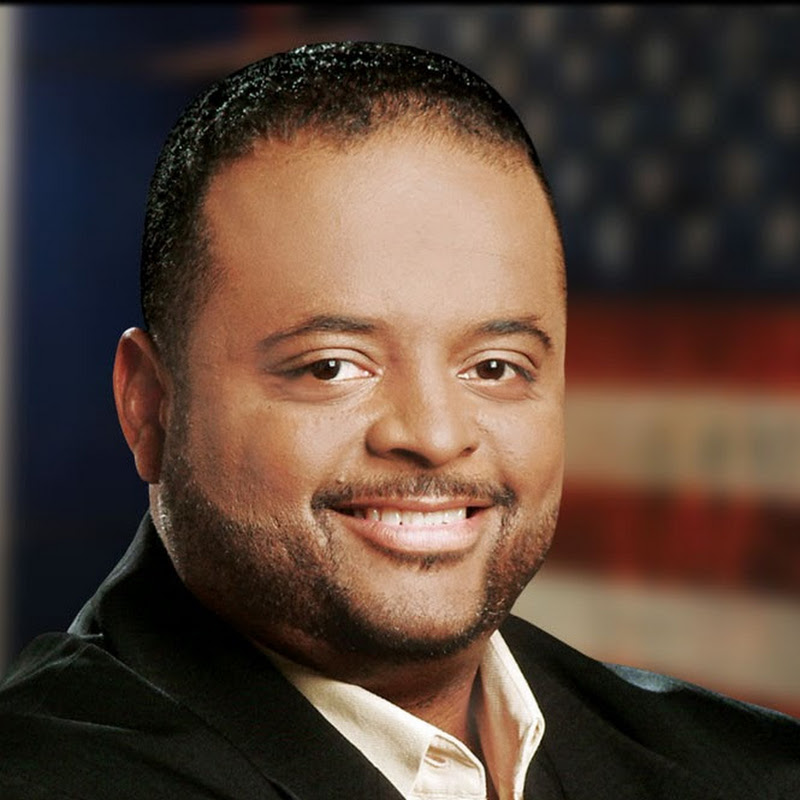
SCOTUS Weighs Birthright Citizenship. Trump Voting Order Under Fire. GA Lawmaker Goes Off
YouTube · O6sKWh8FXNk
Quick Read
Summary
Takeaways
- ❖The Supreme Court heard arguments on Donald Trump's executive order to end automatic birthright citizenship, guaranteed by the 14th Amendment.
- ❖Legal correspondent Ellie Misttol predicted Trump's legal team lost the birthright citizenship argument, citing skepticism from Chief Justice Roberts and Justice Amy Coney Barrett.
- ❖Trump's legal argument for ending birthright citizenship was based on the writings of Alfred P. Morse, an avowed white supremacist who argued for segregation in Plessy v. Ferguson.
- ❖Virginia Attorney General Jay Jones announced plans to sue over Trump's executive order on mail-in voting, calling it an illegal overreach into state election administration.
- ❖Alabama Governor Kay Ivy signed the Roy Johnson Prostate Cancer Screening Bill (SB19), requiring insurance companies to cover prostate cancer screenings at no cost for at-risk men.
- ❖Journalist Roy Johnson, a prostate cancer survivor, highlighted that 1 in 6 Black men will get prostate cancer and are three times more likely to die from it due to late detection.
- ❖Georgia State Representative Tanya Miller provided a historical critique of Confederate monuments, distinguishing chattel slavery from biblical slavery and condemning attempts to rewrite history.
- ❖NASA launched the Artemis 2 mission, with pilot Victor Glover, aiming to circle the moon with an international and diverse crew.
- ❖Friendship Public Charter School in Washington D.C. celebrated its Teacher of the Year gala, highlighting its success as a Black-run, Black-controlled educational institution.
Insights
1Supreme Court Skepticism on Birthright Citizenship Challenge
The Supreme Court's oral arguments on Trump's executive order to end birthright citizenship were met with significant skepticism from several justices. Chief Justice John Roberts notably stated, 'It may be a new world, but it's the same constitution,' dismissing arguments for reinterpreting the 14th Amendment based on modern immigration challenges. Justice Amy Coney Barrett also questioned the administration's 'blood of your birth parents' argument, which could have implications for adopted children.
Ellie Misttol, Justice Correspondent for The Nation, reported on the justices' reactions, specifically quoting Chief Justice Roberts and noting Justice Barrett's strong criticism of the administration's core argument. (, )
2Trump's Legal Argument Rooted in White Supremacy
The Trump administration's legal argument against birthright citizenship, particularly the concept of 'domicile,' is fundamentally based on the theories of Alfred P. Morse, a 19th-century avowed white supremacist. Morse was the lawyer who argued for segregation in Plessy v. Ferguson. Justices Elena Kagan and John Roberts described these sources as 'unusual' and 'quirky,' respectively, indicating a lack of mainstream legal credibility.
Ellie Misttol detailed that John Sauer, representing the Trump administration, relied on Alfred P. Morse, a 'famous white supremacist,' as the source for the 'domicile' argument. (, )
3Alabama Passes Landmark Prostate Cancer Screening Bill
Alabama Governor Kay Ivy signed SB19, now known as the Roy Johnson Prostate Cancer Screening Bill, into law. This legislation mandates that insurance companies cover prostate cancer screenings at no cost. The bill ensures men over 50 and high-risk men over 40 can receive screenings without out-of-pocket expenses, aiming to increase early detection and improve survival rates, especially among Black men who face higher mortality.
Roland Martin announced the bill's signing and its provisions, with Roy Johnson, the journalist for whom the bill is named, explaining his personal journey and the importance of early detection. (, )
4Georgia Lawmaker Challenges Confederate Monument Support with History Lesson
Georgia State Representative Tanya Miller delivered a powerful 'scholastic breakdown' to her white colleagues who supported Confederate monuments. She explicitly distinguished American chattel slavery from biblical slavery, highlighting its unique brutality as property ownership, rape, and forced breeding. Miller asserted that the Civil War was fought over slavery and condemned the 'celebrated ignorance' and attempts to rewrite history, vowing legal challenges to any legislation protecting such monuments.
Tanya Miller's direct address to the Georgia General Assembly, where she detailed the nature of chattel slavery and its historical context. (, )
5Trump's Presence at SCOTUS Seen as Failed Intimidation Tactic
Donald Trump's unprecedented attendance at Supreme Court oral arguments was interpreted by legal analysts as an attempt to intimidate his handpicked justices. However, according to Ellie Misttol, the justices showed no indication of being swayed or intimidated by his presence. Trump reportedly left halfway through the arguments, possibly due to boredom or realizing his arguments were failing, making his appearance 'classless' and ultimately ineffective.
Ellie Misttol's analysis of Trump's attendance, comparing it to 'Tony Soprano' or 'Michael Corleone' tactics, and observing that justices were not intimidated. (, )
Key Concepts
Jus Soli vs. Jus Sanguinis
These are two primary legal principles for determining nationality. 'Jus soli' (right of soil) grants citizenship to anyone born within a country's territory, regardless of parentage. 'Jus sanguinis' (right of blood) confers citizenship based on the nationality of one's parents. The 14th Amendment of the U.S. Constitution primarily establishes jus soli, which Trump's executive order attempts to challenge.
Originalism vs. Living Constitution
The debate over birthright citizenship highlights the tension between interpreting the Constitution based on its original meaning (originalism, favored by some conservatives) and viewing it as a dynamic document that evolves with society (living constitution). Trump's argument about the 14th Amendment's 'original intent' for enslaved people's children, and Chief Justice Roberts' counter that 'it's a new world, but it's the same constitution,' exemplifies this interpretive conflict.
Lessons
- Advocate for the protection of birthright citizenship and the 14th Amendment by engaging with elected officials and supporting organizations that defend constitutional rights.
- Prioritize regular prostate cancer screenings, especially for Black men over 40, and encourage male family members and friends to get tested, as early detection is crucial for curability.
- Support state-level efforts and Democratic attorneys general who are fighting against federal overreach and executive orders that undermine voting rights and democratic processes.
Notable Moments
Bishop William Barber's protest outside the Supreme Court against Trump's birthright citizenship order.
This moment highlighted the moral and religious opposition to Trump's policy, framing it as an attack on children and fundamental human rights, and emphasizing the 14th Amendment's historical context in the rebirth of America.
Georgia State Representative Tanya Miller's 'scholastic breakdown' on chattel slavery and Confederate monuments.
Miller's impassioned speech provided a direct, unvarnished historical account to her legislative colleagues, challenging historical revisionism and the 'celebrated ignorance' surrounding the Civil War's true causes, underscoring the ongoing fight for accurate historical representation.
Quotes
"It may be a new world, but it's the same constitution."
"Woe unto those who legislate evil and rob the poor of their rights and make women and children pray."
"Trump hasn't been in a room where he is as irrelevant as he was in that room since like the last time he was in Melania's bedroom."
"The 14th Amendment, equal protection under the law, was written in birthright citizenship so that evil could not be perpetrated against the children."
"American slavery is what we call chattel slavery... They were not in essence property to be murdered, raped, sold, stolen, and declared in the Constitution three-fifths of a human being."
"Prostate cancer is 97% curable, but you have to do the things that are instructed and follow through in order for you to be on that 97% side."
Q&A
Recent Questions
Related Episodes

HOT TOPICS | WARNING: Donald Trump's Iran War Chaos Has Hit the Point of No Return!
"Don Lemon delivers a scathing critique of Donald Trump's recent actions, framing them as desperate, unconstitutional attempts to consolidate power, undermine democracy, and distract from economic and foreign policy failures, all while questioning his mental stability."
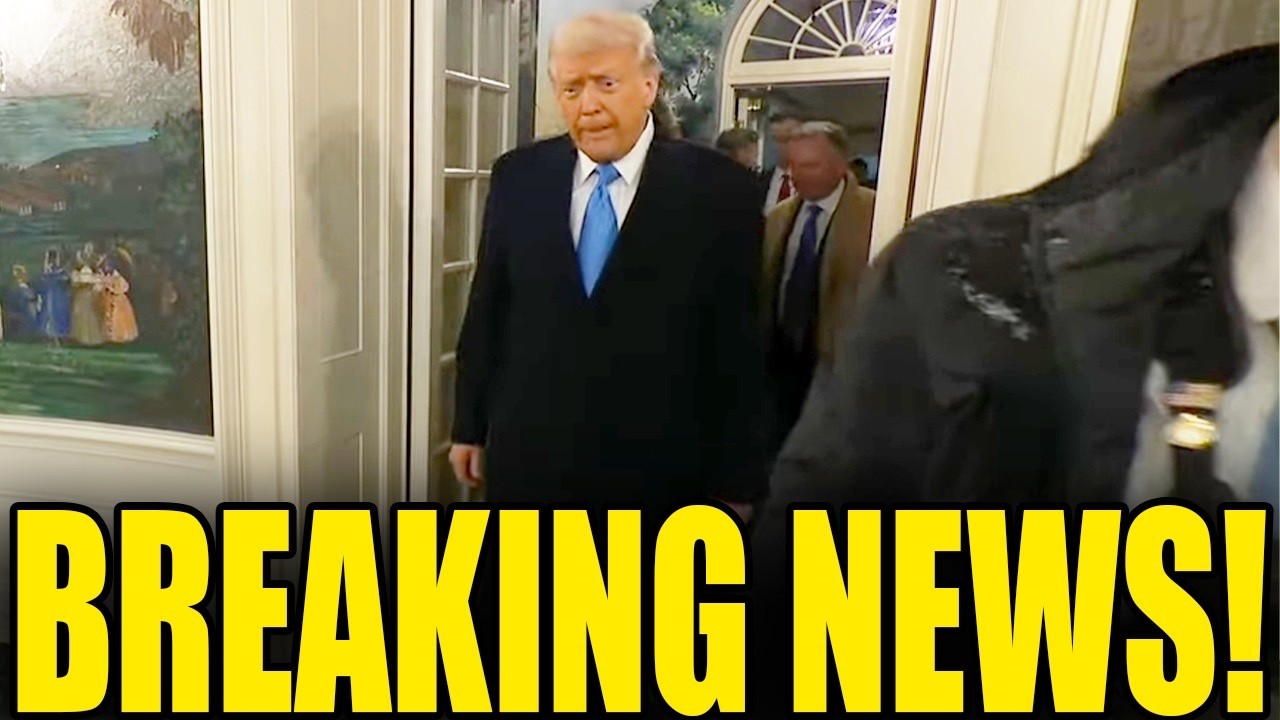
SHOCK BREAKING: SHOCKED TRUMP STORMS OUT OF SUPREME COURT IN RAGE!
"This episode dissects Donald Trump's contentious Supreme Court appearance regarding birthright citizenship, the growing disillusionment of right-wing figures like Alex Jones with Trump, and the political fallout from Kristi Noem's husband's alleged cross-dressing scandal."
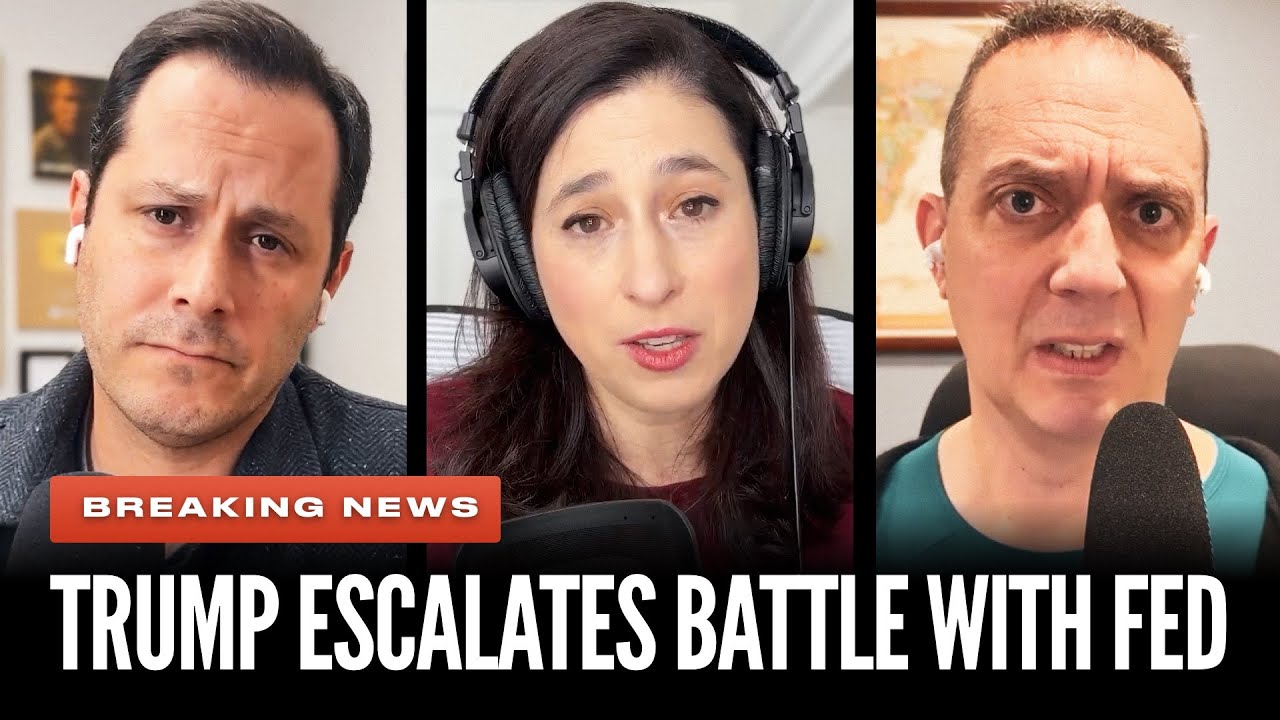
BREAKING: DOJ Threatens Fed Chair With Criminal Charges
"The Department of Justice's criminal investigation into Fed Chair Jay Powell for alleged false testimony is framed by hosts as a politically motivated attack by Donald Trump, aiming to undermine the Federal Reserve's independence and control interest rate policy."

NC Targets DEI. Trump Blocks Housing Bill. Minority Banks Face New Rules. Kohen Wiley Protests
"This episode exposes how current political actions, from changes in minority bank definitions to attempts to regulate college athlete earnings and block foreign aid, are systematically undermining Black economic power, voting rights, and social justice."