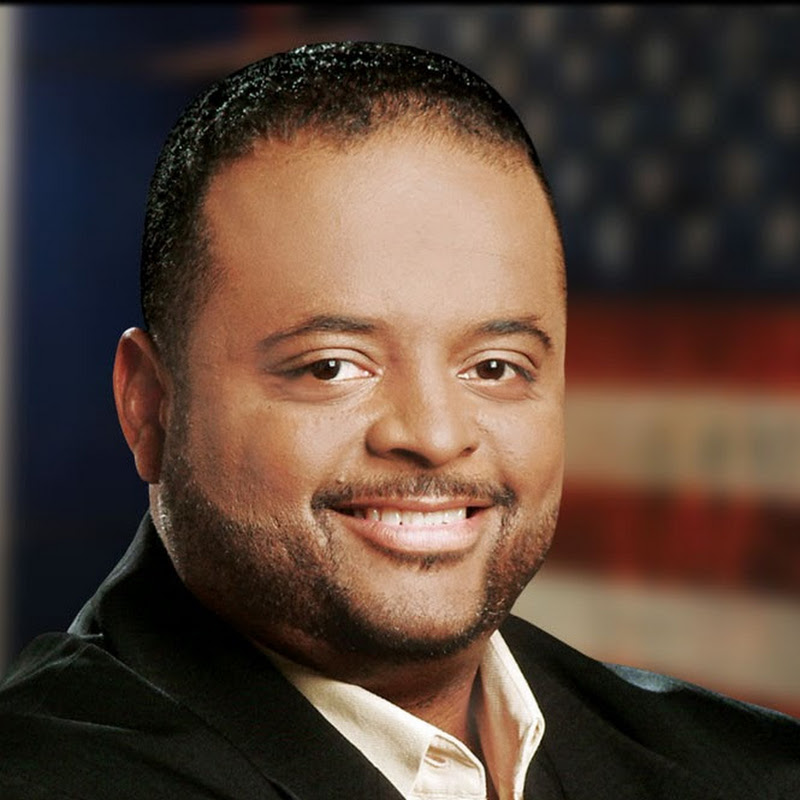
SCOTUS Weighs Birthright Citizenship. Black Census Mobilizes. Nick Cannon Backlash Explodes
YouTube · OyJDDM-TfVk
Quick Read
Summary
Takeaways
- ❖The Supreme Court is considering the Trump administration's efforts to end birthright citizenship, using arguments from the 1896 Plessy v. Ferguson case that supported Jim Crow.
- ❖The 14th Amendment's 'subject to the jurisdiction thereof' clause is at the core of the birthright citizenship debate, with conservatives arguing for a narrow interpretation.
- ❖The Black Futures Lab launched its third Black Census, aiming to survey 300,000 Black Americans to understand their concerns and design a governmental blueprint.
- ❖Celebrities like Chilli, Nick Cannon, and Amber Rose made historically inaccurate claims about Democrats creating the KKK and Republicans freeing slaves.
- ❖The host provides a detailed historical account, demonstrating that 'whiteness' and white supremacy have consistently driven anti-Black policies across both Republican and Democratic parties throughout history.
- ❖The Republican Party's current platform is characterized by 'white fear,' targeting DEI, affirmative action, and voting rights, according to the host.
- ❖Ignorance of historical context and reliance on soundbites from social media or celebrities contribute to the spread of misinformation among voters.
- ❖Kentucky State University, an HBCU, is planning a five-year transition to a polytechnic institution, raising questions about its HBCU classification.
- ❖A new study links HBCU attendance to improved brain health, showing better memory and cognitive performance in alumni at age 62 compared to those from predominantly white institutions.
Insights
1SCOTUS Birthright Citizenship Challenge Rooted in Jim Crow Era Racism
The Supreme Court is considering the Trump administration's attempt to end birthright citizenship, which a federal judge previously blocked. This effort cites arguments from the 1896 Plessy v. Ferguson case, which established 'separate but equal' and supported Jim Crow laws. These arguments were originally made by Alexander Porter Morse, a Confederate officer and segregationist attorney. The administration's claim is that the 14th Amendment only applies to children of formerly enslaved African Americans, not all people born in the U.S., a strategy to target undocumented workers.
Trump's executive order to invalidate the 14th Amendment, citing 1896 Plessy v. Ferguson arguments, and the belief that a conservative-packed Supreme Court will rule in their favor. The host highlights the 'subject to the jurisdiction thereof' clause as central to the legal debate.
2Black Census Project Aims to Define Black Agenda with Massive Data
The Black Futures Lab launched its third Black Census, aiming to gather input from 300,000 African Americans across all 50 states. This initiative serves as an 'imagination project' for Black people to design future governance and community structures. Previous censuses (30,000 in 2018, 211,000 in 2022) revealed distrust in institutions (except small businesses) and top concerns around economics, affordability (childcare, healthcare, housing), quality education, and police relations.
Kristen Powell, Executive Director of the Black Futures Lab, details the project's scale, methodology, and past findings, emphasizing its role in countering false narratives about Black communities' priorities.
3Celebrity Historical Misinformation on Political Parties and Race Debunked
The host critically refutes claims by celebrities like Nick Cannon, Amber Rose, and Chilli, who asserted that Democrats created the KKK and Republicans freed slaves, or that Republicans 'love Black people.' Martin provides a detailed historical 'class,' explaining that while Southern Democrats did create the KKK, there were also 'Lily White Movement' Republicans who opposed Black advancement. He argues that 'whiteness' has been the consistent driving force behind anti-Black policies across both parties throughout American history, from Reconstruction Amendments to the Civil Rights Era and contemporary issues like DEI and affirmative action.
Detailed historical accounts of the Democratic and Republican parties' evolution, the Emancipation Proclamation's limitations, the roles of Radical Republicans, Redeemers, the Lily White Movement, and presidents like Woodrow Wilson, FDR, LBJ, and Reagan. Specific examples include the 1964 Civil Rights Act and the 1968 Fair Housing Act.
4Modern Republican Strategy Driven by 'White Fear'
The host asserts that the contemporary Republican Party, fused with the MAGA movement, operates on a strategy of 'white fear.' This fear is fueled by demographic shifts and perceived threats to white male dominance, leading to attacks on Black Lives Matter, Critical Race Theory, DEI, and affirmative action. This strategy aims to mobilize a new generation of white voters by convincing them that 'the others' (Black, Latino, Asian, Native American, undocumented individuals) are taking what 'belongs' to white people.
Discussion of CPAC attendees expressing white nationalist sentiments, Senator Mike Lee's tweet about declining birth rates (interpreted as white birth rates), and the host's book 'White Fear: How the Browning of America is Making White Folks Lose Their Minds.'
Bottom Line
The Supreme Court's current conservative majority is actively reversing established legal precedents, not just interpreting law, making it a political rather than purely jurisprudential body.
This judicial activism poses a significant threat to long-standing civil rights and constitutional protections, as evidenced by the overturning of Roe v. Wade and the current challenge to birthright citizenship.
Advocates must shift strategies from relying on judicial precedent to focusing on legislative action and public education to protect rights, while also emphasizing the political nature of judicial appointments in elections.
The decline in white birth rates in Western countries is being weaponized by conservative politicians to fuel 'white fear' and justify anti-immigrant and anti-diversity policies.
This narrative frames demographic changes as an existential threat to white identity and power, leading to policies like the attack on birthright citizenship and restrictions on reproductive rights, impacting all non-white communities.
Progressive movements can expose this underlying 'white replacement theory' agenda, build broader coalitions across diverse communities, and advocate for inclusive policies that celebrate demographic diversity as a strength.
Key Concepts
Whiteness as a Driving Force
The concept that 'whiteness' – the collective pursuit and maintenance of white racial power and privilege – has been the consistent, underlying driver of American political history and policy, transcending specific party platforms and individual politicians.
Originalism (Critiqued)
A legal philosophy asserting that constitutional provisions should be interpreted based on the original intent or meaning of the framers. The host and guests critique this, arguing that it is selectively applied by conservative courts to achieve political outcomes, rather than consistently adhering to the plain language or evolving nature of the law.
Lessons
- Participate in the Black Census Project at blackcensusproject.org to contribute to a data-driven agenda for Black communities.
- Critically evaluate political claims, especially from celebrities, by seeking historical context and factual evidence, rather than relying on soundbites or social media trends.
- Educate yourself on American history, particularly the nuanced roles of political parties and the persistent influence of 'whiteness,' using recommended books like W.E.B. Du Bois's 'Black Reconstruction in America' and Richard Rothstein's 'The Color of Law.'
- Challenge political candidates and elected officials on their specific policies and their impact on marginalized communities, demanding concrete evidence of benefit or harm.
- Recognize that judicial appointments are inherently political and that voter engagement in all elections, from local to presidential, directly impacts the composition and decisions of the Supreme Court and federal benches.
Dissecting Political Narratives: A Historical Context Playbook
Identify the core claim or narrative being presented (e.g., 'Democrats created the KKK').
Seek historical context: Investigate the specific time period, regional differences (e.g., Southern vs. Northern Democrats), and the motivations of key actors.
Broaden the scope: Examine the actions and ideologies of all relevant groups and parties during that era (e.g., Lily White Republicans, Redeemers) to avoid a simplistic 'good vs. evil' framing.
Connect to present-day: Analyze how historical patterns of power and prejudice (e.g., 'whiteness') continue to manifest in contemporary policies and political rhetoric.
Demand specifics: When presented with general claims of support or harm, require concrete policy examples and data to substantiate the argument.
Notable Moments
The host's extensive 'history class' to debunk celebrity claims about political parties and race, spanning from the founding of parties to the Civil Rights era.
This segment provides crucial historical context often missing from public discourse, directly countering misinformation and illustrating the complex, race-driven evolution of American politics.
Discussion on how the Supreme Court's conservative majority is viewed as politically motivated, willing to overturn long-standing precedents like Roe v. Wade and potentially the 14th Amendment.
It highlights the perceived politicization of the highest court and its profound implications for civil rights and constitutional law, emphasizing that judicial decisions are not always purely legal.
Quotes
"An executive order cannot invalidate a constitutional amendment that was of course approved by Congress, ratified by the states, and then placed to the Constitution."
"The Constitution is clear, Roland, and the court must be, too. This is a question beyond just law. You hit the nail on the head when you brought up our culture. You brought up who is American."
"This is a Supreme Court that is hell-bent on reversing the rights of pretty much everybody who is not a, you know, a cisgendered white male. And they're going to do whatever it takes to do that. And their mindset has always been, 'Damn the law.'"
"The Republican Party today is the party of whiteness. It is about white fear."
"American history has no party that is a savior for black people. American history shows that Republicans and Democrats have been anti-black."
"The problem we have today, we got folk who don't read, who don't study, and they choose to go to YouTube University and TikTok College and Instagram A&T."
Q&A
Recent Questions
Related Episodes

Scott Jennings Notices Something in Trump’s Chilling Warning No One Noticed
"Dave Rubin dissects Donald Trump's aggressive Iran strategy and the ensuing political polarization, arguing that Democrats are actively undermining American success and national identity through policies like birthright citizenship and DEI."

Trump Impact On Black America. SCOTUS Birthright Citizenship Case. Alabama College DEI probe
"This episode dissects the multifaceted impacts of Trump-era policies on Black America, from economic destabilization and civil rights rollbacks to an inspiring narrative of an entrepreneur rebuilding her life and community."
Major SCOTUS "Birthright Citizenship" Case, and Charlie Kirk Murder Trial Bullet Questions
"Megyn Kelly and legal experts dissect the Supreme Court's oral arguments on birthright citizenship and break down new, potentially exculpatory evidence in the Charlie Kirk murder trial, including an 'inconclusive' bullet match and complex DNA findings."

SHOCK BREAKING: SHOCKED TRUMP STORMS OUT OF SUPREME COURT IN RAGE!
"This episode dissects Donald Trump's contentious Supreme Court appearance regarding birthright citizenship, the growing disillusionment of right-wing figures like Alex Jones with Trump, and the political fallout from Kristi Noem's husband's alleged cross-dressing scandal."