Trump SLUSH FUND Instantly UNDERMINED by CONSTITUTION!!! | It's Complicated
YouTube · PMV5vw6jGp4
Quick Read
Summary
Takeaways
- ❖Trump's $1.776 billion settlement for tax return leaks is viewed as collusive and potentially illegal, lacking a legitimate basis for such damages.
- ❖The settlement attempts to use the Judgment Fund but is criticized for not meeting statutory requirements and avoiding court-ordered judgment.
- ❖A separate DOJ memo promises to drop all disputes concerning Trump's past tax returns, effectively granting immunity from future audits.
- ❖The Supreme Court's *Cale* decision on Alabama redistricting is seen as gutting the Voting Rights Act, allowing states to disenfranchise Black Americans.
- ❖The Court is accused of applying a double standard with the Purcell principle, impacting election timing and fairness, and undermining its credibility.
Insights
1Trump's Legally Dubious $1.776 Billion Settlement
Professor David Super explains that Donald Trump's $1.776 billion settlement for leaked tax returns, filed against his own administration, is legally problematic. The lawsuit was 'speculative, thinly supported,' and lacked standard legal requirements like demonstrating damages or compliance with the statute of limitations. The core issue is the collusive nature of the litigation, where Trump controlled lawyers on both sides, making it a 'play-acting' scenario that federal courts are mandated to dismiss.
President Trump's lawyers filed a very unusual speculative, and thinly supported lawsuit against the federal government claiming $10 billion. President Trump's lawyers, his other lawyers in the Justice Department, settled that case for a agreement that includes a 1.776 billion dollar fund... Congress has passed a law saying that you cannot get jurisdiction in federal court through a collusive lawsuit where both sides are working together.
2Misuse of the Judgment Fund and Anti-Deficiency Act Violation
The settlement attempts to draw funds from the Judgment Fund, a congressional appropriation for legitimate judgments or good-faith settlements consistent with federal law. However, this settlement is argued not to qualify due to its collusive nature and lack of merit. Furthermore, the $1.776 billion figure is not explicitly stated in the settlement document itself, making any payment above $1 a 'gift' and a potential violation of the Anti-Deficiency Act, which makes spending federal money without congressional appropriation a felony.
The Judgment Fund is a law passed by Congress, um, that says that where judgments have been entered against the United States, uh, those may be paid... But those settlements have to be arrived at consistent with federal law. And this one wasn't... So, at most you can charge $1 to the judgment fund. Everything above that is a gift. And the judgment fund has no provision for gifts.
3Unprecedented Damages and Evasion of Judicial Scrutiny
The $1.776 billion amount for 'loss of reputation' is deemed wholly unprecedented for a single individual or even a small group, especially compared to large class-action settlements involving calculable damages for many people. The settlement was also rushed over a weekend to avoid a federal judge's impending ruling on whether the court had jurisdiction, as the judge had 'grave doubts' about the case's collusive appearance.
I can't recall a lawsuit against the federal government of any kind off the top of my head that would that has resulted in damages of that magnitude... The court had grave doubts that she had jurisdiction because the case looked collusive to her... The briefs were due today, Wednesday. And rather than filing those briefs... the Trump lawyers... settled it quickly over the weekend.
4DOJ Memo Grants Immunity from Tax Audits
A separate Department of Justice memo, part of the settlement, promises to drop all disputes concerning the tax returns of President Trump and the Trump organization filed prior to the case. This effectively grants immunity from future tax audits for these entities, setting a dangerous precedent for civil liability and potentially allowing individuals to escape accountability through collusive settlements.
Then there's this other document in which the Justice Department promises to drop all disputes concerning the tax returns of President Trump and the Trump organization and so on, um, that have been filed prior to this case... for civil liability pardons don't work. So this sort of collusive settlement I think is going to be quite popular.
5Supreme Court's *Cale* Decision Guts Voting Rights Act
The Supreme Court's decision in *Cale* is criticized for effectively gutting Section 2 of the Voting Rights Act. This ruling allows states like Alabama to implement redistricting maps that intentionally disenfranchise Black Americans, even after lower courts found intentional discrimination. This enables a return to maps previously deemed unconstitutional, undermining protections for marginalized groups.
The Supreme Court's decision in Cale... effectively guts the Voting Rights Act basically means that um states can redistrict in ways that disenfranchise black Americans... They literally um went to they was they were taken to court. A judge found that they intentionally intentionally discriminated against black people.
6Supreme Court's Double Standard on Purcell Principle
The Supreme Court is accused of applying a double standard regarding the Purcell principle, which advises against altering election rules close to an election to avoid voter confusion and depressed turnout. The Court previously blocked new maps from going into effect for the 2022 midterms but is now rushing to allow new maps for the upcoming midterms, with both instances appearing to favor a particular political party, significantly damaging the Court's credibility and legitimacy.
It seems like the court the Supreme Court has a very has a double standard when it comes to the Purcell principle... they didn't allow new maps to go into effect in time for the midterms. Now they're like rushing to let, you know, new maps be drawn in time for the midterms. It just so happens that they tend to favor a particular party both times.
Lessons
- Understand the legal mechanisms (like the Judgment Fund and Anti-Deficiency Act) that are being tested and potentially circumvented by executive actions and collusive litigation.
- Monitor judicial decisions, particularly from the Supreme Court, for their impact on established legal principles and democratic processes, such as voting rights and election integrity.
- Recognize how claims of executive immunity and non-adversarial settlements can challenge the separation of powers and governmental accountability, and consider their long-term implications for the rule of law.
Quotes
"If it was legal, it would. Uh there's no reason that any prior president hasn't done this except that it's illegal and unethical and corrupt."
"The president is clearly immune from prosecution under the Anti-Deficiency Act and everybody else involved is hoping the Justice Department will look the other way, which at the moment they certainly are."
"The Judgment Fund is a law passed by Congress... where judgments have been entered against the United States... those may be paid. ... But those settlements have to be arrived at consistent with federal law. And this one wasn't."
"It just so happens that they tend to favor a particular party both times. I mean, that to me is a huge blow on the credibility and legitimacy of the Supreme Court, which I know everybody listening is going to be like, 'What's new?' It's just still really gross."
Q&A
Recent Questions
Related Episodes

Trump DOJ REACHES NEW LOW Trying to SAVE Trump
"Professor Aziz Huck dissects the foundational principles of the rule of law, revealing how modern political partisanship and the Justice Department's 'weaponization fund' challenge core constitutional mechanisms and legal predictability."

"Mini" Super Tuesday Primaries. Bodycam Clears Black Teen. Haitian Heritage Month. #TheBreakdown
"This episode breaks down critical political developments, highlights the power of bodycam footage in exonerating a Black teen, celebrates Haitian heritage, showcases innovative arts education, and champions breast cancer awareness for Black women."

SHOCK Ruling on Trump Deportation PLOT + DEBUNKED Election WARRANT?!? | It's Complicated
"The Fifth Circuit Court's controversial ruling redefines 'seeking admission' for non-citizens, potentially allowing indefinite detention for millions, while a federal search warrant for 2020 election ballots is criticized as a 'test run' for future election interference."
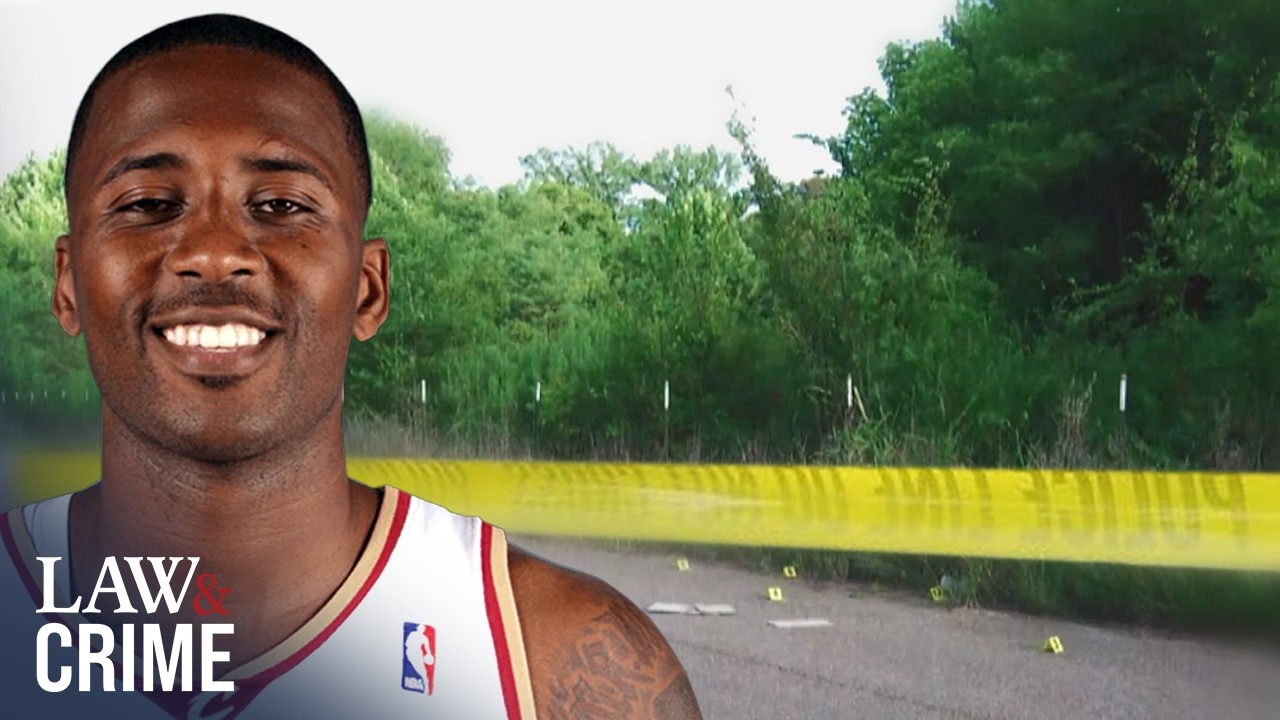
Killer Cases: NBA Star Lured to Execution In Rural Tennessee
"The decade-long cold case of NBA star Lorenzen Wright's murder was cracked through a persistent mother, a jailed informant, and a covert police operation that recovered the murder weapon from a lake and exposed a conspiracy driven by greed."