
Unanswered Questions, Savannah "Today" Return - Part 4 MK Investigates Nancy Guthrie's Disappearance
YouTube · PgYpXr_eGE4
Quick Read
Summary
Takeaways
- ❖Savannah Guthrie's mother, Nancy Guthrie, had extensive personal details (home location, maiden name, birth details) publicly broadcast on the 'Today Show' for years, raising concerns about potential targeting.
- ❖Sheriff Nanos's statements shifted from assuring the community there was 'no cause for alarm' on day two to warning of ongoing danger and a 'boogeyman' six weeks later, despite claiming to know the motive 'since day one'.
- ❖Initial police focus, according to independent media sources, was on Nancy Guthrie's brother-in-law, Tomaso, including towing his car and closing the crime scene prematurely.
- ❖The crime scene was allegedly released to the family within 24 hours, with evidence like blood on the doorstep visible to reporters and a Nest Cam bracket left for weeks.
- ❖Sheriff Nanos repeatedly refused help from experienced civilian search groups, hindering efforts to find Nancy Guthrie in the vast Arizona desert.
- ❖A theory suggests Nancy was targeted by a sick individual, possibly a geriatric sexual predator, a scenario often overlooked by mainstream media due to its uncomfortable nature.
- ❖Polygraph tests and voluntary electronic device handover by family members were cited by law enforcement as clearing them, but hosts question the reliability and decisiveness of these methods.
- ❖Mainstream media, including NBC and CNN's Jake Tapper, are criticized for 'skewing' coverage and shaming independent journalists for discussing family involvement or uncomfortable theories, possibly due to personal connections to Savannah Guthrie.
- ❖The perpetrator displayed a mix of smart and 'dumbass' mistakes, such as hiding his car and potentially using a secondhand backpack, but also struggling with the Nest Cam and leaving blood evidence.
Insights
1Extensive Public Information on Nancy Guthrie
The 'Today Show' extensively shared personal details about Nancy Guthrie, including her residence in Tucson, maiden name, birth details, and even glimpses of her home, over many years, particularly during Savannah Guthrie's rise as co-anchor. This level of public exposure is now seen as a potential factor in her targeting.
Segments from 2012-2015 showing Nancy's appearances, on-screen maps of her location, and Savannah's public birthday wishes mentioning Tucson. Savannah's 2024 book also discussed a childhood 'kidnapping game' involving Nancy.
2Sheriff Nanos's Contradictory Statements and Investigative Focus
Sheriff Nanos initially assured the public there was no danger to the community after Nancy's disappearance but later, six weeks into the investigation, warned residents to 'lock your doors' and that the perpetrator 'could strike again,' despite claiming to know the motive 'since day one.' Independent media sources indicated an early focus on Nancy's brother-in-law, Tomaso, contradicting Nanos's later statements about a 'boogeyman' outside the family.
Nanos's February 2nd news conference stating 'no cause for alarm' () versus later statements warning 'you in danger, girl' (). Ashley Banfield's source reported that on days 1-3, the focus was 'entirely towards the brother-in-law,' including towing his car and shutting down the search ().
3Critique of Initial Crime Scene Processing and Search Efforts
The initial handling of the crime scene and search efforts for Nancy Guthrie are heavily criticized. The crime scene was reportedly released within 24 hours, with visible blood evidence on the front doorstep and a Nest Cam bracket left for weeks. Sheriff Nanos also consistently refused assistance from experienced civilian search groups, despite the vastness of the desert where Nancy might be found.
The crime scene was released on Monday, February 2nd, after the incident on Sunday (). Reporters observed blood on the doorstep (). The Nest Cam bracket was left for two weeks (). Nanos 'repeatedly said no' to search groups ().
4Theory of a Geriatric Sexual Predator and Lone Perpetrator
Ashley Banfield proposes a 'simple' theory that Nancy Guthrie was targeted by a sick individual with 'sick intentions against a vulnerable person,' possibly a geriatric sexual predator. This theory is supported by prosecutor Matt Murphy's experience with such cases, where perpetrators are often younger men (20s-30s). Banfield also believes the perpetrator likely acted alone, citing similarities to the Nancy Woodrum case.
Ashley Banfield's theory: 'sick individual who had sick intentions against a vulnerable person' (). Matt Murphy's experience with 'geriatric rape cases' where perpetrators are 'younger men' (). 92% of geriatric rapists are in their 20s (). Comparison to Nancy Woodrum case where a single, smaller perpetrator carried a body 100 yards ().
5Mainstream Media's Perceived Bias and Self-Censorship
Both hosts accuse mainstream media, including NBC and CNN, of biased or self-censored coverage of Nancy Guthrie's disappearance. They argue that personal connections to Savannah Guthrie within these organizations led them to avoid discussing uncomfortable theories, such as family involvement, or criticizing law enforcement's handling of the case, hindering the investigation and public's right to information.
NBC's coverage 'stayed 20 feet away from anything involving Annie and Tomaso' (). Jake Tapper of CNN 'was out there shaming people for even discussing it' (). Ashley Banfield recounts being 'shamed' for reporting on the initial police focus on family ().
Bottom Line
The 'kidnapping game' described in Savannah Guthrie's 2024 book, where she and her sister would pretend to be kidnapped by a cousin and call Nancy, is an unsettling detail that could be latched onto by stalkers or individuals with 'weird ways' of processing information.
This seemingly innocent childhood memory, made public, could inadvertently provide a 'narrative hook' for a disturbed individual, potentially influencing their actions or fantasies related to Nancy's disappearance. It underscores the unpredictable ways personal details can be weaponized.
Public figures and their families should exercise extreme caution and consider potential interpretations when sharing personal anecdotes, especially those involving vulnerability or 'games' that could be misconstrued by malicious actors.
The perpetrator in the Nancy Woodrum case, a 'clean as a whistle' painter with no criminal background, stopped at a church to pray for 20 minutes before committing rape and murder, then drove 60 miles with the victim's body in an open-gate pickup truck.
This highlights the 'weird combination of very smart decisions and very dumb ones' often seen in criminals, making them difficult to profile. It also shows that seemingly 'normal' individuals can commit horrific acts and that bizarre, seemingly illogical actions can occur during a crime, challenging conventional investigative assumptions.
Investigators should remain open to unconventional perpetrator profiles and illogical criminal behaviors. Public awareness campaigns could emphasize that perpetrators don't always fit stereotypes, encouraging vigilance even around seemingly 'normal' individuals.
The local Democratic representative, Arizona State Legislator Alma Hernandez, publicly told independent media to 'get out' of the area covering the Nancy Guthrie case.
This demonstrates a political attempt to suppress independent journalistic scrutiny of a high-profile case, potentially hindering the flow of information and tips. Such actions undermine the role of the press in holding authorities accountable and advocating for missing persons.
Independent media outlets should proactively educate the public and public officials on their constitutional role and the benefits of broad media coverage in missing persons cases, citing examples where media attention led to breakthroughs or increased public safety.
Key Concepts
Confluence of Circumstances
The idea that a series of unrelated or loosely connected events and factors align to create a particular outcome. In Nancy Guthrie's case, this includes her public profile, her vulnerability as an elderly woman living alone, and potential investigative missteps, all contributing to the difficulty of solving her disappearance.
Fog of War (Investigation Edition)
Adapted from military strategy, this describes the uncertainty and confusion inherent in the early stages of a complex investigation. It highlights how initial decisions, lack of complete information, and conflicting priorities can lead to misdirection or missed opportunities, as seen in the shifting narratives and actions of Sheriff Nanos.
Lessons
- Re-evaluate the amount and type of personal information shared on public platforms, especially for family members of public figures, to mitigate potential targeting risks.
- Critically assess official statements from law enforcement, especially when they contradict earlier messages or lack specific details, and seek information from diverse media sources.
- Support and consume independent media that is willing to question authority and explore uncomfortable theories in true crime investigations, as this can provide crucial accountability and generate leads.
- Advocate for transparent police practices, including clear communication with the public and willingness to collaborate with experienced civilian search groups in missing persons cases.
- Consider implementing robust home security measures, including cameras that are difficult to disable and layered defenses, recognizing that even seemingly impenetrable systems can be circumvented.
Notable Moments
Megyn Kelly and Ashley Banfield discuss the irony of Savannah Guthrie's book detailing a childhood 'kidnapping game' involving Nancy, released months before her disappearance.
This unsettling coincidence highlights how seemingly innocuous personal details, once public, can take on dark significance and potentially be exploited by disturbed individuals, adding a layer of tragic irony to the case.
Ashley Banfield shares her personal experience with PTSD after reporting live from 9/11, drawing parallels to the emotional challenges Savannah Guthrie will face returning to television.
This moment humanizes the impact of trauma on public figures and offers a rare glimpse into the psychological toll of high-stress events on journalists. It also provides a framework for understanding the delicate balance required for Savannah Guthrie's return to the public eye, advocating for empathy and strategic media management.
Quotes
"It is disturbing to think that it was just November that she broadcast that her mother does live in Tucson, and I haven't checked, but like, I'll bet it's fairly easy to find the mom's address. She lives alone. She's elderly."
"We believe we know why he was here. We believe we know why he was here and we have known since day one."
"I'm still of the conviction this is not somebody who was obsessed with Savannah because Megan, you and I have been on TV a long time and there are all sorts of communications that come our way... but it doesn't just start with a member of the family."
"I had a source telling me where that investigation was. And that is where it was. So this guy, you know, it's sad because I'm I'm a huge supporter of law enforcement... But when a guy like this takes the helm, he does a disservice to all the good men and women in blue who are honest and who have integrity."
"Every missing family, every family in America that has a missing person would give their eye teeth to have that kind of coverage independent broadcast or otherwise of their missing loved one. That's how you put pressure on law enforcement."
Q&A
Recent Questions
Related Episodes

New ransom note claims to know where Nancy Guthrie is — but is it real? Day 65 in the search
"A new ransom note surfaces on the day Savannah Guthrie returns to work, raising questions about its authenticity and the ongoing, politically fraught investigation into Nancy Guthrie's disappearance."
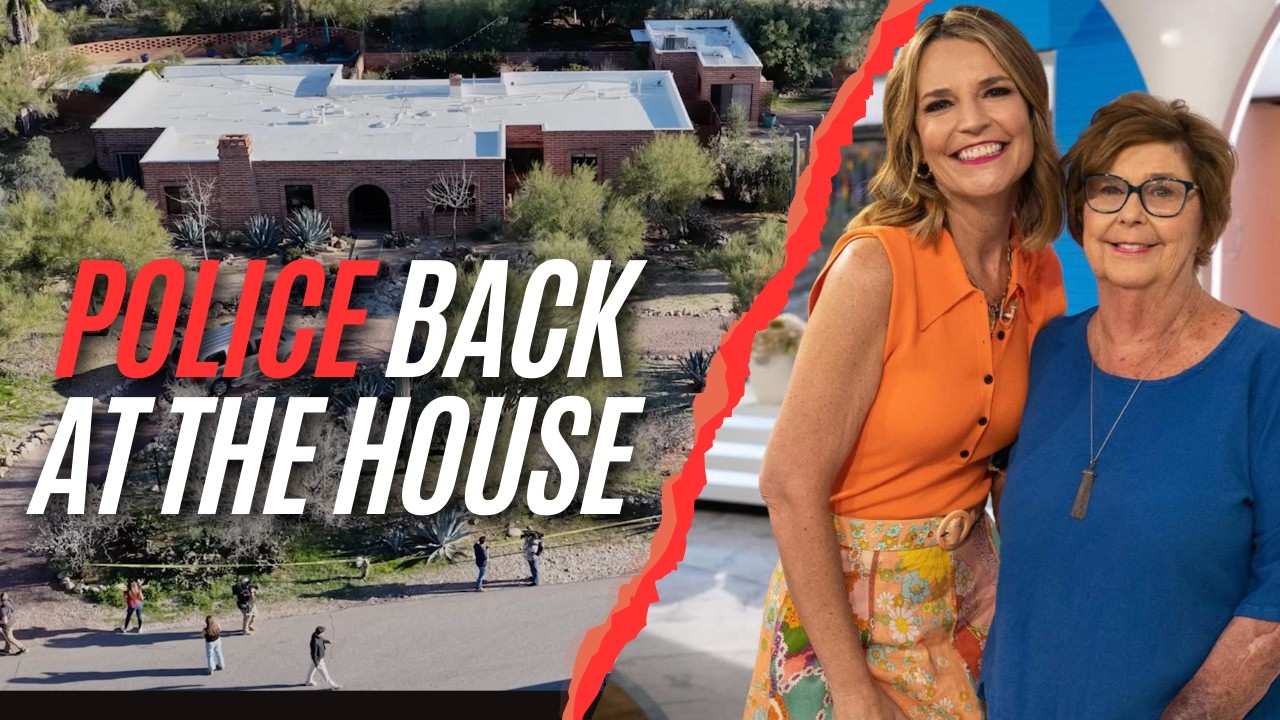
Police back at Nancy Guthrie's house -- what evidence did they take as Savannah pleads with captors
"Federal agents re-entered Nancy Guthrie's home for a targeted search and assisted Savannah Guthrie in crafting a public plea to her mother's alleged captors, revealing critical insights into the ongoing kidnapping investigation."

Amanda Knox and John Ramsey - Megyn Kelly's "Double Feature" of Fascinating Interviews
"This episode features two individuals, Amanda Knox and John Ramsey, whose lives were irrevocably altered by tragic crimes and subsequent wrongful accusations, revealing systemic failures in justice and media manipulation."

Student Murders Her Ex-Teacher After Graduation
"A welfare check for a missing retired teacher escalates into a murder investigation when his car is found with a former student, revealing a brutal robbery-homicide driven by drug-induced rage."