
Paul Craig Roberts: Lebanon's Speaker Declares US-Israel Deal "Won't Be Implemented
YouTube · PiJW5Woi8MA
Quick Read
Summary
Takeaways
- ❖The US-Iran conflict in the Strait of Hormuz is framed as a US attempt to test Iran and define new shipping routes, provoking responses.
- ❖The US-brokered Lebanon-Israel deal is seen as a bribe to the Lebanese government, excluding Hezbollah and serving Israel's agenda.
- ❖Paul Craig Roberts argues that the US lacks good faith in negotiations, driven by the immense power of the Israel lobby.
- ❖Trump's motivation for an "agreement" is to declare a political victory and exit unpopular wars before midterm elections.
- ❖The "nuclear weapon issue" with Iran is described as a "fake" excuse for US hostilities, masking real motives like controlling oil flows and supporting "greater Israel."
- ❖Israel's "freedom of movement plan" is presented as a re-naming of efforts to displace Palestinians from Gaza and the West Bank.
- ❖The disarming of Hezbollah is viewed as a precursor to Israel taking over all of Lebanon, similar to the West Bank's fate.
- ❖The US's long-standing policy of controlling Middle East oil flows adds another layer of difficulty for any genuine US withdrawal from the region.
- ❖The Democratic Party is experiencing a shift with new candidates showing hostility towards Israel, potentially impacting US-Israel relations.
- ❖Roberts expresses concern over the erosion of constitutional rights in the US, citing widespread surveillance without warrants.
Insights
1US-Iran Conflict Driven by Route Control and Provocation
The current US-Iran conflict in the Persian Gulf stems from the US attempting to define new shipping routes in the Strait of Hormuz, challenging Iranian authority and provoking military responses. This is framed as a deliberate test by the US rather than a misunderstanding.
The United States is attacking Iran in the Persian Gulf and Iran is responding hitting American bases in Kuwait and Bahrain... The main reason is the same thing. You remember project freedom in the straight of formos using the vassels tankers to pass through the trade of formos without considering you know the Iranian sort of you know authorization or they're trying to define or to designate new routes...
2Lebanon-Israel Deal as a US-Engineered Bribe to Exclude Hezbollah
The US-brokered agreement between Lebanon and Israel is characterized as a US effort to bribe the Lebanese government to make a deal that specifically excludes Hezbollah, thereby undermining Lebanese sovereignty and serving Israeli expansionist goals.
the United States first of all bribed uh the Lebanese government to make a deal with Israel that excludes Hezbollah... I think basically it's just a question of money. United States uh buys the government in Birut.
3Trump's Pursuit of "Victory" for Domestic Political Gain
Trump's administration seeks an "agreement" in the Middle East primarily to declare a political victory and exit unpopular wars, aiming to improve his standing before midterm elections, even if it means presenting a surrender as a win or provoking adversaries to walk away.
the reason Trump needs an agreement is so he can declare a victory and get out of the war... Trump faces is the war is unpopular... he needs a way out that he can present as a victory.
4"Nuclear Threat" as a Pretext for US Hostility Towards Iran
The host and Roberts agree that the Iranian nuclear weapon issue is a "totally fake" and "absolutely false" pretext used by Washington to justify hostilities, control oil flows, and advance Israel's "greater Israel" agenda, rather than a genuine concern about proliferation.
my own view has always been that the nuclear weapon issue is totally fake. It's absolutely false. It always has been. But it's the issue that Washington can use to have public support for carry on hostilities toward Iran... It's the hostility due to the Iranian revolution and it's uh the hostility to Iranian resistance to American control of of oil flows and it's uh in behalf of Israel's great agenda of greater Israel.
5Erosion of US Constitutional Rights Through Surveillance
Roberts highlights the widespread deployment of surveillance cameras across the US, collecting billions of license plate photos daily, as a significant violation of the constitutional right to privacy, occurring without warrants and far exceeding historical grievances that led to the American Revolution.
the huge number of cameras that are stationed all over the United States. You can't move without being photographed... they have 20 billion license tag U photos a day... all of this is in violation of the constitutional right to privacy... all this is happening with no warrants.
Bottom Line
Iran's continued participation in "charade" negotiations, despite violations, might be a strategic play to expose and potentially split the US-Israel alliance.
This suggests a long-game strategy by Iran, aiming for a geopolitical shift rather than immediate peace, which could fundamentally alter Middle East power dynamics.
For analysts, this implies looking beyond the stated goals of negotiations to identify deeper, strategic objectives of non-Western actors.
The influx of Middle Eastern refugees into the US, welcomed by Democrats, is inadvertently shifting the Democratic Party towards an anti-Israel stance, creating a new political dynamic.
This demographic shift could lead to a significant re-evaluation of US foreign policy towards Israel, potentially weakening the Israel lobby's influence over time and creating internal party conflict.
Political strategists could analyze these demographic and ideological shifts to predict future electoral outcomes and policy changes, particularly concerning foreign policy.
Key Concepts
Charade Diplomacy
The idea that diplomatic negotiations are often performative, serving ulterior motives (e.g., political posturing, maintaining conflict) rather than genuine peace-making.
Israel Lobby Influence
The concept that a powerful pro-Israel lobby significantly shapes US foreign policy in the Middle East, often at the expense of US national interests or genuine peace.
Money as Principle
The cynical view that in international relations and domestic politics, financial incentives (bribes, frozen assets) often outweigh moral or ethical principles in determining actions and allegiances.
Demonization as Policy Tool
The strategy of consistently portraying an adversary (e.g., Iran) as evil or dangerous to justify ongoing hostilities and maintain public support for interventionist policies.
Quotes
"If they really wanted to have a peaceful agreement, then they certainly wouldn't uh bribe the government in Birut to make a deal with Israel that doesn't include Hezbollah."
"The only way Trump could conclude a real peace agreement that meant anything with the Iranians uh would be to excl would be to at Israel's expense. And I just don't think the United States has that independence uh from the Israel lobby."
"The main reason is the same thing. You remember project freedom in the straight of formos using the vassels tankers to pass through the trade of formos without considering you know the Iranian sort of you know authorization or they're trying to define or to designate new routes..."
"The minute Hezbollah is disarmed, they'll they'll take all of Lebanon."
"The nuclear weapon issue is totally fake. It's absolutely false. It always has been. But it's the issue that Washington can use to have public support for carry on hostilities toward Iran."
"We we were more independent under British colonial rule than we are today."
Q&A
Recent Questions
Related Episodes

BREAKING: Iran Threatens To END Talks; U.S. Vows Retaliation; Hezbollah Collapsing? | TBN Israel
"Iran is leveraging Hezbollah and the Strait of Hormuz to manipulate US negotiations, while Israel asserts its right to dismantle Hezbollah's eroding but still dangerous infrastructure in Lebanon, independent of international talks."

Iran Update: Israel’s Newest Bombing Campaign, the Oncoming War With China and How to Avoid It
"Colonel Wilerson reveals how the US and Israel are actively bombing China's strategic infrastructure in Iran, escalating a covert economic war that Beijing intends to win without direct military conflict by dismantling the dollar's global dominance."

Patrick Henningsen: Hezbollah JUST Fired Back at Israel - Iran Vows to “Crush” All Attacks
"Patrick Henningsen argues that the US and Israel initiated an illegal war against Iran, driven by Trump's incompetence and Israeli influence, leading to an inevitable escalation with severe global economic repercussions."
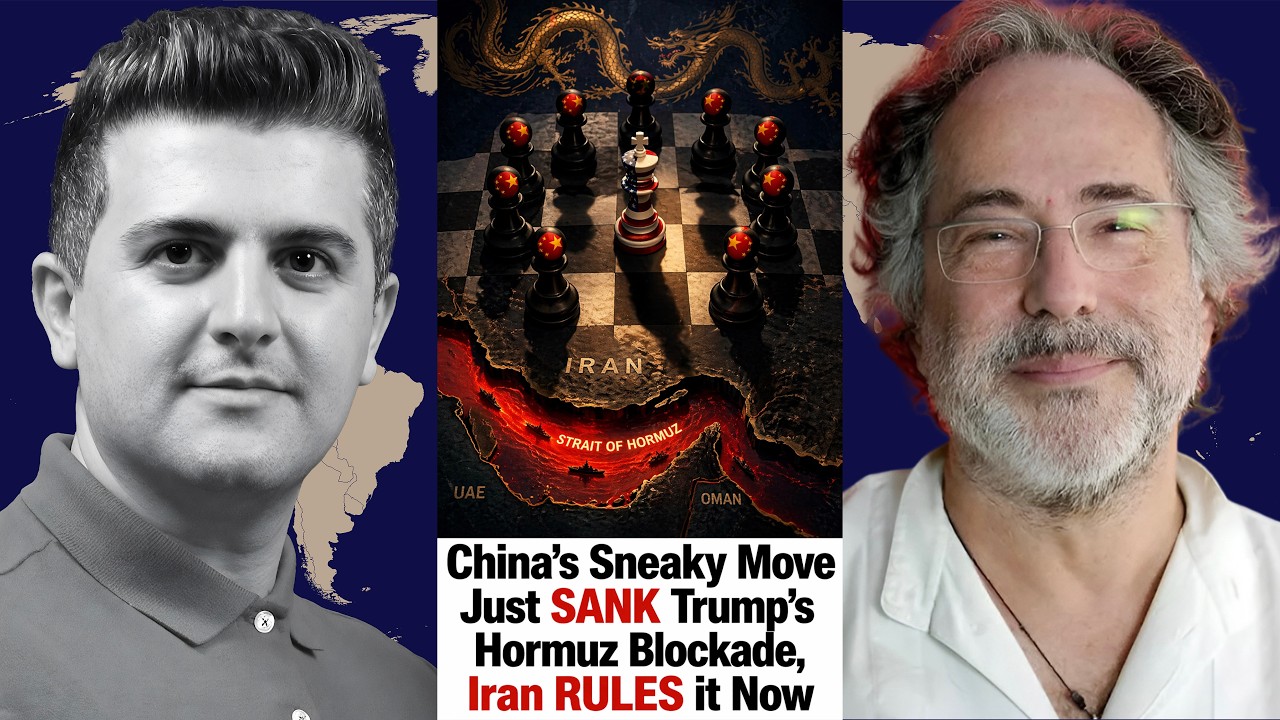
Pepe Escobar: “Total Failure”: Trump’s Blockade Just Backfired Disastrously
"Pepe Escobar argues that the US blockade against Iran, spearheaded by Donald Trump, has utterly failed and backfired, accelerating global economic chaos and challenging US geopolitical dominance."