Trump's State of the Union Reactions + Supreme Court Tariff Troubles | PBD #746
YouTube · PqGaaoxu9-4
Quick Read
Summary
Takeaways
- ❖The Supreme Court's ruling on tariffs, while procedural, has significant economic implications, potentially leading to $175 billion in refunds and weakening presidential negotiation leverage.
- ❖The Democratic party currently lacks a clear front-runner for future presidential elections, reflecting internal ideological divisions.
- ❖Wealth taxes in states like New York and California risk driving out high-income earners and job creators, potentially harming middle-class residents.
- ❖China is engaging in industrial-scale AI intellectual property theft, using 'distillation attacks' to replicate advanced models due to U.S. chip export controls.
- ❖AI and robotics are projected to outnumber human workers within decades, leading to significant job displacement across various sectors, especially white-collar roles.
- ❖The ongoing consolidation in the entertainment industry, exemplified by the Paramount/Warner Bros. Discovery bidding war, raises concerns about creativity, market competition, and the future of theatrical releases.
- ❖Panama's Supreme Court voided a contract allowing a Chinese-linked company (CK Hutchinson) to control key canal ports, a move seen as a strategic win for U.S. national security interests in the region.
- ❖The debate over presidential executive power extends beyond economic tariffs to military actions, highlighting a constitutional struggle for authority between the executive, legislative, and judicial branches.
Insights
1Supreme Court Tariff Ruling Challenges Presidential Authority
The Supreme Court ruled that President Trump lacked the authority to unilaterally impose certain tariffs, requiring congressional approval. This decision has led to over a thousand importers, including major companies like FedEx, L'Oreal, and Prada, suing the U.S. government for an estimated $175 billion in refunds. The ruling highlights a constitutional debate over the extent of presidential power in economic policy and national security, with critics arguing it handcuffs a leader's ability to act swiftly and unpredictably in negotiations.
FedEx and over a thousand importers filed suits for $175 billion in refunds after the Supreme Court rejected several of Trump's tariffs, citing a lack of congressional permission.
2Democratic Party Lacks a Clear Presidential Front-Runner
CNN's Harry Enten reported that for the first time in nearly 40 years, no Democratic candidate has over 25% support as a leading front-runner. This 'clown car' scenario reflects a civil war within the party between progressives and the center-left, with progressives currently holding more energy but potentially less electability nationally. This internal division creates uncertainty for the party's future leadership.
CNN's Harry Enten reported no Democratic candidate above 25% support, a situation not seen since 1992, indicating a 'clown show' of contenders like Newsome (19%), Harris (18%), and AOC (12%).
3Wealth Taxes Drive Exodus from New York and California
New York and California's consideration of wealth taxes is criticized for lacking common sense, as it incentivizes billionaires and high-income small business owners to leave. This exodus of job creators and investors to states with more favorable tax environments (e.g., Nevada, Florida) ultimately hurts the middle class and the states' long-term fiscal health.
Kenneth Rogoff notes that raising taxes on the wealthy in New York will 'just going to chase them out and it's going to lose money.' Examples like Mark Wahlberg moving to Nevada and Palantir/Citadel moving to Miami are cited.
4China's Industrial-Scale AI Intellectual Property Theft
Anthropic, a leading AI startup, has accused three major Chinese AI labs (Deep Seek, Moonshot, Minimax) of 'industrial-scale distillation attacks.' This involves training smaller models on the outputs of Anthropic's advanced systems (like Claude) to replicate high-level performance without needing the same computing resources or access to restricted Nvidia chips. This theft poses significant national security concerns, as China aims to circumvent U.S. export controls.
Anthropic identified 24,000 fraudulent accounts generating over 16 million exchanges with Claude, which Chinese labs allegedly used for 'distillation attacks' to train their own models, circumventing U.S. chip export controls.
5AI and Robotics Threaten Mass Job Displacement
AI robots are projected to outnumber human workers within a few decades, driven by firms' investments to reduce costs. Humanoid robots can offer a payback period of less than 10 weeks compared to human workers, making them economically irresistible. This rapid automation, particularly in white-collar jobs, is expected to lead to massive job loss and societal instability, raising urgent questions about taxation of robotic labor and the creation of new employment opportunities.
Rob Garlic of City Global Insights states AI robots will exceed the working population in decades, with humanoids offering a payback period of less than 10 weeks. Tom confirms Amazon distribution centers already extensively use non-humanoid robots for warehouse tasks.
6Panama Reclaims Canal Ports from Chinese-Linked Control
Panama's Supreme Court voided a decades-long contract allowing China-linked CK Hutchinson to control key ports at both ends of the Panama Canal (Balboa and Cristobal). This move, likely influenced by U.S. interests, is a major geopolitical win for the U.S., preventing China from gaining strategic control over a critical global shipping route that handles 40% of U.S. maritime cargo. The Panamanian president's bold stance suggests U.S. backing.
Panama's Supreme Court threw out a contract with China-linked CK Hutchinson, allowing Panama to occupy the Balboa and Cristobal ports. Analysts warned Chinese control could threaten U.S. national security.
Bottom Line
The rise of 'Pelosi Stock Tracker' accounts and services that mirror congressional trading activity highlights a systemic issue of perceived insider trading by politicians, creating a 'legal' avenue for the public to capitalize on information asymmetry.
This phenomenon erodes public trust in government and creates an unfair playing field, where political influence can directly translate into personal wealth. It also showcases entrepreneurial exploitation of regulatory loopholes.
Develop transparent, ethical investment platforms that leverage publicly available data on political decisions and their market impact, but without directly mirroring individual politicians' trades, focusing instead on broader policy-driven sector analysis.
Anthropic's dispute with the Pentagon over AI usage, specifically regarding safeguards against mass surveillance and autonomous 'kill orders,' reveals a growing tension between AI developers' ethical concerns and national security demands for unrestricted access to powerful AI tools.
This conflict indicates that AI companies are increasingly asserting moral agency, potentially limiting government access to advanced capabilities. It also suggests a future where AI development might be bifurcated between ethically-constrained commercial entities and less-regulated state actors or 'black box' military projects.
Invest in 'ethical AI' governance and auditing solutions that can verify and enforce usage constraints on AI models, bridging the gap between developer ethics and government operational needs, potentially creating a new compliance industry for advanced AI.
Opportunities
Pelosi Stock Tracker / Autopilot Investment Service
A service that allows individuals to automatically mirror the stock trades of public officials, leveraging publicly available disclosure forms. This capitalizes on the perceived insider information and superior trading performance of politicians.
AI-Powered Manufacturing and Logistics Solutions
Develop and deploy advanced robotics and AI systems for manufacturing and warehouse operations, focusing on efficiency, cost reduction, and 24/7 operation. This addresses the inability of human labor to compete on cost and continuous availability, potentially bringing manufacturing back to high-wage countries.
Key Concepts
Balance of Power
The ongoing struggle between the executive, legislative, and judicial branches for authority, exemplified by the Supreme Court's tariff ruling and the debate over presidential war powers, is a core feature of U.S. democracy. This balance aims to prevent overreach but can lead to policy paralysis.
Monroe Doctrine (Modern Application)
The U.S. policy of opposing European colonialism in the Americas is being implicitly applied to counter Chinese influence in the Western Hemisphere, as seen in the Panama Canal port dispute. This reflects a strategic imperative to maintain regional security and economic control.
Deflationary Innovation
Technological advancements, particularly in AI and robotics, drive down the cost of production and services. While increasing productivity and making goods cheaper, this also leads to job displacement and requires new economic models to manage societal impact.
Lessons
- Monitor legislative efforts regarding congressional stock trading and AI regulation, as these could impact market dynamics and investment opportunities.
- Evaluate the long-term impact of AI and automation on your industry and workforce, considering strategies for reskilling, upskilling, or adapting business models to leverage AI efficiencies.
- Stay informed on geopolitical developments concerning critical trade routes and technological competition, as these can signal shifts in supply chains, national security priorities, and investment risks/opportunities.
Notable Moments
President Trump's perceived 'fun' and charisma during his State of the Union address, despite facing significant challenges.
This highlights a key aspect of his leadership style: projecting confidence and enjoyment even amidst adversity, which resonates with his base and creates a distinct political persona.
Nancy Pelosi's uncomfortable reaction when asked about congressional stock trading, despite her public support for a ban.
This moment underscores the perceived hypocrisy and self-interest in politics, fueling public cynicism about politicians' motivations and the integrity of legislative processes.
The U.S. Navy's procurement officer noting a drastic reduction in military contractors, leading to inflated costs for parts.
This illustrates a critical national security vulnerability due to lack of competition in the defense industry, leading to higher costs and potentially slower innovation, impacting military readiness.
Quotes
"I think the most striking thing is he's having fun. He enjoyed it whether other people did or not. Some people love him, some people hate him, but he's really feeling it."
"It's not an accident that she has a better trading record than Warren Buffett and Ray Dalio."
"I mean, I once asked someone who's a big investor in Silicon Valley, do you think China's going to get quantum, you know, computing before we do? And he said, 'Only if they steal it.'"
"No drug was invented without a disease being there first."
"You don't get to dictate how to how if I paid for it, I'm going to use a software whatever way I want."
"We will return the property, including cranes and industrial equipment, when the determining reason for the occupation ceases. Well, what is the determining reason for the occupation? And everybody is looking no further than Langley, Virginia..."
"Military power is very important to US dominance, to dollar dominance. You can't just keep running it down and expect to stay on top."
Q&A
Recent Questions
Related Episodes
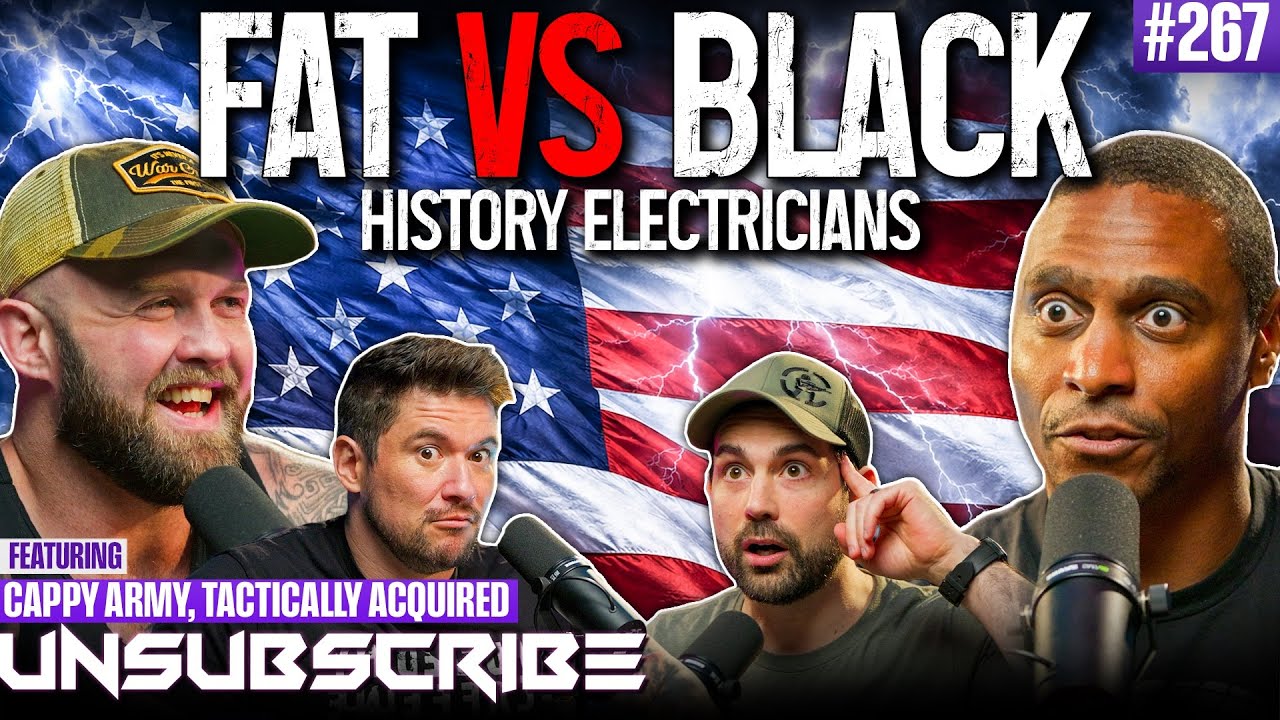
The Fat Electrician Vs Tactically Acquired | Unsubscribe Podcast 267
"This episode features military content creators discussing current geopolitical hotspots, advanced weaponry, and the surprising psychological warfare tactics of modern conflict, alongside their personal journeys building online communities."

Iran Update: Israel’s Newest Bombing Campaign, the Oncoming War With China and How to Avoid It
"Colonel Wilerson reveals how the US and Israel are actively bombing China's strategic infrastructure in Iran, escalating a covert economic war that Beijing intends to win without direct military conflict by dismantling the dollar's global dominance."
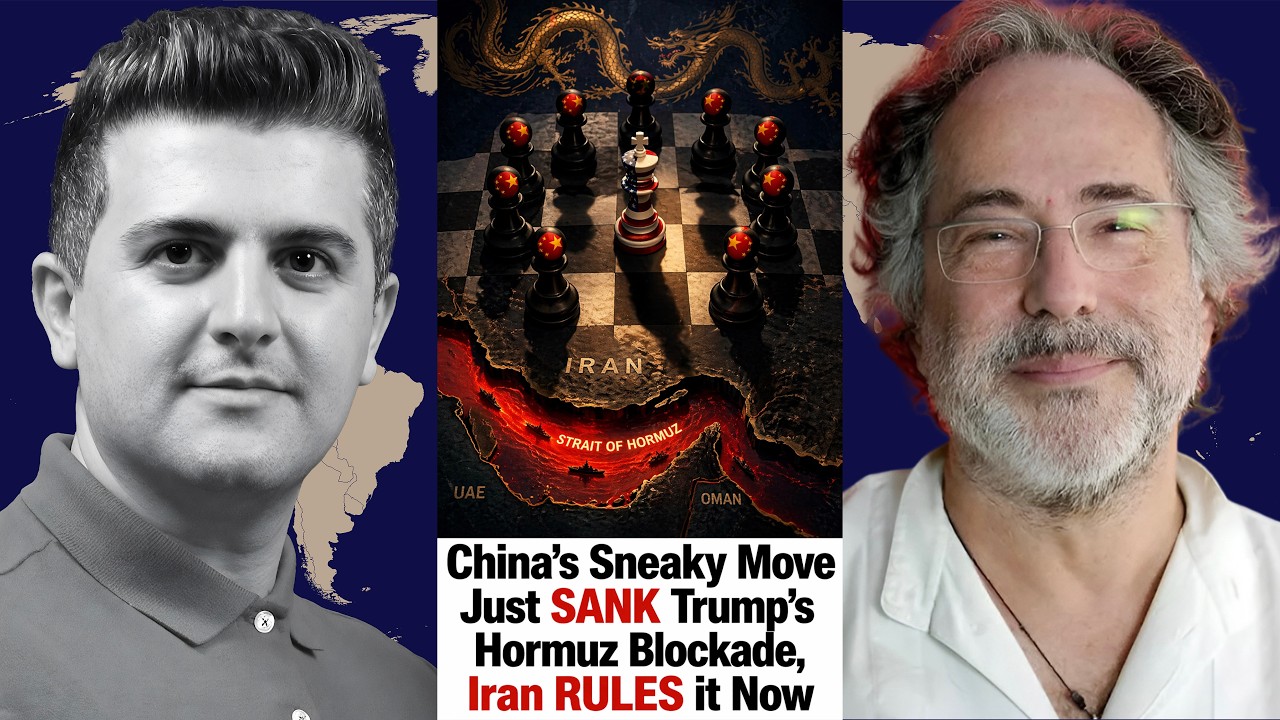
Pepe Escobar: “Total Failure”: Trump’s Blockade Just Backfired Disastrously
"Pepe Escobar argues that the US blockade against Iran, spearheaded by Donald Trump, has utterly failed and backfired, accelerating global economic chaos and challenging US geopolitical dominance."

PBS News Hour full episode, April 10, 2026
"This episode covers high-stakes US-Iran peace talks amidst ongoing conflict, Hungary's pivotal election challenging Viktor Orban, the accelerating decline in US birth rates, AI's disruptive impact on jobs, and Palestinian Christians observing Easter under Israeli restrictions."