
Trump’s New Voters Are Already Bailing
YouTube · Q1C2jK8UqAM
Quick Read
Summary
Takeaways
- ❖Donald Trump's approval rating is 40% with 57% disapproval, reflecting a significant decline.
- ❖The demographic shifts observed in 2024, where Trump gained support among young and non-white voters, have reversed.
- ❖Trump's approval among non-white voters has fallen from minus 25% in 2024 to nearly minus 50% currently.
- ❖Support among young voters (18-29) has similarly collapsed, moving from near-even in 2024 to almost minus 50%.
- ❖The economy, particularly the cost of living (minus 30% approval), is the main issue driving voters away from Trump.
- ❖Among 'switcher' voters (those who supported Trump in 2024 but no longer do), 44% cite economic issues as the biggest problem.
- ❖Only 9% of Trump supporters feel 'enthusiasm or pride' about his presidency, while 29% of the overall electorate feels 'disgust or derision'.
Insights
1Trump's 2024 Coalition Unravels
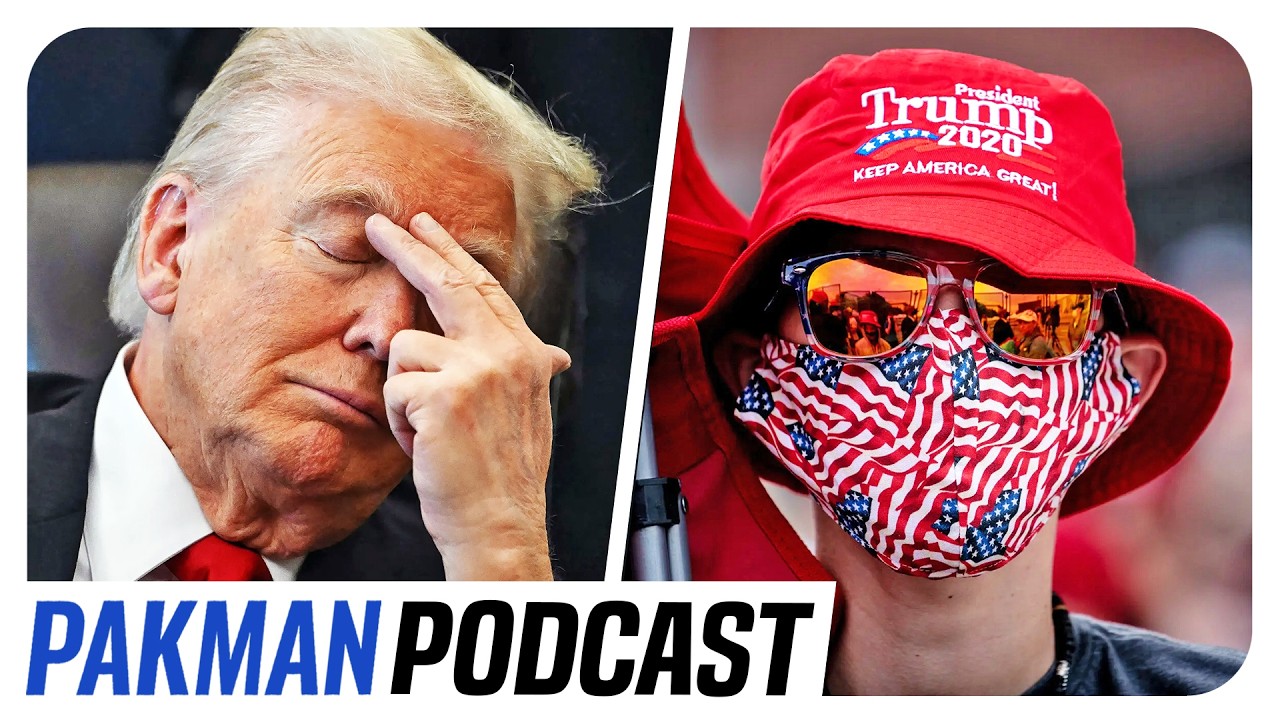
A New York Times/Siena poll indicates that the 'second Trump coalition' that emerged in 2024, which included significant gains among young, black, and Hispanic men, has largely disintegrated. Trump's approval rating stands at 40% with 57% disapproval, and his demographic support has 'snapped back' to levels seen before his defeat in 2020.
Trump's approval rating is at 40%, disapproved, 57%. The major demographic shifts of the last election have snapped back. Trump's approval rating by demographic group looks almost exactly as it did in the run-up to his defeat in 2020.
2Significant Decline Among Young and Non-White Voters
Trump has lost the support he gained among non-white and young voters in 2024, with disapproval rates now even higher than in 2020. For non-white voters, his net support moved from around minus 25% in 2024 to almost minus 50%. Similarly, young voters (18-29) who were nearly even in 2024 now show disapproval close to minus 50%.
In 2024, he gained to where he was minus only, call it around 25. Now, in 2026, he's almost minus 50. So, not only has he lost the support he gained, but even additional people have jumped off the train. Total collapse among young voters 18 to 29 as well as non-white voters.
3Economy Drives Voter Disengagement
The primary reason for voters abandoning Trump is the economy, particularly concerns about the cost of living. While other issues like immigration and foreign affairs play a role, 44% of 'switcher' voters (those who supported Trump in 2024 but no longer do) specifically cite economic issues as the biggest problem facing the country.
Con finds is that like broadly speaking, the evidence is that it's the economy that's driving voters away from Trump... including just 34% approve his handling of the cost of living compared with 64% who disapprove. Among the voters who flipped, 44% of them cite economic issues.
4Low Enthusiasm Among Trump Supporters, High Outrage Among Opponents
The poll reveals a striking emotional landscape: only a small fraction of Trump supporters (9%) express 'enthusiasm or pride,' with 'satisfaction' being the most common positive emotion (19%). In contrast, a significant portion of the overall electorate (29%) feels 'disgust or derision,' and 20% feel 'hostility or outrage' towards Trump's presidency. This suggests a more unified and intense negative emotional response than positive one.
Among Trump's supporters, the emotion that best described how they felt was satisfaction... enthusiasm or pride only had 9%. Hope only had 3%... The biggest number, hostility outrage, 20%. You add in disgust and derision, 29%. That's 29% who feel disgusted or outraged by Trump versus only 9% who feel enthusiastic or proud.
Lessons
- Political strategists should focus on economic messaging, particularly the cost of living, to appeal to voters who have disengaged from Trump's coalition.
- Campaigns targeting young and non-white voters should recognize that Trump's 2024 gains in these demographics were not sticky and these groups are highly susceptible to shifting allegiance.
- Opponents of Trump can leverage the widespread negative emotional responses ('disgust,' 'outrage,' 'hostility') to mobilize their base, as these feelings appear more intense and widespread than positive sentiments among his supporters.
Notable Moments
The host expresses a personal 'pick-me-up' from the poll data showing that 'satisfaction' was the most common positive emotion among Trump supporters, rather than 'enthusiasm' or 'pride.' He interprets this as a 'tinge of disappointment in MAGA world' compared to a 'unified rage in Never Trumper World.'
This moment highlights the host's interpretation of the emotional data as a significant indicator of political momentum, suggesting that a less fervent positive base combined with an intensely negative opposition could yield favorable political results for Trump's opponents.
Quotes
"If anything, young and non-white voters are even likelier to disapprove of Mr. Trump than they were back in 2020 while Trump retains most of his support among older and white voters."
"Among Trump's supporters, the emotion that best described how they felt was satisfaction. That's not like enthusiasm."
Q&A
Recent Questions
Related Episodes

HOT TOPICS | Is Donald Trump Destroying MAGA?!
"Don Lemon declares the MAGA movement is collapsing, citing Donald Trump's escalating political missteps, economic failures, and alienation of his core base and former allies."

🚨 LEFTISTS ARE F*CKING SEETHING 😂😂😂
"The host aggressively celebrates perceived 'wins' for the right-wing, from global conflicts and domestic politics to cultural shifts, framing them as a 'humiliation' for the 'leftist world order' and a testament to Donald Trump's influence."
What happens to Trump voters when Trump is gone?
"The David Pakman Show explores the contentious path forward for Trump voters after his political era, exposing alleged corruption, economic misrepresentation, and the necessity of media literacy."

A major shift is happening right now
"Donald Trump is losing his grip on the Republican party and movement, evidenced by internal dissent and a broader political landscape grappling with a collapse of accountability and truth."