
Autistic Son: “Weird like your daddy. I see it as a superpower." I CLUB SHAY SHAY
YouTube · QBRcW42R2es
Quick Read
Summary
Takeaways
- ❖The guest views his son's autism as a 'superpower' and a shared 'weirdness,' contrasting with his wife's guilt and societal concerns.
- ❖He believes all topics are fair game for comedy, provided the jokes are crafted to resonate with and empower the affected audience.
- ❖His depression is linked to his upbringing as the family's 'fixer,' leading to an inability to ask for help and a constantly active creative mind.
Insights
1Reframing Autism as a 'Superpower' and Shared 'Weirdness'
The guest views his son's autism not as a deficit but as a unique strength, a 'superpower' that allows for intense focus and distinct perspectives. He identifies with his son's 'weirdness,' seeing it as a positive trait passed down from himself, a self-proclaimed introverted 'weirdo.' This perspective contrasts sharply with his wife's struggle, who experiences guilt and concern over societal perceptions.
He states, 'I see it as a superpower' and 'Boy, you weird like your daddy.' He also notes, 'Weird is not an insult to me. I embrace that I'm weird. I love being a weirdo. It's a blessing to pass that on to my son.'
2The Comedian's Rule for Sensitive Jokes: Appeal to the Affected
The guest asserts that no topic is off-limits for comedy, including disability, but the crucial factor is 'how you get to it.' He believes jokes about sensitive subjects must primarily appeal to and be appreciated by the people directly affected, making them feel 'seen' and allowing them to laugh 'with' the joke, rather than feeling laughed 'at' by outsiders.
He explains, 'The joke has to appeal more to the people it affects than the other people. Cuz if other people are laughing, they're laughing at it. If the people who go through it can't laugh at it, they're going to feel like they're being laughed at.'
3Depression Rooted in Family Role and Inability to Seek Help
The guest's depression stems from his upbringing as the middle of seven children from high school dropouts, where their home was a refuge for extended family. This ingrained a sense of responsibility to 'take care of your people,' leading him to take on others' burdens. He struggles to ask for help himself, even when offered, because he's conditioned to believe he 'can do it all on [his] own.' This, combined with a creative brain that 'never turns off,' contributes to his depressive episodes.
He describes his home as a place where 'anybody fell on hard times... they came to our house.' He adds, 'I take on fights that's not mine all the time. And then when I feel it, I don't know how to go to other people.' He also mentions, 'My brain goes, it'll never turn off. It don't ever turn.'
Lessons
- Challenge your own perceptions of 'normalcy' and 'weirdness,' especially when interacting with neurodivergent individuals, by seeking to understand their unique strengths.
- When creating or consuming content about sensitive topics, evaluate if the narrative empowers and resonates with the affected community, rather than merely entertaining outsiders.
- Recognize the signs of burnout and depression, particularly if you are a 'fixer' or a creative, and actively practice setting boundaries and seeking support, even if it feels unnatural.
Quotes
"The joke has to appeal more to the people it affects than the person that's telling the story... If the people who go through it can't laugh at it, they're going to feel like they're being laughed at."
"I take on fights that's not mine all the time. And then when I feel it, I don't know how to go to other people."
"People do not know what that's like for your brain to never turn off. Ever. It never ends."
Q&A
Recent Questions
Related Episodes
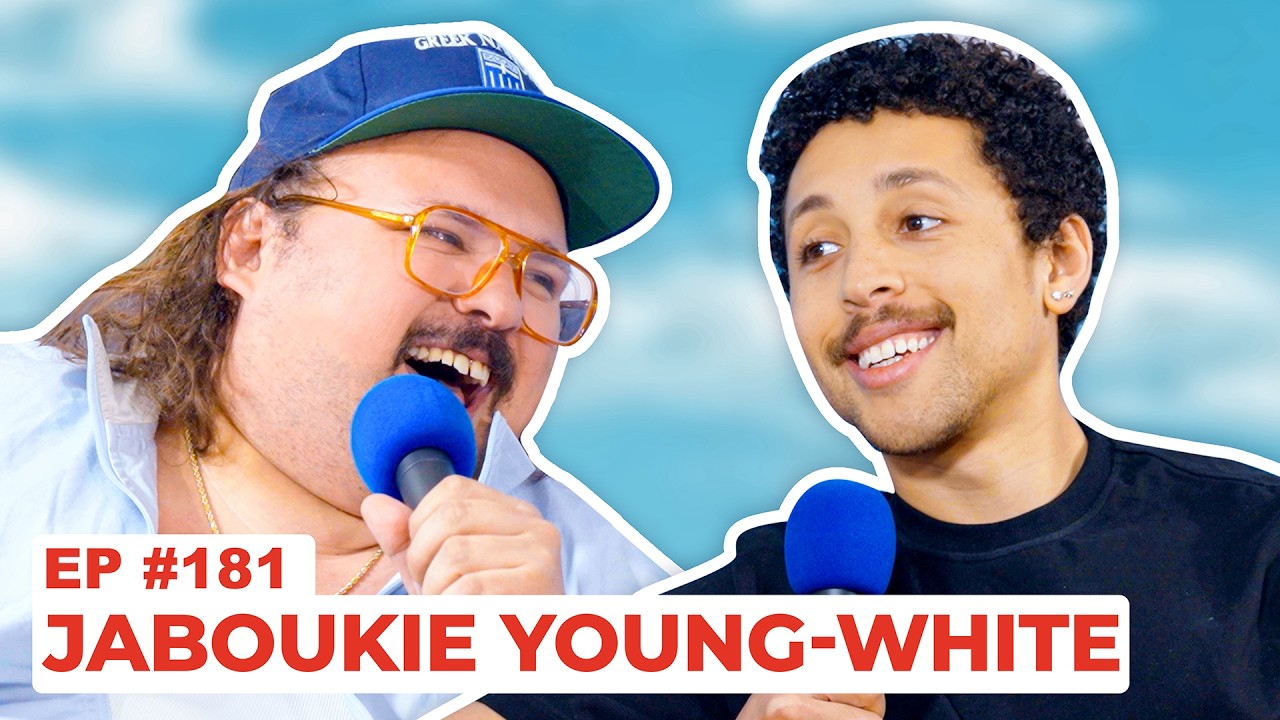
Stavvy's World #181 - Jaboukie Young-White | Full Episode
"Stavros Halkias and Jaboukie Young-White dive into chaotic family histories, modern relationship dilemmas, and the absurdities of celebrity culture, offering unfiltered comedic takes and unconventional advice to callers."

KOUNTRY WAYNE - MILLION DOLLAZ WORTH OF GAME EPISODE 372
"Comedian Kountry Wayne reveals his unconventional, high-volume content creation strategy using only cell phones and a large, distributed team, alongside candid discussions on financial responsibility for children, modern relationships, and the detrimental glorification of incarceration."

Sadhguru - Stop Letting Your Mind DESTROY You | SRS #315
"Sadhguru challenges conventional wisdom on 'being in the moment' and stress, arguing that mastering the mind requires understanding its sophisticated design and consciously directing one's internal chemistry for profound well-being."

HaHa Davis on Druski, Katt Williams, Kevin Hart, Jay-Z, Relationships, Fame & Social Media Comedy
"Comedian Haha Davis offers a candid look into the unpredictable world of social media fame, the complexities of modern relationships, and the personal journey of finding success while staying true to his Detroit roots."