
Bombshell DNA Found? Burglary Gone Wrong? | Nancy Guthrie Missing Day 15
YouTube · QkPpkDVRWcg
Quick Read
Summary
Takeaways
- ❖Savannah Guthrie made a heartfelt Instagram appeal directly to her mother's captor, urging them to 'do the right thing.'
- ❖The FBI issued a rare public statement confirming DNA was recovered from one of 16 gloves found two miles from the Guthrie residence; this specific glove appears to match the one worn by the subject in the surveillance video.
- ❖The recovered DNA profile is undergoing quality control before being entered into CODIS (Combined DNA Index System), a national database of criminal and forensic DNA profiles.
- ❖Conflicting reports from NBC and Arizona Family/Associated Press suggest authorities are either 'leaning away' from previously scrutinized individuals and considering a 'burglary gone wrong,' or are 'not categorizing the case as any particular type of crime at this stage.'
- ❖Pima County Sheriff Nanos explicitly denied the 'burglary gone wrong' theory as the working theory, stating they will 'let the evidence take us to motive.'
- ❖DNA testing from a silver Range Rover, towed after a Friday night raid, is still underway, despite some reports suggesting individuals connected to it were being cleared.
- ❖Analysis of the rugged desert terrain around Nancy Guthrie's home indicates that the perpetrator likely possessed significant local knowledge or utilized mapping technology to navigate the unlit, thorny landscape at night.
- ❖The FBI is using a sophisticated 'signal sniffer' device attached to helicopters to detect Nancy Guthrie's pacemaker, requiring low, slow flight for efficacy.
- ❖The host speculates that saliva DNA from the perpetrator's 'bite light' could be present on the tiled entrance of Guthrie's home, offering another potential source of evidence.
Insights
1FBI Confirms DNA from Suspect-Matching Glove
The FBI released an unusual public statement confirming that DNA was recovered from a specific glove found approximately two miles from Nancy Guthrie's home. This glove is described as 'different' from other discarded searcher gloves and 'appears to match the gloves of the subject in the surveillance video.' The DNA profile is undergoing quality control and will be entered into CODIS, the national DNA database.
FBI statement given to NewsNation's Libby Dean, read verbatim by the host.
2Conflicting Reports on Case Direction and Suspect Status
Media outlets provided contradictory reports on the investigation. NBC initially reported that authorities were 'leaning away' from several previously scrutinized individuals, including those involved in a Friday night raid and a man named Carlos. However, Arizona Family/Associated Press reported an 'inside source' suggesting a 'widespread belief' it was a 'burglary gone wrong' and that Nancy Guthrie 'could be alive.' This was directly refuted by Sheriff Nanos and other local law enforcement sources, who stated it was 'not the working theory' and that residential nighttime burglaries are 'ridiculously rare' in the area.
NBC News reports (, , ), Arizona Family/Associated Press report (), Michael Ruiz and Matt Finn's reporting on law enforcement pushback (, , ).
3Challenging Desert Terrain Suggests Perpetrator Knowledge
Reporter Brian Enton's on-site investigation with a former border patrol agent revealed the extreme difficulty of navigating the desert terrain around Nancy Guthrie's home at night. The area lacks streetlights, is filled with thorny brush, cacti, and dangerous animals, making it easy to get lost. This suggests the perpetrator either had intimate knowledge of the area or used advanced mapping systems, which could be an investigative lead.
Brian Enton's walk-and-talk report with Art Deluo, a former border patrol agent, detailing the 'wash' areas, lack of lights, and natural hazards.
4FBI Deploys Pacemaker Signal Sniffer Technology
The FBI is utilizing sophisticated 'signal sniffer' technology, attached to sheriff's helicopters, to detect Nancy Guthrie's pacemaker signal. This device requires the helicopter to fly low and slow to be effective. The host suggests that drones might be a more efficient and less intrusive platform for this technology.
NewsNation's Libby Dean's reporting on the FBI's signal sniffer technology and its deployment.
Bottom Line
The perpetrator's use of a 'bite light' during the abduction, as inferred from surveillance footage, could have led to saliva DNA being dropped on the tiled entrance of Nancy Guthrie's home, providing a direct DNA link.
This specific, non-obvious source of DNA could be a crucial piece of evidence, potentially overlooked in initial sweeps if not specifically targeted, and could explain the presence of 'unknown male DNA' previously found inside the house.
Investigators should specifically re-examine the tiled entrance and surrounding areas for dried saliva, especially in the spots illuminated by the 'bite light' in the video, to test for the perpetrator's DNA.
Deploying the FBI's 'signal sniffer' technology on drones instead of helicopters could significantly enhance search efficacy for Nancy Guthrie's pacemaker, given the challenging terrain and the need for low, slow, and quiet operation.
Drones offer greater maneuverability, quieter operation, and the ability to get closer to potential hiding spots (like windows or dense brush) without causing undue disturbance or privacy concerns associated with low-flying helicopters. This could cover more ground more effectively.
Law enforcement could explore integrating this signal detection technology with drone platforms for future missing person cases, especially in areas with difficult topography or where stealth is required.
Lessons
- When consuming news about ongoing investigations, critically evaluate source levels and acknowledge that official statements can change as new evidence emerges.
- Understand that advanced forensic tools like CODIS and specialized signal detection technologies are constantly evolving and play a significant role in modern criminal investigations.
- Recognize the impact of environmental factors, such as challenging terrain and lack of infrastructure, on the complexity and duration of search efforts in missing person cases.
Notable Moments
Ashleigh Banfield reflects on the collective human fascination with the 'who does this?' question in inexplicable crimes, linking it to the Nancy Guthrie case and other high-profile incidents like the Idaho murders.
This moment highlights a fundamental psychological aspect of public engagement with true crime, suggesting that the inability to comprehend extreme human behavior is a powerful binding principle that draws communities into such stories, fostering a shared desire for justice.
Quotes
"It's never too late, and you're not lost or alone. And it is never too late to do the right thing."
"Did not come from us. No idea. And even though that is one of many possibilities, we would never speculate such a thing. We will let the evidence take us to motive."
"Nighttime residential burglaries are so ridiculously rare, crazy rare. Commercial building burglaries at night, residential during the day. We don't have any indication she kept really anything valuable there. And if this was a burglary gone wrong, they don't take the victim with them usually. I guess anything is possible, but my gut says it's something else entirely."
"In the 50 years that I've lived here, I've never heard of any crime like this. By and large, there's just no crime."
Q&A
Recent Questions
Related Episodes

Surveillance video with possible timing connection to Nancy Guthrie disappearance - on the scene
"New surveillance video emerges with timing that aligns with Nancy Guthrie's pacemaker disconnection, while law enforcement prepares to return her house to the family, fueling speculation about a burglary gone wrong and the case's potential to remain unsolved."

Nancy Guthrie investigation: the traces bodies leave behind in the desert — scientific deep dive
"An ASU forensic science study reveals that even after a body is moved, a distinct microbial and elemental signature can persist in Arizona desert soil for over 2.5 years, significantly impacting missing persons investigations like the Nancy Guthrie case."

Breaking: Almost NOTHING Inside Nancy Guthrie's Home Explains Disappearance? | Nancy Guthrie Missing
"Despite a clear blood trail leading from Nancy Guthrie's front door, investigators found almost no other evidence inside her home, making her disappearance a profound and vexing mystery."
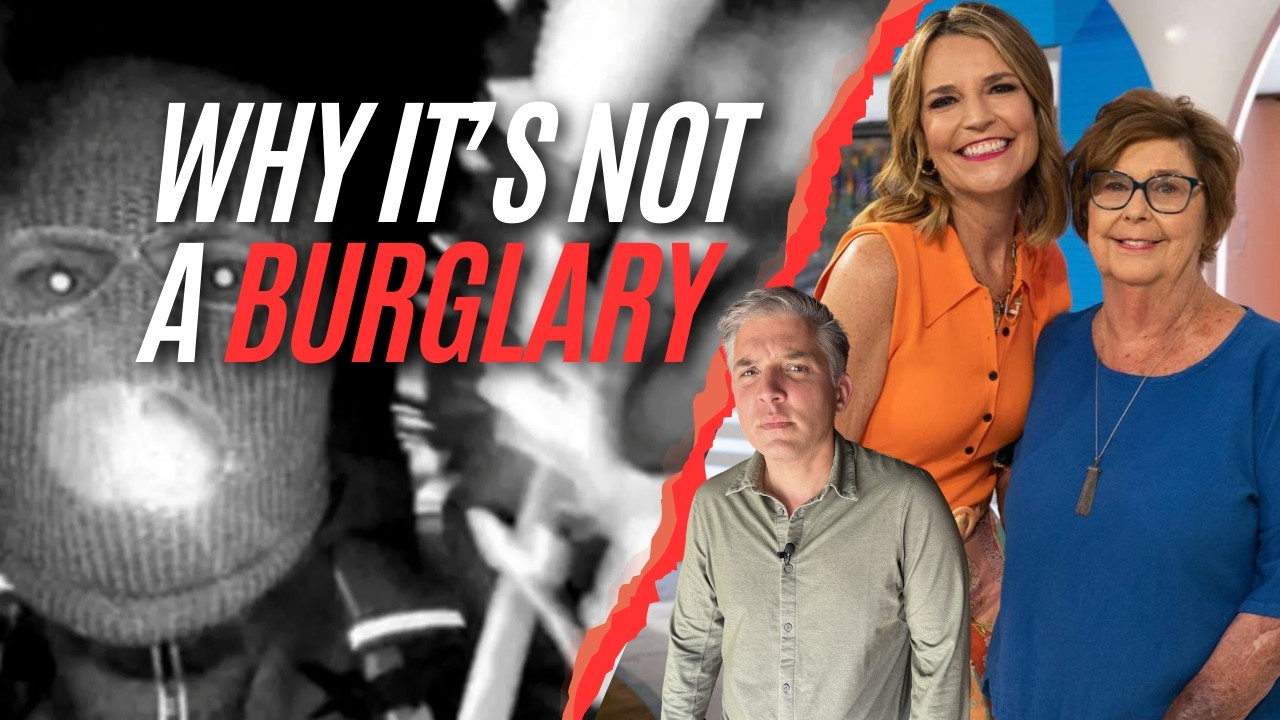
Why the Nancy Guthrie case is not a burglary gone wrong, but a targeted abduction - day 47
"An expert investigator argues the Nancy Guthrie disappearance was a targeted abduction gone wrong, not a botched burglary, based on criminal behavior analysis and a lack of digital evidence."