
LIVE: Trump STORMS OUT OF SCOTUS in DEFEAT as CASES COLLAPSE | Legal AF
YouTube · R3m_UDUV0aY
Quick Read
Summary
Takeaways
- ❖Donald Trump made history as the first sitting president to attend and then storm out of a Supreme Court oral argument after it went poorly for his administration.
- ❖The Supreme Court's conservative justices, including Trump appointees, appeared skeptical of arguments against birthright citizenship based on the 14th Amendment and the 1898 *Wong Kim Ark* case.
- ❖Federal Judge Richard Leon issued a stop-work order on the White House Royal Ballroom Project, ruling that Trump violated the law by proceeding without congressional funding and approval.
- ❖Judge Leon's order on the ballroom project was punctuated with 18 exclamation marks and several 'eye-rolling' remarks, emphasizing the administration's disregard for legal process.
- ❖Trump's executive order to have the Postal Service and Social Security Administration determine mail-in ballot eligibility is being challenged by state attorneys general as unconstitutional federal interference in state elections.
- ❖A civil damages lawsuit against Donald Trump for inciting the January 6th Capitol attack is proceeding to trial, with Judge Ma rejecting Trump's claims of official conduct (Westfall Act) and First Amendment immunity.
- ❖CNN polling indicates two-thirds of Americans, including a significant number of Republicans, view Trump's presidency as a failure, with declining support among key demographics.
- ❖A federal judge, Randy Moss, ruled in favor of NPR and PBS, overturning Donald Trump's funding cuts as violations of the Administrative Procedures Act and an attack on free speech.
Insights
1Supreme Court Rejects Trump's Birthright Citizenship Challenge
During oral arguments on birthright citizenship, Supreme Court justices, including Trump's conservative appointees like Roberts, Gorsuch, and Barrett, expressed strong skepticism towards the administration's arguments. The prevailing legal precedent, the 1898 *Wong Kim Ark* case, which affirms birthright citizenship for children born in the U.S. regardless of parentage, was repeatedly cited. Trump reportedly stormed out after 50 minutes, indicating his argument was not well-received.
Justices' questions to John Sauer, particularly from Kavanaugh, Gorsuch, and Roberts, indicated a lack of support for the administration's position. Kavanaugh's direct question about *Wong Kim Ark* being dispositive and Roberts' 'same old constitution' remark highlighted the weakness of the argument.
2Federal Judge Halts White House Ballroom Project
Federal Judge Richard Leon issued a stop-work order on Donald Trump's 'Royal Ballroom Project' at the White House. The judge ruled that Trump violated the law by undertaking a massive reconstruction project without congressional approval and funding, emphasizing that the White House is federal property, not the president's personal domain. Trump's attempt to reframe the ballroom as a national security bunker was dismissed.
Judge Leon's 35-page memorandum opinion, which included 18 exclamation marks, methodically rejected Trump's arguments, stating 'construction has to stop' unless Congress blesses the project. The judge noted Trump's prior need for congressional approval for a simple fence replacement.
3Trump's Mail-in Ballot Order Faces Immediate Legal Challenges
Donald Trump issued an executive order attempting to federalize mail-in ballot eligibility by tasking the Postal Service and Social Security Administration with determining voter eligibility. This move is seen as an unconstitutional overreach, as the Constitution grants states the authority to run federal elections. State attorneys general are preparing to file lawsuits to block this order, citing previous successful challenges against similar attempts to usurp state control.
Trump's proclamation was met with immediate plans for lawsuits from at least 20 Democratic state attorneys general, who assert that the order is unconstitutional and interferes with states' control over election processes. Attorney General Nick Brown of Washington State issued a statement affirming the unconstitutionality of the order.
4January 6th Civil Damages Lawsuit Against Trump Advances to Trial
Judge Ma allowed a civil damages lawsuit against Donald Trump, filed by Metropolitan and Capitol Police officers and members of Congress, to proceed to trial. The lawsuit alleges Trump incited the January 6th insurrection, causing harm to the plaintiffs. The judge rejected Trump's claims of 'Westfall Act' immunity (official conduct immunity for civil cases) and First Amendment protection for his speech on the Ellipse, certifying the First Amendment issue for appeal.
Judge Ma denied Trump's motion for summary judgment, finding that many of Trump's actions on January 6th were outside the 'outer boundaries of official conduct immunity' and that his speech constituted incitement rather than protected free speech.
Lessons
- Understand the constitutional division of power: Recognize that the Supreme Court and federal judges actively check presidential authority, as demonstrated by rulings on birthright citizenship, White House construction, and election policies.
- Monitor state-level legal challenges: Pay attention to lawsuits filed by state attorneys general against federal executive orders, particularly those impacting voting rights, as these cases are critical for upholding state sovereignty in elections.
- Recognize the implications of presidential immunity rulings: Follow the ongoing legal debates on civil and criminal immunity for presidents, as these decisions shape the accountability of high-ranking officials and the scope of executive power.
Notable Moments
Donald Trump's dramatic exit from the Supreme Court after oral arguments on birthright citizenship, signaling his perceived defeat.
This moment visually underscored the judicial branch's independence and its willingness to challenge executive policy, even from a president who appointed several of its members.
Judge Leon's use of 18 exclamation marks and 'eye-rolling' remarks in his opinion halting the White House ballroom project.
This highlights the judge's strong disapproval of the administration's actions and its disregard for legal and congressional oversight, making the ruling particularly memorable.
Justice Ketanji Brown Jackson's pointed question about taking depositions of pregnant women to determine citizenship intent.
This exposed the impractical and potentially invasive nature of the administration's proposed changes to birthright citizenship, emphasizing the human impact of such policies.
Quotes
"You can't outrun logic and gaps in your reasoning that were pointed out by the rightest of rightwing on this on the Supreme Court."
"So we bringing pregnant women in for depositions? What what are we doing to figure this out?"
"Unless and until Congress blesses this project, construction has to stop. Exclamation mark."
"The current occupant of the White House is just the temporary occupant who who a guardian for the property for the people and for future generations. That the real landlord of all federal property that holds the keys is the Congress."
"It's no surprise that the same man that claims he won the 2020 election and advances nonsense conspiracy theories now wants total control over elections. But he has no authority here."
Q&A
Recent Questions
Related Episodes

PBS News Hour full episode, March 23, 2026
"President Trump's surprise diplomatic signals on the Iran war, a fatal plane collision at LaGuardia amidst a federal shutdown, and a Supreme Court case on mail-in ballots dominate a day of complex national and international developments."
Major SCOTUS "Birthright Citizenship" Case, and Charlie Kirk Murder Trial Bullet Questions
"Megyn Kelly and legal experts dissect the Supreme Court's oral arguments on birthright citizenship and break down new, potentially exculpatory evidence in the Charlie Kirk murder trial, including an 'inconclusive' bullet match and complex DNA findings."
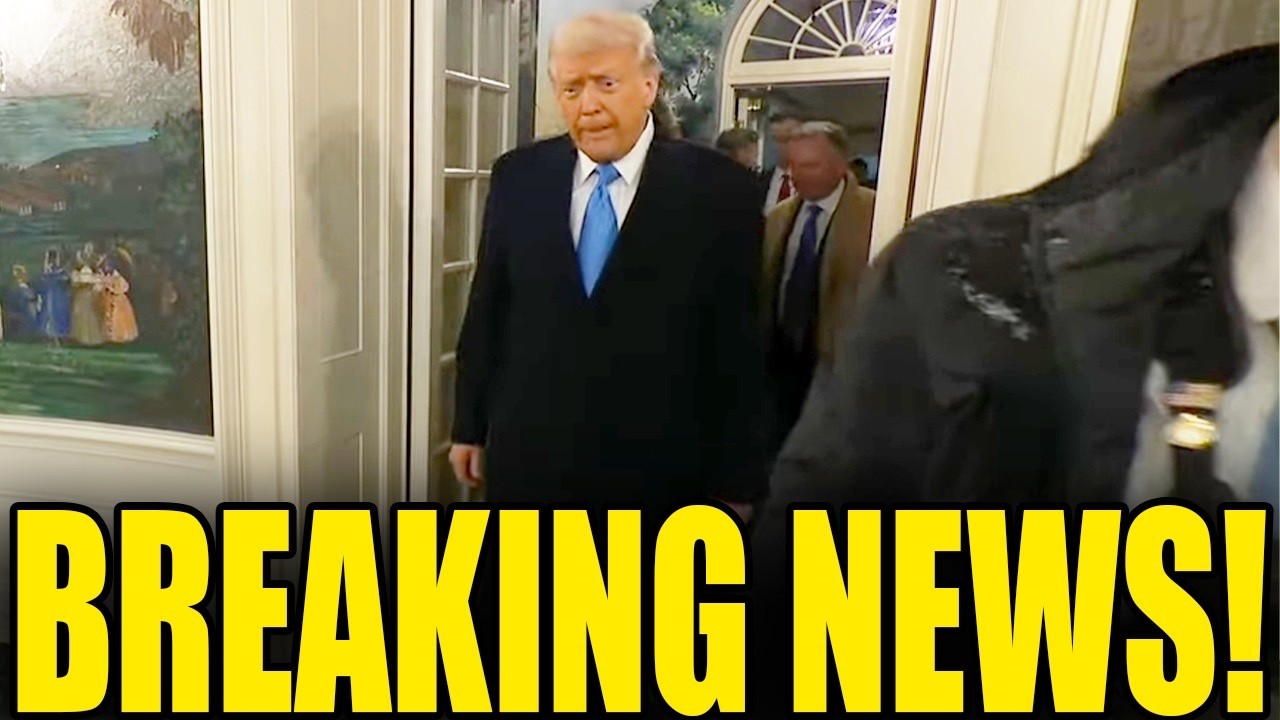
SHOCK BREAKING: SHOCKED TRUMP STORMS OUT OF SUPREME COURT IN RAGE!
"This episode dissects Donald Trump's contentious Supreme Court appearance regarding birthright citizenship, the growing disillusionment of right-wing figures like Alex Jones with Trump, and the political fallout from Kristi Noem's husband's alleged cross-dressing scandal."

Trump Impact On Black America. SCOTUS Birthright Citizenship Case. Alabama College DEI probe
"This episode dissects the multifaceted impacts of Trump-era policies on Black America, from economic destabilization and civil rights rollbacks to an inspiring narrative of an entrepreneur rebuilding her life and community."