
PBS News Hour full episode, Dec. 31, 2025
YouTube · RT7E-WX02pk
Quick Read
Summary
Takeaways
- ❖The CIA concluded Ukraine did not target Putin's residence, leading President Trump to reverse his stance and acknowledge Russia as the obstacle to peace.
- ❖The US-backed 'Trump Route for International Peace and Prosperity' (TRIPP) aims to establish new trade corridors in the South Caucasus, significantly reducing Russian regional influence.
- ❖A scientific expedition is underway to the Thwaites 'Doomsday Glacier' in Antarctica to gather critical data on its accelerating melt rate and potential 10-foot sea level rise.
- ❖PolitiFact designated 2025 as 'the year of the lies' due to the overwhelming volume and severity of false claims, particularly from political leaders on topics like Tylenol safety, immigration, and international conflicts.
- ❖Photojournalists documented a 'war of the drones' in Ukraine, hyperaggressive US immigration enforcement, and the human toll of natural disasters and global events.
- ❖The US is restraining certain weapons supplies to Ukraine, which reduces Ukraine's leverage on the front lines and at the negotiating table.
- ❖A chronic shortage of foster families in rural Oklahoma forces child welfare workers to drive long distances, highlighting the trauma children face when removed from their homes.
- ❖Pianist Chloe Flower created the 'popsical' genre to blend classical and contemporary music, actively promoting female composers whose works are largely underrepresented.
Insights
1US Diplomacy Challenges Russian Narratives in Ukraine Conflict
The CIA assessed that Ukraine did not target Vladimir Putin's residence in a recent drone attack, directly contradicting Putin's claim to President Trump. This assessment led Trump to reverse his initial acceptance of Putin's story, publicly stating that 'Russia is the one standing in the way of peace.' European leaders concurred, calling Putin's claim a 'false flag' and a 'deliberate distraction' to derail peace efforts. The former national intelligence officer for Russia, Angela Stent, explained that the CIA's conclusion was likely based on drone flight paths targeting defense industries near Putin's residence, not the residence itself. This shift in Trump's public stance is significant, given his past skepticism of the intelligence community.
A U.S. official confirmed the CIA assessment to 'PBS News Hour.' President Trump's social media post reversed his earlier position. European leaders, including top E.U. diplomat Kaja Kallas and French officials, dismissed Putin's claim. Angela Stent provided expert analysis on the CIA's likely methodology.
2US-Backed 'TRIPP' Project Reshapes South Caucasus Geopolitics
The 'Trump Route for International Peace and Prosperity' (TRIPP) is a US-backed road and rail project in Armenia and Azerbaijan designed to create a transit corridor linking Azerbaijan to its Nakhchivan enclave along the Iranian border. This initiative is framed as a solution to regional conflicts and a means to unlock trade with Central Asia, offering a 'Middle Passage' that bypasses Russia, China, and Iran. The project includes commercial opportunities like a US-Armenian joint venture to operate the route, an AI data center powered by Nvidia and Dell, and ExxonMobil gas exploration in Azerbaijan. This development significantly marginalizes Russian influence in the South Caucasus, as Russian peacekeepers were previously ineffective, and public sentiment in Armenia against Moscow is plummeting. The US has pledged $145 million in financial support for TRIPP and Armenia's border capacities.
Special correspondent Simon Ostrovsky reported from the Armenian border with Iran, detailing the TRIPP proposal. Hikmet Hajiyev, Assistant to the President of Azerbaijan, and Vahan Kostanyan, Armenian Deputy Foreign Minister, discussed the commercial potential and US financial support. Ostrovsky noted the encounter with Russian FSB Border Patrol and the diminishing Russian role.
3Thwaites 'Doomsday Glacier' Expedition to Quantify Global Sea Level Threat
A team of nearly 40 researchers embarked on a two-month expedition to the Thwaites Glacier in Antarctica, dubbed the 'Doomsday Glacier,' which is roughly the size of Florida. This glacier is melting rapidly due to warm ocean currents eating it away from beneath, and its collapse could raise global sea levels by approximately 10 feet. The mission is critical because no data has ever been collected from this specific part of the world. Scientists aim to drill a hot water hole at the glacier's grounding line (where it meets land and sea) to deploy instruments and leave behind a mooring for continuous temperature data, which will provide crucial insights into the melt's acceleration and its potential global impact.
Science correspondent Miles O'Brien reported live from the icebreaker in the Southern Ocean, detailing the expedition's purpose, the glacier's characteristics, and the scientific objectives.
4PolitiFact Declares 2025 'The Year of the Lies' Amidst Information Erosion
PolitiFact's editors declared 2025 'the year of the lies' instead of naming a single 'lie of the year,' citing the overwhelming volume and severity of inaccurate claims. Editor-in-chief Katie Sanders highlighted several examples: President Trump and HHS Secretary Robert F. Kennedy Jr.'s unproven claim linking Tylenol to autism, the Trump administration's misrepresentation of immigration deportations (73% of detainees had no criminal convictions), and Israeli PM Benjamin Netanyahu's 'Pants on Fire' rated claim of 'no starvation in Gaza.' Sanders noted a 'serious volume difference' in misinformation originating from the White House and warned of high stakes for information integrity, including the abundance of AI slop and public numbness to misleading narratives.
Lisa Desjardins interviewed PolitiFact editor-in-chief Katie Sanders, who explained the decision and provided specific examples of misinformation and their ratings.
Bottom Line
The US is actively leveraging diplomatic agreements and infrastructure projects (like TRIPP) to strategically diminish Russian influence in historically Russian-dominated regions like the South Caucasus, creating new trade routes that bypass traditional adversaries.
This represents a significant geopolitical pivot, potentially redrawing economic and political maps in Central Asia and the South Caucasus, shifting power dynamics away from Moscow and towards Western-aligned interests.
Businesses and investors can explore opportunities in new trade corridors and infrastructure development in Armenia and Azerbaijan, particularly in logistics, AI data centers, and energy, as the region opens up to Western engagement.
The overwhelming volume and severity of political misinformation, including 'AI slop' and out-of-context narratives, has led to public numbness, posing a critical threat to information integrity and informed decision-making.
This erosion of trust in facts makes it increasingly difficult for citizens to discern truth, impacting public health, political processes, and societal cohesion. It also creates a fertile ground for further manipulation.
There's a growing need for advanced media literacy tools, fact-checking technologies, and educational initiatives to combat misinformation effectively. Businesses focused on AI-powered truth verification or critical thinking education could see increased demand.
Opportunities
US-Armenian Joint Venture for TRIPP Infrastructure
Establish a joint company to develop and operate the road and rail infrastructure for the 'Trump Route for International Peace and Prosperity' (TRIPP) in Armenia, leveraging the $145 million in US financial support and the potential for regional and global logistic changes.
AI Data Center in Armenia
Develop and operate an AI data center in Armenia, powered by Nvidia chips and Dell servers, as part of the commercial opportunities envisioned by the TRIPP project, catering to the growing demand for AI infrastructure in the region.
Gas Exploration in Azerbaijan
ExxonMobil plans to explore for gas in Azerbaijan, indicating opportunities for energy companies to invest in resource extraction in the region, particularly as new trade routes open up.
Lessons
- Actively verify information from political figures, especially regarding public health and international events, given the pervasive nature of misinformation in 2025.
- Monitor geopolitical developments in the South Caucasus, as US-backed initiatives like TRIPP are reshaping trade routes and challenging established regional powers.
- Support or advocate for foster care systems, particularly in rural areas, to address the chronic shortage of families and provide stability for children experiencing trauma.
Notable Moments
President Trump reversed his stance on Putin's drone attack claims after a CIA briefing, publicly acknowledging Russia as the obstacle to peace.
This marks a significant shift in US foreign policy rhetoric regarding the Ukraine conflict and demonstrates Trump's acceptance of intelligence community findings despite past skepticism.
PolitiFact declared 2025 'the year of the lies' due to the unprecedented volume and severity of misinformation, rather than singling out one 'lie of the year.'
This highlights a critical erosion of information integrity and the pervasive challenge of discerning truth in public discourse, impacting various societal domains.
The discovery of Florence Price's extensive musical work in an attic during a house renovation in 2009, decades after her success, was highlighted.
This illustrates the historical underrepresentation and oversight of female composers, underscoring the importance of initiatives like Chloe Flower's to revive and promote their contributions.
Quotes
"The decision to bring charges against President Trump was mine. But the basis for those charges rests entirely with President Trump and his actions, as alleged in the indictments returned by grand juries in two different districts."
"It's a delicate period of time. This is not the right time. It's one thing to be offensive, because they were offensive. It's another thing to attack his house. It's not the right time to do any of that, and can't do it."
"The president of the Russian Federation ordered to continue expanding the line of defense next year."
"The Thwaites Glacier... has a tremendous capacity to potentially raise sea levels all over the globe by about 10 feet if it melts and collapses and the ice behind it flows into the sea."
"There are still a lot of hurdles to get over before the White House's vision of peace becomes a reality on the ground here in Armenia on the border with Iran."
"The volume and severity of the inaccurate claims was just overwhelming. And we felt that it was insufficient to name just one our lie the year. So we wanted to catch people's attention and take stock of the times we're in."
"The stakes are high for facts and the erosion of information integrity... we're contending with a really fraught online information environment, where A.I. slop is abundant, misleading, out-of-context narratives abound, and you just can't believe what you see."
"As photojournalists, our role is to act as the eyes of the public. I think of my job as to be there on the ground documenting what I find, what I see, but not just the flames, not just the destruction. I believe it's our duty to try to capture the human toll, the human element."
"Foster parents are one of the most important roles of child welfare. If we don't have placement for these kids, they are in the office, they go to shelters, they go into group homes."
"I do hip-hop, but I'm not a hip-hop pianist. I do house, but I'm not a house pianist. So, for me, explaining to labels and to people what my sound is, I just thought it was easier to say popular music and classical music mixed together, popsical."
Q&A
Recent Questions
Related Episodes

🚨 LEFTISTS ARE F*CKING SEETHING 😂😂😂
"The host aggressively celebrates perceived 'wins' for the right-wing, from global conflicts and domestic politics to cultural shifts, framing them as a 'humiliation' for the 'leftist world order' and a testament to Donald Trump's influence."
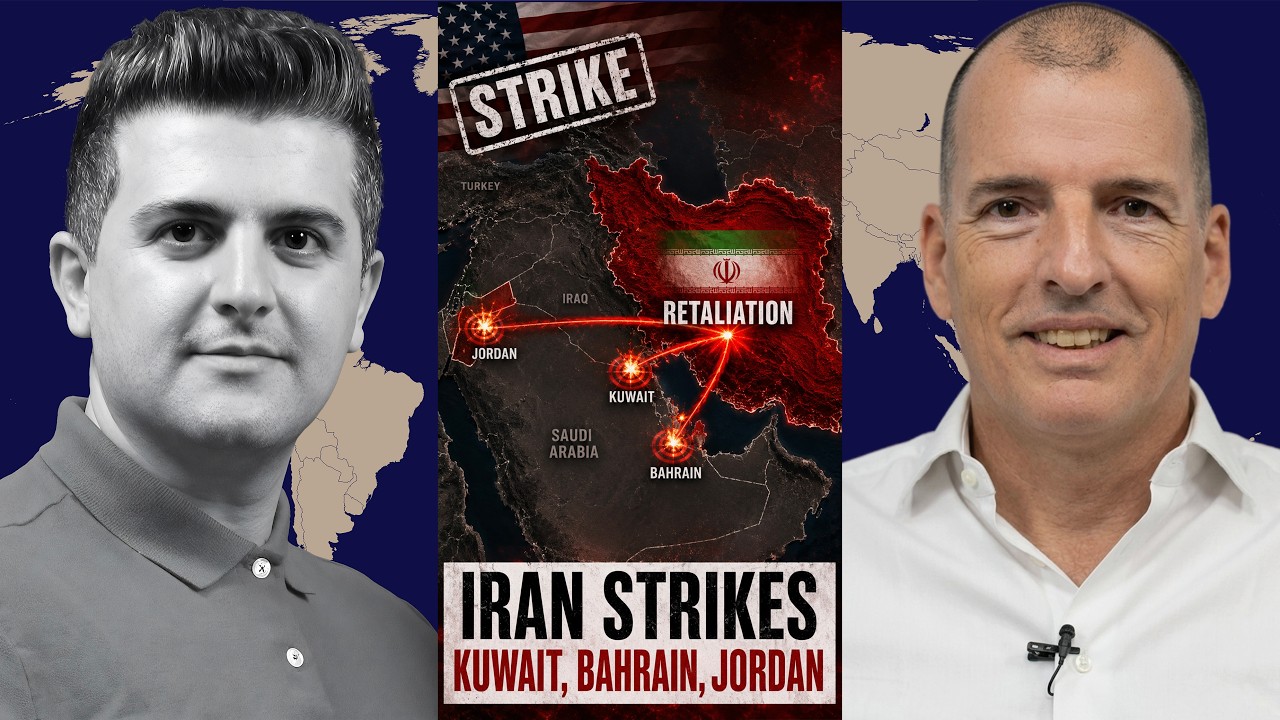
Alex Krainer: US STRIKES Iran – Iran RETALIATES Against Kuwait, Bahrain & Jordan!
"Amidst escalating US-Iran conflict and Iranian retaliation against regional US allies, this episode argues that US foreign policy is deeply controlled by an 'Anglo-Zionist conspiracy' led by the Rothschild banking dynasty, prioritizing Israeli interests over American ones."

Iran Update: Israel’s Newest Bombing Campaign, the Oncoming War With China and How to Avoid It
"Colonel Wilerson reveals how the US and Israel are actively bombing China's strategic infrastructure in Iran, escalating a covert economic war that Beijing intends to win without direct military conflict by dismantling the dollar's global dominance."

Patrick Henningsen: Hezbollah JUST Fired Back at Israel - Iran Vows to “Crush” All Attacks
"Patrick Henningsen argues that the US and Israel initiated an illegal war against Iran, driven by Trump's incompetence and Israeli influence, leading to an inevitable escalation with severe global economic repercussions."