Supreme Court STUNS Trump as They’re SET to REBUKE HIM?!?! | Unprecedented
YouTube · RVgY63Zer0I
Quick Read
Summary
Takeaways
- ❖The Supreme Court's delay in the Louisiana Voting Rights Act case effectively prevents new, fairer maps from being used in the 2026 primaries, largely due to prior 'shadow docket' rulings favoring existing maps in other states like Texas.
- ❖The upcoming oral argument on the President's power to remove a Federal Reserve Board governor (Lisa Cook) threatens the Federal Reserve's independence and could give the executive branch direct control over interest rates and monetary policy.
- ❖The anticipated tariff decision, expected to rule against Trump's broad use of tariff power, may be a strategic move by the pro-business Roberts Court to appear independent while still having facilitated other Trump-friendly outcomes.
- ❖The hosts express concern that the Court's actions are systematically eroding democratic accountability and institutional checks and balances, often in ways that benefit Donald Trump's political agenda.
Insights
1Voting Rights Act Challenges and Strategic Delays
The Supreme Court has delayed a ruling on the Louisiana redistricting case (Cala), which involves the state legislature redrawing maps to include a second Black-majority congressional district to comply with the Voting Rights Act. Despite the urgency for upcoming primaries, the Court has not issued a decision. This delay, combined with a prior 'shadow docket' ruling in a Texas case that overturned a lower court's finding of racial gerrymandering, effectively allows existing, potentially discriminatory maps to remain in place for the 2026 midterm elections. The hosts interpret this as a deliberate strategy by the Roberts Court to undermine Section Two of the Voting Rights Act and dilute minority votes.
The Louisiana legislature redrew maps to add a second Black-majority district (out of six) after a federal court ruled initial maps violated the VRA. White citizens challenged these new maps. The Supreme Court did not rule last year and scheduled arguments again, delaying a decision past Louisiana's primary ballot deadlines. Separately, the Roberts Court overturned a lower court order against Texas's redrawn maps via the 'shadow docket' before the holidays, which the hosts describe as a 'bat signal' to other Southern legislatures.
2Threat to Federal Reserve Independence
The Supreme Court is set to hear arguments on the President's power to remove a member of the Federal Reserve Board of Governors, specifically Lisa Cook, based on unsubstantiated claims of mortgage fraud. The hosts emphasize that if the President gains this power, it would destroy the Federal Reserve's historical independence, allowing the executive to control interest rates and monetary policy by replacing board members and, subsequently, the presidents of regional Federal Reserve banks who comprise the Federal Open Markets Committee. This would have enormous, potentially destabilizing, consequences for the U.S. economy.
Donald Trump's attempts to remove Lisa Cook from the Federal Reserve Board of Governors based on social media claims. The Supreme Court previously carved out the Federal Reserve as distinct in the Gwen Wilcox case regarding executive agency heads. The Federal Reserve Board of Governors' power to replace regional Federal Reserve bank presidents, who then form the Federal Open Markets Committee.
3Tariff Decision and Pro-Business Court Dynamics
The Supreme Court is expected to rule against Donald Trump regarding his broad use of tariff power, which imposed tariffs on numerous countries for indeterminate durations. While this might appear as a ruling against Trump, the hosts suggest it could be a strategic move by the pro-business Roberts Court. The Constitution explicitly grants tariff power to Congress, and the business community generally opposes arbitrary trade policies. A ruling against Trump on tariffs could allow the Court to project an image of independence while having previously enabled other Trump-friendly outcomes, such as broad immunity claims.
Amy Coney Barrett's strong comments during oral arguments questioning the source of the President's power to impose such extensive tariffs. The Customs and Border Patrol (CBP) has begun setting up mechanisms for electronic refunds of tariffs, suggesting an expectation of a ruling against the tariffs. The Court's historical tendency to side with business interests.
Bottom Line
The Supreme Court's delayed ruling on the Louisiana redistricting case, combined with its 'shadow docket' ruling in the Texas case, effectively allows racially gerrymandered maps to stand for the 2026 elections, thereby impacting the composition of Congress without a full merits decision.
This judicial strategy undermines the Voting Rights Act and democratic representation, potentially giving a partisan advantage in upcoming elections by diluting minority votes through procedural means rather than direct legal challenge.
Advocacy groups and legal organizations must focus on public awareness and legislative action to counter the effects of these judicial delays and 'shadow docket' maneuvers, highlighting how procedural tactics are being used to shape electoral outcomes.
The Court might rule against Trump on the tariff issue, not necessarily due to constitutional fidelity alone, but also to appease pro-business interests and maintain a facade of independence, despite having facilitated other Trump-favorable outcomes.
This suggests a calculated judicial strategy where the Court selectively rules against Trump on issues that align with its broader pro-business ideology or public perception, while still enabling his executive overreach in other critical areas like immunity.
Analysts should scrutinize Supreme Court rulings not just on their individual merits, but also for their collective strategic impact on political power dynamics and public perception, identifying patterns of selective intervention.
Key Concepts
Unitary Executive Theory
This extremist legal theory, asserted by John Roberts, suggests that the President has near-absolute power to control the executive branch and fire any appointee at any time for any reason, undermining the independence of federal agencies. The hosts argue this theory has been used to chip away at the independence of agencies like the CFPB and now threatens the Federal Reserve.
Shadow Docket
The Supreme Court's 'shadow docket' refers to rulings issued without full oral arguments or detailed explanations, often on emergency applications. The hosts highlight its use in the Texas redistricting case, where a lower court's order against racially gerrymandered maps was overturned, effectively sending a 'bat signal' to other states to proceed with similar maps, thus influencing elections without a full merits decision.
Lessons
- Educate your community about the impact of political decisions on critical health research, such as the reported halt in cancer vaccine trials due to anti-vaccine sentiment and funding freezes.
- Support organizations like Court Accountability Action and the ACLU, which are actively working to monitor and challenge judicial actions that impact democratic processes and institutional independence.
- Stay informed about Supreme Court cases related to voting rights, executive power, and economic policy, as these decisions have direct and lasting effects on the stability of the country and individual liberties.
Notable Moments
Dena Dah shares a personal anecdote about a cancer vaccine clinical trial at MD Anderson being halted due to an administration's refusal to fund anything with the word 'vaccine,' leading to a drying up of both government and private funding.
This highlights a direct, tangible, and deeply concerning impact of political ideology on public health and scientific research, affecting real lives and potentially delaying life-saving medical advancements.
Quotes
"She literally told us that they were all ready to start a clinical trial on the on a cancer vaccine MD Anderson that got stopped because this administration or regime will not fund anything related to vaccines."
"Everyone has been anticipating that this Roberts court is going to strike down one of the last protections for the Voting Rights Act, section two of the Voting Rights Act, and related case law that has protected against the dilution of black votes."
"The Roberts court overturned those that lower court order that barred those five redrawn uh districts in Texas and basically sent a bat signal to the other legisl other legislatures in the south that are governed by the Voting Rights Act section two that they could basically proceed along the same lines as Texas."
"The core issue, as you point out, Michael, is whether the Federal Reserve will continue to have the independence it has had throughout its tenure or whether this court is going to help Donald Trump wreck another institution."
"The idea of putting our economy the the interest rate decisions that have actually helped America have one of the best economies in the world coming out of the pandemic due to the Biden policies along with the way the Federal Reserve was managing inflation... The Federal Reserve has been has played an important role and what Donald Trump wants as you point out is his hand on the wheel, his foot on the gas to try to protect himself from the consequences of his disastrous policies..."
"I think the I think the Roberts court because it really is in some ways not just a right-wing you know operation. It also is a very pro business court."
Q&A
Recent Questions
Related Episodes

HOT TOPICS | WARNING: Donald Trump's Iran War Chaos Has Hit the Point of No Return!
"Don Lemon delivers a scathing critique of Donald Trump's recent actions, framing them as desperate, unconstitutional attempts to consolidate power, undermine democracy, and distract from economic and foreign policy failures, all while questioning his mental stability."

Markets PANIC As Trump Threatens Fed Chair w Prosecution
"Donald Trump's alleged threat to criminally prosecute Fed Chair Jerome Powell over a building renovation project has sent shockwaves through financial markets and ignited a political firestorm over the independence of the Federal Reserve and the Department of Justice."
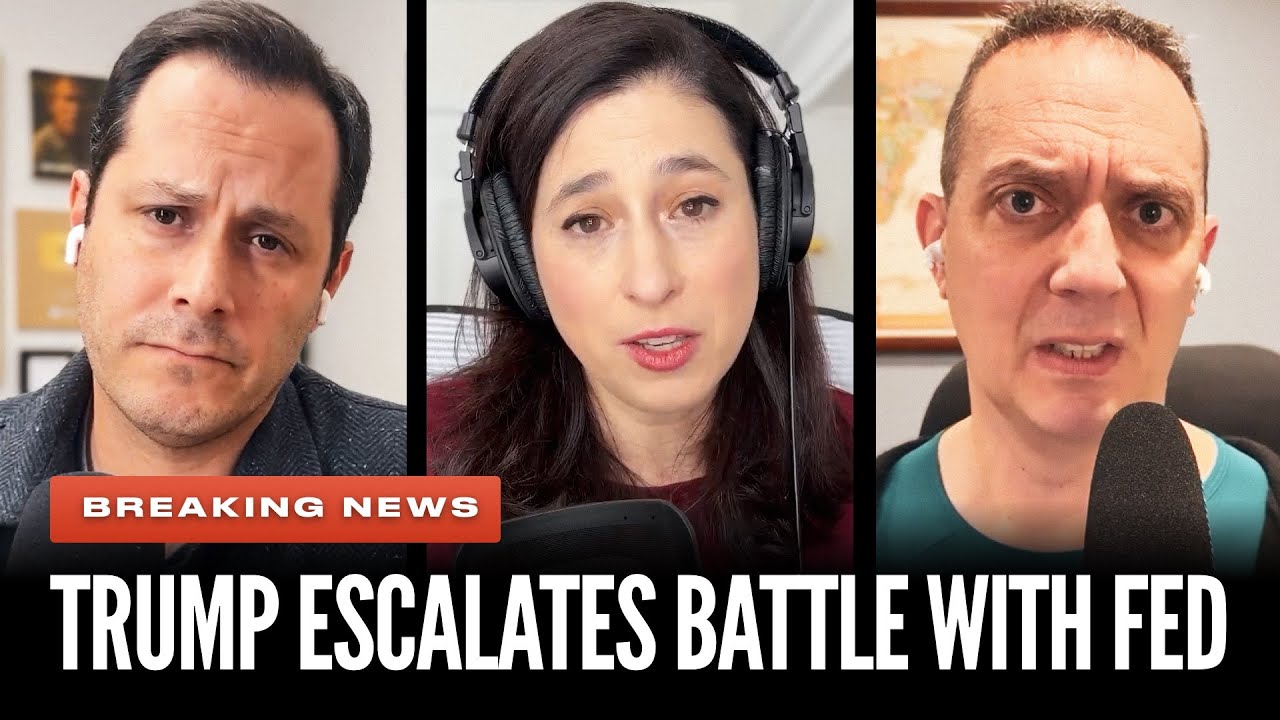
BREAKING: DOJ Threatens Fed Chair With Criminal Charges
"The Department of Justice's criminal investigation into Fed Chair Jay Powell for alleged false testimony is framed by hosts as a politically motivated attack by Donald Trump, aiming to undermine the Federal Reserve's independence and control interest rate policy."
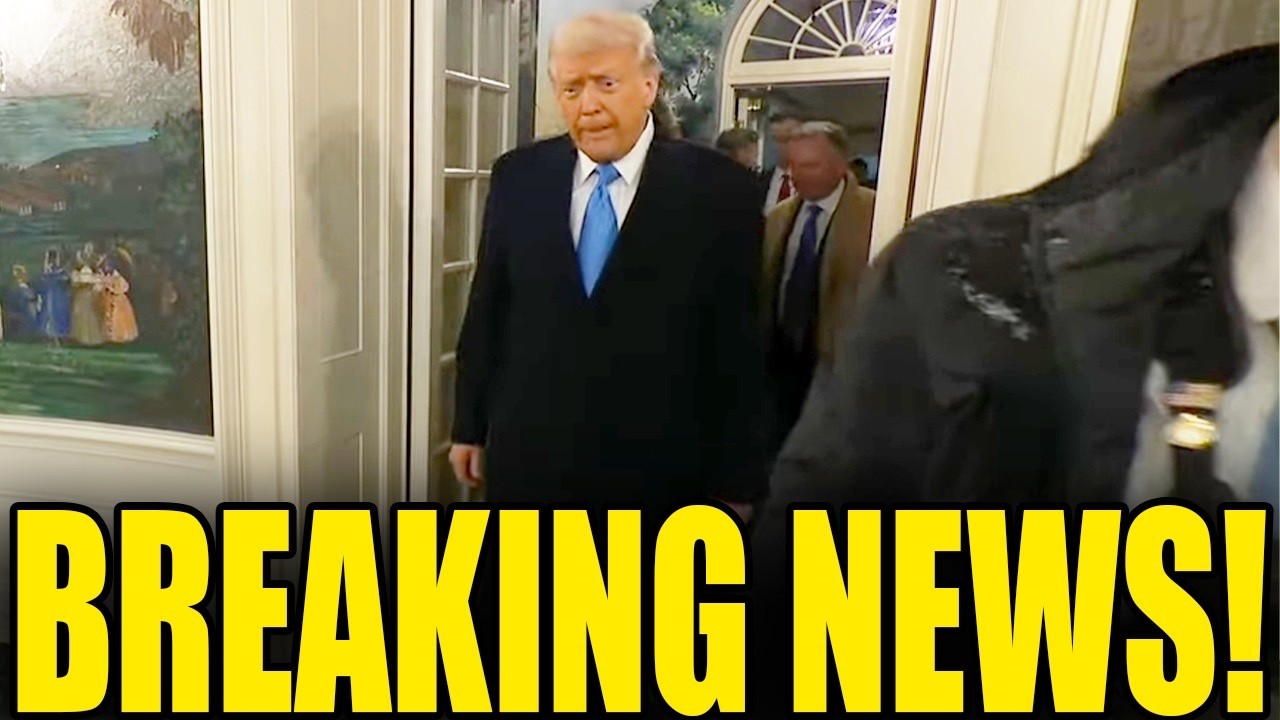
SHOCK BREAKING: SHOCKED TRUMP STORMS OUT OF SUPREME COURT IN RAGE!
"This episode dissects Donald Trump's contentious Supreme Court appearance regarding birthright citizenship, the growing disillusionment of right-wing figures like Alex Jones with Trump, and the political fallout from Kristi Noem's husband's alleged cross-dressing scandal."