Trump Admin TORPEDO Their Own CASES in COURT | It's Complicated
YouTube · RlWzKZeX3p8
Quick Read
Summary
Takeaways
- ❖A judge blocked the termination of TPS for Haitian immigrants, citing the administration's failure to follow statutory procedures and evidence of racial animus.
- ❖The Supreme Court is likely to focus on the procedural failings (Administrative Procedures Act) rather than racial animus in the TPS case.
- ❖The search warrant execution in Fulton County, Georgia, was marked by irregularities, including the DNI's unusual presence and initial warrant errors.
- ❖The indictment of journalist Don Lemon under the KKK Act and FACE Act for protesting in a church is viewed as an egregious example of weaponizing the law for spectacle.
- ❖The administration's approach is characterized by a 'clictatorship' that prioritizes content creation and spectacle over meticulous legal process, often leading to incompetence.
Insights
1Judicial Intervention Halts Haitian TPS Termination Due to Procedural Flaws
A judge issued a stay preventing the Department of Homeland Security (DHS) from terminating Temporary Protected Status (TPS) for Haitian immigrants. The ruling highlighted DHS Secretary Christy Gnome's failure to consult with the Secretary of State as required by statute and her disregard for record evidence of violence in Haiti. While the judge strongly noted racial animus, the hosts predict the Supreme Court will likely focus on these administrative procedural failings rather than the explicit racism.
The judge's opinion quotes George Washington on welcoming immigrants versus Secretary Gnome's tweet stating, 'we don't want them not one.' The opinion also cites the administration's failure to consult with the Secretary of State () and ignoring record evidence of violence ().
2Fulton County Search Warrant Marked by Irregularities and DNI's Unusual Presence
The execution of a search warrant in Fulton County, Georgia, seizing hundreds of boxes of materials, was fraught with procedural irregularities. These included the removal of the Atlanta FBI field office's special agent in charge just days prior, the involvement of a US attorney from Missouri with special powers, initial errors in the warrant itself, and the highly unusual presence of the Director of National Intelligence (DNI), Tulsi Gabbard, at the scene.
The Atlanta FBI field office's special agent in charge was removed six days prior (). A US attorney from Missouri, granted special powers by Pam Bondi, oversaw the warrant (). The warrant was initially incorrect and had to be re-obtained (). Tulsi Gabbard, the DNI, was present at the scene, which is highly unusual for an intelligence official in a domestic criminal investigation ().
3Indictment of Don Lemon Under KKK Act and FACE Act Raises Alarm Over Weaponized Justice
Journalist Don Lemon was indicted and arrested late at night, despite having legal representation, for his involvement in a protest at a Minneapolis church. The charges include violations of the KKK Act and the FACE Act (Free Access to Clinic Entrances Act), which was originally designed to protect access to reproductive health services and religious freedom. The hosts view this as an egregious example of using serious statutes for political spectacle and harassing journalists, especially given previous judicial dismissals of similar charges against journalists.
Don Lemon was arrested late at night and held overnight despite having an attorney (). The charges include the KKK Act () and the FACE Act (). Two different judges had previously dismissed similar charges against journalists ().
Bottom Line
The administration's 'clictatorship' approach prioritizes creating viral content and spectacle over adhering to legal procedures, often leading to self-sabotage and legal setbacks.
This focus on political theater and 'content creation' explains why the administration frequently makes procedural errors, as the goal isn't sound governance but rather public perception and loyalty to 'dear leader.'
Understanding this dynamic can help anticipate where the administration might cut corners legally and where its policies are most vulnerable to challenge based on procedural grounds, offering avenues for legal and political opposition.
The administration's repeated legal failures are often rooted in incompetence and a lack of experienced personnel rather than solely malicious intent.
Despite having four years to plan, the administration struggles to execute complex policies effectively because it lacks the necessary expertise and often creates more work for itself by ignoring established processes.
This suggests that even well-intentioned or ideologically aligned policies can be thwarted by poor execution, providing a potential 'silver lining' for those opposing the administration's agenda, as its own operational deficiencies can limit its impact.
Key Concepts
Shadow Docket
The Supreme Court's practice of issuing significant rulings, often on emergency requests for stays or injunctions, without full oral arguments, extensive briefing, or detailed public reasoning, which can have immediate and far-reaching impacts on policy and individual lives.
Administrative Procedures Act (APA)
A federal statute that governs the way administrative agencies of the U.S. federal government may propose and establish regulations, ensuring due process, public notice, and reasoned decision-making, which can be a critical legal hook for challenging arbitrary executive actions.
Lessons
- Advocate for adherence to administrative procedures and due process, as these legal safeguards can effectively challenge executive overreach, even when direct challenges to discriminatory intent are difficult.
- Support organizations that monitor and litigate against the weaponization of legal statutes, particularly when they are applied in ways that contradict their original intent or target journalists and activists.
- Stay informed about the 'shadow docket' and Supreme Court's administrative stays, as these unreasoned rulings can have immediate and significant impacts on civil liberties and policy implementation.
Notable Moments
The judge's opinion begins by contrasting George Washington's welcoming stance on immigration with DHS Secretary Christy Gnome's 'we don't want them not one' tweet.
This stark juxtaposition immediately sets the tone, highlighting the perceived animus driving the policy and framing the legal battle as a conflict between foundational American ideals and current executive actions.
The discussion of the KKK Act's original purpose (addressing racially motivated violence against Black people) versus its current application against a Black journalist (Don Lemon).
This illustrates a deeply concerning and ironic weaponization of a civil rights statute, suggesting a deliberate distortion of legal intent for political purposes and raising serious questions about prosecutorial ethics and civil liberties.
Quotes
"America is open to receive not only the opulent and respected stranger but the oppressed and persecuted of all nations and religions."
"What should happen to the 300,000 human beings while our colleagues on the Ninth Circuit and then perhaps we do the job of judging? Should they get to remain in the United States working legally as the government promised them or should they be left vulnerable to job loss, family separation and deportation to a country that's very dangerous?"
Q&A
Recent Questions
Related Episodes

SHOCK Ruling on Trump Deportation PLOT + DEBUNKED Election WARRANT?!? | It's Complicated
"The Fifth Circuit Court's controversial ruling redefines 'seeking admission' for non-citizens, potentially allowing indefinite detention for millions, while a federal search warrant for 2020 election ballots is criticized as a 'test run' for future election interference."

LIVE: Trump $1.8B Scheme Faces IMMINENT COLLAPSE!!
"Donald Trump's $1.8 billion 'slush fund' faces imminent collapse due to a barrage of lawsuits, bipartisan Republican opposition, and judicial scrutiny over alleged fraud and procedural defects."
NC Mom Sues Hospital For Negligence. Black NFL Coaches Win Major Ruling. Drug Test Scandal Exposed
"This episode exposes systemic failures and racial disparities across healthcare, professional sports, and politics, featuring a mother's harrowing hospital negligence lawsuit, a landmark NFL discrimination ruling, and alarming findings on flawed drug tests criminalizing new mothers."
rump’s DOJ arrests journalists Don Lemon, Georgia Fort
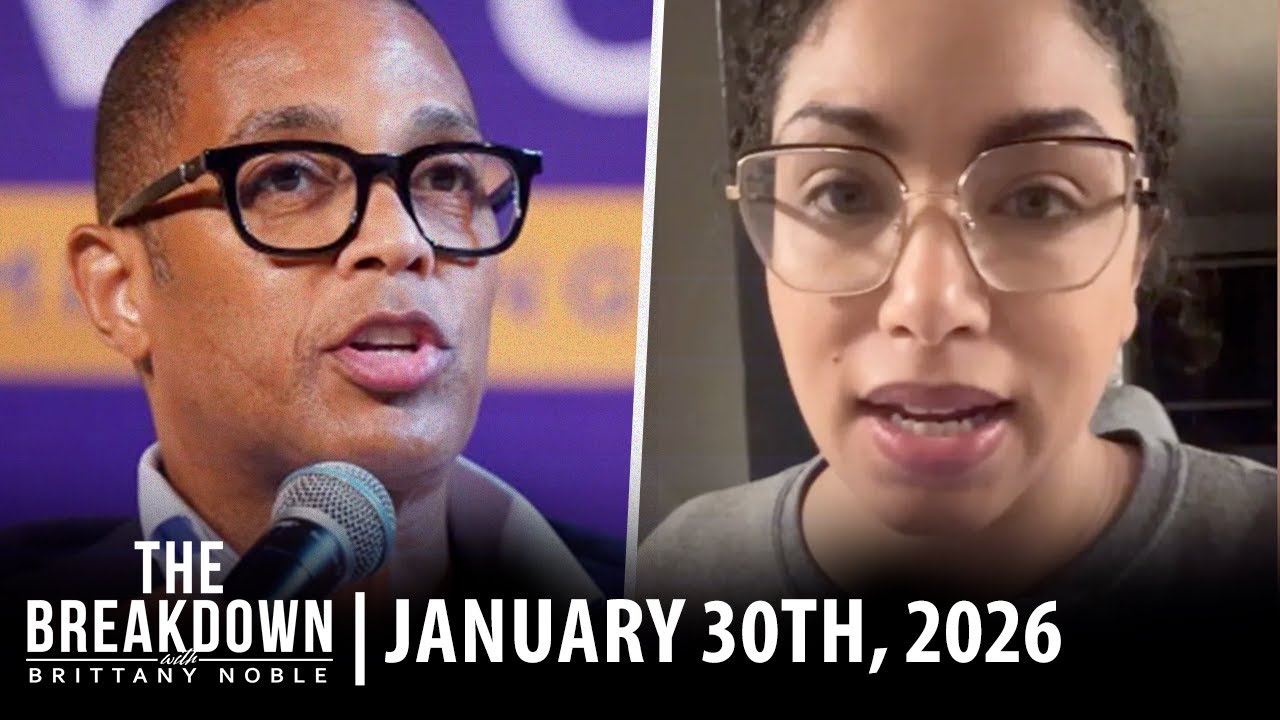
"Federal agents arrested prominent journalists Don Lemon and Georgia Fort for covering a church protest, sparking widespread condemnation and raising critical questions about First Amendment rights and the weaponization of the Justice Department."