BREAKING: Trump Tariffs BLOCKED In SCOTUS Rebuke
YouTube · SGyUZJB_Ma4
Quick Read
Summary
Takeaways
- ❖The Supreme Court, in a 6-3 vote, struck down former President Trump's authority to impose sweeping tariffs using national emergency claims.
- ❖The ruling invalidates the legal basis for many of Trump's previous tariffs, which were often tied to non-economic foreign policy disputes.
- ❖The decision raises questions about the reimbursement of hundreds of billions in tariff revenue already collected, with concerns that financial entities like 'Lutnik's kids' acquired rights to these refunds.
- ❖Trump's administration reportedly has a backup plan to use the 1930 Smoot-Hawley Tariff Act, which allows for tariffs up to 50% on countries discriminating against US commerce.
- ❖The 1930 Act does not require an emergency declaration, a key difference from the previously used AIPA authority.
- ❖The ruling is seen as a rare rebuke of Trump by a Supreme Court that has often allowed his administration's actions, particularly on issues opposed by corporate America.
Insights
1Supreme Court Strikes Down Trump's Emergency Tariff Authority
The Supreme Court ruled 6-3 that former President Trump's use of emergency authority to impose broad tariffs on trading partners was unlawful. This decision specifically targeted the administration's practice of declaring 'national emergencies' to justify tariffs that were often tied to unrelated foreign policy grievances, such as the treatment of Bolsinaro or Swiss officials.
The Supreme Court has struck down President Trump's tariff authority, saying his claim of emergency authority to issue sweeping tariffs to America's trading partners was unlawful. ()
2Conservative Justices Joined Liberals in Rebuke
The 6-3 majority included three conservative justices (Roberts, Gorsuch, and Barrett) alongside three liberal justices (Sotomayor, Kagan, and Jackson). This cross-ideological alignment signals a significant check on executive power, particularly noteworthy given Trump's appointments to the court.
Roberts... delivered the opinion... in which Sotomayor, Kagan, Gorsuch, Barrett and Jackson joined. ()
3Smoot-Hawley Tariff Act of 1930 as a Backup Plan
Yale law professor Jed Rubenfeld suggested that the Trump administration's backup plan could be the Smoot-Hawley Tariff Act of 1930. This statute allows the president to impose tariffs of up to 50% on countries found to be discriminating against US commerce, without requiring an emergency declaration. The hosts speculate the administration may have initially overlooked this provision.
Jed Rubenfeld has been arguing for a while that the tariff act of 1930 could be Donald Trump's uh backup plan... Congress has expressly and precisely given the president the power to impose worldwide tariffs of up to 50% on countries he finds to be discriminating against US commerce. ()
4Uncertainty Over Collected Tariff Revenue Reimbursement
The ruling creates a major technical question regarding the billions of dollars in tariff revenue already collected. It is unclear who will be reimbursed and how, with concerns that consumers who ultimately paid higher prices will not see refunds, while financial entities that bought rights to these refunds might benefit.
It raises questions about, you know, the tariff revenue that's already been collected. What happens with that is a big, you know, sort of technical question. Who gets reimbursed? How does that work? ()
Bottom Line
The Trump administration may have initially overlooked the 1930 Smoot-Hawley Tariff Act as a legal basis for tariffs because it doesn't require an 'emergency' declaration, which was central to their previous legal strategy.
This suggests a potential lack of comprehensive legal review or strategic foresight in the initial tariff implementation, leading to a more vulnerable legal position that was ultimately struck down.
Legal teams advising future administrations on trade policy should conduct exhaustive reviews of all historical statutes, even obscure ones, to identify robust and unchallenged legal frameworks for policy implementation.
Financial entities, referred to as 'Lutnik's kids,' proactively purchased the rights to potential tariff refunds from companies for 'pennies on the dollar' in anticipation of this Supreme Court ruling.
This highlights a sophisticated financial arbitrage strategy, where investors capitalized on the legal uncertainty of the tariffs, positioning themselves to profit significantly if the tariffs were deemed unlawful and refunds became due.
Businesses facing uncertain regulatory or legal financial liabilities should explore options to monetize potential future refunds or claims, while investors can identify opportunities to acquire such rights at a discount.
Opportunities
Tariff Refund Rights Acquisition
Establish a financial firm specializing in acquiring the rights to potential government refunds or claims arising from contested regulatory or legal decisions. This involves purchasing these rights from affected companies at a discount, then pursuing the full reimbursement from the government once a favorable ruling is made.
Lessons
- Businesses engaged in international trade should review their past tariff payments and assess potential eligibility for refunds, preparing documentation for any future reimbursement processes.
- Companies should monitor legal challenges to executive trade actions closely, as court rulings can significantly alter the landscape of import/export costs and create financial opportunities or liabilities.
- Policymakers should prioritize clear, congressionally approved trade legislation to provide stability and predictability for businesses, rather than relying on broad executive emergency powers that are prone to legal challenge.
Notable Moments
The hosts noted the Supreme Court's decision to rebuke Trump on tariffs was significant because the court has historically been 'loathed to rebuke Trump on much of anything,' often using the shadow docket to allow his actions.
This suggests that the economic impact of the tariffs on corporate America may have been a key factor in prompting a formal, public ruling from the court, contrasting with its prior leniency on other executive actions.
The hosts discussed the irony that the Supreme Court's ruling, while a legal defeat, might provide Trump with a more legally sound, albeit constrained, framework for future tariffs via the 1930 Smoot-Hawley Act.
This contrarian perspective suggests that a legal setback could inadvertently lead to greater policy certainty for the executive, potentially allowing for a more stable, albeit less aggressive, tariff regime.
Quotes
"The Supreme Court has struck down President Trump's tariff authority, saying his claim of emergency authority to issue sweeping tariffs to America's trading partners was unlawful."
"You've got three conservatives Gorsuch, Amy Coney Barrett, and Roberts joining with three of the liberals to knock this down."
"Congress has expressly and precisely given the president the power to impose worldwide tariffs of up to 50% on countries he finds to be discriminating against US commerce."
"The people who actually paid the tariffs, something like 80 plus percent of it was consumers. Like we all paid these tariffs."
Q&A
Recent Questions
Related Episodes

Trump's Trade War Derailed By SCOTUS w/ Mark Joseph Stern | MR Live
"The Supreme Court significantly curtailed former President Trump's sweeping tariff authority, ruling his use of an emergency statute for broad taxation was unlawful, yet the financial benefits of these illegal tariffs are unlikely to reach the public."

Colleges Cut DEI Ties. Supreme Court Blocks Trump Tariffs. Roy Cooper Senate Bid
"Roland Martin and guests detail the ongoing attacks on DEI initiatives in universities, the Supreme Court's ruling against Trump's tariffs, and the enduring legacy of Reverend Jesse Jackson Sr., emphasizing the need for Black community mobilization and economic empowerment."
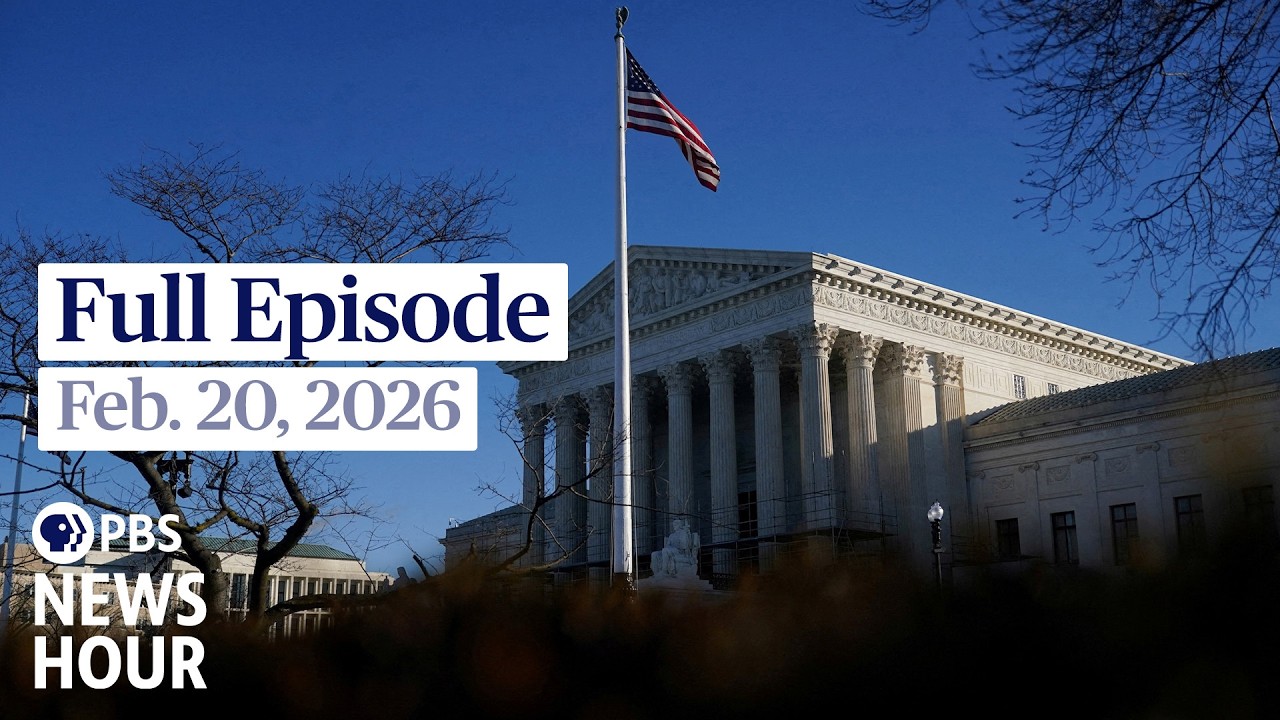
PBS News Hour full episode, Feb. 20, 2026
"The Supreme Court struck down President Trump's sweeping global tariffs, prompting an immediate presidential counter-move with new tariffs and escalating tensions with Iran, while the EPA rolled back critical environmental protections."
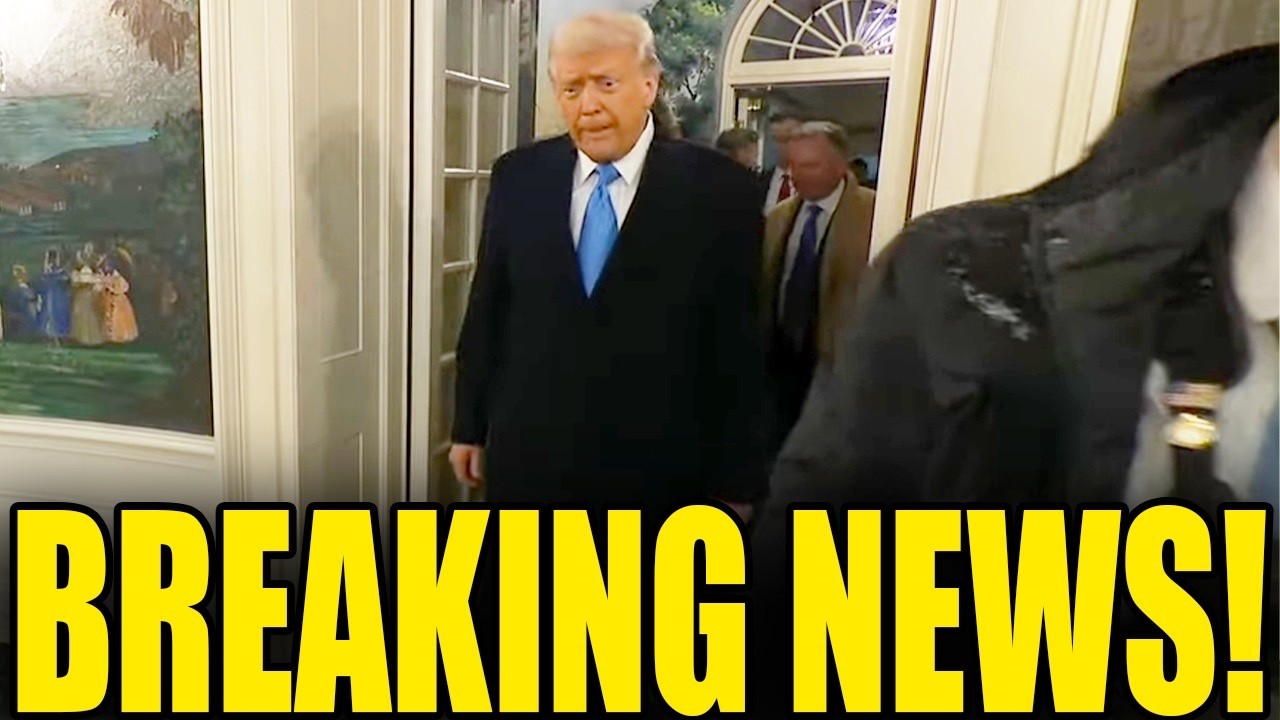
SHOCK BREAKING: SHOCKED TRUMP STORMS OUT OF SUPREME COURT IN RAGE!
"This episode dissects Donald Trump's contentious Supreme Court appearance regarding birthright citizenship, the growing disillusionment of right-wing figures like Alex Jones with Trump, and the political fallout from Kristi Noem's husband's alleged cross-dressing scandal."