
Larry Johnson: US-Iran Agree to Direct Conflict Management in Lebanon
YouTube · SU6IFsoXS4s
Quick Read
Summary
Takeaways
- ❖The US and Iran have established a direct conflict control unit to manage and de-escalate tensions in the Middle East, particularly concerning Lebanon.
- ❖Pakistani General Asim Munir is identified as the central figure orchestrating the US-Iran negotiations, successfully bringing the Iranian delegation back to the table after a temporary walkout.
- ❖The ongoing closure of the Strait of Hormuz has created a severe global energy and commodity crisis, impacting oil, LNG, urea, sulfur, and helium supplies.
- ❖Qatar and Saudi Arabia are reportedly distancing themselves from the United States, indicating a reluctance to continue hosting US military bases.
- ❖The US is pressuring Israel to reduce violence in Lebanon by suspending weapons deliveries, halting aid, and threatening to withdraw US military assets.
- ❖A significant majority (92%) of Israelis believe they lost the recent conflict, highlighting a shift in public perception regarding their military's effectiveness.
- ❖Pakistan, with its nuclear capabilities and strong ties to China and Russia, is actively shaping a new regional security architecture in the Persian Gulf, aiming to reduce dependence on the petrodollar.
- ❖The Memorandum of Understanding (MOU) between the US and Iran explicitly acknowledges their shared obligation to protect Lebanon's territorial integrity and sovereignty.
- ❖The host suggests Israel's long-term survival depends on negotiating a two-state solution, recognizing Palestine, and sharing Jerusalem.
Insights
1US-Iran Establish Direct Conflict Management for Lebanon
Despite initial tensions and a temporary walkout by the Iranian delegation, the United States and Iran have agreed to establish a direct conflict management unit specifically for Lebanon. This agreement aims to maintain a ceasefire and manage the ongoing situation, signaling a direct diplomatic channel for de-escalation.
Two delegations left Switzerland after achieving 'some sort of management process for the case of Lebanon' to keep the ceasefire going. A 'conflict control unit' was established to destabilize front lines in the Middle East, including Lebanon. The MOU signed by the US acknowledges the obligation to protect Lebanon's territorial integrity and sovereignty.
2Pakistan's General Munir Emerges as Key Regional Mediator
Pakistani General Asim Munir is identified as the 'ringmaster' of the US-Iran negotiations, playing a pivotal and influential role in bringing both sides to the table and smoothing over diplomatic crises. His leadership is seen as central to the emerging regional security architecture.
Munir is 'really playing the central role of bringing this together.' He was able to 'somehow smooth things over with the Iranian delegation and get them back to the table' after Donald Trump's 'intemperate remarks.' Pakistan also organized a meeting of Foreign Ministers from Egypt, Turkey, and Saudi Arabia to build security infrastructure.
3Economic Crisis Looms from Strait of Hormuz Closure
The prolonged closure of the Strait of Hormuz has caused a significant disruption to global oil supply, leading to an impending energy crisis in Europe and the US. This disruption has also impacted the supply of liquid natural gas, urea, sulfur, and helium, with long-term economic consequences.
The Strait of Hormuz shutdown and attacks on oil infrastructure have taken 'upwards of 20% or more of oil off the market' for four months. Qatar, a major LNG and helium supplier, went from 'supplying 10% of the world's liquid natural gas to nothing.' Even if reopened, ships are stuck due to cleaning needs (3 weeks to 2 months) and mines (6 months to clear), preventing immediate resumption of trade.
4Gulf States Distance from US, Seeking New Security Architecture
Qatar and Saudi Arabia are actively distancing themselves from the United States, expressing a desire to no longer host US military bases. This move is part of a broader trend, with Pakistan, in consultation with China and Russia, leading efforts to establish a new, independent regional security framework in the Persian Gulf.
Reports indicate Qatar and Saudi Arabia are 'distancing themselves from the United States' and 'don't want to be involved anymore at hosting US bases.' The Qatari Foreign Minister 'deliberately snubbed Vance.' Pakistan's efforts are 'trending towards creating this Muslim Arab military force that will be able to provide security in the Persian Gulf, meaning the US no longer there. The US is no longer relevant.'
5Israelis Perceive Military Defeat, Face Existential Choices
A vast majority of Israelis believe they lost the recent conflict, indicating a significant shift in national sentiment. The host argues that Israel's long-term survival hinges on accepting a negotiated settlement, including the recognition of a Palestinian state and a shared Jerusalem, rather than continued military aggression and expansion.
92% of Israelis believe 'they lost the war,' with 93.4% within the Likud party holding this view. The host states, 'the only way forward for Israel to survive is to accept and recognize the state of Palestine' and that 'Jerusalem itself must become a shared city.'
Bottom Line
Pakistan received intelligence of an Israeli plot to assassinate General Munir, leading to a direct threat of nuclear retaliation against Israel.
This alleged assassination plot and Pakistan's response reveal an extremely volatile, under-reported layer of geopolitical tension, demonstrating Pakistan's willingness to use its nuclear deterrent to protect its key figures and interests, potentially escalating regional conflicts to an unprecedented level.
Policymakers and intelligence agencies must closely monitor the credibility of such threats and the potential for miscalculation, as any action against a nuclear state's leadership could trigger catastrophic consequences, reshaping global security alliances and doctrines.
The emerging regional security architecture in the Persian Gulf, led by Pakistan and supported by China and Russia, aims to free Gulf countries from dependence on the petrodollar and the United States.
This initiative represents a direct challenge to the existing global financial order and US hegemony, potentially accelerating de-dollarization efforts and fundamentally altering trade relationships and currency reserves worldwide.
Businesses and investors should prepare for a multipolar financial system, diversifying currency holdings and exploring new trade routes and partnerships that bypass traditional Western-dominated structures. The shift could create new opportunities in non-dollar denominated markets and resource-rich nations previously tied to the petrodollar.
Lessons
- Monitor the implementation and effectiveness of the US-Iran conflict management unit in Lebanon as a bellwether for future diplomatic engagement in the Middle East.
- Track global energy and commodity prices, particularly for oil, LNG, and helium, given the ongoing disruptions from the Strait of Hormuz and potential long-term supply chain issues.
- Observe the evolving relationships between Gulf states (Qatar, Saudi Arabia) and the US, as their distancing could indicate significant shifts in military basing agreements and regional alliances.
Quotes
"I candidly think we're only, it won't be long before we see if if this continues that Russia will strike militarily in the UK at one of these drone factories."
"You're threatening to murder your, threatening a war crime and assassination. That, you know, Munir was able to somehow smooth things over with the Iranian delegation and get them back to the table."
"The US is a, has limited power. And and now here's here's Pakistan, you know, really running rings around the United States. United States has to come to Pakistan to try to, you know, get tell the Iranians to stop, please. Because, you know, we can't we can't sustain this."
"92% of the Israelis believe that they lost the war? ... And within the Likud party, it's more than 90, it's 93.4% they believe that they were defeated."
Q&A
Recent Questions
Related Episodes

Patrick Henningsen: Hezbollah JUST Fired Back at Israel - Iran Vows to “Crush” All Attacks
"Patrick Henningsen argues that the US and Israel initiated an illegal war against Iran, driven by Trump's incompetence and Israeli influence, leading to an inevitable escalation with severe global economic repercussions."
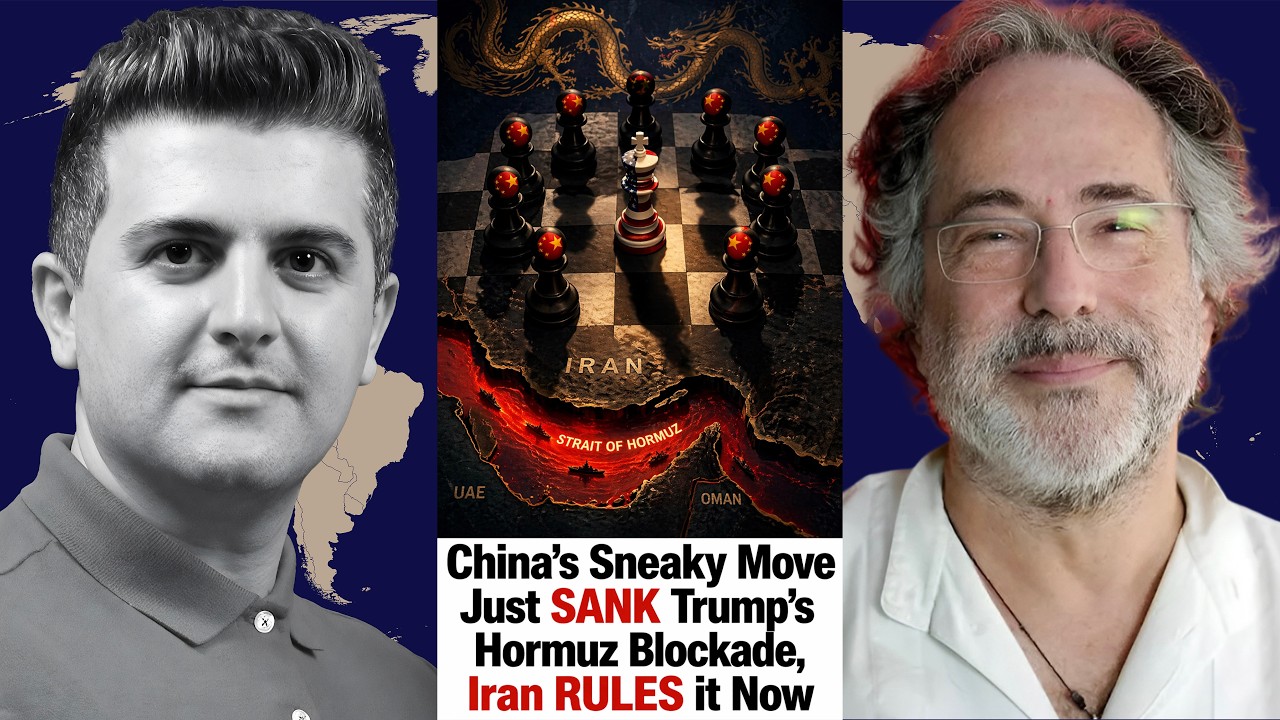
Pepe Escobar: “Total Failure”: Trump’s Blockade Just Backfired Disastrously
"Pepe Escobar argues that the US blockade against Iran, spearheaded by Donald Trump, has utterly failed and backfired, accelerating global economic chaos and challenging US geopolitical dominance."

BREAKING: Iran Threatens To END Talks; U.S. Vows Retaliation; Hezbollah Collapsing? | TBN Israel
"Iran is leveraging Hezbollah and the Strait of Hormuz to manipulate US negotiations, while Israel asserts its right to dismantle Hezbollah's eroding but still dangerous infrastructure in Lebanon, independent of international talks."

🚨 TOTAL F*CKING CHECKMATE 😂😂😂
"The host argues that Trump's 'ceasefire' with Iran was a calculated '5D chess' move to orchestrate a global energy market reshuffle, while simultaneously lambasting 'woke' domestic policies and the 'freefall' of anti-Trump conservative figures."