
The Epstein Files Could Blow Up Everything | Shield of the Republic
YouTube · Sc05YDoR2dE
Quick Read
Summary
Takeaways
- ❖US political 'jackassery' is characterized by juvenile behavior, infighting, and incompetent appointments, eroding national standing.
- ❖The Munich Security Conference highlights European concerns about US commitment and the search for alternative security arrangements.
- ❖The New Start treaty's expiration ushers in an era without strategic nuclear arms control, complicating deterrence against Russia and China.
- ❖US policy towards Iran is muddled, risking unintended escalation due to unclear objectives and Iranian miscalculations.
- ❖The Epstein files reveal widespread elite corruption and potential foreign intelligence connections, contributing to political turbulence.
Insights
1Widespread Political Incompetence and 'Jackassery'
The hosts detail several instances of what they term 'jackassery' within the US political sphere, including a Fox News personality's call to ban military officers from Harvard due to 'woke' infestation, the government shutting down an airport to shoot down party balloons, and South Dakota Governor Kristi Noem's erratic behavior involving firing and rehiring a Coast Guard pilot over a blanket. They also criticize the appointment of unqualified political figures to ambassadorships and other key roles, which they argue diminishes US standing globally.
Pete Hegseth's comments on Harvard (), El Paso airport shutdown (), Kristi Noem's blanket incident (), US Ambassador to Poland Thomas Rose's actions (), Jeremy Carl's nomination ().
2Munich Security Conference Highlights European Unease
The Munich Security Conference serves as a critical forum for transatlantic security discussions. European leaders, like German Chancellor Mertz, are reaffirming the need for the US-Europe link while simultaneously exploring 'hedging' strategies, such as discussions about extending France's nuclear umbrella to Germany. This indicates a growing lack of confidence in the US commitment to extended nuclear deterrence and NATO, potentially leading to a 'different nuclear order in Europe' with more states considering nuclear weapons.
Rubio representing the US after Vance canceled (), Under Secretary Colby's 'innocuous' speech (), German Chancellor Mertz's affirmation of transatlantic link (), Financial Times report on French nuclear umbrella discussions ().
3Expiration of New Start Treaty and New Nuclear Deterrence Challenges
The New Start treaty, a bilateral US-Russian strategic nuclear arms control agreement, expired, marking the end of formal limits on the largest nuclear arsenals. This creates a new challenge: deterring two major adversaries (Russia and China) simultaneously, both of whom are modernizing and expanding their nuclear forces. The US, in contrast, is behind schedule on its own modernization program, raising questions about the sufficiency of its current arsenal to deter a combined threat.
New Start expiration (), treaty details (), Russian modernization (), China's buildup (), US modernization delays (), challenge of deterring two adversaries ().
4Muddled US Strategy Towards Iran Risks Escalation
The US approach to Iran is characterized by a 'confusion of aims,' with different administration officials citing various objectives (nuclear program, missile program, proxies, human rights). This ambiguity, combined with a significant US military buildup in the Persian Gulf (including a second aircraft carrier), creates a volatile situation. Iranian leadership, potentially miscalculating US resolve, may overplay its hand, increasing the 'serious chance' of US strikes without clear objectives, which could lead to a regional war.
Confusion of aims (), President's 'help is on the way' comment (), Netanyahu's focus on missile program (), Arab allies refusing US bases (), Iranian down-blending proposal ().
5Epstein Files Expose Elite Corruption and National Security Risks
The ongoing revelations from the Epstein files are not only 'utterly revolting' but also politically significant, serving as an 'indictment of the elites' who have run Western countries. The sheer scale of criminality, including potential murder and torture videos, combined with the involvement of high-profile figures, fuels public distrust. Furthermore, the hosts highlight significant Russian connections, including a main interlocutor being an FSB Academy graduate and the use of 'kompromat' tactics, suggesting potential national security implications that are being overshadowed by the prurient details.
New York Times investigation (), Kathy Rumler's resignation (), Russian connections (), Sergey Belakov (), Epstein's MO (), Trump's past relationship with Epstein ().
Bottom Line
The US is facing a 'three-body problem' in nuclear deterrence, needing to simultaneously deter Russia and China, while also considering their interactions with each other.
Traditional Cold War deterrence models, focused on a single adversary, are insufficient. This requires a fundamental re-evaluation of US nuclear force structure, targeting strategies, and arms control approaches, potentially leading to an 'upload' of US warheads.
Develop new, multi-adversary deterrence theories and capabilities. Invest heavily in advanced nuclear modernization and command and control systems to maintain credibility in a more complex strategic environment.
The Epstein files, beyond their criminal and moral implications, represent a significant 'kompromat' operation with potential Russian intelligence ties, targeting Western elites.
This suggests a deeper, unaddressed national security vulnerability where foreign adversaries could exploit the compromised positions of influential Western figures. The focus on the salacious details may be distracting from a more serious intelligence threat.
Conduct a thorough, intelligence-focused investigation into the Epstein network's foreign connections, particularly Russian, to assess the extent of compromise and mitigate ongoing risks to national security.
Key Concepts
Deterrence Theory
The concept that the problem with deterrence lies in the mind of the adversary, meaning what one side believes will deter may not be what the other side perceives as a credible threat. This applies especially to nuclear weapons, where the numbers and types of weapons, as well as the targets held at risk, must be calibrated to the adversary's values and perceptions, not just one's own.
Political Gravity
The idea that despite attempts to defy norms or consequences, political actions eventually face natural pushback and repercussions. This model suggests that incompetence and problematic policies will eventually lead to negative outcomes or a 'reversion to the mean' in political stability.
Lessons
- Advocate for rigorous vetting and accountability in political appointments to restore competence and trust in government.
- Support increased investment in US nuclear modernization and strategic planning to address the complex challenge of deterring multiple nuclear-armed adversaries.
- Demand clear, consistent, and well-defined objectives for US foreign policy interventions, particularly in volatile regions like the Middle East, to avoid unintended escalation.
- Push for a comprehensive, national security-focused investigation into the Epstein network's international connections, especially any links to foreign intelligence operations.
Quotes
"The problem with deterrence is it goes on in the mind of your adversary."
"Political gravity still operates, and we're going to be seeing more of it over time."
"I 1550 against 3000. That's probably not the right number. I don't think we need to match them weapon for weapon, but we probably do need to do some upload."
"The more I read their pronouncements and the more I think about that kind of regime, the more I tend to think that the senior leadership, the people calling the shots, do not have a very good grasp on reality."
"This is a kind of an indictment of the elites that have been running western countries for decades and decades now."
Q&A
Recent Questions
Related Episodes
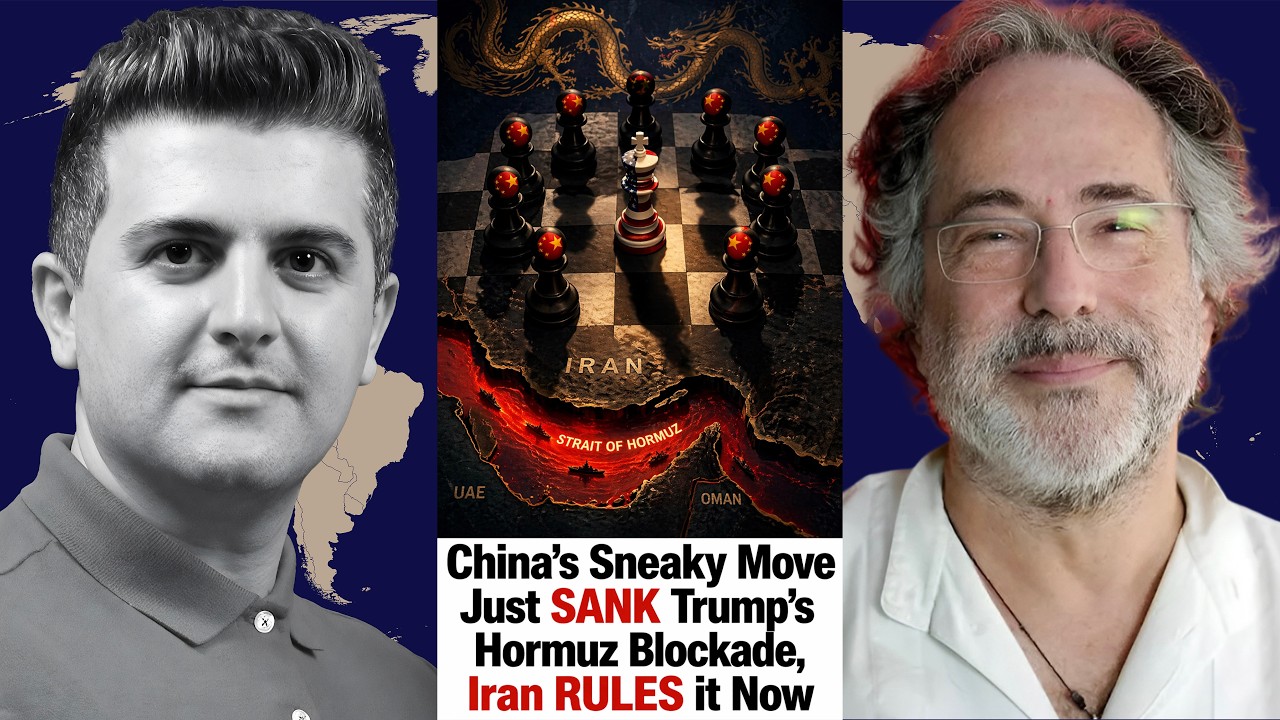
Pepe Escobar: “Total Failure”: Trump’s Blockade Just Backfired Disastrously
"Pepe Escobar argues that the US blockade against Iran, spearheaded by Donald Trump, has utterly failed and backfired, accelerating global economic chaos and challenging US geopolitical dominance."

Alex Krainer: US STRIKES Iran – Iran RETALIATES Against Kuwait, Bahrain & Jordan!
"Amidst escalating US-Iran conflict and Iranian retaliation against regional US allies, this episode argues that US foreign policy is deeply controlled by an 'Anglo-Zionist conspiracy' led by the Rothschild banking dynasty, prioritizing Israeli interests over American ones."

The Fat Electrician Vs Tactically Acquired | Unsubscribe Podcast 267
"This episode features military content creators discussing current geopolitical hotspots, advanced weaponry, and the surprising psychological warfare tactics of modern conflict, alongside their personal journeys building online communities."

Iran Update: Israel’s Newest Bombing Campaign, the Oncoming War With China and How to Avoid It
"Colonel Wilerson reveals how the US and Israel are actively bombing China's strategic infrastructure in Iran, escalating a covert economic war that Beijing intends to win without direct military conflict by dismantling the dollar's global dominance."