BREAKING: 30 Hezbollah Terrorists TRAPPED; Iran Demands $6B; Hormuz Threatens War | TBN Israel
YouTube · Sybrx6yevbI
Quick Read
Summary
Takeaways
- ❖IDF forces are encircling an underground Hezbollah headquarters in Tibnin, Southern Lebanon, trapping approximately 30 terrorists.
- ❖Iran's Revolutionary Guards threatened to close the Strait of Hormuz, citing Israeli actions in Lebanon, while US Central Command stated shipping continues.
- ❖US Vice President J.D. Vance is engaged in direct talks with Iranian representatives in Switzerland regarding a memorandum of understanding.
- ❖The proposed US-Iran plan includes allowing Iran to access $6 billion in frozen funds in Qatar for humanitarian goods, part of a larger $100 billion frozen asset pool.
- ❖The hosts argue the US-Iran agreement is 'asymmetrical' and favors Iran, providing immediate benefits to Iran while postponing its commitments.
- ❖Israel's perspective is that the agreement is a 'disaster,' leaving it highly exposed to Iranian military and nuclear threats.
- ❖The conflict is described as a 'war over who defines reality,' where perception often outweighs facts on the ground, amplified by social media.
Insights
1IDF Traps Hezbollah in Strategic Underground Compound
The IDF is actively operating in Southern Lebanon, specifically in the village of Tibnin on the Ali Taher Ridge, where it has encircled a significant underground Hezbollah headquarters. This compound, described as a 'center of gravity' for Hezbollah's Bader Forces, contains 30 trapped terrorists and represents a national strategic asset built over years. Hezbollah is attempting to break the encirclement using high-trajectory fire, mortar shells, and drones.
The IDF is encircling an underground Hezbollah headquarters in southern Lebanon... 30 terrorists from the terrorist organization that are trapped. Hezbollah is acting to prevent the IDF from continuing to encircle the tunnels. It is doing this through high trajectory fire, mortar shells, and drones.
2Iran Leverages Lebanon Conflict and Hormuz Threat in US Negotiations
Iran is directly linking Israeli military actions against Hezbollah in Lebanon to its commitments regarding the Strait of Hormuz and ongoing negotiations with the US. The Revolutionary Guards announced that Iran considers itself released from commitments concerning Hormuz's opening due to 'Zionist attacks in Lebanon,' threatening to close the strait to Israel-linked shipping. This tactic aims to pressure the US to restrain Israel while Iran seeks the release of frozen funds.
Iran's Revolutionary Guards announced last night the closure of the strategic shipping route using their usual excuse, 'Look what Israel is doing in Lebanon.'... The Revolutionary Guard announced that Iran sees itself as released from any commitment or agreement concerning the opening of the Strait of Hormuz on the grounds of the continuation of Zionist attacks in Lebanon.
3US-Iran Agreement Criticized as Asymmetrical 'Surrender'
The hosts argue that the ongoing US-Iran negotiations in Switzerland are leading to an 'asymmetrical' agreement that heavily favors Iran. Iran is expected to receive immediate benefits like the cancellation of sanctions, release of frozen assets (starting with $6 billion in Qatar), and permits for oil exports, along with promises regarding its nuclear program and ballistic missiles. In contrast, Iran's supposed concessions are vague, postponed, and subject to future negotiations, effectively constituting a 'surrender' by the US.
According to the contract text, all of Iran's requests are expected to be fulfilled immediately. It's also receiving things that it never dreamed of receiving... everything that it supposedly gives is postponed to the future and demands un-vague negotiations... This is not the structure of an agreement between equals, but the structure of surrender.
4Iran's Strategy: Blurring Diplomacy and Terrorism
Iran is depicted as managing diplomacy and terrorism from the 'same situation room,' using its proxies like Hezbollah to create leverage during international negotiations. By having Hezbollah attack Israeli forces while simultaneously negotiating a ceasefire and financial relief, Iran aims to protect its assets, insert Hezbollah into the agreement as a pressure card, and ultimately gain money and influence without genuinely upholding its commitments.
Iran no longer separates diplomacy from terrorism, but manages both from the same situation room... Iran wants to tie Hezbollah in Lebanon to the greater agreement. They want to do that for their reasons. They want to protect their asset, which is the terrorist organization...
Bottom Line
The US foreign policy, under President Trump, is framed as being driven by domestic economic concerns, using international agreements as a 'monetary tool' to lower oil prices and inflation, rather than solely strategic security interests.
This prioritization suggests that geopolitical stability and the security of allies like Israel may be secondary to internal economic metrics, potentially leading to agreements that are strategically disadvantageous for regional partners.
Understanding this dynamic allows for anticipating US negotiation stances and developing strategies that align with or counteract these economic motivations, potentially by highlighting the long-term economic costs of short-term geopolitical concessions.
Iran's regime is not cohesive, with various factions within the IRGC and government (Foreign Minister, Parliament Speaker, President) expressing differing stances, making it difficult to ascertain a unified commitment to agreements.
This internal disunity implies that any agreement with Iran may be fragile and subject to internal sabotage or selective adherence by powerful factions, undermining the reliability of diplomatic outcomes.
External actors could exploit these internal divisions to influence outcomes or identify more reliable interlocutors, or conversely, prepare for the likelihood of non-compliance and the need for robust verification mechanisms.
Key Concepts
War of Perception
This model highlights how modern conflicts are not solely about facts on the ground but heavily influenced by how events are perceived and framed by various actors, especially through mass and social media. Iran, Hezbollah, and Hamas are cited as examples of entities that skillfully manipulate public perception to their advantage, even when militarily defeated.
Asymmetrical Negotiation
Describes a negotiation scenario where one party (Iran) receives immediate and concrete benefits (sanctions relief, frozen asset release) while its commitments are vague, postponed, or easily violated. The other party (US) is seen as making concessions without securing firm, immediate reciprocal actions, effectively 'surrendering' despite its superior position.
Lessons
- Follow news from diverse, unfiltered sources, especially those on the ground, to gain a clearer understanding of geopolitical realities.
- Recognize that modern conflicts involve a 'war of perception' where narratives are manipulated; critically evaluate information and seek underlying facts.
- Understand that Iran's long-term goal, as stated by the regime, is the destruction of Israel and the US, and its agreements should be viewed through this lens, anticipating non-compliance and deceit.
Notable Moments
The IDF receiving a 'hold fire' order from Prime Minister Netanyahu and Defense Minister Katz in Lebanon, despite Hezbollah's continued attacks, to avoid wider escalation.
This moment highlights the political constraints on military operations, where strategic objectives (dismantling Hezbollah infrastructure) are balanced against diplomatic pressures and the risk of broader regional conflict, potentially leaving IDF forces in a vulnerable 'one hand tied behind their back' situation.
The revelation that Iran's nuclear program documents, stolen by Israel in 2018, proved Iran moved enrichment into hiding despite signing agreements to stop.
This serves as concrete evidence of Iran's historical deceit and non-compliance with international agreements, reinforcing the hosts' skepticism about Iran's commitment to any new deal and emphasizing the need for robust verification.
Quotes
"This is not the structure of an agreement between equals, but the structure of surrender. And what's unbelievable is that the side surrendering is supposedly the one that won this war."
"This war is not only about facts on the ground, much of it is about perception, and specifically perception of power projection from two different angles."
"Iran no longer separates diplomacy from terrorism, but manages both from the same situation room."
"The only long-term solution is a change of regime in Iran."
"Help the IDF banish Hezbollah from Lebanon. Help the IDF banish the terrorists from the country. Help the Lebanese army fight against Hezbollah and free that country from the oppressive effects of the imperialistic force of Iran, not Israel in Lebanon."
Q&A
Recent Questions
Related Episodes

BREAKING: Trump REJECTS Iran Deal - Panic In IRGC - U.S. Military & IDF Plan War
"President Trump rejected Iran's latest deal proposal, labeling it 'unacceptable,' while the US and Israel reportedly planned military strikes and Saudi Arabia urged the US to 'destroy the regime,' signaling a major escalation in Middle East tensions."
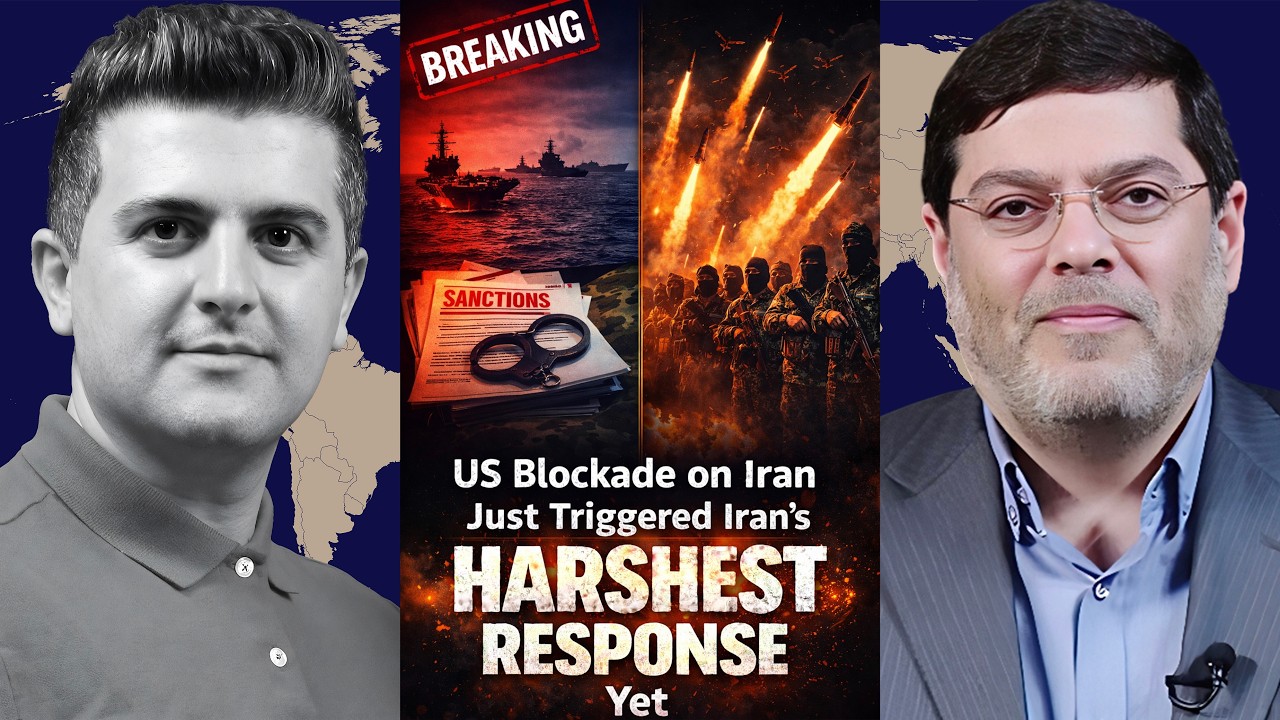
Seyed M. Marandi: US Blockade on Iran Just Triggered Iran’s HARSHEST Response Yet
"An Iranian professor details how US demands and an imposed blockade triggered Iran's harshest response, exposing American strategic missteps and the vulnerability of Gulf Arab states."

BREAKING: Iran Threatens To END Talks; U.S. Vows Retaliation; Hezbollah Collapsing? | TBN Israel
"Iran is leveraging Hezbollah and the Strait of Hormuz to manipulate US negotiations, while Israel asserts its right to dismantle Hezbollah's eroding but still dangerous infrastructure in Lebanon, independent of international talks."

Iran Deal Skepticism. Whoopi Vs Vance. Potomac Park Invasion. Racist Hurls Slurs At Black Boy.
"This episode dissects multiple instances of alleged anti-Black policies and racial injustice, from the Trump administration's legal challenges to reparations and the Iran deal, to police brutality and the erasure of Black history."