
Best of 2025: Mark Blyth Trump’s Tarrifs and Inflation
YouTube · T1RpRSC4H1w
Quick Read
Summary
Takeaways
- ❖Inflation is experienced by ordinary people as a rise in the total level of prices, not just the rate of change, disproportionately affecting lower-income households.
- ❖The 1970s inflation was primarily a series of discrete supply shocks (Vietnam War, oil crises), not solely a monetary phenomenon, a lesson often misapplied by central banks.
- ❖Central bank interest rate hikes are designed to break 'expectations' of rising prices, but are less effective against actual supply shocks.
- ❖Trump's tariffs function as policy-induced supply shocks, deliberately making goods more expensive to achieve a specific re-industrialization vision.
- ❖Trump's tariff policies caused U.S. treasuries to become 'information sensitive assets,' leading to bond market instability and forcing a policy adjustment.
- ❖The Democratic Party is criticized for being the 'party of the status quo' and needs to embrace a 'left populism' focused on economic issues like wealth inequality and housing.
- ❖Addressing the housing crisis requires massive public investment in building affordable homes and strategic deregulation, which would also create skilled jobs and labor mobility.
Insights
1Inflation: Popular Experience vs. Economic Definition
Ordinary people experience inflation as a rise in the total level of prices, directly impacting their disposable income, especially for the bottom 60% who spend most on consumption goods. Economists, however, often focus on the rate of change. This disconnect explains why official inflation numbers can feel out of touch with public sentiment, as a slowing rate of inflation doesn't mean prices have returned to previous levels.
The example of eggs still costing $12 even if the rate of inflation slows. Poorer individuals spending 60-70% of income on consumption goods are severely impacted by price levels, unlike the top 10% who use less income for direct consumption and may even benefit from rising equities.
2Misinterpreting 1970s Inflation and Flawed Policy Responses
The prevailing wisdom that 1970s inflation was 'always and everywhere a monetary phenomenon' (Milton Friedman) is challenged. Instead, it was a series of discrete supply shocks (Vietnam War funding, oil crises, labor market shifts). Learning the wrong lesson led central banks to primarily use interest rate hikes to 'break expectations,' which can cause unnecessary economic destruction when the root cause is supply-side.
Alan Blinder's research indicates the 70s saw multiple supply shocks. The European Central Bank in 2023 acknowledged 40% of inflation was 'price gouging,' not just money supply or labor market tightness. Raising interest rates to make people poorer is the standard response, but it's ineffective against supply shocks.
3Trump's Tariffs as Policy-Induced Supply Shocks
Trump's tariffs are a deliberate policy choice to create supply shocks, making imported goods more expensive. This strategy is driven by a complex, often contradictory, coalition of national conservatives, China hawks, and tech lords, all aiming for a re-industrialization based on carbon assets and an idealized 1950s economy, rather than modern green sectors.
Tariffs are explicitly designed to make things more expensive to bring industrial jobs back. The rationale for tariffs shifts based on which faction (e.g., tax cut advocates vs. China hawks) has the President's ear. The 100% tax on Chinese EVs protects a carbon-based business model.
4The Bond Market's Discipline on Trump's Economic Policies
U.S. treasuries are typically 'information invariant assets,' meaning their value is stable regardless of news. Trump's unpredictable tariff policies, however, made them 'information sensitive,' causing investors to sell dollars and seek alternatives. This increased volatility and rising yields in the bond market acted as a disciplinary force, compelling Trump to adjust his aggressive tariff stance.
On April 2nd, Trump's actions made people question the stability of treasuries, leading to selling of dollars and a search for alternatives. This 'broke the bond market,' forcing a policy rollback.
5The Democratic Party's 'Status Quo' Problem and the Need for Left Populism
The Democratic Party is criticized for inadvertently becoming the 'party of the status quo,' catering to the top 20% (the 'Whole Foods crowd') and lacking transformative economic policies for ordinary people. This failure has alienated the working-class vote and necessitates a shift towards 'left populism' focused on addressing deep-seated economic inequalities.
The absence of transformative policies from figures like Kamala Harris. The party's mainstream often opposes figures like AOC and Bernie Sanders who advocate for such changes. The example of Democratic donors being the same wealthy individuals who benefit from the current system.
6Solving the Housing Crisis Through Public Investment and Deregulation
The housing crisis is a direct result of treating housing as an asset class rather than a basic need, leading to a shortage of affordable homes. A solution involves a 'left deregulation' agenda to simplify building processes, close tax loopholes (like conservation easements), and massive public investment in constructing houses for normal people. This would not only provide housing but also create jobs, upskill the working class, and improve labor mobility.
The observation that new developments are almost exclusively 'luxury condos.' The existence of 'conservation easements' as a tax scam that restricts building. The need for vocational training (HVAC, plumbers, electricians) to support large-scale construction.
Bottom Line
The 'imaginary' behind Trump's re-industrialization strategy is a carbon-based, 1950s-style economy with male breadwinners and 1940s social politics, which is fundamentally incompatible with modern manufacturing (robotics) and global supply chains.
This highlights a severe disconnect between political rhetoric and economic reality, leading to policies that are likely to fail in achieving their stated goals and could further isolate the US economy.
For businesses, this signals continued policy volatility and the need to diversify supply chains and investment strategies beyond short-term political cycles, while for policymakers, it underscores the importance of evidence-based industrial policy over nostalgic visions.
The ability of the bond market to discipline presidential economic policy (as seen with Trump's tariffs) demonstrates a powerful, non-electoral check on executive power, particularly when policies introduce significant uncertainty into global financial systems.
This reveals that even populist leaders cannot entirely disregard the foundational stability of global finance, and that market reactions can force policy adjustments faster than political processes.
Analysts should closely monitor financial market reactions to unpredictable policy shifts as a leading indicator of potential policy reversals or modifications, offering an alternative lens to traditional political analysis.
Opportunities
Public-Private Partnerships for Affordable Housing Development
State and local governments, in cooperation with B-corps, 501c3s, and private sector entities, can create models to build and manage affordable housing. This leverages public borrowing power for long-term assets, shares gains, and addresses the housing crisis while generating economic activity and jobs.
Vocational Training & Reskilling Programs for Green/Modern Construction
Invest heavily in accelerated vocational training programs for skilled trades (HVAC, plumbers, electricians) tailored for modern, sustainable housing construction. This addresses labor shortages, upskills the workforce, and supports both housing and green sector growth.
Key Concepts
Information Invariant vs. Information Sensitive Assets
Information invariant assets (like U.S. treasuries traditionally) are those whose value is not significantly affected by news cycles or political events, making them stable savings vehicles. When political actions, like unpredictable tariffs, introduce high uncertainty, these assets can become 'information sensitive,' meaning their value reacts strongly to news, leading to volatility and a loss of confidence.
Lessons
- Challenge the conventional wisdom on inflation: Recognize that not all price increases are due to 'too much money chasing too few goods'; many are supply shocks requiring different policy solutions than interest rate hikes.
- Advocate for supply-side solutions to economic problems: Instead of solely relying on monetary policy, push for policies that address root causes like housing shortages, supply chain vulnerabilities, and market concentration (e.g., through strategic deregulation and public investment).
- Support political movements focused on economic populism: Engage with or advocate for political agendas that prioritize addressing wealth inequality and the economic struggles of the majority, rather than maintaining the status quo for the affluent.
A Progressive Playbook for Addressing the Housing Crisis
Implement 'Left Deregulation': Identify and remove process regulations and tax loopholes (e.g., conservation easements) that artificially restrict land supply and make building difficult or impossible.
Invest in Vocational Training: Launch large-scale, accelerated vocational training programs to create a skilled workforce (HVAC, plumbers, electricians) capable of meeting the demands of new housing construction.
Initiate Public Housing Development: Utilize state and local government capacity, potentially in partnership with B-corps and non-profits, to directly finance and build affordable housing units, treating housing as a public asset rather than solely a private investment opportunity.
Quotes
"Inflation, the best definition was given by Mrs. Thatcher... it's a rise in the general level of all prices. So it's not when houses get madly expensive. It's not when a particular part of the market gets suddenly really expensive. It's when everything goes up."
"The poorer you are, the more you spend. If you're shopping at like Dollar General and prices go up 10%, you and your family have to have a serious conversation about what you're going to do without. If you're in the top 10%, you're shopping at Whole Foods. You clearly don't give a crap about inflation anyway."
"Treasuries are information invariant assets. What does that mean? The news cycle doesn't matter. A treasury is a treasury... What did Trump do on April 2nd? He made it an information sensitive asset because people suddenly went, 'Oh this guy's real... I want to get out of dollars.'"
"The Democrats have to discover their left populism on economics because if you don't, you've got nothing. Cuz at the end of the day... the Democrats have become inadvertently the party of the status quo."
"If you want to do something about inequality... just build houses. It's amazing what would happen if you'd build houses."
Q&A
Recent Questions
Related Episodes

Republicans Don't Even Pretend to Care About Debt (w/ Jessica Riedl) | Mona Charen Show
"Both Republican and Democratic parties have abandoned fiscal responsibility, leading the U.S. towards an inevitable debt crisis exacerbated by demographic shifts and ineffective policy approaches."

Trump’s Iran War Could Send Prices Soaring (w/ Kenneth Rogoff) | How to Fix It
"Harvard Professor Kenneth Rogoff details how escalating US debt, attacks on Federal Reserve independence, and geopolitical instability in the Middle East threaten the dollar's global reserve status and could trigger a domestic economic crisis."
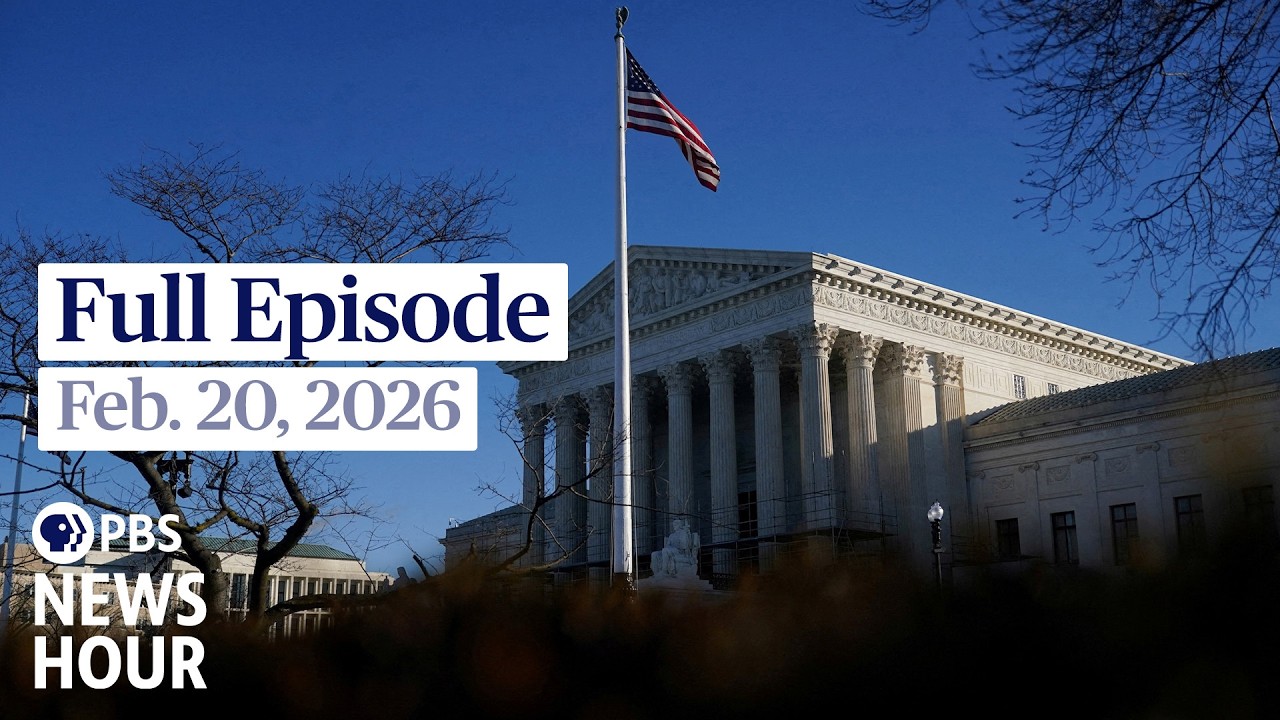
PBS News Hour full episode, Feb. 20, 2026
"The Supreme Court struck down President Trump's sweeping global tariffs, prompting an immediate presidential counter-move with new tariffs and escalating tensions with Iran, while the EPA rolled back critical environmental protections."

Billionaire Investor Ray Dalio Warns of Deadly Economic Crisis (Here's How to Avoid It)
"Ray Dalio outlines a historical cycle of civilizations, asserting the US is in 'Stage 5' of decline, characterized by monetary, political, and geopolitical breakdowns, and warns of an impending 'great disorder' if systemic issues like the budget deficit are not addressed."