
🚨 LIVE: IRGC Kidnap 15 Foreign Nationals In Persian Gulf - US Military WARN Khamenei
YouTube · TsDZ7GKPTmM
Quick Read
Summary
Takeaways
- ❖IRGC seized two foreign vessels in the Persian Gulf, kidnapping 15 crew members and over 1 million liters of fuel.
- ❖The US deployed additional naval and air strike groups, with the USS Abraham Lincoln sending a message that Iran is 'within strike range.'
- ❖IRGC responded by deploying Khorramshahr 4 ballistic missiles in underground bases, claiming they can reach Israel in 10-12 minutes.
- ❖Upcoming US-Iran negotiations are framed as 'fake' by the host, designed to create legitimacy for potential military action or to trap the opposing side.
- ❖A leaked 5-point negotiation proposal (denied by IRGC) suggested Iran would commit to zero uranium enrichment, transfer enriched uranium, cease proxy support, and agree to non-aggression.
- ❖The US may introduce a new 'red line' demand for Iran to cut energy ties with China if cornered by a 'reasonable' Iranian proposal.
- ❖The IRGC is accelerating public and private executions of political prisoners, fearing a re-energized uprising if external conflict occurs.
- ❖US Treasury Secretary Scott Bessant stated Iranian leadership is wiring money out of the country, interpreting it as 'rats leaving the ship' and a sign the regime's end is near.
Insights
1IRGC Kidnaps Foreign Nationals and Seizes Vessels in Persian Gulf
The Islamic Revolutionary Guard Corps (IRGC) seized two foreign vessels near Pari Island, confiscating over 1 million liters of fuel and kidnapping 15 foreign crew members. The IRGC claimed these individuals were fuel smugglers, but did not disclose their nationalities, leading to speculation about their legal detainment.
The IRGC seized two foreign vessels near the Pari Island in the Persian Gulf, confiscating over 1 million L of fuel. They also kidnapped 15 foreign crew members. () The IRGC claimed these were fuel smugglers but did not disclose nationalities. (, )
2US Military Posturing and 'Strike Range' Warning to Iran
The US military deployed an extra naval and air strike group, including the USS Abraham Lincoln, to the Middle East. Sentcom released footage of the USS Abraham Lincoln in operation, explicitly stating, 'Iran is within strike range,' as a direct warning to the IRGC leadership and commanders.
Washington and the White House have now deployed an extra naval group, an air strike group, a carrier towards the Middle East. () Sentcom released footage of the USS Abraham Lincoln in full operation, with the message: 'Iran is within strike range.' (, )
3IRGC Responds with Ballistic Missile Deployment
In response to US military signaling, the IRGC showcased its Khorramshahr 4 ballistic missiles, claiming they were deployed for the first time in hidden underground bases nationwide. State media asserted these missiles are among Iran's most advanced, capable of reaching Israel in 10-12 minutes.
The IRGC responded by showing off their capabilities, with footage from IRIB stating Khorramshahr 4 ballistic missiles had now been deployed for the first time in underground bases nationwide. (, ) The media claims it can reach Israel in 10 to 12 minutes. ()
4US and Iran Engage in 'Fake Negotiations' as Strategic Maneuver
Both the US/Israel and the IRGC are engaging in negotiations, which the host characterizes as 'fake.' The US aims to trap the IRGC into making impossible demands to justify future action, while the IRGC might offer seemingly reasonable concessions to corner the US diplomatically and gain legitimacy.
The one thing about the negotiations which is good is that you're preparing but both sides are preparing. But while you are buying time to do these fake negotiations, you are also buying legitimacy diplomatically. () The whole point of this negotiation was supposed to be for the IRGC to be trapped so that they walk away so that they can't say yes to any of the demands by President Trump. ()
5Leaked 5-Point Proposal and IRGC Denial
Al Jazeera reported a leaked 5-point framework for US-Iran negotiations, including commitments to zero uranium enrichment, transfer of enriched uranium, cessation of proxy support, non-use of ballistic missiles against Israel, and a non-aggression pact. The IRGC officially denied these claims, but the host speculates this denial could be a strategic move to gauge reactions before potentially adopting such a position.
Al Jazeera reporters claimed they received a framework proposal for negotiations... () The proposal included zero uranium enrichment for three years, transfer of enriched uranium, no weapon transfers to proxies, no ballistic missile use against Israel, and a non-aggression agreement. () The IRGC officially denied the claims, accusing media of bias. ()
6US Considers Demanding Iran Cut Energy Ties with China as a 'Red Line'
A new, potentially decisive US demand in negotiations could be for Iran to cut energy ties with China. This demand is seen as a 'hidden card' or a new 'red line' that the IRGC cannot accept, designed to force them to reject a deal if they attempt to trap the US with seemingly reasonable concessions.
The new demand is interesting: Cut energy ties with China. The Islamic Republic can't say yes to that because Beijing will have a meltdown. () If the energy cut is on the table, it's not going to be a red line. It's just going to be a demand. It's highly unlikely that the Americans would use that unless they have to. ()
7IRGC Accelerates Executions Amidst Uprising Fears
The IRGC is reportedly accelerating public and private executions of political prisoners, with at least 15 more executed recently. This desperate measure is attributed to the IRGC's fear that any fresh air strikes or war could re-energize the Iranian populace to resume their uprising and overthrow the regime.
The IRGC is getting desperate because the message from the intelligence services in Iran was they are slightly worried that any fresh round of air strikes or war against the Islamic Republic would re-energize the Iranian people to take to the streets and finish the uprising. Because of that, they have accelerated their executions. ()
8US Treasury Secretary Signals Regime's End: 'Rats Leaving the Ship'
US Treasury Secretary Scott Bessant publicly stated that Iranian leadership has been wiring money out of the country 'like crazy,' interpreting this as 'the rats are leaving the ship' and a 'good sign that they know the end may be near.' This statement is seen as a coordinated message from the Oval Office.
Scott Bessant said the IRGC rats are leaving the ship. This is a good sign that they know that the end may be near. () Scott Bessant would not say something like that without getting it cleared by the Oval Office and the president. This is planned. ()
Bottom Line
The UK's refusal to designate the IRGC as a terrorist organization, despite the EU's designation, creates a potential safe haven for IRGC members and assets, undermining international efforts.
This policy divergence allows IRGC members to relocate to the UK, potentially facilitating their operations and influence within a major Western nation, while other European countries and the US have restricted their movement and activities.
There is an opportunity for a coordinated national movement or public pressure campaign in the UK to compel the government to align with EU and US policy on IRGC designation, closing a critical loophole in international counter-terrorism efforts.
The IRGC's internal hardliners are likely to view any diplomatic engagement or perceived concessions by the Iranian government as a 'sellout,' potentially leading to internal strife and violence within the regime.
This internal division could destabilize the Iranian regime from within, creating opportunities for external actors to exploit or for the Iranian people to further their uprising, as the regime's factions turn against each other.
External powers could subtly amplify these internal narratives of 'sellout' through information operations, exacerbating divisions within the IRGC and among loyalists, potentially weakening the regime's cohesion without direct military intervention.
Key Concepts
Fake Negotiations as a Strategic Trap
Both the US/Israel and the Iranian regime are engaging in diplomatic 'negotiations' not as a genuine path to peace, but as a strategic maneuver to gain international legitimacy for future actions, buy time, or corner the opponent into an untenable position. The goal is to force the other side to walk away or make impossible demands, thereby justifying a harder stance or military intervention.
Escalation Ladder (Signaling and Counter-Signaling)
The dynamic involves a continuous exchange of military deployments, threats, and counter-threats (e.g., US carrier group deployment vs. IRGC missile display). Each action serves as a signal of capability and intent, aiming to deter or provoke, pushing the conflict up an 'escalation ladder' where miscalculation is a constant risk.
Lessons
- Monitor the specifics of any leaked or official negotiation proposals between the US and Iran, as they reveal strategic intent beyond stated diplomatic goals.
- Pay close attention to public statements from US officials like the Treasury Secretary, as they often convey coordinated, high-level messaging about the perceived stability of adversary regimes.
- Recognize that military deployments and displays of force are often part of a broader signaling strategy, intended to influence negotiations and deter aggression, rather than immediate precursors to conflict.
- Consider how internal political pressures, such as fear of popular uprisings, can drive desperate actions by authoritarian regimes, like increased executions, impacting regional stability.
Notable Moments
IRGC attempts to chase off a US warship near the Abushahr port, resulting in an 'embarrassing' retreat.
This incident highlights the IRGC's aggressive but often ineffective attempts to assert control in international waters, contrasting sharply with the overwhelming power of US naval assets and underscoring potential for miscalculation.
The host criticizes Western journalists like Tucker Carlson for making unsubstantiated claims (e.g., Jeffrey Epstein being a Mossad agent) and lacking journalistic integrity, especially when potentially funded by entities like Qatar.
This segment underscores concerns about information warfare, the erosion of journalistic credibility, and the potential for foreign influence to shape media narratives in the West, impacting public perception of geopolitical conflicts.
Quotes
"The IRGC general, our main goal is to drive America out of the region altogether. If the US attacks, we will strike Israel first and target all American bases."
"The rats are leaving the ship and that is a good sign that they know the end may be near."
Q&A
Recent Questions
Related Episodes

🚨 THEY F*CKED AROUND FOR THE LAST TIME 😭😭😭
"This episode unleashes a torrent of highly opinionated commentary on the US-Iran deal, Israel's role, and a scathing critique of 'leftist' policies and immigration, particularly highlighting the UK grooming gang report as evidence of Western societal decay."
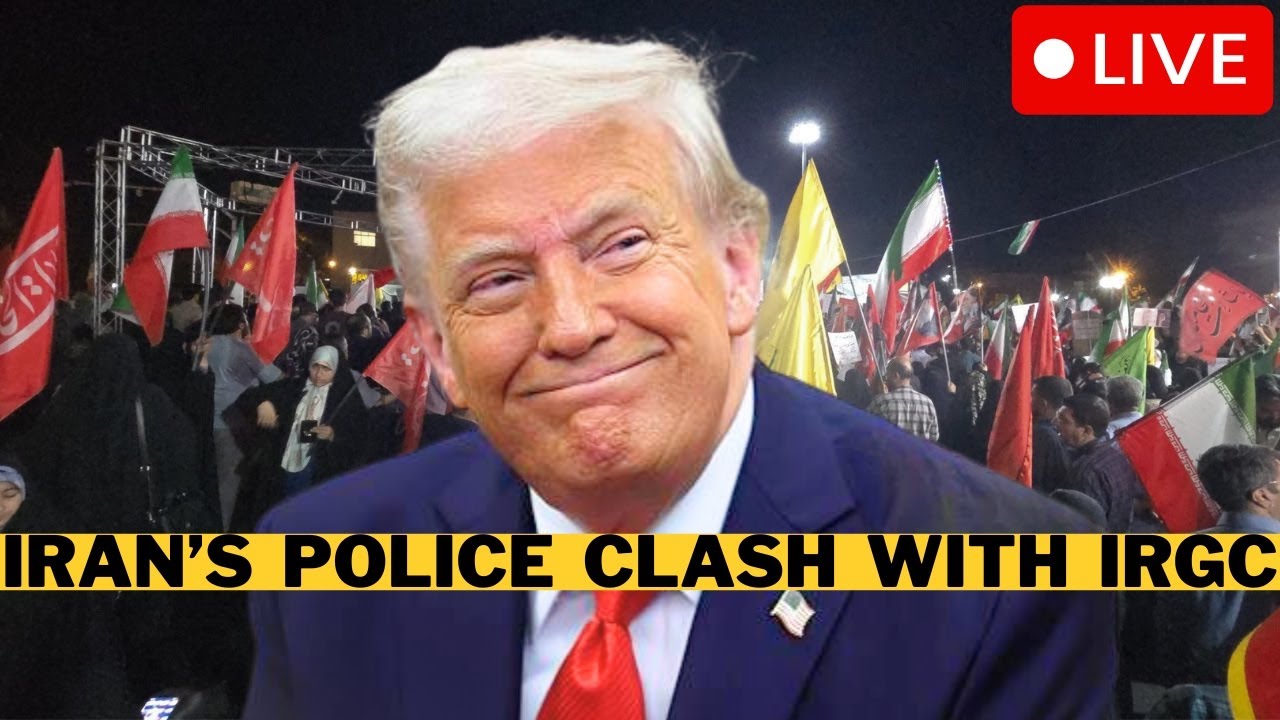
BREAKING: Protests ERUPT In Iran Over IRGC Surrendering To Trump - Infighting Clashes In Tehran
"Iran is experiencing severe internal infighting and protests as hardline IRGC elements clash with government figures over a perceived 'surrender' to the US, while mainstream Western media misrepresents the situation."

BREAKING: Iran Threatens To END Talks; U.S. Vows Retaliation; Hezbollah Collapsing? | TBN Israel
"Iran is leveraging Hezbollah and the Strait of Hormuz to manipulate US negotiations, while Israel asserts its right to dismantle Hezbollah's eroding but still dangerous infrastructure in Lebanon, independent of international talks."

Alex Krainer: US STRIKES Iran – Iran RETALIATES Against Kuwait, Bahrain & Jordan!
"Amidst escalating US-Iran conflict and Iranian retaliation against regional US allies, this episode argues that US foreign policy is deeply controlled by an 'Anglo-Zionist conspiracy' led by the Rothschild banking dynasty, prioritizing Israeli interests over American ones."