
VIDEO OF NANCY GUTHRIE & KIDNAPPER CLAIM
YouTube · UMEr56g70qE
Quick Read
Summary
Takeaways
- ❖An anonymous emailer claims to possess video of Nancy Guthrie with her kidnapper on her 'last day,' demanding one Bitcoin for access to a hidden phone.
- ❖Cybersecurity expert Morgan Wright dismisses the new claim as 'parasitic communication' lacking evidentiary proof, suggesting an escrow account for verification.
- ❖Savannah Guthrie, Nancy's daughter, believes two earlier ransom notes were authentic, which Nancy Grace suggests was FBI-sanctioned.
- ❖Experts debate whether Savannah's public statements are genuine belief or part of an FBI strategy to engage the perpetrator.
- ❖Specific details in earlier notes, like the Apple Watch's unique location and pajama description, lent them credibility.
- ❖The sender's refusal to send a screenshot due to metadata concerns is deemed elementary to bypass by cybersecurity experts, further fueling skepticism.
- ❖The low Bitcoin demand ($58,000) is questioned against the $1.2 million reward, suggesting a potential scam or different motive.
- ❖Former FBI agent Maureen O'Connell and Morgan Wright speculate about the possibility of DNA evidence from the 'porch guy' leading to a breakthrough, despite crime scene integrity issues.
Insights
1New Ransom Claim: Video Evidence for One Bitcoin
An anonymous sender emailed TMZ, claiming to possess a short video of Nancy Guthrie with her 'main kidnapper' on what was 'probably her last day.' The sender demands one Bitcoin (approximately $58,000) for access to a hidden phone containing this video, along with names and contact information for the kidnappers. The phone is described as being in a 'secure secret location' that is 'easy to find if you know where to look.'
The email was sent to TMZ and subsequently shared with Nancy Grace's show. The sender referenced a previous Bitcoin address, indicating continuity with prior communications.
2Expert Skepticism on New Claim's Authenticity
Cybersecurity expert Morgan Wright views the new email as 'parasitic communication,' lacking immutable proof. He suggests the fastest way to verify would be an escrow account: Bitcoin held by a neutral third party, released upon delivery and verification of the phone's contents. Former FBI agent Maureen O'Connell also expresses strong disbelief in the new letters, citing inconsistencies and the sender's motives.
Morgan Wright states, 'A claim of evidence is not evidence.' He points out the sender's refusal to provide a screenshot due to metadata concerns, which he calls 'grade school kind of stuff' to bypass, making the story contradictory.
3Savannah Guthrie's Belief in Earlier Ransom Notes
Savannah Guthrie, Nancy Guthrie's daughter, publicly stated her belief that two prior ransom notes were authentic. These notes included a ransom request, followed by an apology stating Nancy Guthrie had passed away and was 'buried with nature.' Nancy Grace suggests this public statement was 'FBI sanctioned' given Savannah's intelligence and legal background.
A clip from 'Today' shows Savannah Guthrie saying, 'I tend to believe those are real.' Sydney Silvani, an investigative reporter, confirms these notes requested ransom and later apologized for Nancy's death.
4FBI Strategy and Public Statements
There is a debate among experts regarding whether Savannah Guthrie's public statements about the authenticity of the notes reflect her genuine belief or are part of a deliberate FBI strategy to engage the perpetrator. Mike Gould, a former lieutenant, suggests the FBI might use such statements in a 'game of cat and mouse' to further the investigation.
Mike Gould states, 'The FBI has a strategy of disclosing information... if a statement by the victim's daughter is going to help... it might be helpful.' Maureen O'Connell also considers the possibility that Savannah was 'told to do it by the bureau.'
5Credibility from Specific Details in Earlier Notes
Despite overall skepticism for the latest claim, earlier ransom notes contained specific details that lent them credibility to law enforcement. These included a unique description of the Apple Watch's location (not just on a nightstand) and an exact description of Nancy Guthrie's pajamas on the night she went missing.
Nancy Grace highlights, 'The first note apparently had information in it about the Apple Watch that was very distinct... that Apple Watch was in a very interesting place.' She also mentions 'an exact description of Nancy Guthri's pajamas the night she went missing. Not just that she was wearing pajamas but what they looked like.'
6DNA Potential from the 'Porch Guy'
Former FBI agent Maureen O'Connell believes law enforcement is close to catching the 'porch guy' due to potential DNA evidence. She notes the perpetrator had a bite light in his mouth and touched the camera frame and doorknob, suggesting transferred DNA and saliva (from drooling with the light in his mouth) could be present. Forensic genetic genealogy could be used to identify him.
Maureen O'Connell explains, 'He had that bite light in his mouth and he was wearing gloves and you saw him bring his hand up to his mouth at one point and then touch the frame of the camera... I just can't believe that there isn't some good DNA in there.'
7Targeted Abduction Theory
Morgan Wright's working hypothesis is that Nancy Guthrie's disappearance was a targeted abduction, not a burglary gone wrong. He bases this on the 'porch guy's' comfortable and practiced behavior, suggesting prior reconnaissance. The removal of the camera was likely to conceal the getaway vehicle, as the blood trail stopped at the driveway's edge, indicating she was put into a car.
Morgan Wright states, 'My working hypothesis now it was a targeted abduction for one main fact: the porch guy the intruder is very comfortable in his behavior in his tradecraft... the reason the camera was removed was not to disguise him. It was to disguise the car because the blood trail stops at the edge of the driveway.'
Bottom Line
The FBI might be intentionally using public statements from family members, like Savannah Guthrie's belief in certain ransom notes, as part of a psychological 'cat and mouse' game to provoke or gather more information from the perpetrators, rather than these statements being purely spontaneous.
This suggests that public information in high-profile cases might be strategically managed by law enforcement to influence the actions of suspects, adding a layer of complexity to how media and family statements should be interpreted.
Analyzing public statements from family members in ongoing investigations, especially when they contradict expert skepticism, could reveal subtle indicators of law enforcement's strategic communication tactics.
The anonymous sender's demand for one Bitcoin ($58,000) for critical evidence is significantly lower than the $1.2 million reward offered for information leading to Nancy Guthrie's recovery or the arrest of her kidnappers.
This discrepancy raises questions about the sender's true motives. It could indicate they are not directly involved in the kidnapping and are genuinely afraid of the kidnappers, or it could be a scammer testing the waters with a lower, more 'believable' demand to avoid suspicion of direct involvement in the crime.
Investigating the financial motivations and risk assessment of individuals attempting to monetize information related to high-stakes crimes could reveal patterns in how scammers or peripheral actors operate, potentially leading to new methods for identifying fraudulent claims.
Lessons
- Approach anonymous claims of evidence in high-stakes cases with extreme skepticism, especially when the sender avoids standard verification methods like providing metadata-stripped screenshots.
- Recognize that public statements from family members in ongoing investigations, particularly those with legal backgrounds, might be strategically aligned with law enforcement efforts to influence perpetrators.
- Understand that seemingly minor details, like the specific location of an item or description of clothing, can be critical in authenticating communications from perpetrators in kidnapping cases.
Notable Moments
The reveal of a new email claiming video evidence of Nancy Guthrie with her kidnapper, demanding one Bitcoin.
This introduces a potentially significant, yet highly questionable, new lead in the ongoing investigation, setting the stage for expert analysis on its credibility.
Nancy Grace's strong assertion that Savannah Guthrie's belief in earlier ransom notes was 'FBI sanctioned,' despite expert debate.
This highlights the tension between public perception, family emotion, and potential strategic communication from law enforcement in complex cases.
Morgan Wright's dismissal of the sender's metadata excuse for not providing a screenshot as 'grade school kind of stuff' to bypass.
This moment directly challenges the credibility of the anonymous sender's technical claims, reinforcing expert skepticism about the new evidence.
Quotes
"The FBI has to play a game of cat and mouse."
"If they're true, then this one is true. It's not a leap of faith. It's evidence."
"It doesn't pass the sniff test for me when it comes to and I'm a logic driven thinker."
Q&A
Recent Questions
Related Episodes
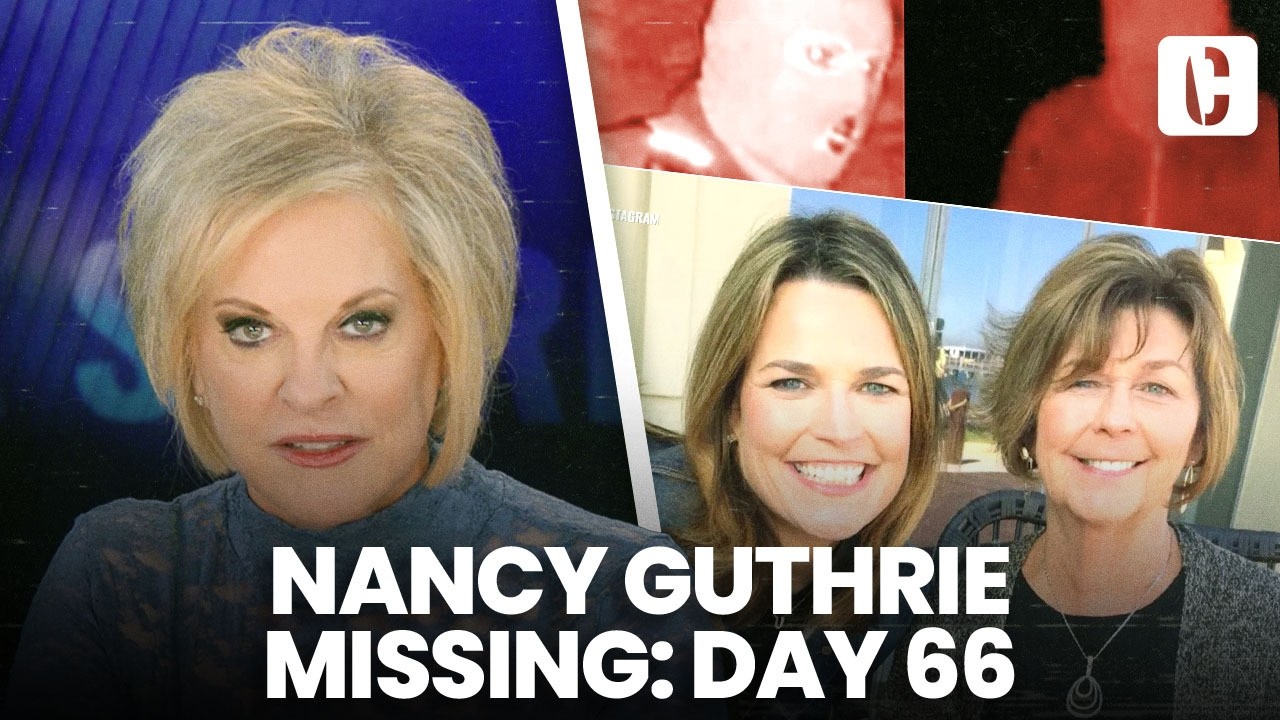
SAVANNAH GUTHRIE'S MOM MISSING: DAY 66
"On day 66 of Nancy Guthrie's disappearance, investigators grapple with two distinct sets of Bitcoin ransom notes, digital tracing challenges, and potential physical evidence like shoe coverings, as new, dubious claims emerge from a 'hyena' seeking payment for information."

Student Murders Her Ex-Teacher After Graduation
"A welfare check for a missing retired teacher escalates into a murder investigation when his car is found with a former student, revealing a brutal robbery-homicide driven by drug-induced rage."

The YouTuber Who Had Her Husband Murdered
"A young YouTuber with dreams of online fame orchestrated the brutal murder of her husband, Ernie Abara, after staging a home invasion, leading to a complex investigation that exposed her calculated deception."
Cops Find Dead Body In Her Crawlspace After Anonymous Tip
"An anonymous Facebook tip leads police to a shocking discovery: a missing man's body encased in concrete within a crawl space, unraveling a tale of murder, domestic violence, and a coerced cover-up."