BREAKING: Chinese & Iran Tankers BREAK U.S. Hormuz Blockade; Israel, Lebanon Hold Talks | TBN Israel
YouTube · UkDK235YcTQ
Quick Read
Summary
Takeaways
- ❖The US naval blockade in the Strait of Hormuz was breached on its first day by an Iranian and a Chinese tanker, signaling its limitations.
- ❖OPEC oil output fell to a low not seen since the 1980s due to the conflict and blockade, causing a global energy market crisis.
- ❖Iran's Revolutionary Guards are demanding compensation from five Arab states (Saudi Arabia, Qatar, UAE, Bahrain, Jordan) for alleged assistance to US-Israeli efforts.
- ❖China condemned the US blockade, emphasizing that freedom of navigation in Hormuz is a 'red line' due to its energy security interests.
- ❖Iran's negotiation tactic is to draw out talks, pretend unwillingness, then make minor concessions to relieve pressure and buy time for political survival.
- ❖Israel is conducting direct talks with the Lebanese government while simultaneously intensifying military pressure against Hezbollah in southern Lebanon, particularly in areas like Binbell.
- ❖Hezbollah, a powerful Iranian proxy, threatens the Lebanese government and opposes any disarmament, maintaining its monopoly over war and peace decisions.
- ❖European nations (France, UK) are attempting to form a separate multinational defensive mission for Hormuz, distinct from the American blockade, to restore navigation when conditions allow.
Insights
1US Hormuz Blockade Faces Immediate Challenges and Global Economic Impact
The US naval blockade in the Strait of Hormuz, intended to prevent Iran from exporting goods, was immediately challenged. An Iranian and a Chinese tanker successfully broke through, demonstrating the blockade's limitations. This event, coupled with the broader conflict, led to an unprecedented collapse in oil exports from the Persian Gulf, causing OPEC oil output to fall to 1980s levels and triggering a global energy market crisis. China strongly condemned the blockade, asserting that freedom of navigation in the Strait is a 'red line' for its energy security.
On the first day of the blockade, an Iranian and a Chinese tanker managed to break through (, ). OPEC oil output fell by 7.88 million barrels per day to 20.79 million barrels per day, the sharpest drop since the 1980s (). China attacked the American blockade, stating it harms global interests and demands full freedom of navigation (, ).
2Iran's Negotiation Strategy: Stalling for Political Survival
Despite US pressure, Iran's approach to negotiations with the United States is characterized by a deliberate strategy of stalling and prolonging talks. The regime aims to buy time, exhaust the West, and project strength, ultimately prioritizing its political survival over a quick resolution. While leaks suggest Iran is discussing enriched uranium, this is framed as a tactical signal to maintain negotiation relevance, rather than a genuine shift towards rapid agreement. The US demands removal of highly enriched uranium and a commitment against nuclear weapons, while Iran offers only dilution or temporary freezes.
The Iranian regime's tactic is to draw out conversations, pretend to refuse terms, then agree a week later (). They have no agenda to end quickly, believing prolonging the conflict weakens adversaries and enhances their perceived strength (). The US demands removal of highly enriched uranium, Iran refuses, offering dilution or temporary freeze ().
3Israel's Dual Strategy in Lebanon: Military Pressure and Fragile Diplomacy
Israel is pursuing a dual strategy in Lebanon: intensifying military operations against Hezbollah in southern Lebanese villages like Binbell to dismantle infrastructure and create a buffer zone, while simultaneously engaging in direct talks with the weak and divided Lebanese government. The goal is to push Hezbollah back from the border, preventing attacks on Israeli communities. Hezbollah, a powerful Iranian proxy, actively undermines the Lebanese government's authority and threatens its leaders, making disarmament through diplomatic means highly challenging. The US is pressuring Israel to de-escalate in central Lebanon to avoid broader regional instability.
Israel and Lebanon entered direct talks (, ). The IDF is focused on war against Hezbollah () and completed encirclement of Binbell (), where 10 soldiers were wounded in close-range clashes (). Hezbollah has previously assassinated Lebanese leaders () and threatens the government (). The US pressures Israel to reduce escalation in central Lebanon ().
4International Responses to Hormuz Blockade: China's Red Line and Europe's Alternative
The US blockade in Hormuz provoked strong international reactions. China sharply condemned the blockade, warning against escalation and asserting that freedom of navigation is a 'red line' for its energy security and global economic interests. European powers, specifically France and the UK, are attempting to establish a separate, multinational defensive mission to restore freedom of navigation in the Strait, distinct from the American blockade. This initiative signals Europe's desire to act independently and not be fully aligned with Washington's aggressive stance, aiming for stability when security conditions permit.
China attacked the American blockade, announcing it harms global interests () and demands full freedom of navigation (, ). French President Macron and British Prime Minister Starmer will hold a video conference for countries interested in a multinational defensive mission to restore navigation in Hormuz (, ).
Key Concepts
Iranian Negotiation Playbook
Iran's consistent strategy in negotiations is to prolong discussions, feign refusal to agree, and then make tactical concessions on previously rejected topics. This approach aims to exhaust adversaries, buy time, and project internal discourse, ultimately serving the regime's political survival rather than achieving swift resolution.
Holding Both Ends of the Rope
Israel's approach in Lebanon involves simultaneously applying military pressure to weaken Hezbollah on the ground while engaging in diplomatic talks with the Lebanese state. This dual strategy aims to achieve security objectives through force while also seeking a political solution that isolates the terrorist organization.
Notable Moments
First day of US naval blockade in Strait of Hormuz is breached by Iranian and Chinese tankers.
This event immediately highlighted the limitations of the blockade and the complex geopolitical alliances, challenging US authority and impacting global energy markets.
OPEC oil output falls to 1980s levels due to the conflict and blockade.
This demonstrates the severe economic repercussions of the regional tensions, affecting global energy supply and prices, and signaling a significant crisis.
10 Israeli soldiers wounded in close-range clash with Hezbollah in Binbell, southern Lebanon.
This incident underscores the intensity and danger of the ground operations in Lebanon, showing that the conflict is moving into tighter, more dangerous combat zones, and that Hezbollah remains a formidable opponent.
Quotes
"The meaning of the fast boats is if one of them approaches our blockade, it will be eliminated immediately in a fast and brutal way exactly as we act against drug traffickers."
"The very tactic of the Iranian regime is to do exactly this, to draw out the conversation, to pretend to refuse to come to terms and then a week later to come to terms on the same topics that they wouldn't discuss a week before."
"Israel's war is not against Lebanon as a country or a people. It's against the terrorist organization that is funded by Iran."
"For China, this is not just another front with Washington. It is energy security, price stability, and the ability to keep feeding its own economy."
Q&A
Recent Questions
Related Episodes

Patrick Henningsen: Hezbollah JUST Fired Back at Israel - Iran Vows to “Crush” All Attacks
"Patrick Henningsen argues that the US and Israel initiated an illegal war against Iran, driven by Trump's incompetence and Israeli influence, leading to an inevitable escalation with severe global economic repercussions."

BREAKING: Iran Threatens To END Talks; U.S. Vows Retaliation; Hezbollah Collapsing? | TBN Israel
"Iran is leveraging Hezbollah and the Strait of Hormuz to manipulate US negotiations, while Israel asserts its right to dismantle Hezbollah's eroding but still dangerous infrastructure in Lebanon, independent of international talks."
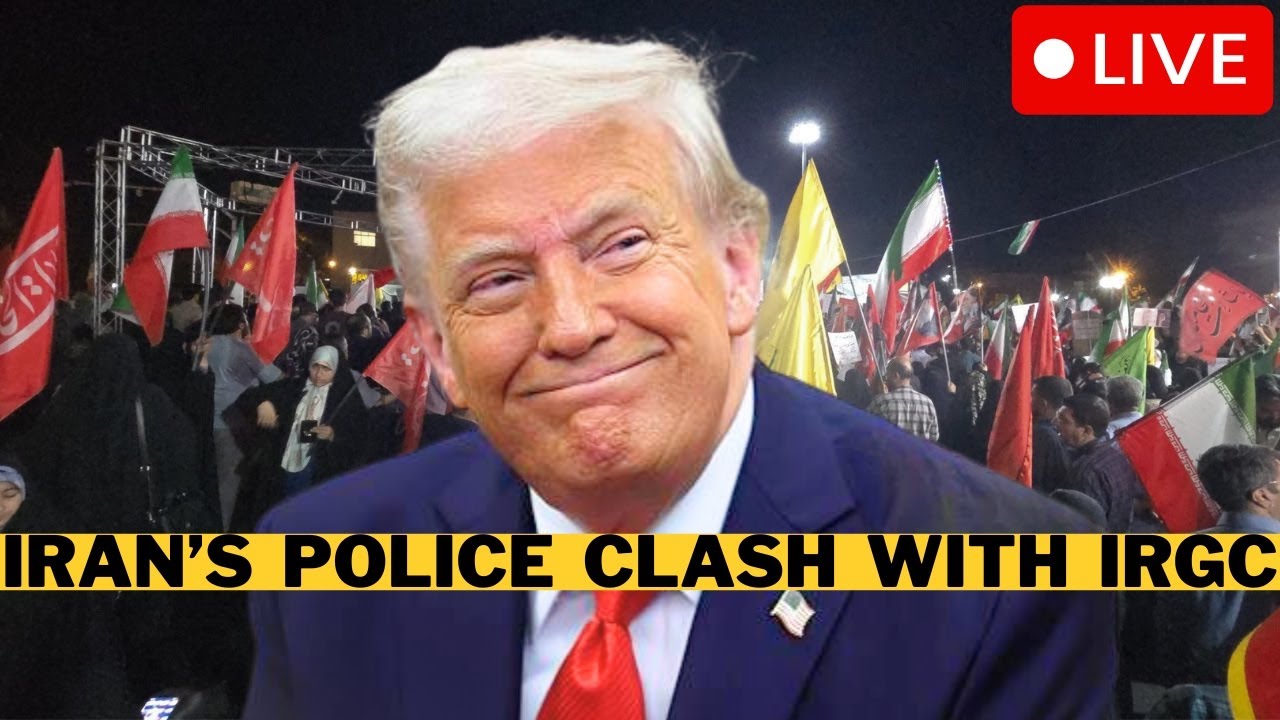
BREAKING: Protests ERUPT In Iran Over IRGC Surrendering To Trump - Infighting Clashes In Tehran
"Iran is experiencing severe internal infighting and protests as hardline IRGC elements clash with government figures over a perceived 'surrender' to the US, while mainstream Western media misrepresents the situation."

Iran Update: Israel’s Newest Bombing Campaign, the Oncoming War With China and How to Avoid It
"Colonel Wilerson reveals how the US and Israel are actively bombing China's strategic infrastructure in Iran, escalating a covert economic war that Beijing intends to win without direct military conflict by dismantling the dollar's global dominance."