
John Helmer: Russia on the Verge of Major Escalation — Europe Braces for Retaliation
YouTube · VHQiDaQ8PZU
Quick Read
Summary
Takeaways
- ❖Russia is locked in a 'permanent war' with NATO, a long-term US strategy to weaken it in Europe.
- ❖Ukraine is evolving into a 'firing platform without people' through advanced drone warfare, making Russian demilitarization goals unattainable.
- ❖NATO, under US direction, is increasingly 'Nazified,' making a negotiated peace or pause difficult to achieve.
- ❖Russian escalation outside Ukraine has lost its deterrent capability, and internal drone attacks are causing psychological insecurity and economic strain.
- ❖European political shifts (e.g., in Italy, UK, France) do not alter the underlying economic and capital structures committed to permanent war against Russia.
- ❖The US is strengthening its power in Europe, dictating policies like 'buying American' and maintaining an 'empire strategy' of destroying Russia in Europe.
- ❖US-Iran negotiations in Qatar are unlikely to yield long-term peace, serving primarily as short-term accommodations under continued US military and economic pressure.
- ❖The Israel-Lebanon MOU is viewed as a US-Israeli attempt to liquidate Hezbollah, not a genuine peace agreement, potentially inviting further regional conflict.
- ❖Internal Russian problems, such as high interest rates and perceived government ties to oligarchs, exacerbate the impact of external warfare on voter confidence.
Insights
1Russia's Unattainable War Aims and Escalation Dilemma
John Helmer argues that Russia's primary war aims – demilitarization and denazification of Ukraine – are proving impossible to achieve. Ukraine's rapid advancements in drone warfare allow it to function as a 'firing platform without any people,' continuously attacking Russian territory. Russian military escalation has failed to deter these drone attacks or significantly reduce Ukraine's drone production capacity. Any direct Russian attack on NATO territory, even a limited nuclear one, is deemed unlikely as it would consolidate US and European mobilization against Russia, counter to Russia's strategic goal of seeking a 'pause' in the war.
Helmer states, 'The problem of Ukraine turning into a firing platform against Russia... there's no way of demilitarizing the firing platform against drones by the current military means.' He adds, 'Russian escalation has lost its deterrent capability outside the Ukraine.'
2US 'Winning' in Europe Through Permanent War Strategy
Helmer contends that the US is effectively 'winning' in Europe by consolidating European commitment to a 'permanent war' against Russia. He dismisses the idea that Russia can divide the US from Europe or that European political shifts (e.g., changes in leadership in Italy, UK, or France) will alter this fundamental alignment. The underlying economic and capital structures in Europe are seen as favorable to this permanent war, leading Europeans to 'buy American' and support the US 'empire strategy' of weakening Russia, despite significant economic costs to European nations like Germany.
Helmer states, 'The US is as committed to this long war against Russia as the Europeans. It's simply false... to imagine that Russia can divide the US or the Trump administration... from the Europeans.' He later adds, 'The success is Trump has gotten the Europeans to buy American to continue the underlying US empire strategy of destroying Russia in Europe. And it's working.'
3Internal Russian Vulnerabilities and Election Risks
Russia faces rising internal psychological insecurity and economic inconvenience due to drone attacks and gasoline shortages, particularly in western Russia and Crimea. These issues, combined with self-inflicted problems like the Central Bank's high-interest rate policies (which Helmer attributes to Putin's protection of Governor Nabiullina), are eroding voter confidence. This creates a 'vulnerable Russia' that NATO and US intelligence agencies aim to exploit, potentially threatening the ruling party's majority in upcoming elections and raising the possibility of election fraud or even postponement.
Helmer notes, 'The level of tension that's caused by drone attacks at night and the associated disruptions... increase psychological insecurity.' He also mentions, 'There are gasoline shortages and rationing in some parts of the western Russia... All of these things are felt personally.' He connects this to, 'Russian voter confidence in President Putin's leadership is correlated with Russian confidence in the Russian army.'
4Skepticism Towards US-Iran Negotiations and Middle East Stability
Helmer views the US-Iran talks in Qatar as unlikely to lead to a long-term peace, characterizing them as short-term 'accommodations' driven by attritional pressures on both sides (US needing oil, Iran needing to sell it). He highlights the US's consistent objective since the 1940s to 'divide and break any form of Arab resistance or Iranian resistance to the US empire.' The recent Israel-Lebanon MOU is interpreted as a US-Israeli war aim to liquidate Hezbollah, not a genuine peace agreement, potentially inviting further regional conflict by allowing foreign forces to intervene against Hezbollah.
Helmer states, 'The issue really remains a military one. Can the US dictate the future of Iran under military attack?' Regarding the Lebanon MOU, he says, 'what this MOU represents is the liquidation of Hezbollah and that's a war aim for the Israelis and the Americans.'
Bottom Line
The US strategy in Europe is not merely about supporting Ukraine, but a deeper 'empire strategy' aimed at destroying Russia's influence in Europe and ensuring European economic dependence on the US, regardless of which political party is in power in European nations.
This implies that even if 'pro-peace' or 'anti-war' parties gain power in Europe, the fundamental geopolitical and economic alignment with the US against Russia will persist, making a true shift in European policy unlikely.
For analysts, this suggests focusing less on superficial political changes in Europe and more on the underlying capital structures and economic interests that drive foreign policy decisions.
Russia's internal political stability, particularly President Putin's voter confidence, is directly linked to the army's perceived ability to protect the interior from drone attacks, not just its success on the front lines.
This means that even if Russia makes military gains in Ukraine, a failure to secure its own hinterland could lead to significant domestic political challenges, potentially forcing the Kremlin into drastic measures like election postponement or increased fraud.
For foreign adversaries, this highlights a key vulnerability: sustained, attritional drone warfare against Russian infrastructure and population centers can have a disproportionate political impact, even if it doesn't achieve immediate military objectives.
Key Concepts
Permanent War
The concept that the conflict is not a temporary event but an ongoing, long-term state of geopolitical struggle, particularly between Russia and NATO/US, driven by entrenched strategic objectives and economic interests that resist diplomatic resolution.
Attritional Warfare (Political & Economic)
Beyond military attrition, this model describes a strategy aimed at eroding an adversary's political stability and economic resilience through sustained, lower-intensity attacks (like drone strikes on infrastructure or economic blockades) to undermine public confidence and force concessions, rather than direct military defeat.
Lessons
- Monitor Russian internal economic indicators and public sentiment, particularly regarding gasoline shortages and drone attack frequency, as these are critical to understanding Putin's political vulnerability.
- Analyze European political shifts through the lens of underlying economic and capital structures, rather than just rhetoric, to predict the continuity of anti-Russia policies and US influence.
- Approach US-Iran and Israel-Lebanon diplomatic efforts with skepticism, recognizing them as potential short-term accommodations or strategic maneuvers within a broader, long-term US objective to dismantle regional resistance.
- Evaluate the evolving capabilities of drone warfare and counter-drone measures, as this technology fundamentally alters traditional military objectives and the dynamics of 'demilitarization' in modern conflicts.
Quotes
"The problem of Ukraine turning into a firing platform against Russia, not only the four regions but Crimea as well and then inland the hinterland of Russia. The problem there is that there's no way of demilitarizing the firing platform against drones by the current military means."
"NATO is Nazified now and it's perfectly clear and has been for a long time to the general staff that Russia is not ready to fight a long permanent war against NATO."
"The success is Trump has gotten the Europeans to buy American to continue the underlying US empire strategy of destroying Russia in Europe. And it's working."
"Russian escalation has lost its deterrent capability outside the Ukraine. It's lost its capability to demilitarize inside the Ukraine."
"The problem that President Putin refuses to solve is the very high interest rate policies of the central bank governor Alvira Nabolina. That's self-inflicted."
"The US has every intention of dividing and breaking any form of Arab resistance or Iranian resistance to the US empire in the Middle East."
Q&A
Recent Questions
Related Episodes

Alex Krainer: US STRIKES Iran – Iran RETALIATES Against Kuwait, Bahrain & Jordan!
"Amidst escalating US-Iran conflict and Iranian retaliation against regional US allies, this episode argues that US foreign policy is deeply controlled by an 'Anglo-Zionist conspiracy' led by the Rothschild banking dynasty, prioritizing Israeli interests over American ones."

Iran Update: Israel’s Newest Bombing Campaign, the Oncoming War With China and How to Avoid It
"Colonel Wilerson reveals how the US and Israel are actively bombing China's strategic infrastructure in Iran, escalating a covert economic war that Beijing intends to win without direct military conflict by dismantling the dollar's global dominance."

Patrick Henningsen: Hezbollah JUST Fired Back at Israel - Iran Vows to “Crush” All Attacks
"Patrick Henningsen argues that the US and Israel initiated an illegal war against Iran, driven by Trump's incompetence and Israeli influence, leading to an inevitable escalation with severe global economic repercussions."
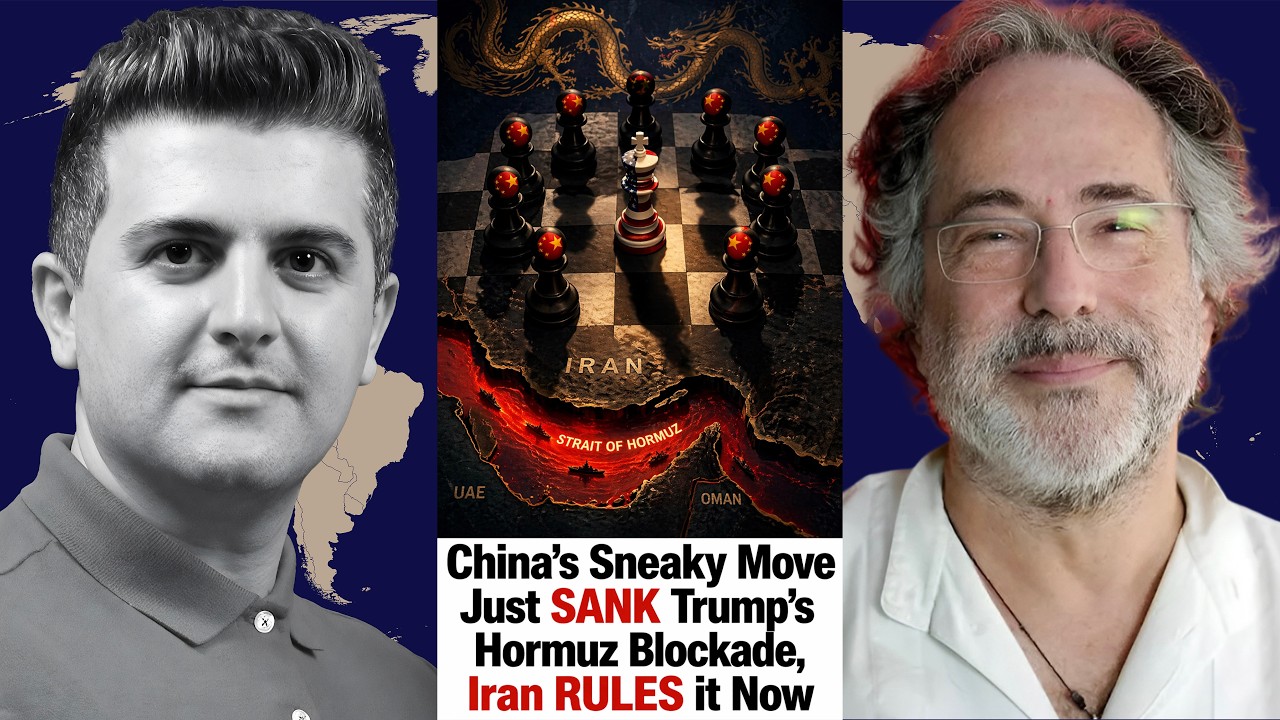
Pepe Escobar: “Total Failure”: Trump’s Blockade Just Backfired Disastrously
"Pepe Escobar argues that the US blockade against Iran, spearheaded by Donald Trump, has utterly failed and backfired, accelerating global economic chaos and challenging US geopolitical dominance."