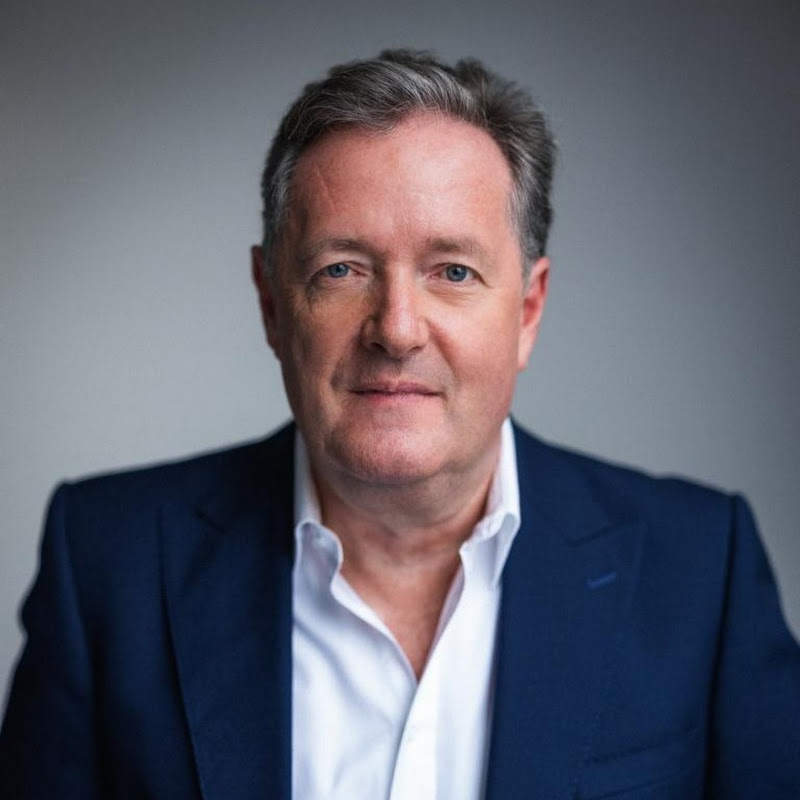
“So Used To LYING!” AIPAC vs Thomas Massie + San Diego Mosque Attack With Mehdi Hasan
YouTube · VXthKe5mEAM
Quick Read
Summary
Takeaways
- ❖Thomas Massie's primary defeat saw record-breaking spending (up to $25 million) by pro-Israel billionaires and AIPAC, targeting his critical stance on US aid to Israel.
- ❖The debate centers on whether Massie's loss was due to Donald Trump's direct opposition and endorsement of his opponent, or the massive financial intervention by foreign-policy-focused donors.
- ❖Mehdi Hasan argues that Islamophobia is mainstreamed in the US and UK, with Republican politicians often silent on mosque attacks, unlike the widespread condemnation of anti-Semitism.
- ❖Hasan highlights that white nationalist extremism often combines anti-Semitism and Islamophobia, as seen in the San Diego mosque attackers' manifesto.
- ❖The discussion on the Iran war reveals differing views on Trump's ability to control the conflict and its economic repercussions, particularly regarding oil prices and the Strait of Hormuz.
Insights
1Record-Breaking Pro-Israel Lobbying in Massie's Primary
Pro-Israel billionaires, led by Miriam Adelson, and AIPAC poured an unprecedented $15-25 million into Thomas Massie's primary district. This made it the most expensive primary in US history, with the funds specifically aimed at unseating Massie due to his increasingly critical stance on US aid to Israel, despite his otherwise conservative voting record aligned with Trump.
Glenn Greenwald states, 'three pro-Israeli billionaires, led by Miriam Adelson... poured insane amounts of money, record-breaking amounts of money into this tiny little district where all you need is 50,000 votes to win. And if you don't think that 20, 25 million dollars is enough to sway 5,000 voters... you're just not living in in political reality.' He adds that AIPAC broke its own record this year, spending $15 million in other primary races as well. Piers Morgan later notes AIPAC and other groups put in 'over $9 million in a deliberate bid to unseat Massie.'
2Trump's Influence vs. Donor Money in Massie's Defeat
Panelists fiercely debated the primary cause of Thomas Massie's loss. One perspective, championed by Will Chambers and Clay Travis, asserts that Donald Trump's endorsement of Massie's opponent and his public denouncement of Massie as 'disloyal' were the decisive factors, given Trump's overwhelming popularity in the Kentucky district. The opposing view, supported by Glenn Greenwald and Buckley Carlson, maintains that while Trump played a role, the massive influx of pro-Israel donor money was at least an equally significant, if not greater, factor in swaying voters.
Clay Travis states, 'Donald Trump is more popular in the Kentucky 4th Congressional District than Thomas Massie is. And whomever Trump decided he was going to endorse, I believe would have won.' Will Chambers adds that pro-Israel donors were 'particularly happy to spend that money' because 'President Trump had made Thomas Massie his target number one.' Conversely, Glenn Greenwald argues, 'if you deny that that was at least as big of a factor, then you're just insulting the intelligence of anybody listening.' Buckley Carlson adds, 'I think Glenn made the case pretty convincingly with the data that he just presented here.'
3Mainstreaming of Islamophobia and Disparate Responses to Hate Crimes
Mehdi Hasan argues that Islamophobia is 'mainstreamed' in American and British society, leading to a noticeable disparity in how attacks on mosques are addressed by politicians and media compared to attacks on synagogues. He cites examples of Republican politicians making anti-Muslim statements and the lack of specific congressional hearings on Islamophobia, contrasting this with numerous hearings and task forces dedicated to anti-Semitism.
Mehdi Hasan states, 'clearly Muslims are treated as second-class citizens in this country, not just by Republican right-wing politicians... but by the media, by liberal media, by the Democratic Party, by ordinary Americans.' He adds, 'Islamophobia has been mainstreamed in America and the UK in a way that, thankfully, anti-Semitism still hasn't.' He points out that 'Republicans in Congress have held like I think a dozen hearings on anti-Semitism. Do you know how many they've held on Islamophobia? None.'
4Interconnectedness of Anti-Semitism and Islamophobia in Extremism
Hasan highlights that white nationalist and Nazi ideologies often encompass both anti-Semitism and Islamophobia. He references the San Diego mosque attackers' manifesto, which allegedly contained hateful content against both Jews and Muslims, reinforcing the idea that minority communities are often targeted by the same extremist groups.
Mehdi Hasan notes, 'If you look at the alleged manifestos from these two kids... they're anti-Semitic and Islamophobic. The manifesto has horrific stuff in there about Jews and about Islam as well.' He further states, 'people who tend to be anti-Semitic also tend to be Islamophobic and vice versa. They're two sides of the same coin.'
5The Iran War and its Economic Impact
The panel discusses the ongoing Iran war, its impact on global energy prices (specifically gas prices in the US), and the strategic control of the Strait of Hormuz. Piers Morgan and Glenn Greenwald express skepticism about Trump's ability to exit the war gracefully or achieve its stated goals, arguing that Iran maintains significant leverage through asymmetric warfare and control over the Strait, which affects the global economy. Clay Travis, however, remains optimistic, predicting a substantial drop in gas prices before the election due to Trump's intervention.
Piers Morgan links the Iran war to the cost of living, stating, 'The Iran war has become... an increasing fiasco, mainly because of the situation with the Strait of Hormuz... They remain in control of the Strait of Hormuz. They remain with a tight grip now on the global energy economy.' Clay Travis makes a prediction: 'If the gas price is right now, $4.50 per gallon on average all 50 states... If they are not 75 cents lower by the time of election day... I will come on the day after the midterm elections with a bright red nose for you.'
Quotes
"If you don't think that 20, 25 million dollars is enough to sway 5,000 voters, you're just not living in in political reality."
"We are so used to lying and obfuscation and weasel words, as we often see from Will Chambers here."
"I would have come out sooner, but I had to call my opponent and concede and it took a while to find Ed Gallrein in Tel Aviv."
"Islamophobia has been mainstreamed in America and the UK in a way that, thankfully, anti-Semitism still hasn't, although there has been an alarming rise in anti-Semitism across the political spectrum."
"When a mosque is attacked in the US, Republican politicians are either silent... You can't find Democrats who do the same when there's a synagogue attack or anything equivalent."
Q&A
Recent Questions
Related Episodes

🚨 THEY F*CKED AROUND FOR THE LAST TIME 😭😭😭
"This episode unleashes a torrent of highly opinionated commentary on the US-Iran deal, Israel's role, and a scathing critique of 'leftist' policies and immigration, particularly highlighting the UK grooming gang report as evidence of Western societal decay."
🚨 THEY… F*CKING... FOUND… OUT… 😂😂😂
"The host delivers a fiery, unfiltered commentary on global and domestic political events, framing them as a battle between a 'collapsing globalist order' and a 'resurgent new right' that prioritizes national sovereignty and traditional Western values."

Trump Just ENDED JD Vance’s White House Dreams
"A New York Times article and internal White House dynamics reveal Donald Trump's deep dissatisfaction with J.D. Vance, potentially ending Vance's 2028 presidential ambitions and highlighting a broader struggle for control within the Republican Party."
"Fighting Solves EVERYTHING!" Who's To Blame For Political Violence? + Maria Machado On Trump
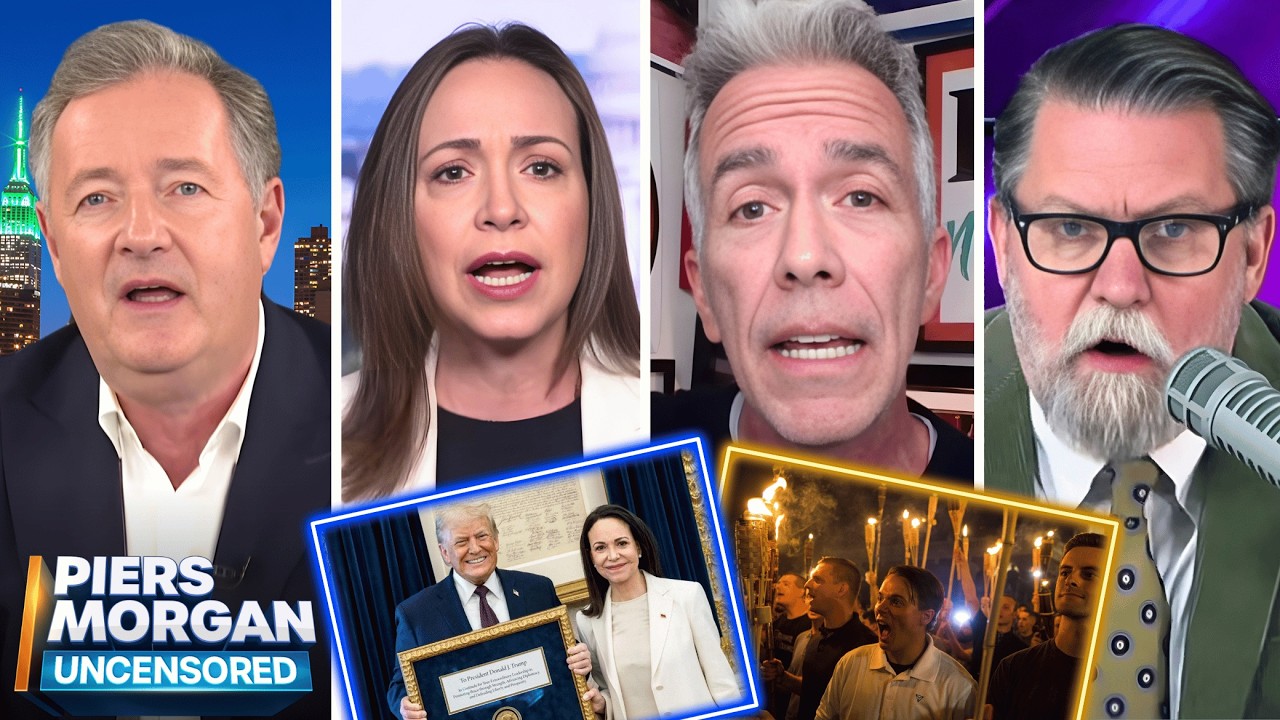
"This episode dissects the escalating political violence in the US, with panelists fiercely debating the role of partisan rhetoric and media in radicalization, alongside an interview with Venezuelan opposition leader Maria Machado on US intervention and her country's future."