
How U.S. Wins Economically By Losing Iran & Ukraine Wars! – w/ Richard Medhurst
YouTube · VZGKSR-VIjo
Quick Read
Summary
Takeaways
- ❖Journalist Richard Medhurst was arrested under UK terrorism acts for expressing support for resistance under international law, and now faces an ongoing investigation in Austria for his Gaza journalism.
- ❖Western governments are accused of hypocrisy for designating some groups as terrorists while engaging with others, such as a former al-Qaeda leader in Syria who now cooperates with Israel.
- ❖The U.S. is seen as economically benefiting from wars in Ukraine and Iran by increasing its market share in oil and LNG, and de-industrializing Europe and Asia.
- ❖Hezbollah is assessed as the most effective guerrilla fighting force globally, capable of inflicting substantial losses on Israeli forces and stopping their advance.
- ❖The U.S. is transitioning to a 'pirate strategy' of global control, relying on naval blockades and economic harassment to influence trade and energy supplies, rather than direct military occupation.
- ❖The modern Hebrew language is described as a 19th-century construct, disconnected from original Hebrew and incorporating Yiddish and Arabic elements, to create a national identity for the Zionist project.
Bottom Line
The U.S. is actively moving the global energy corridor away from the Middle East, preparing to abandon Gulf kingdoms and their bases in favor of a 'pirate strategy' of naval control.
This shift implies a fundamental change in U.S. geopolitical strategy, reducing reliance on traditional alliances and land-based military presence in the Middle East, and increasing global maritime economic warfare.
Nations reliant on global trade routes, especially for energy, must develop robust naval defense capabilities and diversified supply chains to counter potential blockades and economic harassment from dominant naval powers.
Europe's leaders are perceived as 'CIA agents' or subservient to the U.S., willingly allowing the de-industrialization of their continent through high energy prices caused by U.S.-driven conflicts.
This suggests a deep-seated structural issue within European leadership, where national economic interests are sacrificed for geopolitical alignment with the U.S., leading to long-term economic decline and public disillusionment.
Independent political movements in Europe could gain traction by advocating for energy independence, diversified foreign policy, and a re-industrialization agenda that prioritizes European economic sovereignty over U.S. geopolitical objectives.
Lessons
- Critically examine mainstream media narratives on international conflicts, especially regarding economic motivations and the classification of 'terrorist' groups.
- Understand that geopolitical 'losses' for the U.S. on the battlefield may still translate into significant economic gains through control of global energy markets and de-industrialization of competitors.
- Recognize the evolving nature of global power projection, where naval blockades and economic harassment (a 'pirate strategy') are becoming central tools for maintaining influence, rather than traditional military occupation.
Notable Moments
Richard Medhurst details his arrest and ongoing legal battles in the UK and Austria for his journalism, highlighting the criminalization of opinions under terrorism acts.
This illustrates the direct risks faced by independent journalists challenging official narratives, particularly those with anti-imperialist perspectives on Middle East conflicts, and the potential for international cooperation in suppressing such reporting.
Discussion of a former al-Qaeda leader (Golani) meeting with the UK Prime Minister and Donald Trump, while simultaneously being designated a terrorist by the U.S. State Department.
This moment underscores the perceived hypocrisy and shifting alliances in Western foreign policy, where 'terrorist' designations appear fluid and serve geopolitical interests, particularly in Syria and against Iran.
The hosts and guest discuss the U.S. strategy of disrupting energy supplies to China and Russia, including alleged sinking of Russian tankers and taking out Venezuela's oil supply, to benefit U.S. energy companies.
This reveals a core economic driver behind current geopolitical tensions, suggesting that control over global energy markets is a primary objective, potentially escalating conflicts into a world war by threatening vital national resources.
Quotes
"As long as America keeps fighting these wars on other people's turfs, they're always implicitly winning in a sense because you can't really neuter the military-industrial complex."
"In Austria, they bumped it up from quote unquote supporting a terrorist organization, which is basically me saying that, you know, resistance is legal under international law... and they bumped it up to me being a Hamas member."
"If you said that same thing about Hamas, you'd be arrested. You would be arrested."
"The US today is number one in oil production, number one in refined products, number one in LG exports... Even if oil prices go up at the pump in the US, you know, you're you're paying high prices, but that money stays inside the US. So, from the Empire's point of view, it's a win-win."
"The US de-industrializes Asia and Europe and the EU are just like, you know, groveling at their feet and slobbering over them like, 'Oh, thank you so much for for destroying the continent.'"
"The United States as an empire on the other side of the planet is is shielded from all of its wars... as long as America keeps fighting these wars on other people's turfs, they're always implicitly winning in a sense."
"The Hebrew that Israelis speak is is completely fake... Arabic that Palestinians speak is closer to original Hebrew than what the Israelis are speaking."
Q&A
Recent Questions
Related Episodes

Iran Update: Israel’s Newest Bombing Campaign, the Oncoming War With China and How to Avoid It
"Colonel Wilerson reveals how the US and Israel are actively bombing China's strategic infrastructure in Iran, escalating a covert economic war that Beijing intends to win without direct military conflict by dismantling the dollar's global dominance."

Patrick Henningsen: Hezbollah JUST Fired Back at Israel - Iran Vows to “Crush” All Attacks
"Patrick Henningsen argues that the US and Israel initiated an illegal war against Iran, driven by Trump's incompetence and Israeli influence, leading to an inevitable escalation with severe global economic repercussions."

🚨 TOTAL F*CKING CHECKMATE 😂😂😂
"The host argues that Trump's 'ceasefire' with Iran was a calculated '5D chess' move to orchestrate a global energy market reshuffle, while simultaneously lambasting 'woke' domestic policies and the 'freefall' of anti-Trump conservative figures."
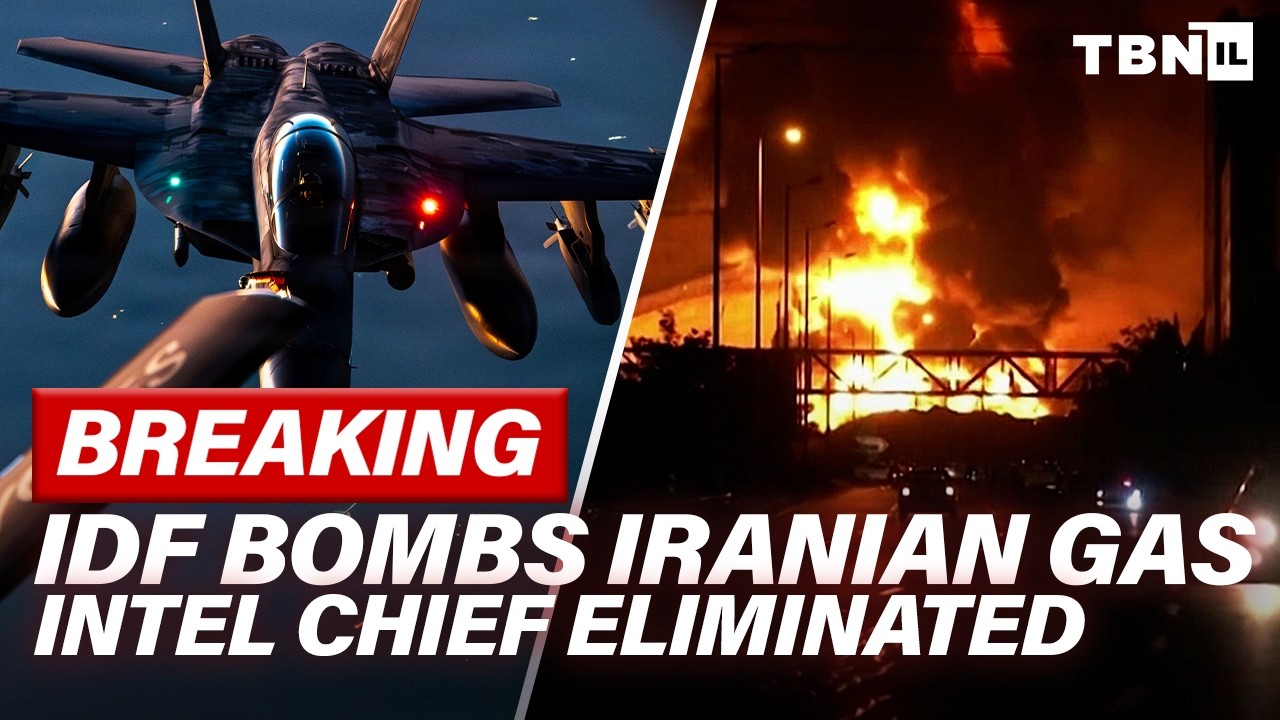
BREAKING: Israel BOMBS Major Iran Gas Site; Top Mullah ELIMINATED; Iran Vows VENGEACE | TBN Israel
"Israel and the United States have escalated their 'Roaring Lion War' against Iran, striking its largest gas facilities, eliminating key intelligence and military figures, and disrupting missile production, while Iran threatens a broader energy war in the Gulf."