
Why YOU Are A Domestic Terrorist; Historical Strike w/ Dania Munoz, Ken Klippenstein | MR Live
YouTube · Vgmt5x6MgVQ
Quick Read
Summary
Takeaways
- ❖New York City nurses are on strike, demanding fair healthcare, workplace safety, and pensions, while facing resistance from hospital executives making millions.
- ❖National Security Presidential Memorandum 7 (NSPM7) defines terrorism broadly to include "anti-Christian," "anti-American," "anti-capitalist," and "anti-traditional family values" sentiments, providing a legal framework for targeting dissent.
- ❖ICE's operations are expanding beyond deportations to include intelligence gathering from immigrants, using them as "cannon fodder" for a broader "war on cartels" in Latin America.
- ❖New York Governor Kathy Hochul's executive order, allowing out-of-state medical practitioners to work, is seen as undermining the nurses' strike by facilitating scab labor.
Insights
1NYC Nurses Strike for Healthcare and Safety
Nurses at Mount Sinai Main Hospital and other NYC hospitals are striking due to proposed cuts to their healthcare benefits, lack of workplace safety (violence from patients/family), and difficulty in hiring/retaining staff. Hospitals are attempting to roll back strong language won in previous contracts that ensured adequate staffing.
The strike is happening because right now the the hospitals are in a sense holding our healthcare hostage... they want to make cuts to the current um health insurance that we we have." (), "The CEO of New York Presby... made $26 million last week." (), "They were forcing us to to train our replacement through these travel nurses... paying them 8 to $10,000 a week." ()
2NSPM7 Redefines Terrorism Broadly
National Security Presidential Memorandum 7 (NSPM7) defines indicators of terrorism to include "anti-Christian sentiment, anti-American sentiment, anti-capitalist sentiment, anti-quote traditional family values." This directive is a high-level strategy articulation for the entire federal government.
It identifies um indicators of terrorism as being anti-Christian sentiment, anti-American sentiment, anti-capitalist sentiment, anti- quote traditional family values, whatever that means." (), "Presidential memorandum is very serious. There's only seven of them." ()
3ICE's Expanded Role in "War on Cartels"
ICE operations extend beyond deportations, actively collecting intelligence from immigrants to support a broader "war on cartels" in Latin America. Immigrants are interrogated and pressured with threats of deportation to cooperate.
These ICE operations and immigrants, they're basically cannon fodder for the war and cartels because when ICE gets an immigrant... they can interrogate them and dangle uh citizenship over their heads and say if you don't work with us, you're gone, your family's gone." (), "Intelligence collection from the immigrants that ISIS is targeting is a central component, um, of their of of the war that's taking place." ()
4Internal Dissent within ICE/DHS
A significant minority of agents within ICE and DHS express concern about the agency's aggressive tactics and the administration's public bravado, fearing it damages public trust and the reputation of federal law enforcement.
I don't want to overstate things and give you the impression that the majority of ICE agents think that. That's not true. But there's a sizable minority um within the immigration uh services border patrol ICE that do think that including at in senior ranks because they look at this and they think it's not good for a number of reasons." (), "It's destroying any reputation um federal law enforcement might have had." ()
5Congress's Failure to Restrain Executive Power
Despite the alarming expansion of ICE's powers and aggressive tactics, Congress, particularly Democratic leadership, is unwilling to use its "power of the purse" to constrain the executive branch, effectively giving the White House a green light.
Chuck Schumer... said very explicitly we are not willing to use the budget to to um coersse uh Trump and the executive branch into behaving differently on this." (), "If you're not willing to use the only leverage point you have... they don't care about the letters." ()
Bottom Line
The administration leverages the public's emotional response to the opioid crisis to justify aggressive military-style operations against cartels in Latin America, framing it as a "war" despite the complex social roots of drug use and the questionable effectiveness of such interventions. This strategy taps into raw public pain to gain support for broader geopolitical objectives.
This reveals a cynical political tactic where genuine public suffering is co-opted to legitimize an expansive, potentially destabilizing foreign policy that may not address the core issue.
Advocates could expose this manipulation by connecting the dots between domestic social problems and the administration's foreign policy, pushing for solutions that address root causes rather than militarized responses.
The Department of Homeland Security (DHS), created post-9/11, is a massive, gun-carrying police force larger than the FBI, operating under a national security mandate that allows it to treat immigration as a threat. This structure places it outside the traditional legal frameworks and oversight mechanisms of the Justice Department, creating a "nether world" where its powers are less constrained and understood.
This institutional design enables the executive branch to push the boundaries of state power without traditional checks, as the legal framework for DHS was built for counterterrorism, not domestic law enforcement or immigration.
Legal and political challenges could focus on re-litigating the scope and oversight of DHS's powers, pushing for its re-integration into a more accountable legal framework or imposing specific legislative constraints on its operations, especially regarding civil liberties.
Key Concepts
Bureaucratic Morass as a Shield
The complexity and opacity of national security directives (like NSPM7) allow agencies to hide controversial policies and actions, making it difficult for the public and even practitioners to understand their full extent.
Weaponization of "National Security"
Shifting issues from civil/criminal law to national security provides agencies like ICE with expanded powers, reduced oversight, and a justification for aggressive tactics, framing dissent as a threat to the state.
"Cannon Fodder" Strategy
Utilizing vulnerable populations (immigrants) not just for their primary stated purpose (deportation) but also as a source of intelligence to further broader, often unrelated, geopolitical or military objectives.
Lessons
- Support the New York City nurses' strike by joining picket lines, donating to their hardship fund, or providing food/supplies.
- Contact New York Governor Kathy Hochul's office to pressure her to side with the striking nurses and withdraw executive orders that undermine their efforts.
- Organize within your local community (apartment building, book club, running club) to build social networks and solidarity, as these relationships are crucial for collective action against future challenges.
- Protect your personal data online using services like Delete Me, especially in an era of increased surveillance and data breaches that can be exploited by nefarious actors.
Building Community Resilience Against State Overreach
Identify Local Problems: Find a common issue in your immediate community (e.g., apartment building, neighborhood) that can serve as a focal point for organizing.
Network and Build Relationships: Get to know your neighbors and community members by name, understanding their lives and fostering mutual trust.
Organize for Collective Action: Even around seemingly small issues, practice organizing to build the muscle for larger, more critical responses when state or corporate actions threaten the community.
Notable Moments
NYC Mayor Eric Adams publicly joined the nurses' picket line, delivering a speech in strong support of their demands for fair pay, benefits, and workplace safety, contrasting sharply with other political figures.
This demonstrates crucial political solidarity at a local level, energizing strikers and highlighting the public's alignment with labor rights, while also putting pressure on hospital management.
During a visit to a Ford plant in Detroit, Donald Trump responded to a heckler calling him a "pedophile protector" by giving him the middle finger, symbolizing his disdain for dissenting workers.
This moment starkly illustrates the breakdown of the "populist, pro-worker Republican" image and Trump's aggressive, dismissive attitude towards labor, further alienating a segment of the working class.
New York Governor Kathy Hochul issued an executive order allowing out-of-state medical practitioners to work in New York, effectively opening the floodgates for scab labor to cross picket lines.
This action directly undermines the nurses' collective bargaining power and prolongs the strike, demonstrating a political alignment with hospital management over the rights of essential workers.
Quotes
"Their value is not negotiable, and their worth is not up for debate."
"It identifies um indicators of terrorism as being anti-Christian sentiment, anti-American sentiment, anti-capitalist sentiment, anti-quote traditional family values."
"These ICE operations and immigrants, they're basically cannon fodder for the war and cartels because when ICE gets an immigrant... they can interrogate them and dangle uh citizenship over their heads and say if you don't work with us, you're gone, your family's gone."
"Chuck Schumer... said very explicitly we are not willing to use the budget to to um coersse uh Trump and the executive branch into behaving differently on this."
Q&A
Recent Questions
Related Episodes

Did Israel Drag Us Into the Iran War?
"The US administration's rationale for its large-scale military action against Iran is critiqued as incoherent and potentially influenced by Israel's independent actions, while a major conflict between the Pentagon and leading AI firm Anthropic highlights the urgent need for congressional regulation on AI's military and surveillance applications."

Trump Dirt REVEALED: Iran, Zohran, Pardons, Deportations
"Journalists Maggie Haberman and Jonathan Swan reveal how Donald Trump operates in his second term, detailing his inner circle, policy priorities, and the surprising checks on his executive power."

Contested Primary Elections. Facebook Marketplace Shooting. Hey Black Girl Affirmations#TheBreakdown
"This episode explores a Georgia lawsuit challenging a new election law, highlights a community-driven real estate project building Black wealth, and features initiatives empowering Black women and girls."
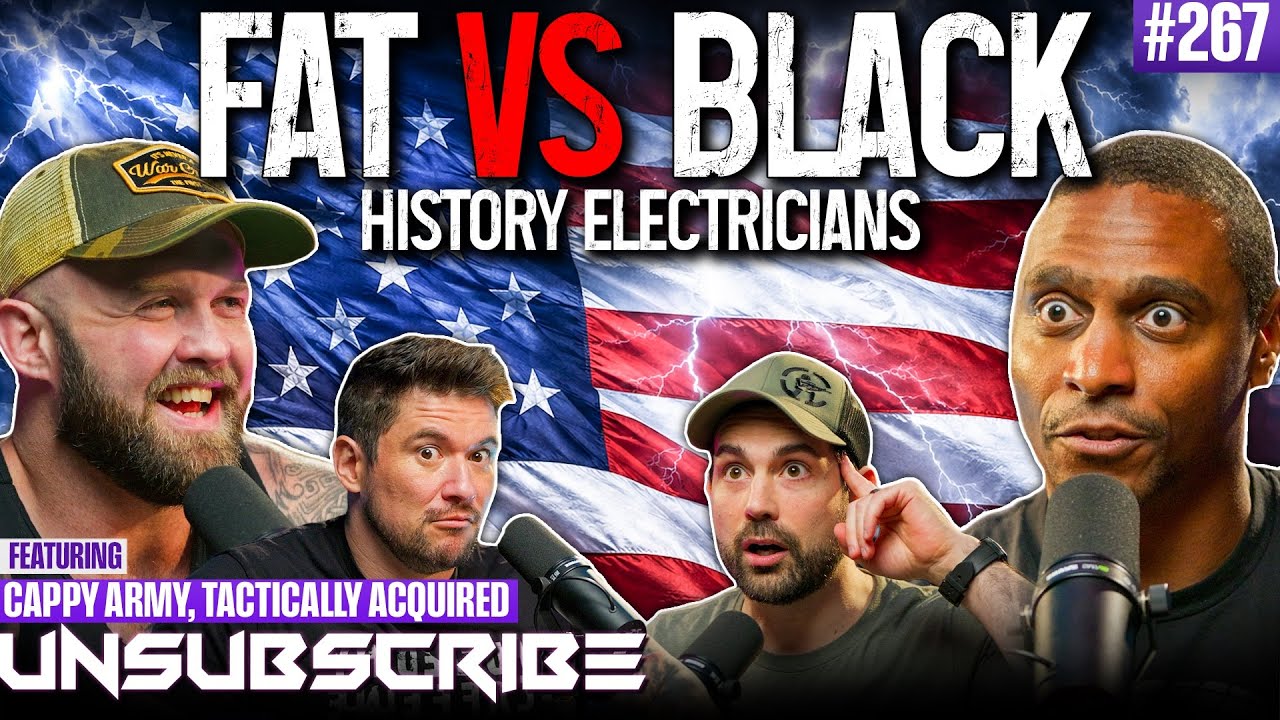
The Fat Electrician Vs Tactically Acquired | Unsubscribe Podcast 267
"This episode features military content creators discussing current geopolitical hotspots, advanced weaponry, and the surprising psychological warfare tactics of modern conflict, alongside their personal journeys building online communities."