BREAKING: Iran Talks FAIL; US Orders Naval Blockade; IDF Assaults Hezbollah Stronghold | TBN Israel
YouTube · Vk-YCidEzWI
Quick Read
Summary
Takeaways
- ❖The US naval blockade on Iran's ports in the Strait of Hormuz is a 'huge and complex military operation' designed to neutralize Iran's economic capabilities.
- ❖Iran's Revolutionary Guard declared the blockade illegal 'piracy' and threatened that if its ports are unsafe, no Gulf port will be safe.
- ❖Economic analysis suggests the naval blockade could collapse Iran's economy within 13 days, costing hundreds of millions daily.
- ❖IDF forces are conducting a ground assault on Binbell, a Hezbollah stronghold in southern Lebanon, eliminating over 100 terrorists and destroying infrastructure.
- ❖Iran's leadership is reportedly receiving a 'distorted picture of reality' from the Revolutionary Guards, believing Israel was destroyed and the US beaten.
- ❖The delayed burial of Supreme Leader Ali, over 40 days after his elimination, indicates deep fear within the Iranian regime of public unrest and internal fragility.
- ❖China, heavily dependent on Gulf oil, is caught between being harmed by the blockade and potentially benefiting from US entanglement in a new crisis.
Insights
1US Shifts Strategy to Maritime Coercion Against Iran
After failed peace talks, the US opted for a naval blockade in the Strait of Hormuz to economically cripple Iran rather than immediate broad military strikes. This strategy aims to block Iranian ports and prevent 'passage fees' collected from foreign ships, effectively choking Iran's economy by targeting its primary trade routes.
The president of the United States ordered the American Navy to block all the ports of the Islamic Republic and stop every vessel that paid passage fees to Iran. The naval blockade declared by President Trump is a huge and complex military operation. The American Navy has become the traffic police of the busiest energy route in the world.
2Iran's Internal Instability and Delusional Leadership
The delayed burial of Supreme Leader Ali for over 40 days, contrary to Muslim tradition, signals deep fear within the Iranian regime of public reaction and internal instability. Concurrently, elements within the Revolutionary Guards are reportedly feeding the top leadership falsified information, presenting a reality where Israel was destroyed and the US beaten, which contributes to a distorted picture of reality at the highest levels.
More than 40 days have passed since the Supreme Leader Ali Kame was eliminated... his body has not yet been brought to burial because his son and heir Müah is heading a mafia regime that fears public reaction and undermining of internal stability. Elements from the revolutionary guards are pressing much and closed circles at the top with falsified descriptions of this war. Videos, simulations, and images meant to present a reality according to which Israel was destroyed. The United States was beaten and Iran actually won.
3IDF Dismantles Hezbollah Stronghold in Lebanon
The IDF launched a ground assault on Binbell, a symbolic Hezbollah stronghold in southern Lebanon, eliminating over 100 terrorists and destroying infrastructure. This operation aims to weaken Hezbollah ahead of negotiations and dismantle a key symbol of its power, where Nasrallah once delivered famous speeches.
The IDF launched a move to capture the symbol of the terrorist organization in the south of the country... ADIFA forces this morning began a ground entry into the town of Binbell after an encirclement that lasted several days. The place is considered a symbol of and famous speeches by Nasala were delivered there before he was eliminated. Division 98 forces completed the encirclement and began the assault on the town of Binbell in southern Lebanon. During the operation, the forces eliminated more than 100 kzbala terrorists.
4Global Economic and Geopolitical Ripple Effects of the Blockade
The naval blockade is projected to cause a surge in global energy prices and severely impact countries like China, which is heavily reliant on Gulf oil. China's response is uncertain; it could either pressure Iran towards an agreement due to its economic losses or benefit from the United States being tied down in another expensive crisis.
The blockade on Iran, a surge in global energy prices is seen. China is the country most harmed by the war and the American blockade of the strait. The question is being asked whether it will be pushed towards an agreement or would like to see the United States actually get entangled in a war with Iran.
Bottom Line
The US naval blockade acts as a 'loyalty test' for regional and global players, forcing nations to choose between aligning with US policy or risking American protection by engaging in 'side deals' with Iran.
This could lead to further isolation of Iran and a clearer delineation of alliances, but also risks alienating countries that prioritize their economic interests over geopolitical alignment, potentially creating new friction points.
Policymakers can leverage this 'loyalty test' to solidify alliances and create a unified front against Iranian influence, but must also anticipate and mitigate potential blowback from nations caught in the middle.
A cornered, deluded, and internally unstable Iranian regime, fed falsified information by its Revolutionary Guards, could become more dangerous and unpredictable.
This increases the risk of miscalculation and irrational responses to external pressure, potentially igniting a wider conflict in the Middle East.
Intelligence agencies and diplomatic efforts should prioritize accurate information gathering on Iran's internal dynamics and leadership perceptions to better anticipate and de-escalate potential flashpoints.
Key Concepts
Economic Coercion
Utilizing economic pressure, such as a naval blockade, as a primary tool of statecraft to achieve strategic objectives and compel behavioral change without resorting to direct military conflict.
Symbolic Warfare
Engaging in actions that target not only physical assets or personnel but also the psychological and ideological symbols of an adversary to undermine morale, legitimacy, and influence.
Lessons
- Monitor global energy markets closely for price surges and supply chain disruptions due to the Strait of Hormuz blockade, and prepare contingency plans for energy security.
- Assess the potential for unpredictable actions from a cornered Iranian regime, especially given reported internal instability and distorted information at the top, to inform diplomatic and military readiness.
- Evaluate the strategic implications of China's response to the blockade, as its economic interests could either pressure Iran or prolong the crisis, impacting broader geopolitical strategies.
Notable Moments
The US Navy becomes the 'traffic police' of the Strait of Hormuz, the world's busiest energy route.
This unprecedented role highlights the scale and complexity of the naval blockade, transforming a military force into a global maritime regulator, with significant implications for international shipping and energy flow.
The 40+ day delay in burying the eliminated Supreme Leader Ali, contrary to Muslim tradition.
This is presented as a strong indicator of the Iranian regime's deep fear of public unrest and internal fragility, suggesting a significant erosion of control beneath its projected stability.
The IDF's assault on Binbell, a place where Nasrallah delivered famous speeches, is framed as 'settling an account with a symbol'.
This signifies that the operation is not just a military objective but also a psychological one, aiming to dismantle Hezbollah's ideological myth and undermine its perceived invincibility.
Quotes
"The naval blockade declared by President Trump is a huge and complex military operation. Starting today at 10:00 a.m. Washington time, the American Navy has become the traffic police of the busiest energy route in the world."
"The men of Iran's navy are tracking and monitoring all movements of the American military in the region."
"The era of side deals is over. If you pay the revolutionary guards so you could keep making money, do not expect American protection now as if nothing happened."
"When a regime does not even dare bury its leader in public, that is not just a delay. That is a status report."
Q&A
Recent Questions
Related Episodes

Iran Update: Israel’s Newest Bombing Campaign, the Oncoming War With China and How to Avoid It
"Colonel Wilerson reveals how the US and Israel are actively bombing China's strategic infrastructure in Iran, escalating a covert economic war that Beijing intends to win without direct military conflict by dismantling the dollar's global dominance."

Patrick Henningsen: Hezbollah JUST Fired Back at Israel - Iran Vows to “Crush” All Attacks
"Patrick Henningsen argues that the US and Israel initiated an illegal war against Iran, driven by Trump's incompetence and Israeli influence, leading to an inevitable escalation with severe global economic repercussions."

Alex Krainer: US STRIKES Iran – Iran RETALIATES Against Kuwait, Bahrain & Jordan!
"Amidst escalating US-Iran conflict and Iranian retaliation against regional US allies, this episode argues that US foreign policy is deeply controlled by an 'Anglo-Zionist conspiracy' led by the Rothschild banking dynasty, prioritizing Israeli interests over American ones."
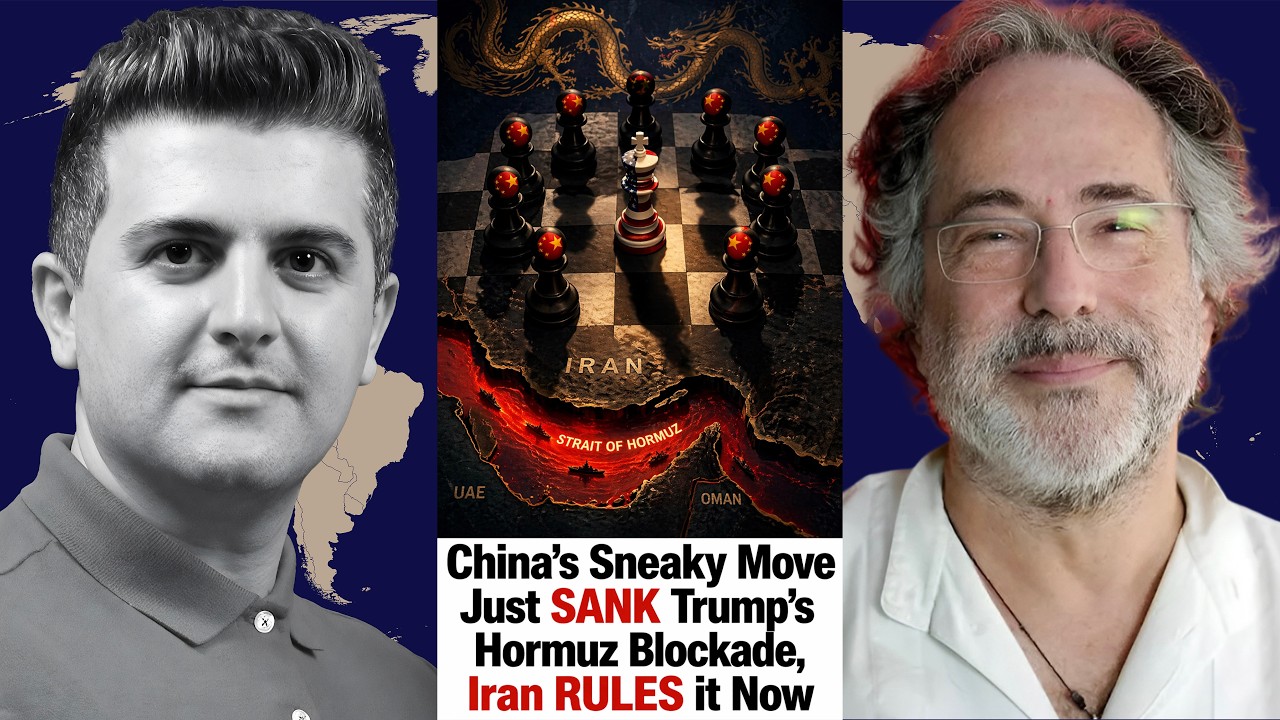
Pepe Escobar: “Total Failure”: Trump’s Blockade Just Backfired Disastrously
"Pepe Escobar argues that the US blockade against Iran, spearheaded by Donald Trump, has utterly failed and backfired, accelerating global economic chaos and challenging US geopolitical dominance."