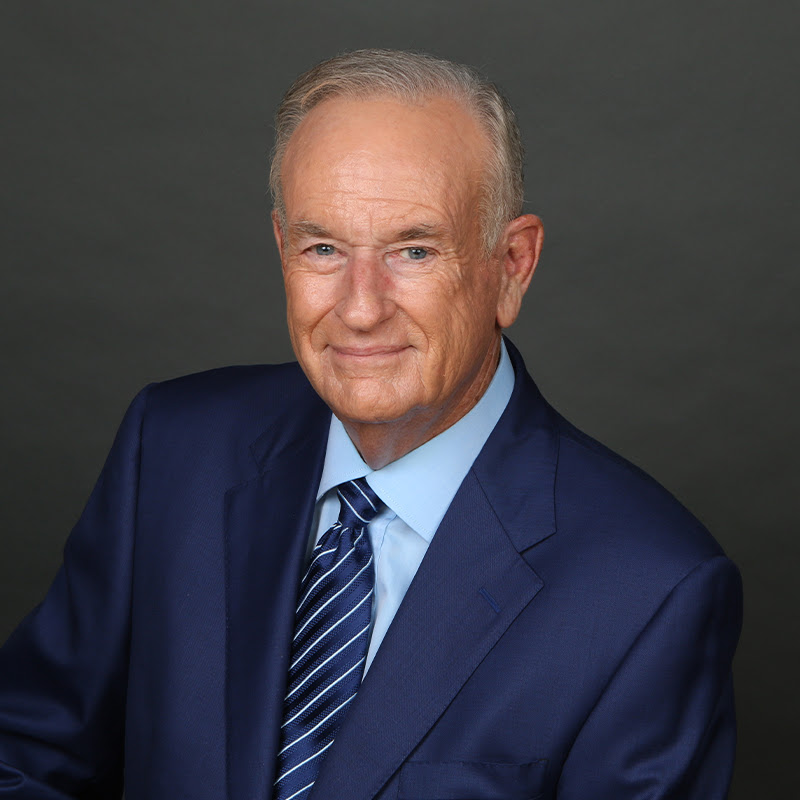
No Spin News - June 8, 2026
YouTube · WKGz7AgT1mM
Quick Read
Summary
Takeaways
- ❖Mainstream media has been on a mission to damage Donald Trump since 2016, often employing confrontational interview tactics.
- ❖Journalists like Kristen Welker are accused of liberal bias, selectively covering stories that reflect poorly on conservatives while ignoring those unfavorable to Democrats.
- ❖Trump's strategy is to get his case 'out there' even in unfriendly media environments, despite the risk of unfair attacks.
- ❖Bill O'Reilly advocates for 'informational' journalism over 'confrontational' journalism, especially when interviewing figures like Trump.
- ❖Bernard Goldberg details two theories for recent changes at CBS News and 60 Minutes: either to appease Trump for future corporate mergers or to genuinely address liberal bias.
- ❖The culture at 60 Minutes is described as insular, arrogant, and highly resistant to outside influence, with a long history of perceived anti-conservative bias.
- ❖Concerns exist that wealthy, politically aligned corporate owners could manipulate news coverage across multiple major networks, impacting information flow to the public.
Insights
1Trump's Media Strategy and Interview Dynamics
Donald Trump deliberately engages with 'unfriendly' media outlets like NBC's Meet the Press to ensure his message is heard, even if it results in confrontational exchanges. O'Reilly criticizes the interviewer, Kristen Welker, for employing a confrontational style, focusing on past statements rather than seeking new information or explanations for policy shifts, such as the 'no new wars' promise.
Trump told O'Reilly off-camera, 'Look, I want my case out there. That's what I want. If I can convince people, fine. But that's not the most important thing. I want to be heard.' O'Reilly contrasts Welker's 'You said, you said' approach with his suggested 'informational' question: 'There's a new war, Mr. President. What has changed now?'
2Allegations of Liberal Bias in Mainstream Media
O'Reilly asserts that the press has been on a mission to damage Donald Trump since 2016. He specifically accuses Kristen Welker of a liberal bias, claiming she highlights stories unfavorable to conservatives and Republicans while ignoring those that reflect poorly on Democrats.
O'Reilly states, 'If there is a story that reflects poorly on conservatives or Republicans or the president, Kristen is going to do the story. If there is a story that reflects poorly on Democrats... there's a good chance Kristen will ignore the story.'
3The Unchanging Stance on the 2020 Election
Donald Trump's belief that the 2020 election was rigged is deeply entrenched and will not change. O'Reilly argues that repeatedly pressing him on this topic in a confrontational manner is 'foolish' and unproductive for journalists, as it only allows Trump to reiterate his claims and attack the media.
O'Reilly states, 'Donald Trump believes that the election of 2020 was rigged. Nothing is going to change his mind. Nothing.' He adds, 'Why are you going back on and on and on and on?'
4The 'Two Theories' of CBS News Changes and Corporate Influence
Bernard Goldberg presents two theories for recent personnel changes at CBS News, particularly the hiring of Barry Weiss and the departure of Scott P. One theory suggests Weiss was brought in to make CBS News more favorable to Trump, potentially to secure his approval for a corporate acquisition of CNN by the same owners. The other theory is that Weiss was hired to genuinely shift CBS News to a more centrist position by addressing its perceived liberal bias.
Goldberg explains, 'One of them says that Barry Weiss... was brought in to make sure that what goes on the air at CBS News meets Donald Trump's approval... because the people who bought CBS also want to buy the company that owns CNN and they're going to need Donald Trump's blessings.' He then offers the alternative: 'Barry Weiss was brought in because the people who own CBS say there's a liberal bias there and we need to get rid of it.'
5The Insular and Biased Culture of 60 Minutes
Both O'Reilly and Goldberg describe 60 Minutes as an insular, arrogant, and often hostile environment with a strong liberal bias. They cite the lack of positive coverage for Donald Trump over six years and the internal dynamics where journalists are resistant to external criticism or direction.
O'Reilly notes that in six years of Trump's presidency, 60 Minutes found 'only one positive reference.' Goldberg quotes a former executive saying, 'Scotty hates Donald Trump, but he doesn't hate him for political reasons... He hates him for the same reason that half the country don't like Donald Trump.' Goldberg also describes 60 Minutes as 'a tight-knit family that fights with each other, but they don't like outsiders telling them what to do.'
Bottom Line
The potential consolidation of major news networks (e.g., CBS and CNN) under politically aligned ownership (like Larry Ellison) could fundamentally alter the media landscape, creating a direct pipeline for political influence over information flow.
This could lead to a less diverse and potentially biased news environment, making it harder for the public to access objective information and critically assess political narratives. It raises significant questions about media independence and the health of democratic discourse.
For independent media organizations or new platforms, this presents an opportunity to gain trust by explicitly committing to unbiased reporting and transparency, attracting audiences disillusioned with politically influenced mainstream news.
Key Concepts
Confrontational vs. Informational Journalism
This model distinguishes between two approaches to interviewing: 'confrontational' journalism, which aims to challenge or corner the subject, often by highlighting past inconsistencies ('You said X, but did Y'), and 'informational' journalism, which seeks to elicit new facts or explanations ('What has changed now?'). The podcast argues that the former is often unproductive and biased, while the latter serves the public interest better.
Media Echo Chamber
This refers to a situation where a group of media professionals (e.g., at 60 Minutes) are insulated from external criticism and share similar ideological viewpoints, reinforcing their own biases and leading to a lack of diverse perspectives in their reporting. This insularity can make them resistant to change or self-correction.
Lessons
- When consuming news, actively discern between 'confrontational' and 'informational' journalism; prioritize sources that seek to explain rather than merely provoke.
- Be aware of the potential for corporate ownership and political affiliations to influence news content, especially when major media outlets are acquired or consolidated.
- Seek out diverse news sources, including those that explicitly state their editorial leanings, to form a more complete and nuanced understanding of political events.
Notable Moments
Donald Trump walking out of a 'Meet the Press' interview with Kristen Welker.
This highlights the extreme tension and distrust between Trump and mainstream media, showcasing his willingness to disengage from what he perceives as unfair or biased questioning.
Bernard Goldberg's analogy of CBS News as 'the Manson family' due to its internal conflicts and insular culture.
This vivid description underscores the deep-seated dysfunction and hostility within a major news organization, suggesting that internal dynamics, not just external pressures, contribute to its perceived biases and issues.
Quotes
"Look, I want my case out there. That's what I want. If I can convince people, fine. But that's not the most important thing. I want to be heard."
"When it comes to arrogance, power, and lack of accountability, journalists are probably the only people on the planet who make lawyers look good."
"At this moment, our sacred rule of law is under attack. Journalism is under attack. Universities are under attack. Freedom of speech is under attack. and a quiet insidious fear is creeping through our schools, our businesses, our homes, and into our private thoughts. We fear to speak in America."
"I made a case once that CBS News was a family. It was the Manson family."
Q&A
Recent Questions
Related Episodes
SHOCK BREAKING: SHOCKED TRUMP STORMS OUT OF SUPREME COURT IN RAGE!
"This episode dissects Donald Trump's contentious Supreme Court appearance regarding birthright citizenship, the growing disillusionment of right-wing figures like Alex Jones with Trump, and the political fallout from Kristi Noem's husband's alleged cross-dressing scandal."

🚨 THEY F*CKED AROUND FOR THE LAST TIME 😭😭😭
"This episode unleashes a torrent of highly opinionated commentary on the US-Iran deal, Israel's role, and a scathing critique of 'leftist' policies and immigration, particularly highlighting the UK grooming gang report as evidence of Western societal decay."

🚨 LEFTISTS ARE F*CKING SEETHING 😂😂😂
"The host aggressively celebrates perceived 'wins' for the right-wing, from global conflicts and domestic politics to cultural shifts, framing them as a 'humiliation' for the 'leftist world order' and a testament to Donald Trump's influence."
"Fighting Solves EVERYTHING!" Who's To Blame For Political Violence? + Maria Machado On Trump
"This episode dissects the escalating political violence in the US, with panelists fiercely debating the role of partisan rhetoric and media in radicalization, alongside an interview with Venezuelan opposition leader Maria Machado on US intervention and her country's future."