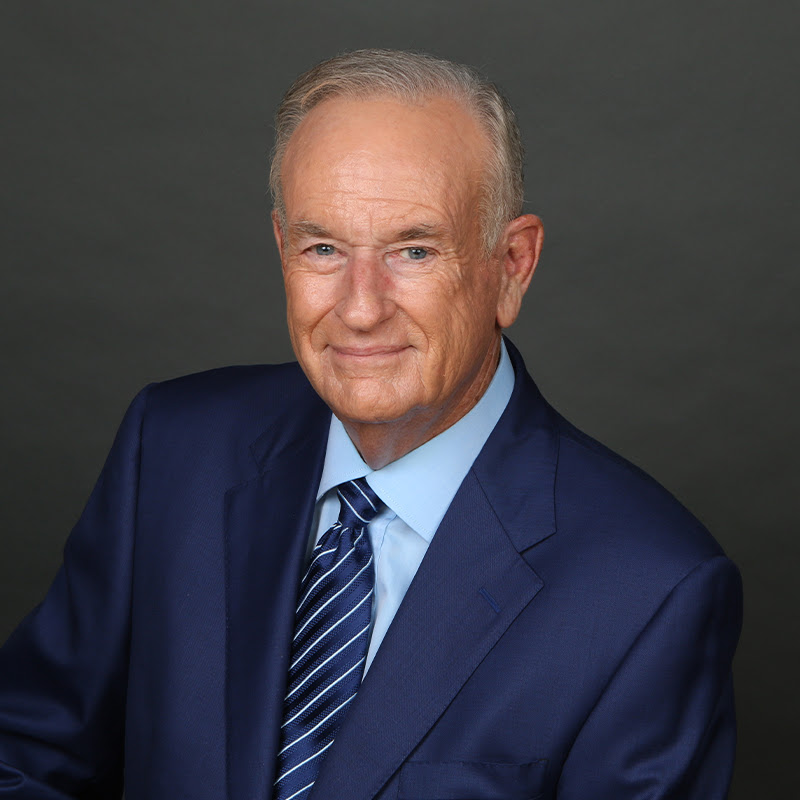
Steve Kroft & Bill O'Reilly on Media Bias, CBS News, Iran & Trump — We'll Do It Live!
YouTube · WMXiQxIyvNA
Quick Read
Summary
Takeaways
- ❖Traditional network news has significantly declined due to technological shifts, budget cuts, and a shortage of experienced, well-rounded reporters.
- ❖Bill O'Reilly argues CBS News tilted left under Dan Rather, influencing other networks, while Steve Kroft attributes perceived bias to East Coast/Ivy League geography rather than explicit political agendas.
- ❖The cable news model thrives on 'preaching to the choir,' telling audiences what they want to hear, which has damaged objective reporting.
- ❖The news industry, particularly at elite levels like 60 Minutes, is a highly competitive 'snake pit' where colleagues are often seen as rivals.
- ❖Steve Kroft's strategy for interviewing Bill and Hillary Clinton about Jennifer Flowers involved a non-accusatory opening question to elicit a direct response.
- ❖Obama granted Steve Kroft 17 interviews primarily because 60 Minutes delivered a massive audience (20 million viewers) and Kroft was perceived as trustworthy.
- ❖Steve Kroft, despite a highly successful career, states he would likely not pursue journalism again due to its constant demands and cutthroat environment.
- ❖Politicians, with rare exceptions, are expected to lie or frame information favorably, a reality journalists must navigate.
Insights
1Decline of Network News and Reporter Experience
Steve Kroft and Bill O'Reilly agree that traditional network news, exemplified by CBS, has significantly deteriorated. Kroft attributes this to algorithms, technology, dwindling budgets, and a critical lack of experienced reporters who came up through 'minor leagues' like local stations or overseas bureaus. He recounts a CBS executive stating, 'They aren't out there' when asked to find a good writer and reporter.
Kroft: 'The budgets dwindled... and people had to do with what they got. But it's also about performance.' () 'There was a level of experience that doesn't really still exist.' () 'They aren't out there.' ()
2Media Bias: Geography vs. Political Agenda
O'Reilly contends that CBS, and subsequently other networks, tilted left under Dan Rather. Kroft, while acknowledging the perception of liberalism, suggests the bias is more a function of geography—many media personnel and executives are from the East Coast, particularly Manhattan and DC, and are Ivy League educated, creating an inherent, non-political bias. He notes that 60 Minutes often pleased conservatives by reporting on government fraud and waste.
O'Reilly: 'I think that Rather turned CBS to the left.' () Kroft: 'Some of it has to do I've always thought with geography and the fact that so many people in the media were from and the people running the news organizations were mostly east coast people... Ivy League people, and that there was a builtin a builtin bias as opposed to like a political bias.' ()
3The Economic Imperative of Partisan News
O'Reilly explains that cable news, including Fox, succeeds by 'preaching to a choir,' telling people what they want to hear. This model, driven by profit margins from speaking to a specific segment of the American population, has become pervasive across networks (e.g., The View targeting liberal women). His own success at Fox insulated him from internal politics because of the 'economic power' he generated.
O'Reilly: 'That's why cable news succeeds. Because they preach to a choir... And it all fell into line because the profit margin was in speaking to one segment of the American people and it remains to this day on all of the networks now.' ()
4Strategy Behind the Clinton 'Jennifer Flowers' Interview
Steve Kroft details how he secured the pivotal interview with Bill and Hillary Clinton after the Jennifer Flowers scandal broke. The Clintons' campaign, particularly George Stephanopoulos, agreed to the interview because it would air immediately after the Super Bowl, guaranteeing a massive audience. Kroft's opening question, 'So, tell me, who is Jennifer Flowers, and how do you know her?', was designed to be non-accusatory and catch Clinton off guard, leading to a direct response.
Kroft: 'He says, 'Wait a minute. This is going to air after the Super Bowl. We're in.'' () 'I said, 'So, tell me, who is Jennifer Flowers, and how do you know her?' Yeah. Because he was completely... Yeah. And and you weren't being accusatory.' ()
5Obama's Interview Strategy with 60 Minutes
Steve Kroft conducted 17 interviews with President Obama, a record for 60 Minutes. Kroft believes Obama's willingness stemmed from the show's ability to deliver a massive audience (nearly 20 million viewers) and Obama's trust that Kroft would not 'cheap shot' him. Kroft asserts that while his interviews became tougher over time, they always addressed controversies without resorting to sensationalism.
Kroft: 'I think he liked the fact that 60 Minutes could deliver almost 20 million people.' () 'I think he did trust me and I think he knew that I was not going to I was not going to like cheap shot him.' ()
Bottom Line
The shift in media from respectful presidential interviews (Brokaw, Cronkite) to an adversarial 'get the guest' approach began with the Iraq War's failure, unleashing 'the hounds of hell in the media.'
This suggests a specific historical inflection point for the modern, aggressive, and often disrespectful tone of political journalism, moving away from a traditional deference to the office.
Understanding this origin allows for more informed analysis of media-government relations and the potential for a return to more respectful, yet still challenging, interview styles if public trust in institutions were to recover.
Despite a highly successful and impactful career, Steve Kroft would not choose journalism again, describing the industry as a 'snake pit' driven by paranoia and intense competition, where even personal success breeds enemies.
This reveals the profound personal cost and psychological toll of a career in elite journalism, challenging the romanticized view of the profession and highlighting its inherent toxicity.
Aspiring journalists or those considering careers in highly competitive fields should factor in the potential for a hostile work environment and the personal sacrifices required, beyond just the professional achievements.
Key Concepts
The Media Snake Pit
This model describes the highly competitive, paranoid, and often backstabbing environment within top-tier news organizations. Journalists constantly vie for stories, status, and recognition, leading to a culture where genuine friendships are rare and self-preservation is paramount. Success can breed enemies among those who desired the same opportunities.
Preaching to the Choir (Cable News Model)
This model explains the economic driver behind partisan cable news. Instead of striving for broad appeal or objective reporting, these outlets maximize profit by catering specifically to a segment of the audience that shares their political views. By consistently reinforcing existing beliefs, they secure loyal viewership and advertising revenue, thereby eroding the business case for down-the-middle journalism.
Lessons
- Critically evaluate news sources for underlying biases, considering the geographical and educational backgrounds of reporters and executives, rather than just overt political leanings.
- Recognize that the 'preaching to the choir' model is an economic strategy for many news outlets; seek out diverse sources to avoid echo chambers and gain a more complete perspective.
- When consuming political interviews, observe the interviewer's approach (accusatory vs. probing) and the politician's response style, understanding that most politicians prioritize favorable light over absolute truth.
Notable Moments
Steve Kroft's first day at 60 Minutes, Andy Rooney, a veteran correspondent, looked at him in the elevator and said, 'You'll never make it, kid,' without any prior interaction or explanation.
This anecdote starkly illustrates the cutthroat, unwelcoming, and competitive culture within elite news organizations, where even established figures could be dismissive of newcomers.
Kroft's experience covering the Chernobyl disaster in the Soviet Union, where he secured access because the Soviets viewed it as a PR opportunity to demonstrate openness after initial screw-ups.
This highlights how even major international crises can be framed and managed by governments as public relations exercises, influencing media access and narrative control.
Quotes
"The one thing that all the people that you mentioned, Ed Bradley and Leslie, um we all had either we had successful careers at CBS News before we got to 60 Minutes and we had all been either overseas or in Washington covering the White House or one of those places. and there was a level of experience that doesn't really still exist."
"I think the conservatives tend to look at it like, well, there's a small occasion of the truth when in fact, um, it is playing it more down the middle, but I don't think the conservatives necessarily like the middle. I think they want people to be on their side."
"I think that McNamera... certainly realized and LBJ certainly realized... that you can't just send American boys off to die without having the country behind you."
"My big problem uh with Trump uh it feels to you know and this is this is 60 Minutes in CBS. I kind of feel like we're in federal receiver receiverhip."
"I remember Izzy Stone once said, 'The first thing you need to know when you go to Washington is that all politicians lie.'"
"If people seem really friendly, you need to check your wallet."
Q&A
Recent Questions
Related Episodes
“I’d Rather DIE Than Bend The Knee!” Megyn Kelly, Scott Galloway & More On Super Bowl Show
"This episode dissects the extreme political and cultural polarization in America, from the Super Bowl halftime show controversy to economic activism and political memes, revealing deep societal divides."
SHOCK BREAKING: SHOCKED TRUMP STORMS OUT OF SUPREME COURT IN RAGE!
"This episode dissects Donald Trump's contentious Supreme Court appearance regarding birthright citizenship, the growing disillusionment of right-wing figures like Alex Jones with Trump, and the political fallout from Kristi Noem's husband's alleged cross-dressing scandal."

🚨 Michael Wolff BREAKS HIS SILENCE on New EPSTEIN DEPOSITIONS
"Michael Wolff reveals how Bill Clinton's testimony directly contradicts Donald Trump's account of his split with Jeffrey Epstein, exposing potential money laundering and Melania Trump's deep connections to Epstein's circle."
LIVE: Ben Meiselas RESPONDS to BREAKING NEWS!! 2/24/2026
"The Midas Touch Network boycotts the official State of the Union, hosting an alternative event while exposing alleged financial grifts, DOJ cover-ups of Epstein files, and the Pentagon's push for unregulated AI mass surveillance."