ZOOTOPIA 2 (2025) Movie Reaction! | Ginnifer Goodwin | Jason Bateman | Ke Huy Quan
YouTube · WPlAFJYQcOI
Quick Read
Summary
Takeaways
- ❖Zootopia 2 delves into deeper emotional themes and character bonds compared to the first film, focusing on partnership and vulnerability.
- ❖The movie subtly explores complex societal issues like gentrification, colonialism, and systemic prejudice against 'reptile' populations.
- ❖Hosts praise the film's ability to deliver important messages in a fun, palatable way, making it accessible for children and thought-provoking for adults.
- ❖The character arcs of Judy Hopps and Nick Wilde are well-developed, showcasing their growth in communication and mutual reliance.
- ❖The film incorporates numerous pop culture references and clever animal-themed puns, enhancing its appeal to adult viewers.
- ❖The casting, particularly Ke Huy Quan as the snake, is highlighted for subverting expectations and making a typically 'villainous' animal lovable.
- ❖The narrative structure is deemed very strong, avoiding common sequel pitfalls by offering fresh challenges and character development.
- ❖The hosts debate Zootopia 2's chances against 'K-pop Demon Hunters' for animation awards, acknowledging its deeper message versus the latter's pure entertainment value.
- ❖The movie's detailed background elements and Easter eggs encourage rewatching, revealing new insights at different life stages.
Insights
1Subtle Exploration of Systemic Prejudice and Gentrification
Zootopia 2 expands on the first film's themes of racism and segregation by tackling gentrification and the historical framing of entire species. The Lynxley family's actions, burying the reptile neighborhood in snow and stealing the original patent, represent how dominant groups can erase history and marginalize others for economic gain. This narrative presents a 'deceptively deep' commentary on real-world power dynamics.
The hosts discuss how the movie addresses 'gentrification as well,' 'perhaps a little bit of colonialism,' and 'let's stop hating each other' (). They note the parallel to 'the foundation of America,' including 'Native Americans were here first' and 'who built a lot of what we have in this country... built by slaves' ().
2Deepened Character Arcs and Partnership Dynamics
The sequel provides significant emotional development for Judy and Nick, moving beyond their initial 'proving oneself' journey to explore the complexities of a working partnership. Nick, a 'solitary animal,' confronts his emotional insecurity and fear of losing Judy, while Judy learns to balance her 'bunny hero complex' with trust. Their 'overshare' therapy session is a pivotal moment of vulnerability and connection.
The hosts note the first film was 'more like proving to yourself that you're worthy,' while this one had 'more of like that inner bond... connection' (). Nick's confession: 'I don't want to lose her... because solitary animals like me don't have real friends' (). Judy's response: 'I make dangerous choices because I have an unhealthy bunny hero complex' ().
3Subverting Expectations with 'Unexpected' Villains and Heroes
Consistent with the Zootopia franchise, the film challenges audience prejudices by making traditionally 'harmless' animals (like sheep in the first film) the villains and 'feared' animals (like snakes) the sympathetic heroes. Ke Huy Quan's character, Gary the snake, is intentionally cast to make reptiles 'accessible' and lovable, forcing viewers to confront their own biases.
The hosts discuss how the first film's villain was a 'sweet, cute little harmless weak sheep' (). They praise the 'choice to have it be reptiles and then snakes' because 'we have prejudices against snakes' (), and how Ke Huy Quan 'made this snake accessible' ().
4Multi-Layered Entertainment for All Ages
Zootopia 2 excels at offering entertainment on multiple levels. For children, it provides vibrant animation, engaging characters, and action. For adults, it's packed with pop culture references (e.g., The Shining, Burning Man, Indiana Jones), clever animal puns, and subtle background details that reward repeat viewings and allow for different interpretations at various life stages.
The hosts mention 'so many great references in the movie' like 'The Shining' and 'Burning Man' (). They note how 'you're going to unpack the film in a completely different way at each stage of your life' () and appreciate the 'small detail' and 'clever puns' ().
Notable Moments
The hosts discuss the film's ability to address complex social issues like racism and gentrification in a 'palatable package' for children.
This highlights the film's educational and social impact, demonstrating how animation can be a powerful tool for teaching empathy and critical thinking about societal structures.
The hosts praise the character development, particularly Nick and Judy's emotional vulnerability during their 'therapy' session.
This underscores the film's success in deepening its characters beyond a simple 'buddy cop' dynamic, adding layers of emotional realism and relatability to their partnership.
The hosts debate Zootopia 2's award potential against 'K-pop Demon Hunters,' weighing deep message versus pure entertainment.
This moment reveals different criteria for evaluating animated films and reflects current industry discussions about what constitutes 'best animation' – artistic depth versus commercial appeal and innovation.
The hosts discuss the clever use of unexpected villains and making a snake character lovable to challenge audience prejudices.
This illustrates the film's core message of overcoming preconceived notions and biases, directly engaging the audience in the thematic experience of the movie.
Quotes
"This one was more sentimental on a different level. Like it was it was it was a little bit deeper emotionally I think more than the first one. The first one was more like proving to yourself that you're worthy and you can like be anything you want, you know, where this one had more of like that inner bond."
"It's that ironic thing of like because it's remote, it feels more accessible."
"I never like found snakes adorable or I don't ever want to like come near them. I I find them just awful and gross and yuck. But like he made this snake accessible."
"It was nowhere near as obnoxious as the sloth in the first Zootopia."
Q&A
Recent Questions
Related Episodes

RED, WHITE & ROYAL BLUE Movie Reaction! | First Time Watch | Nicholas Galitzine, Taylor Zakhar Perez
"CinePals hosts react to 'Red, White & Royal Blue,' praising its witty writing and visual storytelling while critiquing certain plot pacing and character agency issues."
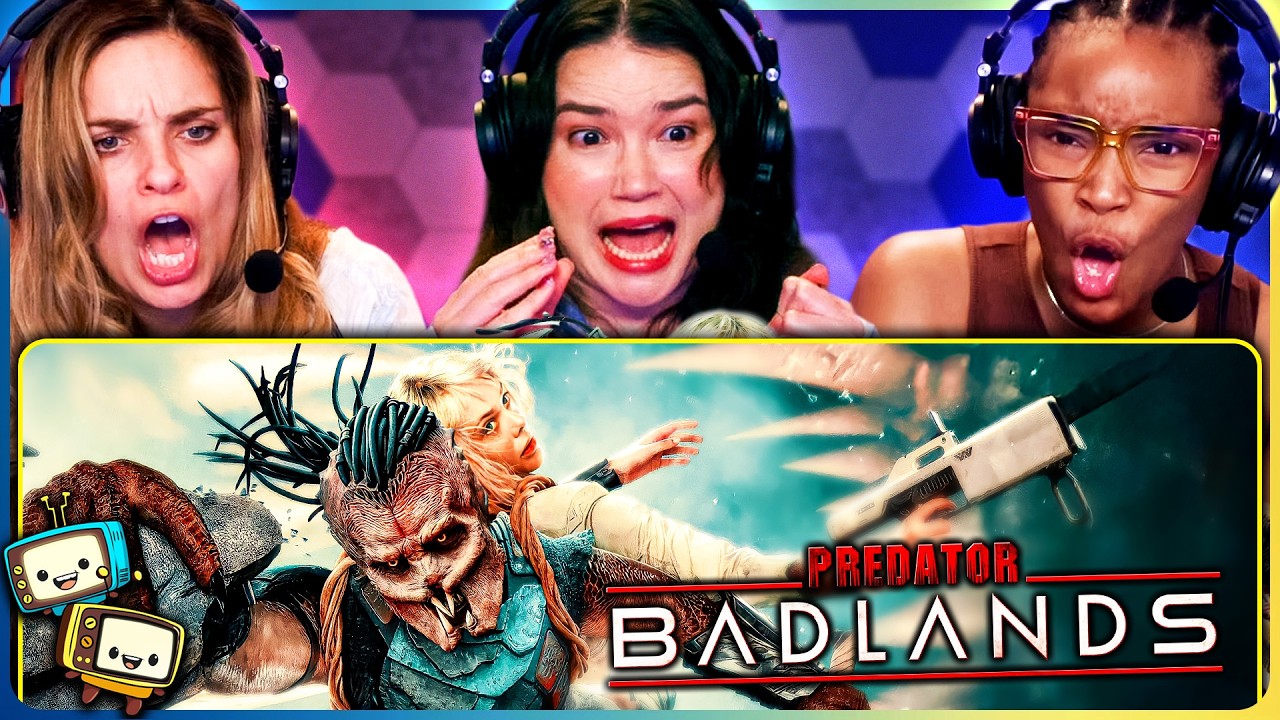
PREDATOR: BADLANDS Movie Reaction! | First Time Watch | Dimitrius Schuster-Koloamatang, Elle Fanning
"This 'Predator: Badlands' reaction unpacks how the film redefines the Predator narrative, focusing on an underdog protagonist, complex family dynamics, and a unique 'Predator as prey' planet, all while seamlessly integrating the Wayland-Yutani Corporation."
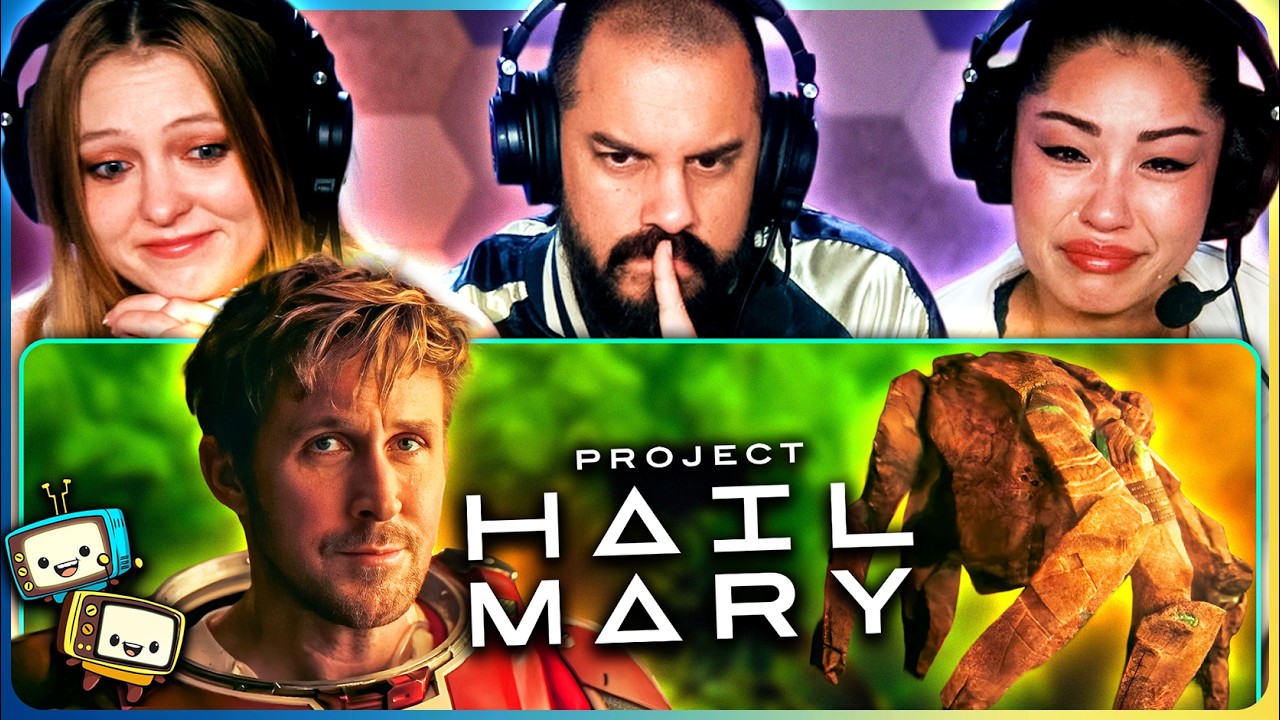
PROJECT HAIL MARY Has One Of The Best Sci-Fi Friendships Ever! | Movie Reaction! | Ryan Gosling
"The CinePals hosts deliver a highly enthusiastic reaction to 'Project Hail Mary,' praising its innovative sci-fi narrative, compelling alien-human friendship, and Ryan Gosling's surprisingly versatile comedic and emotional performance."

THE SECRET OF NIMH (1982) Movie Reaction! | First Time Watch! | Dom DeLuise | Elizabeth Hartman
"Hosts Jabby and Ashley react to the 1982 animated film 'The Secret of NIMH,' expressing surprise at its dark themes and mature storytelling, a stark contrast to contemporary G-rated movies."