“We Hunt Them Down” - Sheriff Grady Judd on Crime, Drugs & Justice” | PBD #774
YouTube · WQiPIvaSx0A
Quick Read
Summary
Takeaways
- ❖Florida's crime rate is at a 50-year low, and Polk County's is at a 54-year low, attributed to tough sentencing laws.
- ❖Sheriff Judd believes politicians in other states prioritize criminals, leading to higher crime rates.
- ❖Polk County conducts massive undercover operations targeting human trafficking, child predators, and prostitution, rescuing victims and arresting hundreds.
- ❖The Sheriff's Office uses AI and drones in investigations, developing an 'Artificial Intelligence Laboratory' (SAIL) to protect the community and enhance policing.
- ❖Sheriff Judd advocates for public humiliation of criminals and holds his own deputies to the same high standard, publicly announcing arrests for misconduct.
- ❖He views the $500 million annual cost of incarcerating 20,000 long-term prisoners in Florida as a 'bargain' for public safety.
Insights
1Florida's Crime Reduction Strategy: Tough Laws and Accountability
Sheriff Judd attributes Florida's 50-year low in crime (54-year low in Polk County) to legislative changes enacted decades ago. These include 85% sentencing (requiring prisoners to serve at least 85% of their sentence), '10-20-Life' gun laws, and minimum mandatory sentencing. He argues that these measures, which prioritize law-abiding citizens over criminals, significantly deter crime by clearly defining consequences.
Crime today in Florida is at over a 50-year low. In my county, crime's at a 54-year low. It's all because we decided that we're going to care more about the law-abiding taxpaying citizen and children than we were about criminals.
2Proactive Human Trafficking and Child Predator Operations
Polk County Sheriff's Office conducts extensive undercover operations using 'bait' (online personas) to identify human traffickers, prostitutes, and child predators. These operations are massive, often resulting in 230-250 arrests and the rescue of 16 human trafficking victims in a single week. Florida law treats human trafficking victims as non-criminals, providing immediate counseling and support services.
In one week, we'll make 230 arrests. We recovered 16 victims of human trafficking in one week... We're working a prostitution sting, a human trafficking operation. We're working a child predator operation. We're working child pornography all at the same time in these operations.
3AI and Drone Integration in Law Enforcement
Sheriff Judd established the Sheriff's Artificial Intelligence Laboratory (SAIL) in partnership with a polytechnic university. This initiative aims to leverage AI for community protection, crime prevention, and operational efficiency, while also addressing potential biases. Drones are actively used in police responses (e.g., burglaries, hostage situations) to provide aerial surveillance, enhance officer safety, and improve response times, with plans for future autonomous drone deployment from intelligence centers.
I asked about a year and a half ago to create a sheriff's artificial intelligence laboratory (SAIL)... We've got to figure out how to have tools to protect the community from bad AI. We've also got to figure out how to use AI to keep the community safe. And we've got to do it without bias being blended in.
4Accountability for Underage Alcohol Sales and Internal Misconduct
The Sheriff's Office conducts regular undercover 'audits' of convenience stores using 17-18 year old cadets to attempt to purchase alcohol. Clerks who sell to minors are arrested and taken to jail, a stricter approach than previous 'notice to appear' citations, which significantly reduced sales to minors from 30-35% to 5%. Internally, Sheriff Judd holds his deputies to the same high standard, publicly arresting and terminating officers who commit crimes or unethical acts, reinforcing trust and setting a positive example.
When they sell beer to an undercover child, we arrest them, put them in handcuffs, and take them to jail. It has slowed the sale of alcohol down to minors... I've held pictures of deputies up that we've arrested because I make it abundantly clear. We all go by the rules.
Bottom Line
The perceived 'cost' of a robust criminal justice system (e.g., $500 million annually for 20,000 long-term prisoners in Florida) is framed as a 'bargain' or 'investment' when considering the priceless value of public safety and the economic benefits of a low-crime environment.
This reframing challenges traditional cost-benefit analyses of incarceration, suggesting that a focus solely on expenditure misses the broader societal and economic returns on investment in public safety.
Policymakers and community leaders can adopt this 'investment' mindset when discussing public safety budgets, emphasizing the long-term value creation rather than just the immediate outlay.
Sheriff Judd's approach includes publicly shaming criminals and even his own deputies for misconduct, believing it serves as an effective deterrent and reinforces community standards.
This contrasts with more privacy-focused or rehabilitative approaches, suggesting that public exposure of wrongdoing is a powerful tool for social control and maintaining public trust in law enforcement.
Law enforcement agencies could explore the strategic use of public information (within legal bounds) to enhance accountability and community deterrence, provided it is applied consistently and fairly.
Key Concepts
Draw the Line
This model suggests that societal behavior, particularly criminal activity, will expand to the limits of what is permitted. By clearly defining and strictly enforcing boundaries, and making examples of those who cross them, a community can significantly reduce undesirable behavior. This applies to both citizens and law enforcement officers.
Investment in Safety
This model reframes the cost of incarceration and robust law enforcement as a necessary and valuable investment in the safety, economic prosperity, and overall well-being of a community. The argument is that the societal cost of unchecked crime (loss of life, property, business flight) far outweighs the financial cost of maintaining a strong criminal justice system.
Lessons
- Advocate for or implement policies that prioritize strict accountability for criminals, such as minimum mandatory sentencing and longer incarceration periods, as seen in Florida's success.
- Support and develop proactive law enforcement strategies, including intelligence-led undercover operations, to combat complex crimes like human trafficking and child exploitation.
- Explore and invest in emerging technologies like AI and drones for law enforcement, ensuring ethical implementation and a focus on community safety and officer protection.
- Hold elected officials and judges accountable for decisions that impact public safety, using electoral processes to remove those perceived as lenient on crime.
- Foster a community culture that actively supports law enforcement and values public safety, recognizing the economic and social benefits of a low-crime environment.
Polk County's Crime Reduction Playbook
Implement and strictly enforce minimum mandatory sentencing and 85% time served laws to ensure accountability for criminals.
Conduct aggressive, intelligence-led undercover operations to target human trafficking, child exploitation, and other serious crimes, rescuing victims and arresting offenders.
Utilize technology like AI laboratories and drones for enhanced surveillance, investigation, and rapid response, prioritizing officer safety and crime prevention.
Publicly hold both criminals and law enforcement officers accountable for misconduct, using press releases and public statements to reinforce community standards and deter future offenses.
Engage the community to foster a culture of support for law enforcement, emphasizing that public safety is a collective investment that leads to societal and economic thriving.
Notable Moments
Sheriff Judd recounts how Florida's crime rates dropped precipitously after the legislature changed laws in the late 1980s, following a period where 17 tourists were murdered and Europe issued a travel warning.
This historical context provides concrete evidence for his argument that strict laws directly lead to reduced crime, linking economic impact (tourism) to policy change.
Sheriff Judd's deputies received suspensions for posing for pictures with rapper R. Kelly while he was in jail, even before his more serious crimes were widely known.
This illustrates his unwavering commitment to professional standards and internal accountability, showing that rules apply equally to all, including high-profile individuals and his own staff.
Sheriff Judd describes sending congratulatory letters to convenience stores that pass underage alcohol sales audits, with some stores proudly displaying these letters.
This highlights a positive reinforcement strategy in policing, balancing strict enforcement with recognition for compliance, fostering a cooperative relationship with businesses.
Quotes
"Just because he's not sharing the plan with you doesn't mean there's not a plan."
"The United States is the strongest country, so there is no reason in the world for us not to exercise command and control and to demand peace across the nation."
"The politicians don't care that your child is murdered. You can stop this. You could give me 2 years and bring that down 75%."
"It is a bargain. It's an investment. Think about those 20,000 people being out... What's what what's your children's life worth? Priceless."
"If you are a victim of human trafficking, you're not a criminal. So if you're brought here by a human trafficker to one of our operations, you are a victim, not a prostitute, and not a suspect."
"We would have been on Jeffrey Epstein like white on rice. He would have been in prison a long time ago had we had access to him or had information about this."
"Well, I'm friends of Sheriff Grady Judd. And my deputy smile at him and said, 'Well, I am too. He hired me to arrest you today.'"
"Don't vote the way the majority did where you came from. You'll still have warm weather in the winter, but you won't have lower taxes, and you won't have lower crime."
Q&A
Recent Questions
Related Episodes

Mamdani CELEBRATES NYC Rent Freeze, This Will DESTROY The City | Timcast IRL
"New York City's rent freeze, celebrated by Mandami, is framed as a socialist 'land grab' that will devastate the city's housing market and economy, while a FIFA Pride Match in Seattle sparks outrage from conservative nations."

Trump DOJ REACHES NEW LOW Trying to SAVE Trump
"Professor Aziz Huck dissects the foundational principles of the rule of law, revealing how modern political partisanship and the Justice Department's 'weaponization fund' challenge core constitutional mechanisms and legal predictability."
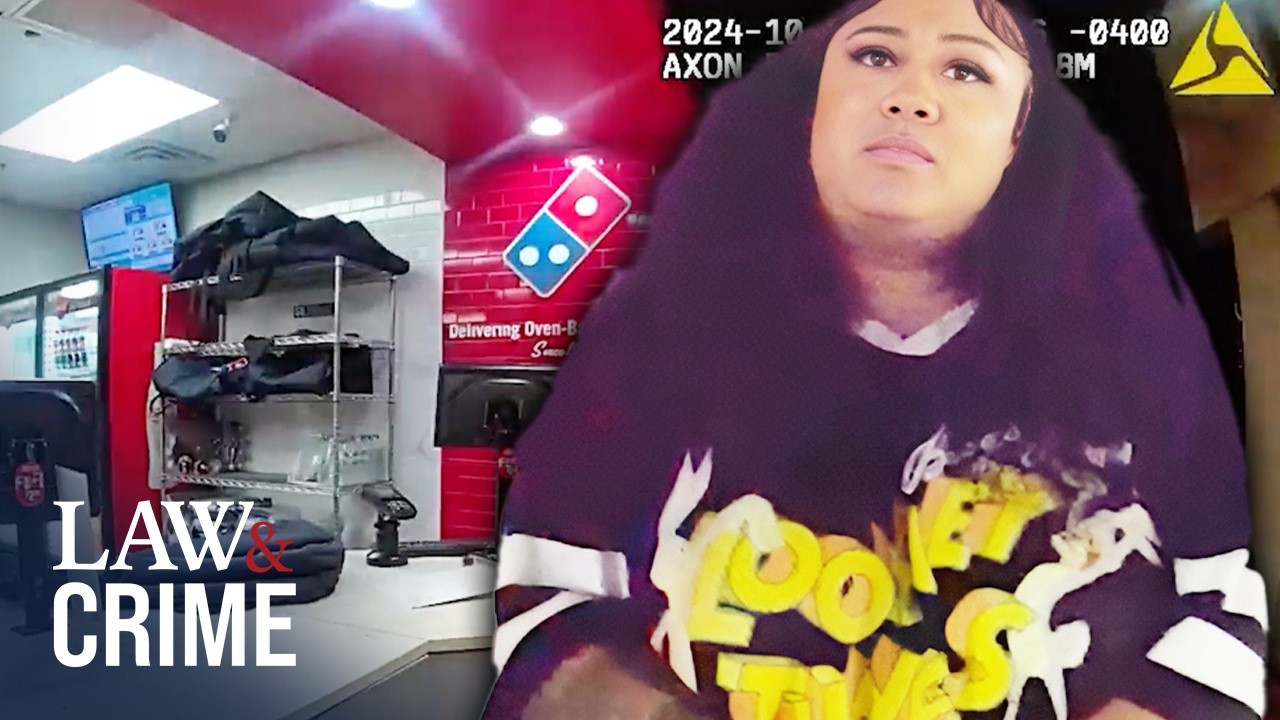
6 Pizza Problems Caught on Bodycam
"From racist rants to armed robbery and attempted murder, this episode details six real-life incidents where minor pizza disputes escalated into serious criminal charges, all captured on bodycam footage."

Top U.S. & World Headlines — February 4, 2026
"President Trump's controversial calls for nationalizing voting, escalating federal immigration enforcement, and tense international relations dominate headlines, alongside a significant media workers' strike for AI protections."