ICE, Missing People & Militarized Enforcement | #TheOtherSideOfChange S1 E34
YouTube · WY0Q0PXkFhg
Quick Read
Summary
Takeaways
- ❖ICE's system is designed to 'lose' detained individuals, with families often waiting days for location confirmation or receiving no notice at all.
- ❖The militarization of ICE echoes historical slave catchers and authoritarian regimes, operating outside clear legal due process and accountability.
- ❖In New Mexico, 48 residents were reportedly 'disappeared' by ICE in a single enforcement action without clear record-keeping or family notification.
- ❖ICE agents have been documented turning phones on airplane mode to prevent tracking and have been accused of sexual assault in facilities, arguing they are not legally responsible.
- ❖Between January 3rd and 9th, four migrants died in ICE custody, part of a record surge in detention deaths, highlighting the life-threatening conditions.
- ❖The killing of U.S. citizen Renee Nicole Good by ICE in Minneapolis, and Keith Porter Jr. by an off-duty ICE agent, sparked widespread protests and condemnation from local officials.
- ❖The Supreme Court has historically disavowed its role as a protector of immigrant rights, allowing Congress to pass anti-immigrant laws like expedited removal, which offers no due process.
- ❖ICE officers often have immunity from misconduct suits, fostering a culture where agents feel 'above the law,' similar to issues with police officers.
- ❖Police collaboration, through agreements like 287g, funnels over half of detained individuals into ICE custody via racial profiling during traffic stops or other contacts.
- ❖ICE's enforcement disproportionately targets Mexican and Central American individuals, while white immigrants (e.g., Canadians, Europeans) are underrepresented in detention, demonstrating a racialized agenda.
- ❖ICE was formed in 2003 post-9/11, making it a relatively new agency that can be abolished, rather than being a permanent constitutional fixture.
Insights
1ICE's Systemic Disappearance of Detainees
ICE's operational design intentionally makes detained individuals untraceable to their families. Reports indicate that families often wait three to five days, if at all, to learn the location of loved ones, with federal agencies providing minimal notice. This practice is likened to historical slave trade tactics and authoritarian regimes, where individuals are 'disappeared' into detention centers with limited information and due process.
In New Mexico, attorneys reported ICE 'disappeared' 48 residents during a March 2025 enforcement action. ICE agents have been observed turning phones on airplane mode to prevent tracking.
2Militarization and Deadly Force by ICE
ICE operations have become increasingly militarized, deploying heavily armed federal agents in coordinated sweeps. These actions resemble policing in authoritarian states, using force to suppress and intimidate rather than applying consistent legal standards. This militarization has led to the use of deadly force against both migrants and U.S. citizens.
Operation Metro Surge sent 2,000 immigration agents into Minneapolis. On January 7, 2026, 37-year-old U.S. citizen Renee Nicole Good was fatally shot by ICE in Minneapolis. Keith Porter Jr. was also killed by an off-duty ICE agent on New Year's Eve 2026.
3Legal Frameworks Enable ICE's Impunity
The Supreme Court has historically disavowed its role in protecting immigrant rights, labeling immigration enforcement as 'political issues' for the executive and legislative branches. This stance has allowed Congress to pass anti-immigrant laws, such as expedited removal (fast-track deportation with no due process). Furthermore, ICE officers are often granted immunity from misconduct suits, fostering a culture where they operate 'above the law.'
Supreme Court cases from the 1800s set a precedent. The Illegal Immigration Reform and Immigrant Responsibility Act (IIRAIRA) of 1996 created expedited removal. DHS has tweeted about ICE officers having immunity for on-duty actions.
4Racial Profiling as a Core ICE Tactic
ICE's enforcement practices are fundamentally driven by racial profiling, disproportionately targeting Black and Brown individuals. This is evident in the overrepresentation of Mexican and Central Americans in detention centers compared to their share of the undocumented population, while white immigrants (e.g., Canadians, Europeans who overstay visas) are underrepresented. Local police collaborations, like 287g agreements, facilitate this by empowering local law enforcement to enforce immigration law, often through racialized traffic stops.
Over half of detainees enter the system via police contact. 287g agreements allow local police to enforce immigration law, leading to 'blatant racial profiling.' Numbers show Mexican and Central Americans are vastly overrepresented in detention, while white immigrants are underrepresented.
Key Concepts
Racialized Policing as Historical Echo
ICE's tactics of disappearing people, operating with impunity, and targeting specific racial groups are framed as a direct continuation of historical practices like slave catching and authoritarian state control over marginalized populations, rather than modern immigration enforcement.
Legality vs. Justice Paradox
The concept that many of ICE's harmful actions are 'technically legal' due to specific Supreme Court rulings and granted immunities highlights a critical distinction between what the law permits and what is morally just or humane, suggesting that legal frameworks themselves can be instruments of oppression.
Lessons
- Support organizations like the ACLU Disappeared in American Project, Immigrant Justice Center, and American Friends Service Committee to help locate loved ones in detention.
- Join local participatory defense hubs or other community organizing groups to resist ICE tactics and advocate for change, offering support like childcare, rides to court, or legal observation.
- If you or someone you know is affected by immigration enforcement, contact legal aid groups, document everything, and connect with local advocacy coalitions committed to transparency and justice.
- Challenge the narrative that ICE is a permanent or necessary institution by reminding others it was formed in 2003 and can be abolished, advocating for political leaders to support its disbandment.
Community Resistance and Support Against ICE
**Utilize Legal Mechanisms:** File 'habeas petitions' to challenge prolonged indefinite detention, as some lower court judges have successfully ordered releases when ICE lacks authority.
**Join Participatory Defense Hubs:** Connect with local groups (over 40 nationwide) where directly impacted individuals lead efforts to dismantle criminal and immigration systems. Look up groups on the participatory defense website.
**Engage in Community Organizing:** Join established groups like Detention Watch Network. Contribute in various ways, including providing childcare, offering rides to court, accompanying individuals to ICE check-ins, being a legal observer, or preparing meals for activists.
**Employ Creative Resistance:** Use tactics like whistles to alert communities to ICE presence or support local businesses of vulnerable populations (e.g., buying out tamale vendors) to allow them to stay home during enforcement actions.
Notable Moments
Mark Ruffalo's Golden Globes statement
During a red carpet interview, Mark Ruffalo expressed the difficulty of celebrating amidst national turmoil, fearing for lives, and experiencing community terror. This resonated with the hosts, highlighting that even celebrities feel the weight of the country's issues and a 'hunger to do something different,' countering the perceived disconnect between glitz and reality.
Quotes
"How did an agency created to enforce immigration laws become an instrument of terror?"
"The US is pretending to be a moral authority but in actuality is looking to take advantage of the discord and the uncertainty to be in control of the oil."
"Advocates say the system isn't merely failing to track people. It is designed to lose them."
"The intention is cruelty. The intention is to let people get missing in the bureaucracy."
"It's not about legality or illegality. It's literally about race and keeping America white."
"This is all technically legal and so our solutions also need to be outside of the law as well."
"ICE doesn't need to exist. Period. Anyone who was born before [2003] lived in a world without ICE."
Q&A
Recent Questions
Related Episodes

Iran Deal Skepticism. Whoopi Vs Vance. Potomac Park Invasion. Racist Hurls Slurs At Black Boy.
"This episode dissects multiple instances of alleged anti-Black policies and racial injustice, from the Trump administration's legal challenges to reparations and the Iran deal, to police brutality and the erasure of Black history."

Mamdani CELEBRATES NYC Rent Freeze, This Will DESTROY The City | Timcast IRL
"New York City's rent freeze, celebrated by Mandami, is framed as a socialist 'land grab' that will devastate the city's housing market and economy, while a FIFA Pride Match in Seattle sparks outrage from conservative nations."
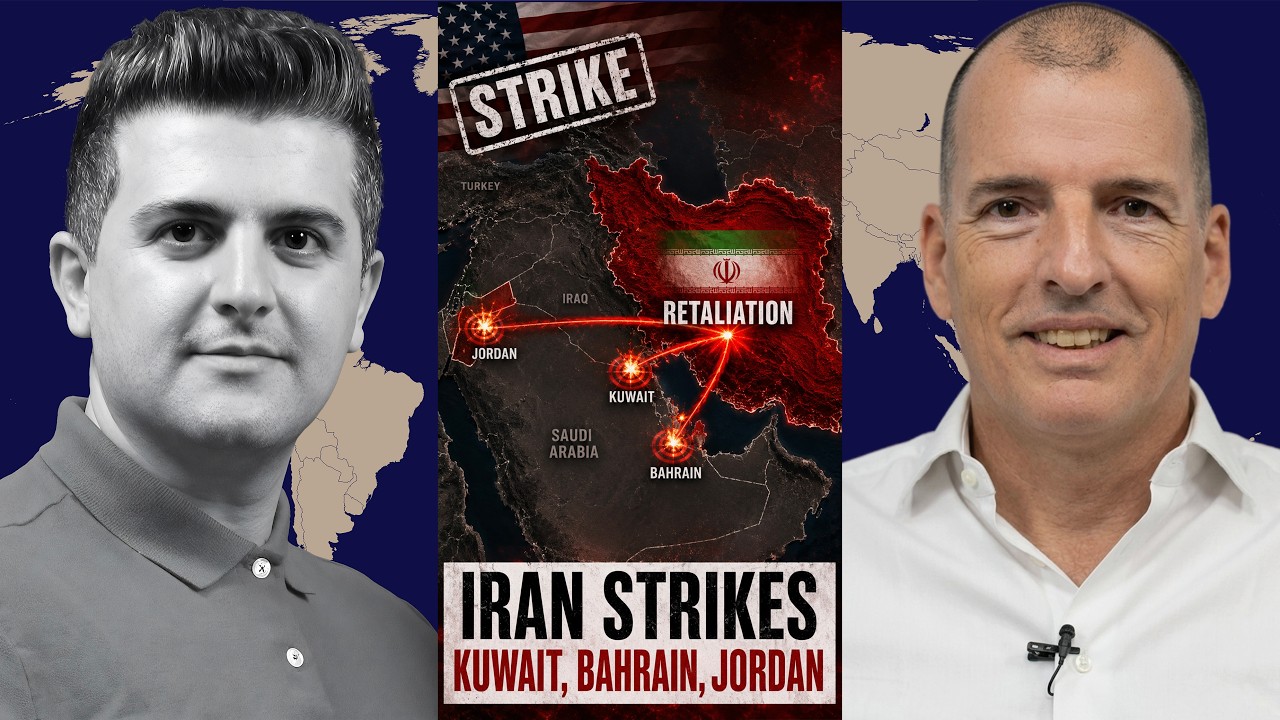
Alex Krainer: US STRIKES Iran – Iran RETALIATES Against Kuwait, Bahrain & Jordan!
"Amidst escalating US-Iran conflict and Iranian retaliation against regional US allies, this episode argues that US foreign policy is deeply controlled by an 'Anglo-Zionist conspiracy' led by the Rothschild banking dynasty, prioritizing Israeli interests over American ones."

LIVE: Trump HIDES FROM PUBLIC as US SOLDIER KILLED!!! 6/2/2026
"The host exposes alleged government cover-ups regarding military casualties, Trump's unexplained public absence, and questionable political appointments, arguing these reflect a 'regime of loser babies' and a failing foreign policy."