
"First Kill!" - Palantir, Nuclear War, Bio-Hybrids & AC-130 Bombing | Jesse Hamel • 377
YouTube · X6KJYankb5g
Quick Read
Summary
Takeaways
- ❖The guest, Jesse Hamel, is a 20-year Air Force veteran and AC-130 gunship pilot who joined after 9/11 and served 8 years in combat.
- ❖China has fully penetrated every aspect of the US telecom system, a result of decades of codependent economic relationships and tech innovation.
- ❖The 'agentic age' describes a shift to intelligent entities (AI, drones, humanoids, satellites) that interact with humans and each other.
- ❖The principle 'any area of human activity that has been monetized will be weaponized' explains the pervasive nature of modern threats.
- ❖Bio-hybrid robots, made with living brain and muscle cells, are already being developed, raising significant ethical concerns.
- ❖American leadership in AI and robotics is crucial to prevent adversaries like China from dominating these fields and imposing their values.
- ❖The moral risk of remote warfare (e.g., drone operation from thousands of miles away) is a significant psychological challenge for operators.
- ❖Effective decision-making, especially in high-stakes situations, requires evaluating both the risks of action and the risks of inaction.
Insights
1China's Digital Infiltration and IP Theft
China has achieved deep penetration into every aspect of the US telecom system. This infiltration stems from a decades-long codependent economic relationship where US companies invested in China, harnessing their manufacturing base for cheap consumer goods. As the US economy transitioned from industrial to internet and now to the 'agentic age,' China, being enmeshed with West Coast tech innovation, gained continuous access and insight into evolving systems, enabling widespread IP theft and coercive capabilities.
The Chinese are in every aspect of the US telecom. There's some open source stuff on this worth looking up. Every single aspect of the US telecom system the CCP's fully penetrated. () The IP theft of what has been stolen or taken from all across US EU as well but most of the US. ()
2The 'Agentic Age' and New Forms of Deterrence
The world is entering an 'agentic age' characterized by intelligent entities like AI, drones, humanoids, satellites, and swarms of robotic agents. This shift redefines warfare, moving beyond traditional nuclear deterrence to a new form of credible deterrence based on a nation's ability to rapidly generate and deploy hundreds of thousands of coordinating robotic systems across all domains (orbit, air, sea, subsurface). The nation that can credibly achieve this will gain the power to coerce and defend its national interests without firing a shot.
Our economy transferred from kind of industrial age to the internet age and now to what I would say we're you know right at the the epoch of the agentic age. () The new way of deterring is which one can credibly generate hundreds of thousands of robotic agents in medium earth orbit, lower earth orbit, stratosphere, the air, at sea, subsurface wave after wave of unrelenting systems and swarms that coordinate themselves every night. ()
3Ethical Challenges of Bio-Hybrid Robotics
Advanced research is blurring the lines between machine and human biology, with labs creating bio-hybrid robots using living brain and muscle cells. These 'sponge-bots' can learn and retain memory for repeated tasks, raising profound ethical questions about their potential for both tremendous good and tremendous evil. The development of such technology necessitates leadership with a strong value system that prioritizes human life to prevent dystopian outcomes.
There's a lab that just came out... it's both machine and human biology and it's crawling around on a table. () This crawling robot is made with living brain and muscle cells. Scientists want to know if a biohybrid robot can form a long-lasting biological mind to direct movement. () If they don't start from a value system that values human life, you can see where this is going to go. ()
4Moral Injury in Drone Warfare
The advent of drone warfare introduced a new form of moral injury for operators. Unlike traditional combat where personnel are physically present in a war zone, drone pilots often operate from thousands of miles away, returning to their normal lives within hours of lethal engagements. This rapid shift between 'combat mode' and 'peace time mode,' combined with the cognitive distance from the act of killing, can lead to severe psychological trauma and moral injury, especially if operators are not adequately screened or supported.
In the MQ-1 and MQ-9 ones it was like, hey I'm going to go do this thing... And then I'm going to be done and I'm going to go home to my wife and kids for the night like in my normal bed. () The moral risk won't [erode]. And it gets even more convoluted, which is you know, what we've seen with MQ the Predator and Reaper types. ()
Bottom Line
The US's freedom, particularly in economic and technological spheres, has been exploited by adversaries like China to infiltrate critical infrastructure and steal intellectual property.
This exploitation turns a core American strength into a vulnerability, making traditional national security approaches insufficient. The challenge is to leverage the same innovative spirit that fostered this freedom to 'out-innovate' the threat.
Develop 'agentic cyber security' solutions that use advanced AI models (similar to LLMs) to retroactively analyze vast telecom data sets, identify malign actors, and create new protocols to secure systems, effectively 'reinstalling the operating system' of critical infrastructure.
The 'new deterrence' is not nuclear weapons, but the credible ability to deploy overwhelming numbers of autonomous, coordinating robotic agents across all domains.
This shifts the focus of military investment and strategy from traditional platforms to AI-driven, mass-produced robotic systems. If the US fails to lead here, adversaries will gain coercive power.
Prioritize and accelerate the development of AI-powered drone swarms and autonomous systems in orbit, air, and sea. This requires fostering an entrepreneurial defense tech ecosystem that can out-innovate and out-produce rivals, creating a deterrent that prevents conflict without firing a shot.
The psychological impact of combat, particularly the ability to make lethal decisions without moral injury, may be linked to inherent DNA differences or significant 'spirit-led altering' through experience and mindset.
This suggests that resilience and high-functioning under extreme stress might not just be a matter of training, but also biological or spiritual predisposition/adaptation. It raises questions about optimal selection and support for military personnel.
Invest in research at institutions like the Institute of Human Machine Cognition to understand the biological and psychological factors that enable individuals to thrive in high-stress, lethal environments. This could inform advanced screening processes and training methodologies to better prepare warfighters and mitigate moral injury.
Key Concepts
The Agentic Age
This model describes the current and emerging era where intelligent entities (AI, drones, robots, satellites) are becoming central to economic and military activity. It follows the industrial and internet ages, focusing on autonomous agents that can interact with humans and each other, transforming everything from warfare to daily life. The challenge is to integrate these entities in a way that empowers humans and aligns with ethical values.
Monetization to Weaponization Principle
This principle states that 'any area of human activity that has been monetized will be weaponized.' If an activity or technology generates economic value, it will inevitably be adapted for coercion and compelling actions, transforming it into a tool for national security or conflict. This applies to everything from telecom networks and social media to advanced biological research.
Risk of Action vs. Risk of Inaction
A crucial decision-making framework, especially in high-stakes environments. It involves not only assessing the potential negative consequences of taking a particular action but also thoroughly evaluating the potential negative consequences of *not* taking that action. This balanced approach helps clarify choices and mitigate unforeseen risks, leading to more informed and effective decisions.
Purity of Heart Is to Will One Thing
Drawing from Søren Kierkegaard, this model suggests that true moral clarity and a strong ethical foundation come from a singular, unwavering commitment to truth and values. 'Double-mindedness' or moral ambiguity indicates a lack of core values, leading to instability and a tendency to rationalize or justify actions based on self-interest or power lust, rather than genuine principles.
Lessons
- Cultivate 'resilience against stress' rather than merely 'managing stress.' Seek out challenges and push to the edge of your fears to map your response systems and enter flow states more effectively.
- Apply the 'risk of action vs. risk of inaction' framework to all major decisions, personal or professional. Quantify and qualify potential outcomes, and actively seek to mitigate identified risks.
- Regularly 'burn down' your current identity and reassess your path every 5-10 years. Engineer the person you want to become in the future by aligning daily actions, risks, and efforts with that vision.
- Prioritize 'doing something' over 'being something.' Focus on tangible achievements and contributions that are bigger than yourself, rather than chasing titles or external validation, to find greater purpose and reduce self-imposed pressure.
High-Stakes Decision-Making Framework (Inspired by Navy SEALs)
Gather all available information and evaluate potential courses of action.
Identify and assess the risks associated with taking each action, including potential negative consequences and their probabilities.
For each identified risk, determine how it can be mitigated to reduce its likelihood or impact (e.g., from 20% to 5% chance).
Crucially, publish and thoroughly evaluate the 'risk of inaction' – what are the second, third, and fourth-order consequences of *not* taking any action?
Compare the mitigated risks of action against the risks of inaction, considering the potential ROI (Return on Investment) for each path. Sometimes, a high-risk action with a huge payoff is preferable to inaction.
Delay the final decision as long as possible to allow for maximum analysis and data gathering, setting a firm deadline to avoid indefinite procrastination.
Notable Moments
Jesse Hamel's first combat kill as an AC-130 pilot.
This moment highlights the profound moral and psychological weight of taking a life in combat, even when justified. Hamel's pre-military 'prayer and wrestling' with the moral consequences underscores the importance of mental and spiritual preparation for such roles, framing the act as a 'merciful kill' in defense of Americans.
The discovery of bio-hybrid robots made with living brain and muscle cells.
This scientific breakthrough exemplifies the rapid advancement of technology that blurs the lines between biology and machinery. It serves as a stark warning about the potential for both immense good (e.g., curing diseases) and catastrophic evil (e.g., creating uncontrolled entities), emphasizing the critical need for ethical leadership and guardrails in tech development.
The concept of 'Purity of Heart Is to Will One Thing' by Søren Kierkegaard.
This philosophical model provides a framework for understanding moral clarity and decision-making. Hamel uses it to explain that 'moral ambiguity' often stems from a 'double-mindedness' or impurity in one's core being, leading to rationalization rather than confronting truth. This is crucial for leaders in high-stakes environments, where a lack of moral foundation can lead to malign actions.
Quotes
"Governments have the responsibility to do force and evil to preserve larger good."
"Any area of human activity that has been monetized will be weaponized."
"If we do it right, we can create just tremendous human prosperity. If we do it wrong, we will enslave our kids and ourselves, maybe permanently."
"Do you want to live in a world where the CCP beats us on this? Do you want to live in a world where they have better autonomous robotic systems than the US does? No. I don't think so. I don't think anybody wants that."
"Maturity is understanding they're always like that. [Choices are always a piece of crap, and you pick the best one.]"
"True purity of heart produces pure actions, even when the context around that you may not understand at all."
Q&A
Recent Questions
Related Episodes
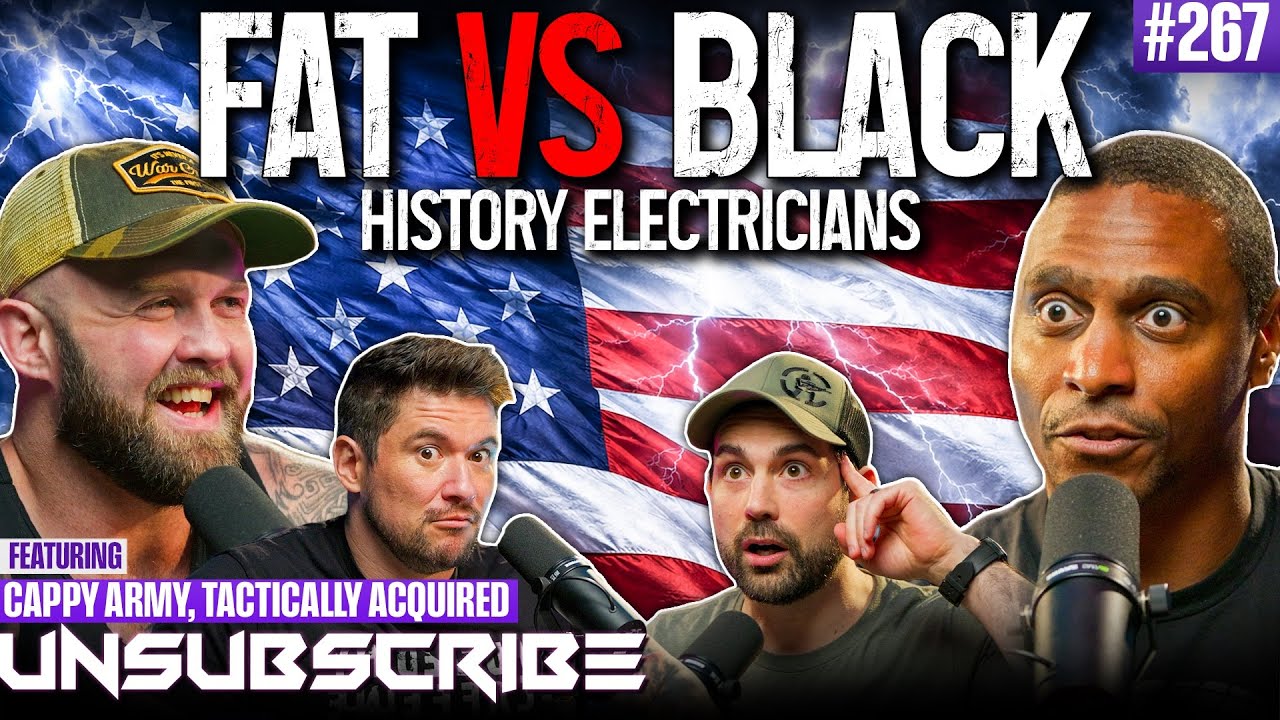
The Fat Electrician Vs Tactically Acquired | Unsubscribe Podcast 267
"This episode features military content creators discussing current geopolitical hotspots, advanced weaponry, and the surprising psychological warfare tactics of modern conflict, alongside their personal journeys building online communities."

Iran Update: Israel’s Newest Bombing Campaign, the Oncoming War With China and How to Avoid It
"Colonel Wilerson reveals how the US and Israel are actively bombing China's strategic infrastructure in Iran, escalating a covert economic war that Beijing intends to win without direct military conflict by dismantling the dollar's global dominance."
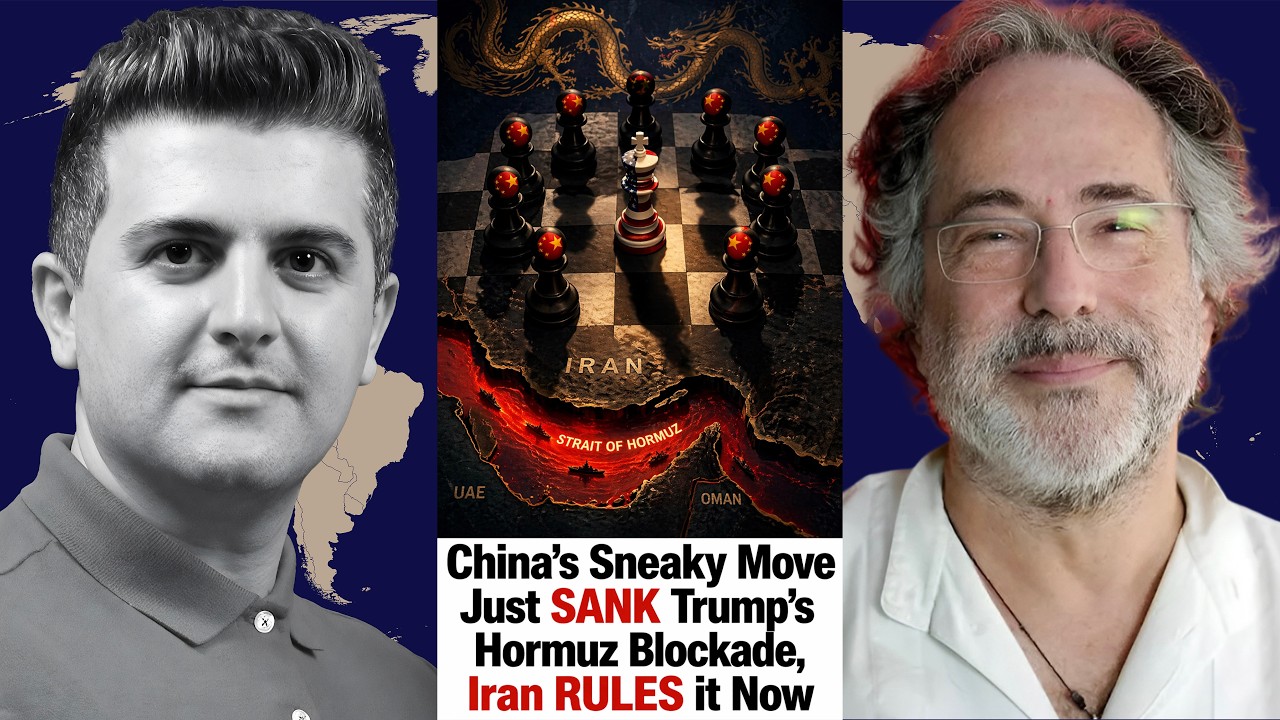
Pepe Escobar: “Total Failure”: Trump’s Blockade Just Backfired Disastrously
"Pepe Escobar argues that the US blockade against Iran, spearheaded by Donald Trump, has utterly failed and backfired, accelerating global economic chaos and challenging US geopolitical dominance."

Joe Rogan Experience #2471 - Mark Normand
"Comedians Joe Rogan and Mark Normand dissect the absurdity of modern media, politics, and human behavior, from AI-generated propaganda to the perils of comfort and cancel culture."