BREAKING: U.S. Destroyers ENTER Hormuz; Iran Talks COLLAPSE; IDF Sieges Hezbollah | TBN Israel
YouTube · XG1OYHD8BQw
Quick Read
Summary
Takeaways
- ❖US-Iran negotiations in Pakistan are collapsing due to Iran's stalling tactics and refusal to meet terms.
- ❖Two American destroyers passed through the Strait of Hormuz without Iranian approval, challenging Iran's claimed control.
- ❖Iran is struggling to locate and clear its own naval mines in Hormuz, turning a strategic choke point into a self-made trap.
- ❖The IDF's "Roaring Lion" operation has eliminated over 1,400 Hezbollah terrorists and destroyed thousands of infrastructures in Lebanon.
- ❖Iran is fortifying its Isfahan nuclear facility and retains thousands of buried ballistic missiles, preparing for a direct confrontation.
- ❖The US has significantly reinforced its military presence in the Middle East, including fighter jets, marines, and an aircraft carrier group.
- ❖Iran demands the release of $100 billion in frozen assets, which is central to its regime stability.
Insights
1Iran's Strait of Hormuz Blockade is a Self-Made Trap
Iran's refusal to fully reopen the Strait of Hormuz is not due to strategic control but its inability to locate and remove the naval mines it scattered. American officials report mines were laid randomly, making clearance difficult even for Iran, turning what was intended as leverage into a significant negotiating weakness.
The host states, "Iran has not opened the straight of Hmuz because it cannot find and destroy the mines that it planted there." () Mati Shosani translates Iran's claim of not knowing where mines were dropped as a 'lie' (). American officials explain mines were laid randomly ().
2US Destroyers Assert Freedom of Navigation in Hormuz
Two American guided-missile destroyers passed through the Strait of Hormuz without Iranian permission, marking the first such passage since the war began. This action, confirmed by CENTCOM, is a political statement backed by overwhelming force, challenging Iran's attempts to impose new realities and assert authority over the international waterway.
Two American destroyers passed through Hormuz without Iranian approval (, ). CENTCOM confirmed US forces began shaping conditions for mine clearing (, ). An American official mocked Iranian vessels as 'bath tools' compared to US destroyers ().
3IDF's "Roaring Lion" Operation Decimates Hezbollah in Lebanon
The IDF's extensive "Roaring Lion" operation has resulted in the elimination of over 1,400 Hezbollah terrorists and the destruction of thousands of terror infrastructures across southern Lebanon. The operation includes a tightening siege on Binbell, the largest Shiite town near the Israeli border, inflicting significant military and psychological damage on Hezbollah's command and logistics.
IDF eliminated over 180 Hezbollah terrorists in 'Eternal Darkness' operation (, ). Over 1,400 Hezbollah terrorists eliminated in 'Roaring Lion' (, ). Divisions 162 and 36 destroyed over 2,700 terror infrastructures (, ). Division 98 is besieging Binbell (, , ).
4Iran Fortifies Nuclear Sites and Retains Ballistic Missiles Amidst Ceasefire
Despite the ceasefire, Iran is actively preparing for renewed conflict by fortifying its nuclear facilities in Isfahan against potential ground raids and retaining thousands of ballistic missiles buried underground. American intelligence indicates that while Iran's missile program was damaged, a substantial arsenal remains, and China may be supplying new air defense systems.
Satellite images reveal Iran protecting uranium in Isfahan (, , ). Thousands of ballistic missiles are still held by Revolutionary Guards, buried underground (, ). China is planning to transfer air defensive systems to Iran (, ).
5Iran's $100 Billion Frozen Assets are Central to Negotiations
The release of approximately $100 billion in frozen Iranian assets, held in foreign banks across multiple countries, is Iran's primary demand in negotiations with the United States. These funds are critical for Iran's currency, inflation, state liquidity, and overall regime stability, making their release a matter of survival for the Revolutionary Guards.
The center of talks revolves around Iran's lost $100 billion (). The Iranian demand at the heart of negotiations is frozen assets (, ). These funds are believed to be spread across foreign banks in South Korea, Japan, China, Germany, India, Turkey ().
Bottom Line
Iran's inability to clear its own naval mines in Hormuz indicates a significant operational weakness, transforming a perceived strategic choke point into a self-made trap that necessitates external assistance for normalization.
This weakness undermines Iran's leverage in negotiations, forcing it to rely on the very powers it seeks to challenge for safe passage through a critical global trade route.
International coalitions could offer mine-clearing assistance in exchange for significant concessions from Iran regarding its nuclear program or regional destabilization efforts, leveraging this operational failure for diplomatic gains.
The UN's decision to allow Iran to oversee women's rights policy, alongside China, Cuba, and Saudi Arabia overseeing human rights organizations, highlights a profound disconnect between international institutions and geopolitical realities.
This absurdity erodes the credibility of these international bodies, making it harder for them to exert moral or diplomatic pressure on rogue states, as their own decisions appear hypocritical.
Advocacy groups and democratic nations can use these glaring inconsistencies to push for fundamental reforms within the UN and other international organizations, demanding accountability and alignment with stated values, thereby strengthening their legitimacy.
Key Concepts
Deceptive Negotiation
Iran's consistent strategy in negotiations involves dragging out talks, making false claims (e.g., about clearing mines), and signing agreements with no intention of fulfilling them, aiming to buy time to rearm and regain lost stature.
Pressure Adjustment
Israel's tactic of lowering military pressure in one area (Beirut) while intensifying it in another (Binbell) to inflict tactical and symbolic damage without completely collapsing diplomatic talks, maintaining leverage during negotiations.
Lessons
- Monitor the Strait of Hormuz for ongoing US naval operations and Iran's responses, as it indicates the real-time balance of power and potential for escalation.
- Track the status of Iran's $100 billion in frozen assets, as their release or continued freezing will significantly impact Iran's economic stability and negotiation stance.
- Observe the IDF's tactical adjustments in Lebanon, particularly around Hezbollah strongholds, as these actions directly influence regional stability and the potential for a broader conflict.
Notable Moments
Two American destroyers crossed the Strait of Hormuz without Iranian coordination, challenging Iran's claimed control over the vital waterway.
This act of freedom of navigation directly defied Iranian attempts to impose new realities and assert authority, signaling a strong US military posture amidst diplomatic talks.
The United Nations effectively allowed Iran to help shape policy on women's rights, alongside China, Cuba, and Saudi Arabia overseeing human rights organizations.
This decision highlights a significant disconnect and perceived absurdity within international institutions, undermining their credibility in addressing human rights issues globally.
Quotes
"When a nation has for decades lied in every possible negotiation and when they sign documents they have no intention of ever fulfilling the words in those documents... Well, now they're just not carrying out a behavior that is the identity of that regime. That regime lies to the world repeatedly."
"Working with Pakistan is like asking a pickpocket to hold your wallet while you tie your shoes."
"The ceasefire did not end the war. It changed the form of the war. The direct bombing paused. The strategic contest did not."
Q&A
Recent Questions
Related Episodes

BREAKING: Iran Threatens To END Talks; U.S. Vows Retaliation; Hezbollah Collapsing? | TBN Israel
"Iran is leveraging Hezbollah and the Strait of Hormuz to manipulate US negotiations, while Israel asserts its right to dismantle Hezbollah's eroding but still dangerous infrastructure in Lebanon, independent of international talks."

Patrick Henningsen: Hezbollah JUST Fired Back at Israel - Iran Vows to “Crush” All Attacks
"Patrick Henningsen argues that the US and Israel initiated an illegal war against Iran, driven by Trump's incompetence and Israeli influence, leading to an inevitable escalation with severe global economic repercussions."
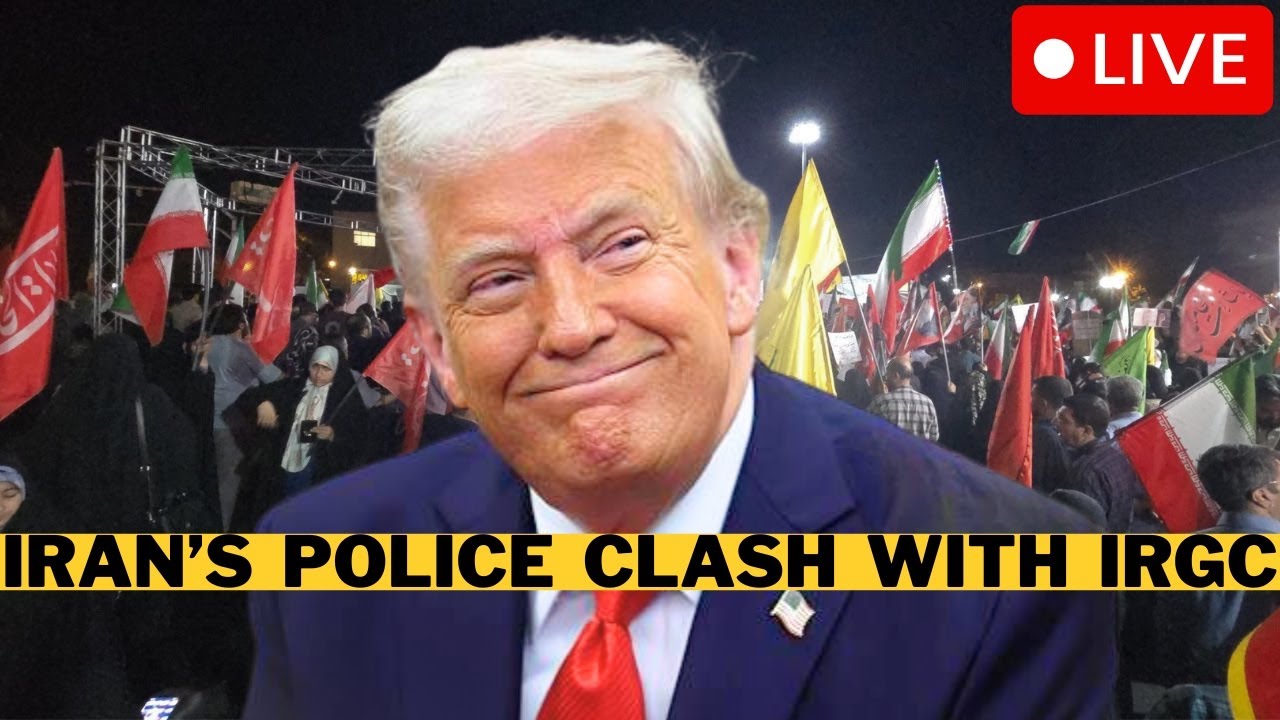
BREAKING: Protests ERUPT In Iran Over IRGC Surrendering To Trump - Infighting Clashes In Tehran
"Iran is experiencing severe internal infighting and protests as hardline IRGC elements clash with government figures over a perceived 'surrender' to the US, while mainstream Western media misrepresents the situation."
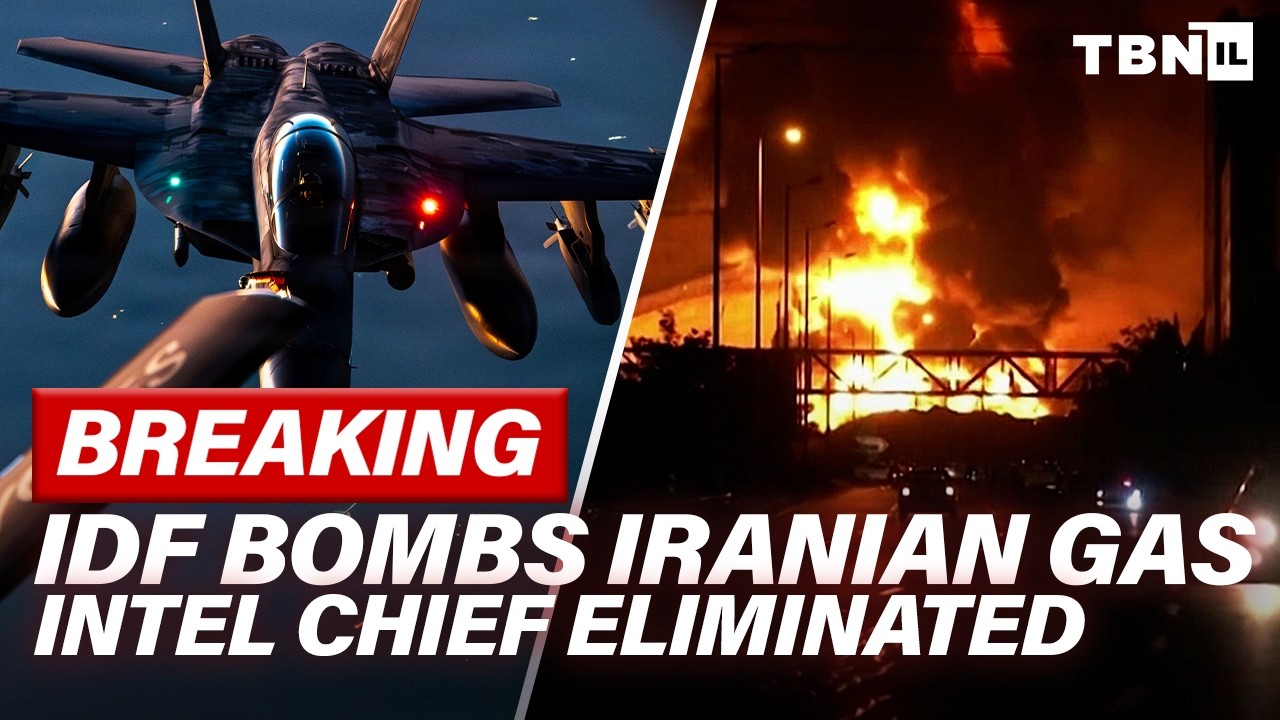
BREAKING: Israel BOMBS Major Iran Gas Site; Top Mullah ELIMINATED; Iran Vows VENGEACE | TBN Israel
"Israel and the United States have escalated their 'Roaring Lion War' against Iran, striking its largest gas facilities, eliminating key intelligence and military figures, and disrupting missile production, while Iran threatens a broader energy war in the Gulf."