
Platner Landslide; Killing FEMA; Bolivia Uprising w/ Micah Loewinger, Joseph Bouchard | MR Live
YouTube · XdMml6RJPJE
Quick Read
Summary
Takeaways
- ❖Graham Platner won the Maine Senate primary with 72% of the vote, exceeding expectations despite media scrutiny of his personal past.
- ❖The host criticizes media for prioritizing Platner's dating history over policy, framing it as an attempt by the establishment to delegitimize him.
- ❖FEMA was created with a dual mandate of natural disaster response and civil defense, leading to early conspiracy theories about 'FEMA camps' rooted in Cold War secrecy.
- ❖The Trump administration's efforts to 'kill FEMA' involve reducing federal funding, shifting responsibility to states, and appointing unqualified personnel, leading to significant brain drain and low morale.
- ❖Bolivia's political instability is deeply tied to US interventionism, particularly concerning control over natural resources like lithium, natural gas, water, and the coca leaf.
- ❖The current Bolivian government under Rodrigo Pas has reversed leftist policies, allied with right-wing parties, and is using repression against widespread protests, with US support.
Insights
1Graham Platner's Primary Victory and Media Scrutiny
Graham Platner secured a decisive 72% of the vote in the Maine Senate primary, significantly outperforming his polling. The host argues that the media, particularly figures like Mika Brzezinski, focused excessively on Platner's past personal relationships and 'concerning pictures' rather than his political platform. This is framed as an attempt by the political establishment to undermine his candidacy, which ultimately failed to sway Maine voters.
Platner's 72% win with 90% of votes in; host's commentary on Mika Brzezinski's interview questions about 'concerning pictures' and Platner's response about consensual adult activities pre-marriage.
2The Movement to Dismantle FEMA and its Historical Roots
FEMA, established in the late 1970s with a Cold War-era civil defense mandate, has been a target of anti-government sentiment. Its early secrecy, including projects like Mount Weather and plans for martial law, fueled conspiracy theories like 'FEMA camps.' While the Clinton administration transformed FEMA into a highly effective disaster response agency, it was subsequently weakened post-9/11 by its integration into Homeland Security and a push towards privatization. The current administration is actively working to reduce FEMA's federal capacity, shifting responsibility to states that lack the financial resources to handle major disasters, and weaponizing disaster relief for political gain.
FEMA's creation in the late '70s with dual mandate; Mount Weather bunker; Reagan administration's martial law plans; James Lee Wit's success under Clinton; post-9/11 integration into DHS and privatization; Trump's claims about FEMA spending on migrant housing and bias against supporters; 20% staff turnover, unqualified appointments like Greg Phillips.
3US Intervention and Resource Control in Bolivia
Bolivia's political landscape has been heavily influenced by US interventionism, primarily driven by its vast natural resources. Key resources include water (leading to the Cochabamba water war), natural gas (sparking secession attempts), lithium (Bolivia holds 20% of global proven reserves, nationalized in 2008), and the coca leaf (used as a pretext for US drug war intervention against leftist leaders). The current president, Rodrigo Pas, has reversed the leftist policies of his predecessor Evo Morales, aligning with US interests, cutting social programs, and attempting to privatize indigenous lands for mining and energy companies. This has led to widespread protests met with government repression and calls for martial law, with US support.
Evo Morales's 15-year presidency ending in a 2019 coup; Pas's 'capitalism for all' motto and subsequent neoliberal shift; privatization attempts of indigenous lands; US companies losing lithium bids; DEA's return to Bolivia; appointment of Eric Martini with counterterrorism ties.
Bottom Line
The political weaponization of federal agencies like FEMA, combined with a 'brain drain' of experienced personnel, creates a critical vulnerability for the US in responding to escalating natural disasters exacerbated by climate change.
This deliberate weakening of disaster response capabilities means that future natural disasters will likely result in greater human suffering and economic damage, disproportionately affecting vulnerable communities and potentially leading to increased social unrest.
There is an urgent need for non-governmental organizations and community-based initiatives to build local resilience and disaster preparedness networks, as federal support becomes less reliable and more politically motivated. Investment in decentralized, community-led disaster response models could fill critical gaps.
The ongoing political turmoil in Bolivia, fueled by external pressures for resource exploitation and internal power struggles, serves as a contemporary case study of neocolonial resource extraction, where 'democracy' and 'rule of law' are used as pretexts for economic control.
This pattern of intervention destabilizes sovereign nations, entrenches authoritarian regimes, and perpetuates cycles of poverty and conflict, demonstrating the continued relevance of resource geopolitics in shaping global power dynamics.
International human rights and anti-imperialist organizations have an opportunity to amplify the voices of indigenous and protest groups in Bolivia, exposing the true nature of foreign intervention and advocating for genuine self-determination and equitable resource management. This could involve supporting independent journalism and legal challenges against exploitative corporate practices.
Lessons
- Scrutinize media narratives during elections, especially when personal issues overshadow policy debates, to identify potential attempts at political delegitimization.
- Support local and state emergency management initiatives and advocate for robust, non-partisan federal funding for agencies like FEMA, recognizing their critical role in disaster response.
- Educate yourself on the history of US foreign policy and resource extraction in Latin America to better understand current geopolitical events and challenge narratives that justify intervention.
Notable Moments
Sam Seder's humorous but pointed critique of Mika Brzezinski's intense questioning of Graham Platner about 'concerning pictures,' highlighting the media's focus on personal scandal over policy.
This moment underscores the podcast's broader theme of media manipulation and the establishment's attempts to control political narratives by focusing on personal lives rather than substantive issues, especially for progressive candidates.
The revelation that a FEMA official's handyman was an undercover militia leader, snooping around his home during the Clinton era.
This anecdote vividly illustrates the real-world impact of anti-government conspiracy theories and paranoia, leading to harassment and fear among public servants, hindering their ability to perform essential functions.
The discussion of 'Alligator Alcatraz' in Florida, a migrant detention center reimbursed by FEMA, as the closest thing to a 'legitimate FEMA camp' in a disturbing twist of irony.
This highlights the dangerous evolution of anti-government fears into actual policies, where the very agency once accused of building political prisons is now funding migrant detention, exposing the hypocrisy and weaponization of conspiracy theories by those in power.
Quotes
"I will be a senator for the people who cannot afford to buy a senator."
"Going to an island with billionaires to possibly assault children is a vastly, vastly different thing."
"Conservatism relies on one principle, which is that there are in-groups for whom the law protects but does not bind, and there are out-groups for whom the law binds but does not protect."
"If your whole MO is just reducing the federal budget and firing thousands of government employees, FEMA is is one prime target."
Q&A
Recent Questions
Related Episodes

"Fighting Solves EVERYTHING!" Who's To Blame For Political Violence? + Maria Machado On Trump
"This episode dissects the escalating political violence in the US, with panelists fiercely debating the role of partisan rhetoric and media in radicalization, alongside an interview with Venezuelan opposition leader Maria Machado on US intervention and her country's future."

🚨 THEY F*CKED AROUND FOR THE LAST TIME 😭😭😭
"This episode unleashes a torrent of highly opinionated commentary on the US-Iran deal, Israel's role, and a scathing critique of 'leftist' policies and immigration, particularly highlighting the UK grooming gang report as evidence of Western societal decay."
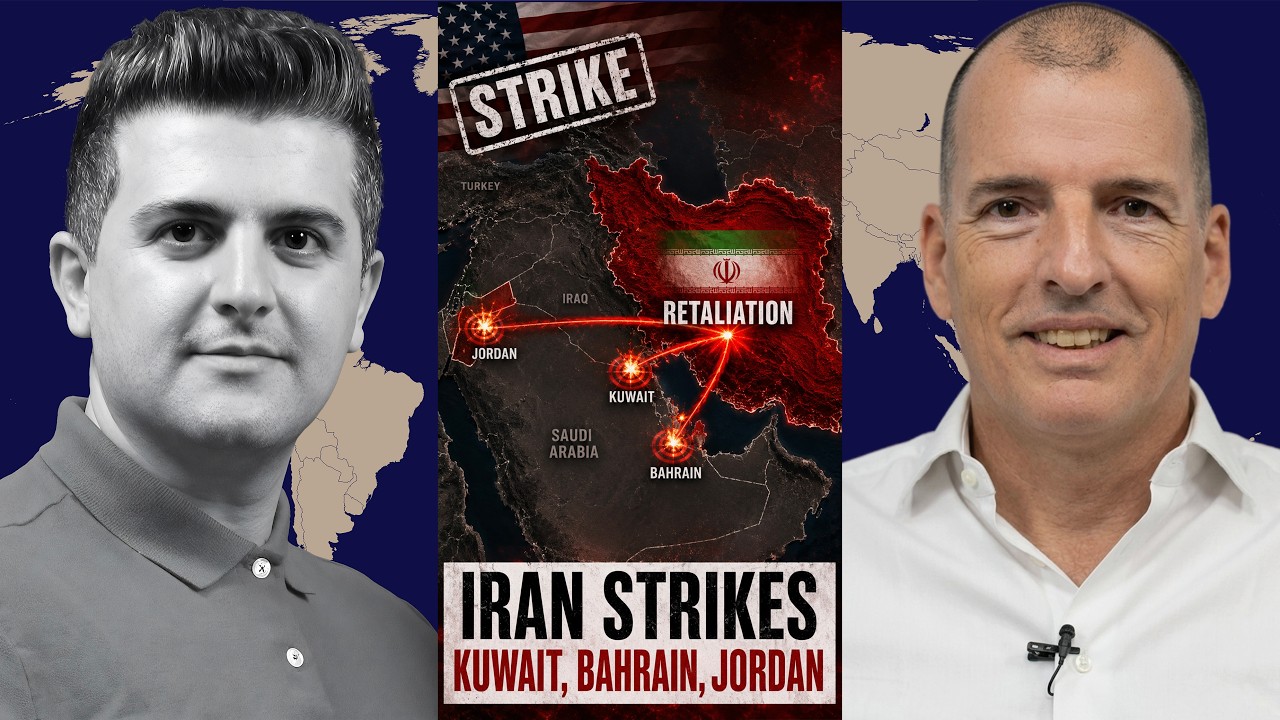
Alex Krainer: US STRIKES Iran – Iran RETALIATES Against Kuwait, Bahrain & Jordan!
"Amidst escalating US-Iran conflict and Iranian retaliation against regional US allies, this episode argues that US foreign policy is deeply controlled by an 'Anglo-Zionist conspiracy' led by the Rothschild banking dynasty, prioritizing Israeli interests over American ones."

LIVE: Trump HIDES FROM PUBLIC as US SOLDIER KILLED!!! 6/2/2026
"The host exposes alleged government cover-ups regarding military casualties, Trump's unexplained public absence, and questionable political appointments, arguing these reflect a 'regime of loser babies' and a failing foreign policy."