BREAKING: U.S. RETALIATION STRIKES Near Hormuz TRIGGERED By Iranian-Downed Apache | TBN Israel
YouTube · YJq3R8W5xR0
Quick Read
Summary
Takeaways
- ❖The United States conducted self-defense strikes inside Iran, targeting air defense systems and military sites near the Strait of Hormuz, in response to Iran downing an American Apache helicopter.
- ❖Iran's foreign ministry threatened to reconsider nuclear negotiations with Washington, framing the talks as a tool within a broader military and diplomatic strategy.
- ❖Israel had already weakened Iran's air defense capabilities through prior strikes, contributing to Iran's vulnerability when the US launched its own attacks.
- ❖The hosts assert that Iran's 'Ring of Fire' proxy strategy is crumbling, with groups like Hezbollah and the Houthis significantly weakened, forcing Iran to engage more directly.
- ❖The Strait of Hormuz remains a critical economic choke point, and Iran's threats to shipping lanes are seen as leverage, but also risk forming a broader international coalition against it.
- ❖The Iranian regime faces internal pressure, evidenced by reports of Israeli electronic espionage equipment found in Tehran and the need to explain repeated military setbacks to its public.
- ❖A spiritual warfare perspective is presented, arguing that anti-Israel sentiment is rooted in a demonic hatred against the Jewish people, which transcends logical explanation.
Insights
1US Retaliation Strikes Iran After Apache Downing
The United States launched self-defense strikes inside Iran, targeting air defense systems, radars, and command and control stations in response to an American Apache helicopter being shot down in the Gulf area. These strikes focused on sensitive areas like the south of the country and the Strait of Hormuz.
The United States Central Command announced it had launched self-defense strikes in Iran in response to 'unjustified Iranian aggression.' Strikes began around midnight Israel time, targeting Bandarabas, Kasim Island, the port of Sir, and the Jusk area. Close to 20 targets were struck.
2Iran's Weakening Air Defenses Preceded US Strikes
Prior to the American retaliation, Israel had already conducted strikes against Iranian air defensive systems, leaving the regime with reduced capability to defend its airspace. This weakened state made Iran more vulnerable to subsequent attacks.
Even before the Americans entered the picture, Israel had already done to Iran the thing that it feared the most. The air force struck again at the air defensive systems that the Iranian had tried to rebuild, leaving the regime with a lot of threats, but with far less ability to actually stop any kind of aircrafts above its head.
3Iran Uses Negotiations as a War Tactic
The Iranian Foreign Ministry views diplomacy and military campaigns as intertwined tools to protect Iran's interests, suggesting that negotiations are not an alternative to war but rather a component of it, used to gain leverage, stop blows, and prepare for future confrontations.
Iranian Foreign Ministry spokesman Ismael Bahi said that diplomacy and the military campaign are not two separate fields. In his view, both are tools to protect Iran's interests. This is a sentence that we need to stop for a moment and remember because it says almost openly that Israel and the United States have been seen for years for the Iranian regime negotiations are not an alternative to war. They're part of this war.
4Iran's Demands Reflect Regime's Pressure
Iran's ultimatum for nuclear negotiations, including demands for the return of frozen assets, an end to the Gaza war, cessation of strikes in Lebanon, lifting blockades, and canceling sanctions, is interpreted as a 'rescue list' for a regime under significant economic and military pressure.
Amongst the demands are the return of frozen Iranian assets, the end of the war in Gaza, stopping the strikes in Lebanon, lifting the blockade on Iran, and cancelling the sanctions. In simple words, Iran wants money, economic breathing room, protection from the terrorist organization in the north, and removal and freedom of action. This is not a normal list of demands in negotiations. This is a rescue list for the regime because the American blockade, the Israeli strikes, the damage to the defense systems, and the pressure on the Iranian economy are all beginning to converge into one point.
5Iran's Internal Weakness Exposed by Espionage Claims
Reports of sophisticated electronic equipment found in Iran, allegedly serving as an Israeli ground guidance station, highlight the Iranian regime's internal vulnerabilities and its struggle to explain how its protected systems and commanders are being targeted.
They're reporting that security authorities and others security personnel, they found sophisticated electronic equipment in the Lavasan area northwest of Tehran. And according to the Iranian claims, this equipment served as a ground guidance station for Israeli air force operations from inside the Iranian territory. The regime is looking for spies, guidance, stations, assistance, internal networks, and it understands that the threat is no longer coming only from the skies. It may also be inside the house.
6Strait of Hormuz Closure Impacts Global Economy
The effective closure or disruption of the Strait of Hormuz due to regional conflict significantly harms global oil, gas, and fertilizer exports, leading to market pressure, stuck ships, and increased prices worldwide, particularly affecting poorer countries.
When Hmuz is effectively closed, Iran and gas exports are harmed, markets come under pressure, ships get stuck, and poor countries around the world feel the price through the fuel, through the fertilizers, and through the food. Before the straight was closed, huge quantities of oil, gas and fertilizers passed through it every single day. A significant part of the global area and the supply of URA passed through this space. That's why this is not only a story of a war between Washington and Thran. This is a blow to the life chain of the global economy.
Bottom Line
The US public's primary concern regarding Middle East conflicts is often domestic economic impact, specifically gas prices, rather than the geopolitical intricacies or the direct threats faced by allies like Israel.
This suggests that US foreign policy decisions, particularly those involving military action, can be significantly influenced by public sentiment tied to economic factors, potentially limiting the duration or scope of interventions if they lead to increased consumer costs.
For advocates of strong US engagement in the Middle East, framing the conflict's importance in terms of its direct economic consequences for American citizens, beyond just national security, could be a more effective strategy for gaining public support.
Iran's strategy of using proxies to create a 'Ring of Fire' around its enemies is failing, forcing the regime into direct confrontations and exposing its own military vulnerabilities.
This shift indicates a potential turning point in regional power dynamics, where Iran's traditional asymmetric warfare advantage is diminishing. It could lead to either increased direct conflict or a more rapid internal weakening of the regime as its deterrence capabilities are eroded.
International coalitions could capitalize on this exposed weakness by maintaining sustained pressure on Iran's direct military capabilities and economic lifelines, potentially accelerating internal dissent or forcing a change in regime behavior.
Key Concepts
Ring of Fire Doctrine
Iran's foreign policy doctrine, prior to recent direct engagements, involved fighting its enemies (primarily Israel and US allies) through a network of proxies (Hezbollah, Hamas, Houthis, etc.) surrounding them, creating a 'ring of fire' to avoid direct confrontation. The hosts argue this doctrine is now failing as proxies are weakened and Iran is forced to engage directly.
Asymmetrical Warfare
Iran's operational methodology in the Middle East, characterized by intimidation and terrorism using mosquito boats, rockets, and sleeper cells, rather than conventional army-on-army 'linear warfare'. The hosts suggest this approach is being countered by direct and strong responses from the US and Israel.
Negotiations as a Tool of War
The hosts argue that for the Iranian regime, negotiations are not an alternative to war but rather an integral part of their conflict strategy. They use diplomatic talks to buy time, regroup, and advance their interests while simultaneously engaging in military provocations.
Lessons
- Recognize that Iran views negotiations not as an alternative to conflict, but as a strategic tool within a broader war, using diplomatic talks to gain advantages and regroup.
- Understand that strong, consistent responses to aggression from entities like Iran and its proxies are crucial for deterrence, as any perceived weakness will be exploited.
- Consider the spiritual dimension of conflicts, particularly regarding anti-Semitism, as a factor driving irrational hatred and propaganda, beyond purely geopolitical or economic explanations.
Notable Moments
Discussion of a Palestinian refugee with Ukrainian citizenship, Khaled Elidi, escaping Hezbollah captivity in Beirut during Israeli strikes, after being accused of espionage for an Israeli network.
This unusual incident highlights the deep, covert struggle for influence within Lebanon, exposing Hezbollah's internal security concerns, its extra-judicial detention practices, and the potential for internal tensions if Lebanese state actors are implicated in aiding escapes.
Quotes
"Iran's military, is a complete mess. Much of it, like their navy and their air force, does not even exist anymore. They have been totally defeated. Iran is all talk and no action. The bully of the Middle East is dead."
"You can keep talking about a decisive response, but when America and Israel act together, Iran discovers very quickly that its threats sound much stronger than its radars."
"We cannot accept a situation in which the enemy can kill our commanders so easily."
"Every challenge will be met. Every threat will be annihilated. Every time that you carry out an attack in the straight of Humuz or elsewhere, you will receive a response."
"Diplomacy and the military campaign are not two separate fields. In his view, both are tools to protect Iran's interests."
"The regime needs air. It needs money. It needs to rebuild its missiles array. It needs to rebuild its air defensive systems and it needs to convince the Iranian public that what's happening now is not collapse but firm resistance."
"This war is a war about the moral understanding. Does the world see Israel as a country defending itself against an axis of terror or as a problem that needs to be restrained?"
Q&A
Recent Questions
Related Episodes
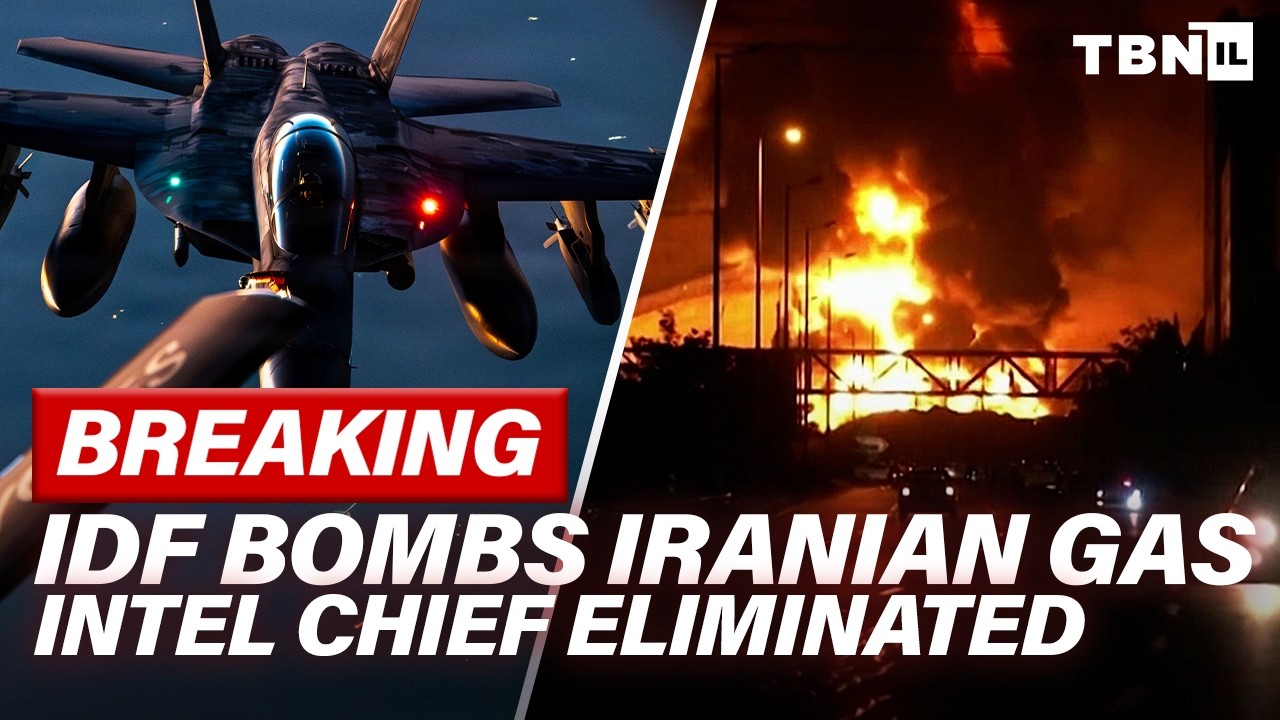
BREAKING: Israel BOMBS Major Iran Gas Site; Top Mullah ELIMINATED; Iran Vows VENGEACE | TBN Israel
"Israel and the United States have escalated their 'Roaring Lion War' against Iran, striking its largest gas facilities, eliminating key intelligence and military figures, and disrupting missile production, while Iran threatens a broader energy war in the Gulf."

BREAKING: Iran Threatens To END Talks; U.S. Vows Retaliation; Hezbollah Collapsing? | TBN Israel
"Iran is leveraging Hezbollah and the Strait of Hormuz to manipulate US negotiations, while Israel asserts its right to dismantle Hezbollah's eroding but still dangerous infrastructure in Lebanon, independent of international talks."

Patrick Henningsen: Hezbollah JUST Fired Back at Israel - Iran Vows to “Crush” All Attacks
"Patrick Henningsen argues that the US and Israel initiated an illegal war against Iran, driven by Trump's incompetence and Israeli influence, leading to an inevitable escalation with severe global economic repercussions."
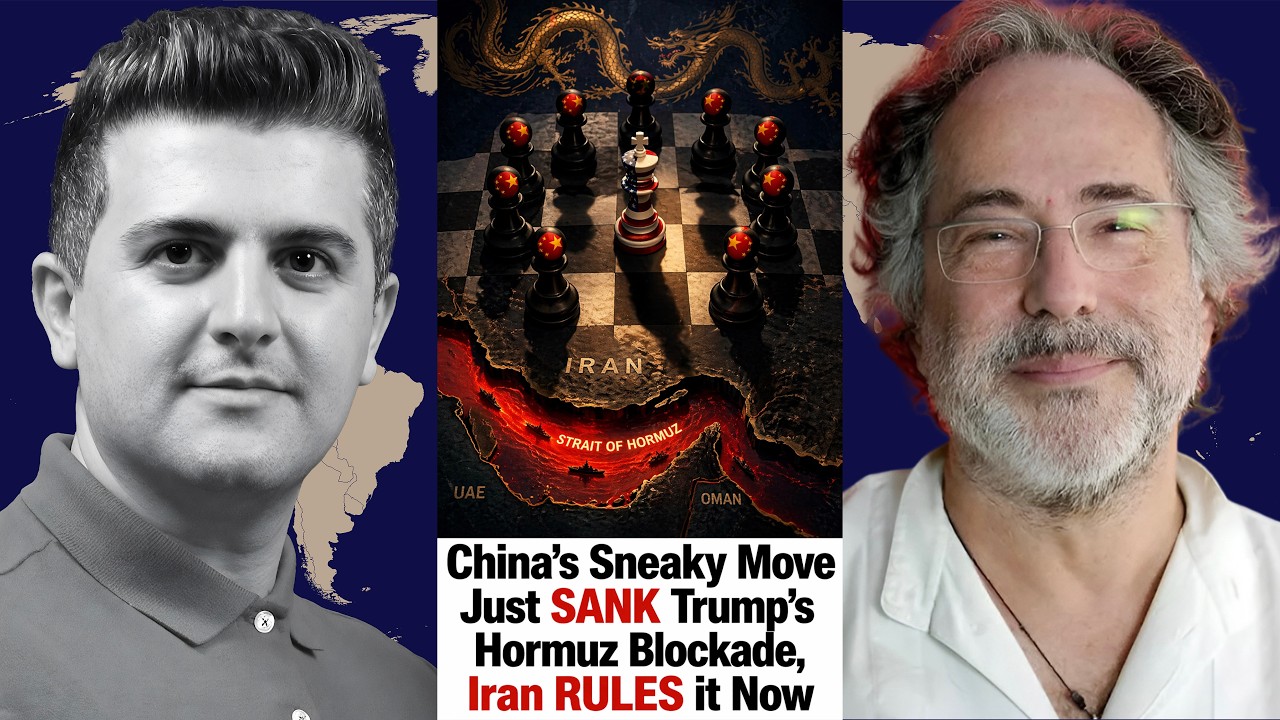
Pepe Escobar: “Total Failure”: Trump’s Blockade Just Backfired Disastrously
"Pepe Escobar argues that the US blockade against Iran, spearheaded by Donald Trump, has utterly failed and backfired, accelerating global economic chaos and challenging US geopolitical dominance."