
Thailand Scams & Love Gone Wrong | FBI AGENT FRAUD STORIES
YouTube · YUlQWgVvWGk
Quick Read
Summary
Takeaways
- ❖A common scam in Thailand involves strangers pointing out perceived flaws (like hair loss) to initiate a pitch for a 'remedy' or medical tourism.
- ❖Donating a kidney as a living donor is a low-risk procedure for the donor but life-changing for the recipient, with no long-term health or insurance penalties for the donor.
- ❖Federal sentencing guidelines are complex, using a point system for loss amount, criminal history, and enhancements (e.g., abuse of trust, sophisticated means), but judges retain discretion.
- ❖Confessing early and cooperating with the FBI can significantly reduce a defendant's sentence by demonstrating 'acceptance of responsibility.'
- ❖Credit unions, while member-owned, can be highly vulnerable to internal fraud due to less sophisticated oversight compared to larger banks.
- ❖Public speaking on fraud prevention is a viable business for former law enforcement and ex-cons, with demand from industries like medical and dental offices.
- ❖Crimes of passion, even those involving kidnapping and threats, can result in surprisingly moderate sentences compared to financial fraud or repeat offenses.
- ❖Prison life, particularly in lower-security federal facilities, is often less violent and more structured than commonly portrayed, with opportunities for fitness and access to supplemental food.
- ❖Judges can impose sentences significantly higher than government recommendations, especially when a defendant shows no remorse or actively obstructs justice.
Insights
1The Altruism and Aftermath of Kidney Donation to a Stranger
Former FBI agent Tom Simon donated a kidney to Brenda Legis, a stranger he met on matchingdonors.com, after being inspired by an article demystifying the process. He explains that a single kidney can function perfectly, and while the donor undergoes surgery, the long-term impact on their health, life insurance, or future medical care is minimal. The recipient's insurance covers all costs. Simon emphasized the importance of a 'no strings attached' mindset, as the recipient's gratitude can create an awkward social dynamic. His kidney lasted nine years, and Brenda eventually passed away.
Tom Simon's personal account of his 2007 kidney donation, including medical details, financial aspects, and the subsequent relationship dynamics. He mentions Brenda's passing after nine years.
2Federal Sentencing Nuances: The 'Korean Wife' Defense and Acceptance of Responsibility
In a Hawaii real estate Ponzi scheme, con man Mits Okura defrauded 12 investors of $421,000. During interrogation, he blamed his 'Korean wife' for his need for money, presenting it as a perfectly reasonable explanation. Despite the bizarre defense, his confession and acceptance of responsibility likely contributed to a sentence of 52 months. This highlights how cooperation and a narrative, however outlandish, can influence outcomes, alongside the structured sentencing guidelines.
The case of Mits Okura, who received 52 months for a $421,000 fraud. Tom Simon notes the 'Korean wife' defense and the impact of a full confession on sentencing.
3Vulnerability of Credit Unions to Internal Fraud
Rita Hartman, a beloved former mayor, managed the Muddy River Credit Union in Aches, Kansas, for two decades. She embezzled $750,000 by stealing from customer accounts and issuing uncollectible loans to herself and family, eventually driving the credit union into insolvency. While depositors were made whole by a larger credit union, the case exemplifies how smaller financial institutions, often staffed by community members rather than highly sophisticated bankers, can lack robust internal controls, making them prime targets for long-term, undetected fraud.
The case of Rita Hartman, who received 63 months for embezzling $750,000 from the Muddy River Credit Union, which she managed for 20 years.
4The Peril of the 'Rainmaker' in a Ponzi Scheme
Donovan Davis, a well-connected individual from a prominent family, was initially a victim in a Forex Ponzi scheme. After investing $1 million and then buying a partnership for $600,000, he became a 'rainmaker,' bringing in $17-20 million from over 100 victims. Despite claiming ignorance of the scheme's fraudulent nature until its collapse, he was ultimately indicted and sentenced to 17 years. This illustrates the severe legal risk for individuals who, even if initially deceived, actively recruit new investors into a fraudulent enterprise, as their actions directly contribute to the scheme's expansion and victim count.
The case of Donovan Davis, who was found guilty of $10.5 million in loss from over 100 victims and sentenced to 17 years, despite claiming he was initially a victim and later a whistleblower.
5Reality of Federal Prison Life: Fitness, Food, and Security Levels
Contrary to popular perception, federal prisons, particularly at medium and low-security levels, are not 'gladiator factories.' Inmates can maintain physical fitness using improvised weights (sandbags), bodyweight exercises (pull-ups, dips, squats with other inmates), and access to basic gym equipment. Dietary needs, especially for high protein, can be met by purchasing items like mackerel, tuna, and chicken from commissary. Security concerns vary by facility type: maximum security focuses on preventing attacks on staff, medium on inmate-on-inmate violence, and low on rule-following. The system generally aims to keep inmates safe, offering options like protective custody for those at risk.
Matt Cox's first-hand account of prison life, detailing workout routines, food options (chow hall vs. commissary), guard attitudes, and the different security levels and their operational priorities.
Quotes
"I give you a kidney and I'm fine a week or two later and your life has changed indefinitely."
"If you can if we have one person who can do both, they could steal and then cover it up in the accounting records. And that's exactly what Jenny did."
"I just think there's something really interesting about how employees can steal from their employers and go undetected."
"I can lead a horse to water, but I can't make him drink Mad Cox."
"There ain't no [cowardice] in my blood. Of course I went to trial."
Q&A
Recent Questions
Related Episodes

SAVANNAH GUTHRIE'S MOM MISSING: DAY 66
"On day 66 of Nancy Guthrie's disappearance, investigators grapple with two distinct sets of Bitcoin ransom notes, digital tracing challenges, and potential physical evidence like shoe coverings, as new, dubious claims emerge from a 'hyena' seeking payment for information."

M&M's Employee Steals $26 MILLION (How He Did It)
"This episode details a series of white-collar crimes, from an M&M's sugar expert embezzling $26 million to a fake immigration attorney scamming undocumented immigrants, highlighting vulnerabilities in various systems and the surprising leniency of some sentences."

True-crime cases with recent developments | 48 Hours Full Episodes
"This episode reconstructs four complex true-crime cases, detailing the harrowing searches for missing persons, the challenges of prosecuting murders without bodies, and the enduring quest for justice in cold cases spanning decades."
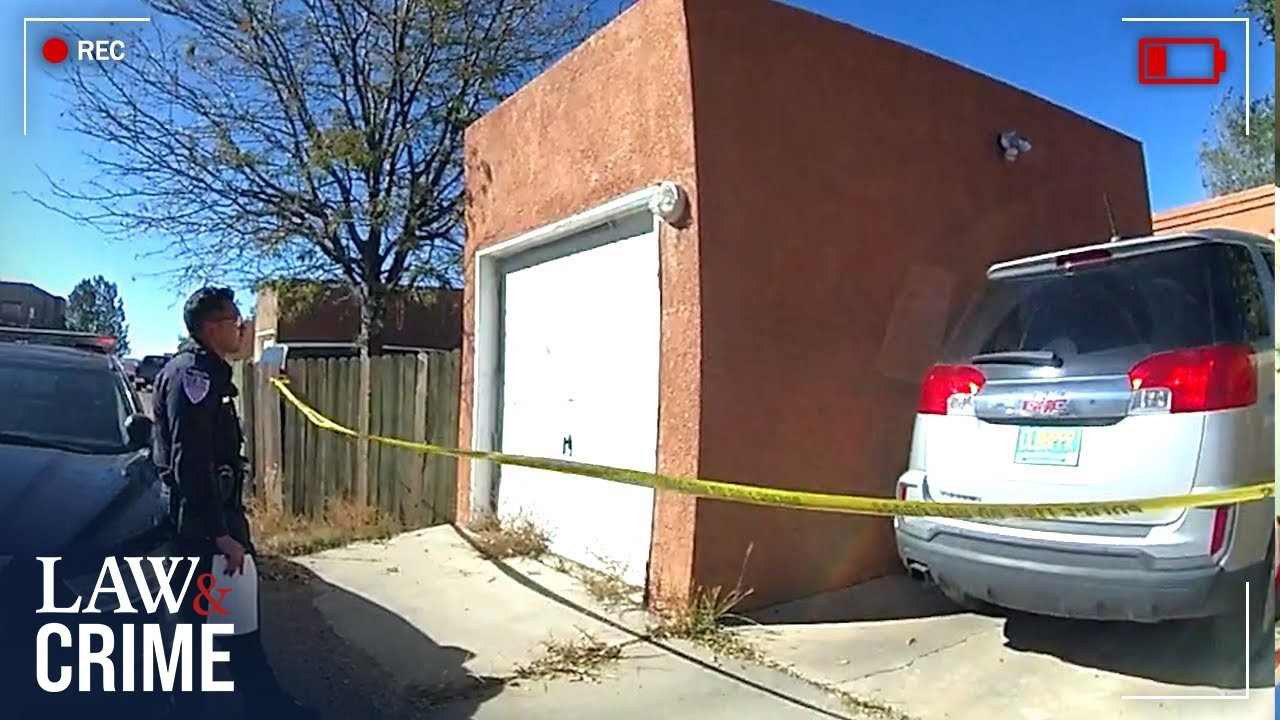
5 Most Wicked Murder Cases Caught On Bodycam
"Bodycam footage provides an unfiltered, real-time look into five brutal murder investigations, exposing the immediate aftermath of horrific crimes and the initial interactions with suspects and witnesses."