Top U.S. & World Headlines — March 18, 2026
YouTube · Z3p4wLN8VDk
Quick Read
Summary
Takeaways
- ❖Israel killed Iran's intelligence minister and other senior leaders; Iran retaliated with missile strikes, killing two near Tel Aviv.
- ❖The US dropped 5,000 lb bunker buster bombs near the Strait of Hormuz, and US National Counterterrorism Center director Joe Kent resigned, citing Israeli lobby pressure for the war.
- ❖Iran's Ministry of Health reported 1,444 killed and 19,000 injured in US-Israeli attacks since February 28th.
- ❖Israel launched airstrikes on central Beirut, demolishing a residential building, and conducted ground operations in southern Lebanon, displacing 1 million people.
- ❖Iran's blockade of the Strait of Hormuz has caused US gas prices to jump 29% and threatens 45 million people globally with acute hunger.
- ❖The Trump administration considered withholding HIV, TB, and malaria medications from Zambia to force the country to open its copper, cobalt, and lithium mines to US companies.
- ❖A federal judge temporarily blocked the Trump administration from terminating Temporary Protected Status (TPS) for immigrants from Somalia.
- ❖The Justice Department dismissed charges against an Army veteran who burned a US flag, reaffirming flag burning as protected speech.
Insights
1Escalating US-Israeli War on Iran and Regional Impact
The conflict between Israel and Iran has intensified dramatically, marked by targeted assassinations of Iranian leadership by Israel and subsequent retaliatory missile and drone strikes by Iran against Israel, Iraq, UAE, and Saudi Arabia. The US has directly participated, dropping bunker buster bombs near the Strait of Hormuz. This escalation has led to significant civilian casualties in Iran and Lebanon, with a UN official raising concerns about international humanitarian law violations.
Israel killed Iran's intelligence minister and other senior leaders (). Iran launched retaliatory strikes, killing two near Tel Aviv (). The US dropped 5,000 lb bunker buster bombs near the Strait of Hormuz (). Iran's Ministry of Health reported 1,444 killed and 19,000 injured (). Israel launched airstrikes on Beirut, and Lebanon reported 912 killed and 2,211 wounded (, ).
2Geopolitical and Economic Fallout from Strait of Hormuz Blockade
Iran's effective blockade of the Strait of Hormuz, a critical chokepoint for 20% of the world's oil supply, has triggered a global economic crisis. US gas prices have surged, and the UN warns of a looming hunger crisis affecting 45 million people due to rising food prices. President Trump's efforts to form a coalition to reopen the strait were rejected by NATO members, highlighting international reluctance to engage in the conflict.
Iran's parliament speaker warned the Strait of Hormuz 'won't return to its pre-war status' (). President Trump blasted NATO members for not joining his coalition (). French President Macron stated France would not take part in operations to open the strait (). US gas prices reached $3.84 a gallon, rising 29% since the war began (). The UN warns 45 million people are at risk of acute hunger ().
3Controversial US Foreign Policy and Domestic Challenges
The Trump administration's foreign policy is under scrutiny, exemplified by a leaked memo revealing a plan to withhold critical medical aid from Zambia to pressure the country into granting US companies access to its mineral reserves. Domestically, the Department of Homeland Security remains under a partial shutdown, and a federal judge intervened to protect Temporary Protected Status for Somali immigrants and to restore a union contract for VA workers, citing retaliation.
A leaked State Department memo showed the Trump administration considering withholding HIV, TB, and malaria medications from Zambia to gain access to copper, cobalt, and lithium reserves (). The Department of Homeland Security has been under a partial shutdown for over a month (). A federal judge temporarily blocked the termination of TPS for immigrants from Somalia (). A federal judge ordered the Trump administration to restore a union contract with VA workers, finding the cancellation was retaliation ().
Quotes
"Iran posed no imminent threat to our nation, and it's clear that we started this war due to pressure from Israel and its powerful American lobby."
"In many instances, Israeli air strikes have destroyed entire residential buildings in dense urban environments with multiple members of the same family, including women and children, often killed together. Such attacks raise concerns under international humanitarian law."
"We are not party to the conflict and therefore France will never take part in operations to open or liberate the straight of Hormuz in the current context."
"We will only secure our priorities by demonstrating willingness to publicly take support away from Zambia on a massive scale."
Q&A
Recent Questions
Related Episodes

🚨 TOTAL F*CKING CHECKMATE 😂😂😂
"The host argues that Trump's 'ceasefire' with Iran was a calculated '5D chess' move to orchestrate a global energy market reshuffle, while simultaneously lambasting 'woke' domestic policies and the 'freefall' of anti-Trump conservative figures."
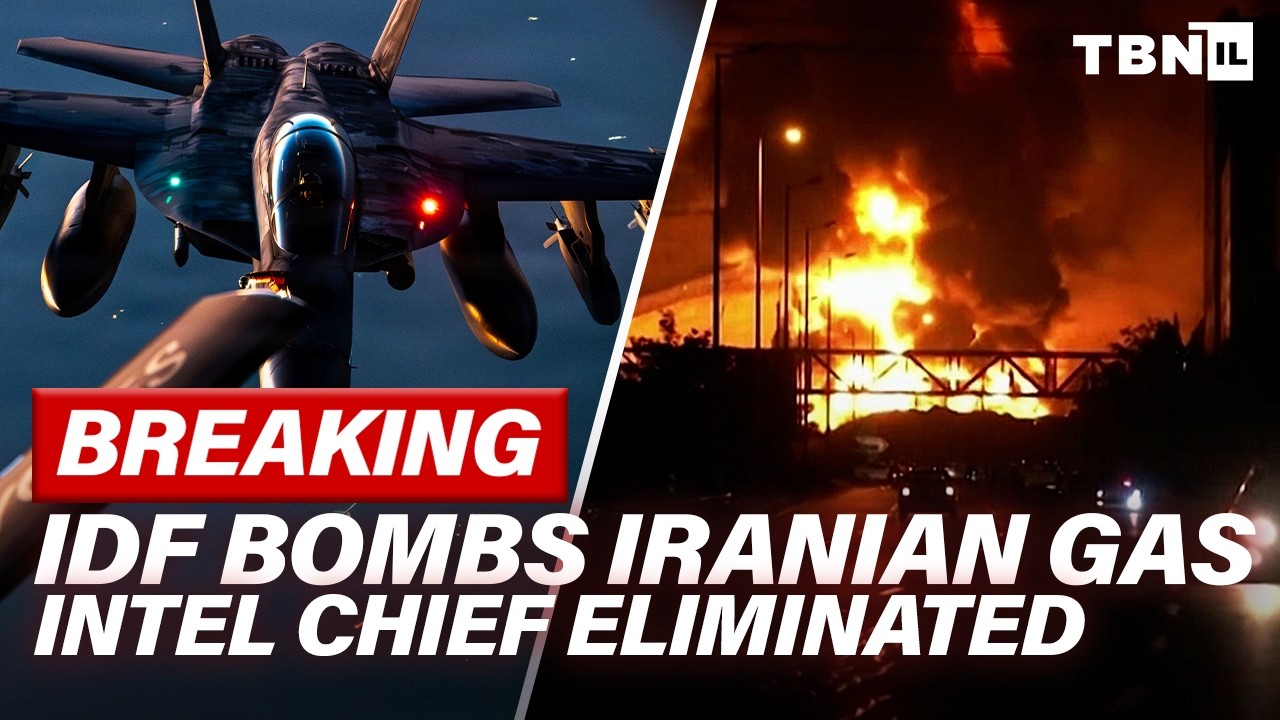
BREAKING: Israel BOMBS Major Iran Gas Site; Top Mullah ELIMINATED; Iran Vows VENGEACE | TBN Israel
"Israel and the United States have escalated their 'Roaring Lion War' against Iran, striking its largest gas facilities, eliminating key intelligence and military figures, and disrupting missile production, while Iran threatens a broader energy war in the Gulf."

🚨 THEY F*CKED AROUND FOR THE LAST TIME 😭😭😭
"This episode unleashes a torrent of highly opinionated commentary on the US-Iran deal, Israel's role, and a scathing critique of 'leftist' policies and immigration, particularly highlighting the UK grooming gang report as evidence of Western societal decay."

Patrick Henningsen: Hezbollah JUST Fired Back at Israel - Iran Vows to “Crush” All Attacks
"Patrick Henningsen argues that the US and Israel initiated an illegal war against Iran, driven by Trump's incompetence and Israeli influence, leading to an inevitable escalation with severe global economic repercussions."