
🚨 BREAKING: Iranians BURN Down Islamic Buildings - Iran Uprising
YouTube · ZBVGHPgCZcE
Quick Read
Summary
Takeaways
- ❖Iranian protesters have gained full control over many cities and towns, escalating the uprising.
- ❖Islamic buildings, mosques, seminaries, and IRGC bases are being attacked and burned by protesters across Iran.
- ❖Protesters have captured police stations, equipment, and even detained IRGC members during clashes.
- ❖Western media, specifically The Guardian, is criticized for publishing propaganda pieces by the Iranian foreign minister instead of reporting on the uprising.
- ❖The Iranian regime has failed to completely shut down the internet, with counter-sabotage efforts keeping connectivity alive.
- ❖Statues of Qassem Soleimani and former President Ebrahim Raisi have been toppled by protesters.
- ❖The host explicitly states his channel's bias towards 'life and freedom,' rejecting the concept of media impartiality.
- ❖Molotov cocktails are now being used by protesters against IRGC bases, marking an increase in violent resistance.
- ❖The host suggests Mossad and CIA operatives are on the ground, coordinating the decentralized nature of the protests to drain IRGC resources.
- ❖The Iranian regime is described as economically collapsed and lacking loyal proxies, making a return to 'normality' impossible even after a potential crackdown.
- ❖Reports suggest Iraqi forces (Hashd al-Shaabi) may have been brought into Hamadan to suppress protests, as Iranian IRGC members are hesitant to engage.
Insights
1Widespread Decentralized Uprising Targets Regime Infrastructure
Iranian protesters have achieved significant control in numerous cities and towns, actively targeting and destroying symbols and infrastructure of the Islamic Republic. This includes burning Islamic buildings (mosques, seminaries), attacking IRGC Basij bases with Molotov cocktails, capturing police stations and equipment, and toppling statues of key regime figures like Qassem Soleimani and Ebrahim Raisi. The host highlights that this widespread, decentralized nature of the protests, occurring across many locations simultaneously, is effectively draining the resources of the IRGC, making it difficult for the regime to suppress the movement.
Protesters have full control over many cities (), attacked Islamic buildings (), seized police equipment in Esvahan (), brought down statues of Qassem Soleimani in Zabat () and Ebrahim Raisi (), hit IRGC Basij headquarters with Molotov cocktails in Sabzavar (), and set an Islamic seminary on fire in Bakiari (). The host notes the widespread nature of attacks across towns, villages, cities, and islands ().
2Alleged Foreign Intelligence Coordination in Protests
The host, referencing previous guests (Emily Shreder, Katherine Perez Shakdam), suggests that foreign intelligence agencies, particularly Mossad and the CIA, have operatives on the ground in Iran. These operatives are allegedly coordinating the protests, providing guidance on 'where to go and what to do when to do it and how' (11:53). This coordination is cited as a reason for the protests' decentralized nature and the sustained internet connectivity, which the regime has failed to completely shut down, implying external assistance with infrastructure.
Emily Shreder and Katherine Perez Shakdam mentioned the role of Mossad in Iran, with operatives on the ground (). The host states it 'seems coordinated' and that 'people know this time what they are doing' (, ). He also points to the internet remaining operational despite regime efforts, suggesting 'somebody's there to help with the infrastructure of internet connectivity' (, ).
3Regime Weakness and Potential External Intervention
The host frames the uprising as occurring against a backdrop of severe regime weakness, citing a collapsed economy, currency devaluation, and shortages of water, gas, and electricity. He claims the regime's traditional proxies (Hezbollah, Hamas, Houthis) are either gone or ineffective, leaving only 'amateur' Iraqi Hezbollah. This vulnerability, combined with explicit statements from US President Trump and Israeli Prime Minister Netanyahu about 'watching' and 'finishing the job,' suggests a high likelihood of external intervention if the regime attempts a widespread massacre. Israel, in particular, is noted to be planning to target the regime's top leadership rather than civilian areas or strategic sites.
The host states the regime is 'completely losing control' () and that 'the Islamic Republic is falling' (). He details the economic collapse, currency collapse, and shortages (). He asserts that proxies are 'gone' or 'amateurs' (). He cites Trump and Netanyahu making it 'quite clear... we are watching. We've got your back' (, ) and that Israelis are 'making plans' to target the top leadership (, ).
Lessons
- Recognize that media coverage of geopolitical conflicts, especially from independent channels, can carry explicit biases, and critically evaluate information presented through that lens.
- Understand the potential for foreign intelligence agencies to play a covert role in supporting or coordinating protest movements in other nations, as alleged in this context.
- Consider the economic and social factors (e.g., currency collapse, resource shortages) that can exacerbate political instability and contribute to widespread uprisings against established regimes.
Quotes
"I absolutely have to take sides. We don't believe in the nonsense of the BBC or CNN saying impartiality is very very important. We have to humans can't be impartial. You absolute idiots. What you need to do is be objective. Be open about your own biases. Report the facts first. I always report the facts first. Then I add my opinion."
"This is after 47 years, this is self-defense. Okay, straightforward, this is simply self-defense."
"The Islamic Republic is falling. It hasn't fallen, but it's falling. They need a bit of a miracle."
Q&A
Recent Questions
Related Episodes

🚨 THEY F*CKED AROUND FOR THE LAST TIME 😭😭😭
"This episode unleashes a torrent of highly opinionated commentary on the US-Iran deal, Israel's role, and a scathing critique of 'leftist' policies and immigration, particularly highlighting the UK grooming gang report as evidence of Western societal decay."
BREAKING: Protests ERUPT In Iran Over IRGC Surrendering To Trump - Infighting Clashes In Tehran
"Iran is experiencing severe internal infighting and protests as hardline IRGC elements clash with government figures over a perceived 'surrender' to the US, while mainstream Western media misrepresents the situation."
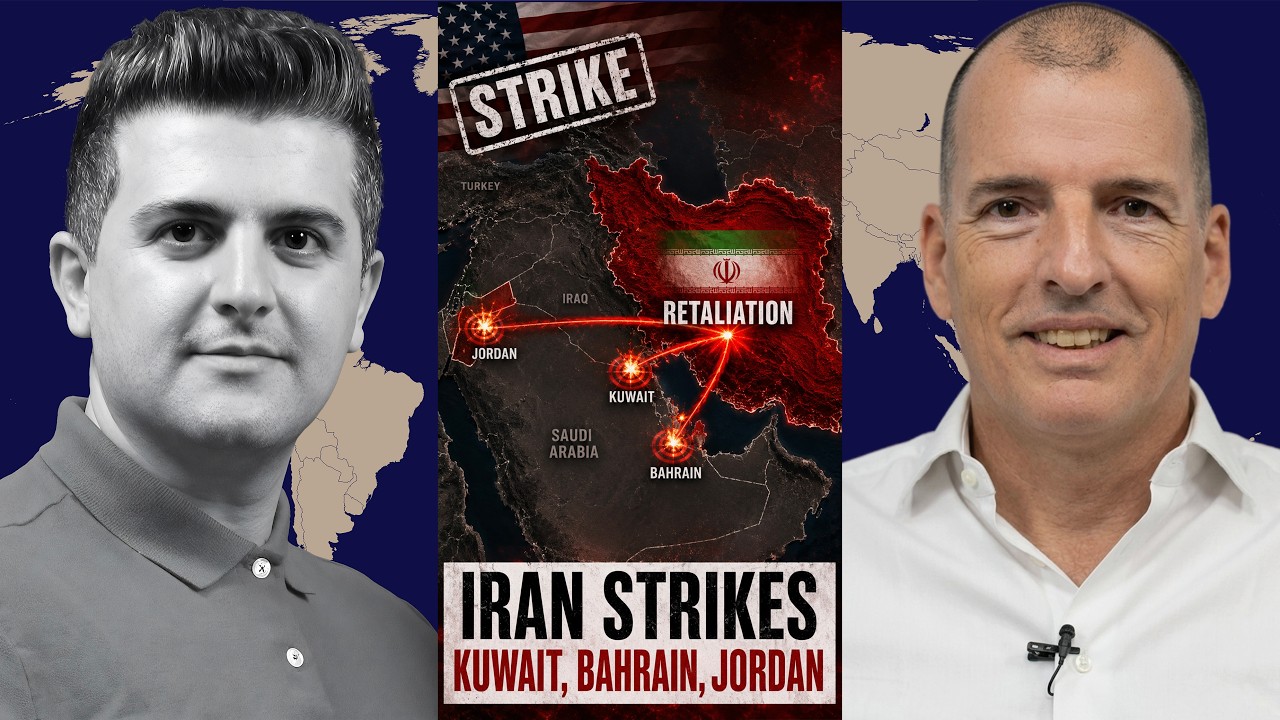
Alex Krainer: US STRIKES Iran – Iran RETALIATES Against Kuwait, Bahrain & Jordan!
"Amidst escalating US-Iran conflict and Iranian retaliation against regional US allies, this episode argues that US foreign policy is deeply controlled by an 'Anglo-Zionist conspiracy' led by the Rothschild banking dynasty, prioritizing Israeli interests over American ones."

Patrick Henningsen: Hezbollah JUST Fired Back at Israel - Iran Vows to “Crush” All Attacks
"Patrick Henningsen argues that the US and Israel initiated an illegal war against Iran, driven by Trump's incompetence and Israeli influence, leading to an inevitable escalation with severe global economic repercussions."