
THE WOLVERINE (2013) Movie Reaction! | Hugh Jackman | X-Men
YouTube · Zefy2Nshh4s
Quick Read
Summary
Takeaways
- ❖The film successfully explores Wolverine's internal pain and desire for an honorable death.
- ❖Hugh Jackman's performance as Wolverine is consistently praised for its physicality and emotional nuance.
- ❖The bullet train fight scene is cited as a standout for its innovative use of speed and environmental obstacles.
- ❖The post-credits scene effectively reintroduces Professor X and Magneto, setting up future X-Men continuity.
- ❖The final act, particularly the Silver Samurai reveal and fight, is considered the weakest part of the movie.
- ❖Director James Mangold's deep understanding of Wolverine's character significantly contributed to the film's quality and later 'Logan'.
Insights
1Wolverine's Character Arc: The Burden of Immortality and Grief
The film effectively portrays Wolverine's deep-seated pain and desire for an end to his eternal life, heavily influenced by the loss of Jean Grey. His nightmares and reluctance to engage with the world underscore his suffering, providing a strong emotional core for his journey in Japan. The hosts note how the film's dream sequences with Jean Grey retroactively strengthened the emotional weight of their relationship, which they felt was underdeveloped in previous films.
The hosts repeatedly discuss Wolverine's pain and nightmares (, , , , , , , ). They specifically mention the dream sequences with Jean Grey and how they 'filled in every single gap of that relationship' (, , , , , ).
2The Power of a Contained Narrative in Superhero Films
The hosts commend 'The Wolverine' for its focused, self-contained story, which centers solely on Logan's journey in Japan. This approach is seen as a significant improvement over previous X-Men films that attempted to juggle too many characters and plotlines, leading to underdeveloped arcs. The film's singular focus allowed for a deeper exploration of Wolverine's character without the distraction of an expansive ensemble.
The hosts state, 'This was a nicely contained just story about Wolverine' () and 'Easy to follow. And I think that feels better compared to the last few movies we've seen because a they're not trying to tell like the mysterious origin story of Wolverine and also like hamfist as many X-Men references in there as possible' (). They also mention, 'having a smaller focus always is going to translate better in a film' ().
3Hugh Jackman's Iconic Portrayal and James Mangold's Direction
Hugh Jackman's performance is consistently praised for his complete embodiment of Wolverine, capturing both the character's raw physicality and complex emotional state. Director James Mangold is recognized for his deep understanding of the character, which allowed him to craft a more grounded and impactful Wolverine story, laying the groundwork for his subsequent acclaimed film, 'Logan'.
The hosts state, 'Hugh Jackman is just this character so much. I feel like he at this point he doesn't even he just snaps right into it. He understands the poses. He hits everything perfectly' (). They also note, 'James Mangold's so good with this character because dude, my favorite and maybe even honestly probably my favorite superhero movie is Logan... he does such a good job with this character and I didn't realize that he did directed this one, but he's good with it' ().
4The Bullet Train Sequence: A Masterclass in Creative Action
The fight scene on top of the Japanese bullet train is highlighted as the film's most memorable and creatively executed action sequence. Its success is attributed to the innovative use of the train's extreme speed and the environmental obstacles, which forced the combatants to adapt their fighting styles and created a unique challenge beyond a typical on-top-of-a-train fight.
The hosts call the bullet train sequence 'one of the best scenes for sure out of this whole series' (). They praise 'the use of the bullet train and that speed and everything like flying by so fast and them needing to like hang on for dear life and not be able to actually get to each other and the fight kind of became about the obstacles rather than just the two of them' ().
5Post-Credits Scene: Major X-Men Universe Continuity Implications
The film's post-credits scene is acknowledged as a significant moment for the broader X-Men cinematic universe, bringing back Professor X and Magneto, both of whom were believed to be dead or depowered after 'X-Men: The Last Stand'. This scene effectively sets up future films by re-establishing key characters and their powers, prompting discussion about how their returns were explained within the continuity.
The hosts react to the post-credits scene, noting, 'Oh my gosh. Two years later... Oh, you don't have the metal. His claws still aren't metal. No, cuz I think that they regrrew the adamantium fuse' (). They specifically mention, 'we've got Professor Xavier and Magneto both back and Magneto's got his powers back because at the end of last stand he got depowered' ().
6Critique of the Final Act and Villain Reveal
Despite overall praise, the hosts agree that the film's final act, particularly the reveal of Yashida as the Silver Samurai and the subsequent fight, was the weakest part. They felt the reveal lacked emotional weight and that the villain's motivations and the fight itself were less compelling compared to the earlier, more grounded action sequences.
One host states, 'the ending I think fighting the robot was probably the weakest' (). They elaborate, 'the final reveal like it makes sense that Yoshida was living and had, you know, faked his death or whatever... didn't have the same weight. Not the gravitas' ().
Quotes
"The bullet train has got to be one of the best scenes for sure out of this whole series."
"Somehow this movie made me feel bad. It Yeah, it did. like just the beautiful dream sequences and her sort of calling him into the beyond and his inability to let go. Like that was some great emotional setup that basically filled in every single gap of that relationship that I didn't buy beforehand."
Q&A
Recent Questions
Related Episodes

DARK PHOENIX (2019) Movie Reaction! | First Time Watch! | X-Men | Sophie Turner | James McAvoy
"CinePals dissects 'Dark Phoenix,' praising its technical execution and character performances, but ultimately finding it a narratively inconclusive and confusing entry in the X-Men franchise, especially regarding its convoluted timeline."

LOGAN (2017) Reaction! | We Forgot How GOOD This Was 😳 | Hugh Jackman | Dafne Keen
"CinePals revisits 'Logan' (2017), dissecting its raw, gritty portrayal of an aging Wolverine and Professor X, and the impactful introduction of Laura (X-23) as a standalone masterpiece."
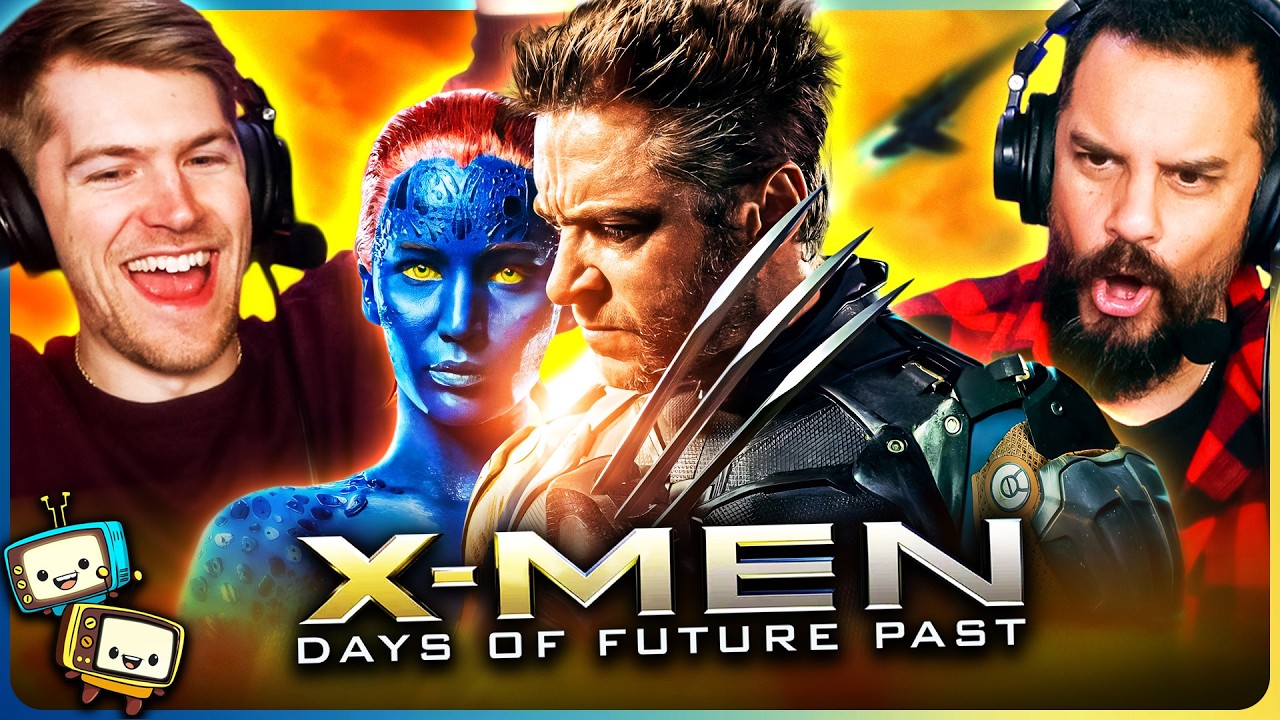
X-MEN: DAYS OF FUTURE PAST Movie Reaction! | First Time Watch! | Hugh Jackman | James McAvoy
"The hosts declare 'X-Men: Days of Future Past' their favorite X-Men film, praising its ingenious narrative that successfully retcons previous timeline inconsistencies and reintroduces beloved characters with high stakes."

X-MEN ORIGINS: WOLVERINE (2009) Movie Reaction! | First Time Watch! | Hugh Jackman | Liev Schreiber
"CinePals revisits 'X-Men Origins: Wolverine,' dissecting its controversial origin story, character portrayals, and continuity flaws that alienated fans, despite praising its action and Hugh Jackman's performance."