
Thomas Massie IN STUDIO: Iran War, Venezuela, Epstein Coverup
YouTube · ZejH2NRG-eY
Quick Read
Summary
Takeaways
- ❖Many 'America First' Republicans are advocating for kinetic attacks in Iran, despite previous promises to avoid regime change operations.
- ❖The executive branch is accused of circumventing Congress's constitutional role in declaring war, using 'tortured legal scaffolding' for actions like those in Venezuela.
- ❖Representative Massie introduced an Iran War Powers Resolution and plans to re-introduce a Venezuela War Powers Resolution to force congressional votes on military action.
- ❖The DOJ has missed deadlines and is violating the Epstein files transparency act, co-authored by Massie, by withholding hundreds of thousands of files and improperly redacting others.
- ❖Massie views foreign policy actions as 'weapons of mass distraction' from the Epstein files, alleging the DOJ is testing the enforceability of the law.
- ❖Epstein had strong connections to Israeli government officials (e.g., Ehud Barak) and US intelligence agencies (e.g., acting CIA director).
- ❖Massie faces significant political opposition and funding against him from billionaires with ties to Israel and financial interests in foreign interventions, some of whom appear in Epstein's black book.
- ❖The 'craziest son of a bitch' theory suggests voters often choose disruptive figures over constitutionalists, a phenomenon Massie attributes to Donald Trump's rise.
- ❖Paul Singer, a billionaire funding opposition to Massie, stands to gain billions from the Venezuela intervention, having acquired Citgo (Venezuelan nationalized oil company) at a low price.
Insights
1Executive Branch Circumvents Congressional War Powers
The executive branch, across administrations, consistently avoids seeking explicit congressional authorization for military actions, even when the War Powers Act requires it. Massie cites the 'tortured legal scaffolding' used for Venezuela, where military action was framed as a DOJ arrest, and anticipates similar arguments for Iran. This undermines Congress's constitutional role in initiating war.
Massie's description of the Venezuela situation (-) and the general pattern of executive actions without congressional votes (-).
2DOJ Obstruction of Epstein Files Release
The Department of Justice is actively violating the Epstein files transparency act, co-authored by Massie. They missed multiple deadlines, are withholding hundreds of thousands of files, and are improperly redacting documents by citing superseded laws (Privacy Act, FOIA standards) rather than the specific provisions of the new act that mandates release of internal communications and prohibits redactions for embarrassment.
Massie details missed deadlines (-), the volume of unreleased files (-), and the DOJ's legal justification for redactions (-).
3Epstein's Deep Connections to Intelligence and Foreign Officials
Jeffrey Epstein maintained significant connections with both foreign government officials, such as former Israeli Prime Minister Ehud Barak (who met Epstein dozens of times, including while an official), and US intelligence agencies, including meetings with an acting CIA director. These connections suggest a deeper, potentially intelligence-related, dimension to Epstein's activities.
Massie discusses Ehud Barak's meetings (-) and his submission of five documents to Congress establishing Epstein's connection to intelligence agencies, including meetings with the acting CIA director (-).
4Foreign Policy as Distraction and Financial Gain
Massie argues that foreign interventions, particularly in Venezuela, serve as 'weapons of mass distraction' from domestic issues like the Epstein scandal. He also highlights how these interventions directly benefit powerful financial interests, such as billionaire Paul Singer, who acquired Venezuelan oil assets (Citgo) and profits from US government actions compelling payment.
Massie's 'weapons of mass distraction' comment (-) and his explanation of Paul Singer's financial interests in Venezuela (-).
Bottom Line
The DOJ's refusal to comply with a signed law regarding Epstein files is a deliberate 'test' of enforcement, indicating a belief that they can act with impunity unless Congress or the judiciary takes extreme measures.
This suggests a systemic breakdown in the checks and balances, where the executive branch feels empowered to ignore legislative mandates, potentially setting a dangerous precedent for future transparency and accountability efforts.
Congress could pursue more aggressive enforcement mechanisms, such as inherent contempt proceedings (fines, arrests) or impeachment, to reassert legislative authority and ensure legal compliance from executive agencies.
The 'America First' movement, despite its anti-interventionist rhetoric, is susceptible to hawkish foreign policy influences, particularly regarding Iran, indicating a potential ideological inconsistency or a hijacking of the movement's stated goals.
This reveals a vulnerability within populist movements to traditional foreign policy establishments, suggesting that stated principles can be easily overridden by other political or financial pressures, leading to a continuation of policies voters believed they were rejecting.
Anti-interventionist advocates within the 'America First' movement need to actively challenge and hold accountable their representatives who support military actions, ensuring alignment with core principles rather than succumbing to neocon influences.
Key Concepts
Weapons of Mass Distraction
This model suggests that significant foreign policy actions or crises are sometimes used, intentionally or incidentally, to divert public and media attention away from sensitive domestic issues, such as government non-compliance or scandals involving powerful individuals.
Coincidence Theorist
A humorous self-description used by Massie to highlight the numerous, seemingly improbable connections between powerful individuals, political actions, and financial interests, implying that these are more than mere coincidences without explicitly labeling them as conspiracies.
Craziest Son of a Bitch Theory
This theory posits that a segment of the electorate, rather than voting for libertarian or constitutional principles, is primarily motivated to support the most disruptive or 'craziest' candidate in a race, seeking to upend the status quo regardless of specific ideology.
Lessons
- Monitor congressional votes on war powers resolutions to understand how representatives align with constitutional checks on executive military action.
- Demand transparency from government agencies, particularly the DOJ, regarding the release of sensitive information like the Epstein files, and support legislative efforts to enforce such transparency.
- Investigate the financial interests of political donors and how they may influence foreign policy decisions, especially in regions with valuable resources or troubled assets.
Quotes
"I call these weapons of mass distraction from the Epstein files and and they're going off every week, all these weapons of mass distraction."
"Our bill is not a FOIA request. Our bill is a law that the president himself signed. And the other thing is we say specifically in our bill, you have to release internal communications involving decisions about whether to indict or not."
"I vote with my party 91% of the time. And in the 9% I don't, they're taking up for pedophiles, starting a new war, or bankrupting the country."
"I think I'm the only sane Republican in the race right now or the only one that's forming an opinion that sometimes deviates from the groupthink."
Q&A
Recent Questions
Related Episodes

Ken Paxton Dominates Cornyn Ahead of Race Against RADICAL Talarico, Plus SHOCK Prince Andrew Stories
"Megyn Kelly delivers a sharp analysis of Ken Paxton's decisive victory in the Texas Republican primary and his upcoming battle against a 'radical' Democratic opponent, alongside explosive new allegations of predatory behavior and corruption surrounding Prince Andrew and Sarah Ferguson."

🚨 HOLY F*CK HE WAS RIGHT 😂😂😂
"The host celebrates perceived conservative victories and the exposure of 'leftist' and 'communist' elements in American politics and culture, from Trump's enduring influence to alleged government fraud and societal decay."

BREAKING: MAGA RIGS VIRGINIA As Trump THREATENS NUCLEAR HOLOCAUST & Kyle EXPLODES!!!
"Host Kyle Kulinski vehemently condemns Republican actions, from alleged gerrymandering and voter suppression to environmental negligence, while sharply criticizing Trump's rhetoric on Iran and other controversial political figures and policies."
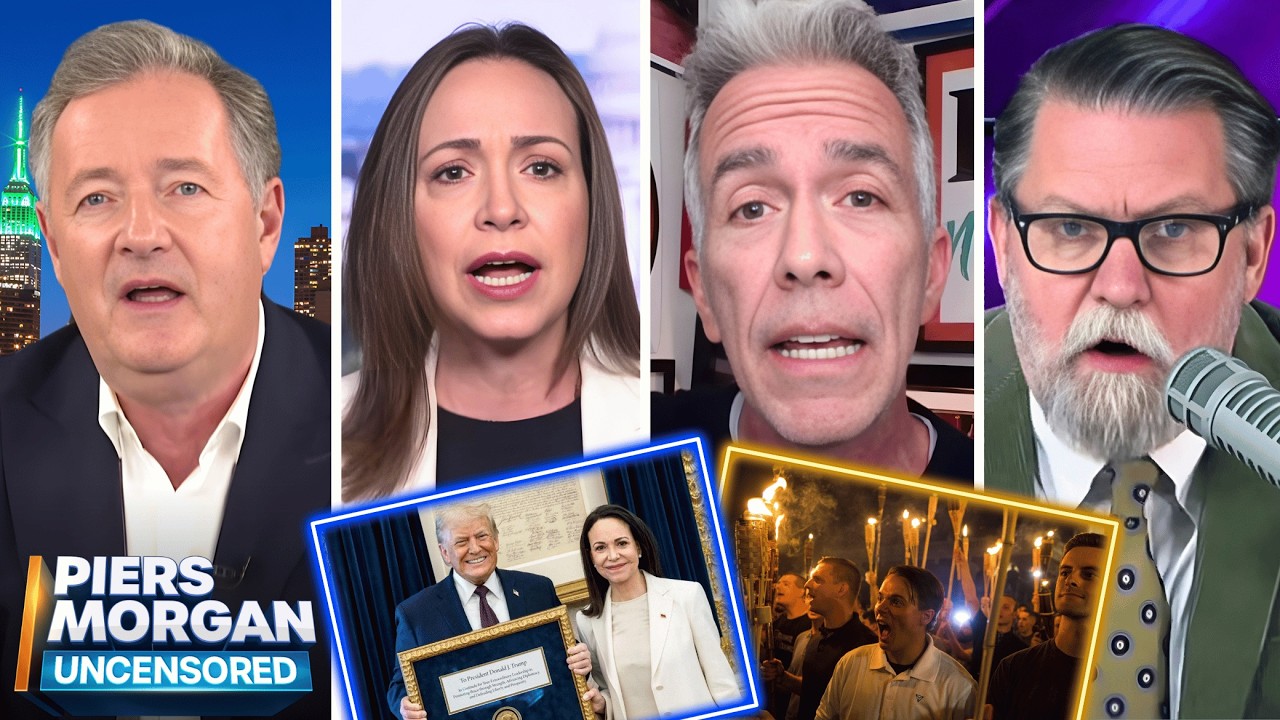
"Fighting Solves EVERYTHING!" Who's To Blame For Political Violence? + Maria Machado On Trump
"This episode dissects the escalating political violence in the US, with panelists fiercely debating the role of partisan rhetoric and media in radicalization, alongside an interview with Venezuelan opposition leader Maria Machado on US intervention and her country's future."