
IS PUKA NACUA THE BEST WR IN THE NFL, GOOD VS. BAD PUBLICITY & RANDY MOSS' HALL OF FAME TAKE!
YouTube · _4xnXx-CpTw
Quick Read
Summary
Takeaways
- ❖Puka Nacua's exceptional rookie season justifies a top-tier wide receiver contract, with analysts placing him among the league's top three.
- ❖Justin Jefferson's claim as the NFL's #1 wide receiver is defended by attributing lower production to inconsistent quarterback play, highlighting the reliance on team dynamics.
- ❖Player social media conduct, exemplified by Puka Nacua's controversial tweet, can negatively impact personal branding and future endorsement opportunities, necessitating media training.
- ❖The concept of 'all publicity is good publicity' is debunked; its value depends on alignment with a player's current and future brand strategy and income streams.
- ❖The historical lack of Name, Image, and Likeness (NIL) rights for college athletes, like Reggie Bush, represents a past injustice that should be retroactively addressed.
- ❖Randy Moss advocates for Hall of Fame voting to be restricted to individuals who have played or coached at the highest level, arguing external analysts lack the necessary firsthand experience.
- ❖Max Crosby's potential trade from the Raiders is driven by his desire for 'meaningful football' and the team's rebuilding efforts, showcasing how player aspirations and team strategy can diverge.
Insights
1Puka Nacua's Elite Performance and Contract Value
Puka Nacua's rookie season statistics, leading the NFL in receptions and second in receiving yards, make a contract extension a 'no-brainer.' Analysts place him as a top-three wide receiver, citing his comprehensive skill set including route running, footwork, speed, catch radius, and yards after reception. His ability to elevate any quarterback's play further solidifies his value to the Rams.
Led the league in receptions and was second in receiving yards by about 80 yards. Two out of four people asked at the Super Bowl media row (including Jamar Chase) ranked Puka Nacua highly among elite receivers.
2Player Branding and the 'Good vs. Bad Publicity' Debate
Puka Nacua's social media activity, including a controversial tweet about Sam Darnold and a video of him intoxicated, highlights the critical need for media training for athletes. While some personalities like Antonio Brown thrive on outlandish behavior, for most players with family-oriented brands and sponsors, such actions can be detrimental. The hosts argue that 'all publicity is not good publicity'; its value depends on whether it aligns with and supports current and future income streams and brand image.
Puka Nacua's tweet 'Sam Darnold with the laughing emoji' after the Seahawks won. Discussion of Kim Kardashian's career trajectory as an example where 'bad' publicity aligned with a future 'sexy' brand.
3Retroactive Justice for NIL Rights: The Reggie Bush Case
The recent legalization of Name, Image, and Likeness (NIL) for college athletes brings to light past injustices where athletes were stripped of awards or denied income for profiting from their own identity. The hosts argue that if NIL is now permissible, previous penalties for athletes like Reggie Bush (who lost his Heisman Trophy) should be reversed, and they should receive retroactive recognition or compensation. This extends to other historical figures who couldn't monetize their collegiate fame.
Reggie Bush lost his Heisman Trophy due to rules against profiting from his name, image, and likeness. Analogy to weed legalization and expungement of past charges.
4Randy Moss's Stance on Hall of Fame Voting
Randy Moss asserts that only individuals who have played or coached football at the highest level should be eligible to vote for Hall of Fame inductees. The argument is that firsthand experience of the game's physical, mental, and cultural demands provides an invaluable perspective that external analysts or media members lack. This perspective considers factors beyond statistics, such as team dynamics, coaching philosophies, and personal sacrifices, which are crucial for a holistic evaluation of a player's legacy.
Randy Moss's quote: 'If you didn't play it, if you didn't coach it, you shouldn't have a vote.' Arabia's supporting argument about the difference between analyzing and experiencing the game.
5The Evolving Concept of 'Untouchable' Players in Trades
The discussion around Max Crosby's potential trade from the Raiders, fueled by his desire for 'meaningful football' and the GM's non-committal response, illustrates that few, if any, players are truly 'untouchable' in modern sports. While teams should strive to retain foundational players, strategic trades can be necessary for rebuilding or acquiring assets. The hosts argue that player movability fosters performance, contrasting it with no-trade clauses that can reduce a player's incentive to perform at their peak.
Raiders GM John Spanos's response regarding Max Crosby: 'I love Max. He embodies everything that a Raider is,' without explicitly stating he's untouchable. Max Crosby's stated priority of playing 'meaningful football.' Examples of LeBron James and Stephen Curry potentially being tradable in the future.
Lessons
- Athletes and public figures should invest in media training to manage their public image and protect their brand, especially on social media platforms.
- When evaluating talent or potential trades, consider not just individual statistics but also the player's desire for 'meaningful football' and how their aspirations align with the team's long-term vision.
- For organizations, retaining key talent requires understanding and addressing player needs beyond just salary, including team culture, competitive outlook, and personal growth opportunities.
- Advocate for retroactive policy changes that address historical injustices, such as compensating past college athletes who were penalized for actions now permitted under NIL rules.
Quotes
"I mean, how am I not? A lot of people based it off of the quarterback play, just different things that really go into my position, obviously, I've got to rely on and I got to depend on a lot of people in order for me to get that ball. If I don't have an elite quarterback that's throwing me the ball the entire year, then it's a little bit difficult to be in those conversations. But then overall, he said, 'I think I'm number one. I think no one in this league can cover me manto man. That's without a doubt. My confidence level will always be high and I always feel that I'm number one in my eyes.'"
"If narcissism was a position, pause. It would be wide receiver."
"I think in general, it it kind of depending on the player, it could hurt your brand if you keep doing all these outlandish things and saying all these these incorrect things. But it depends on what kind of player you are. If you're Antonio Brown, if you're AB, it's great for your brand because that is your brand. People expect you to be outlandish. People expect you to say those things. People love it. But if you're more family oriented, you have all these sponsors and stuff, it it could be bad for business. So, he just got to be careful."
"I think when you go too far is when you mess up the bag. I'll use the bag as the line. when when what you're saying begin to affect that bag, that's when you got to decide, are you saying the right things, right?"
"I really believe as a football player, if you didn't play it, if you didn't coach it, you shouldn't have a vote. I don't care who you are. I don't care how you feel about it. Like I said, I don't want to take no shine away from the guys elected today. And that's it for me."
"I can tell my son, you're not being responsible. You're not doing these things that a young man can do. But I feel like I can't teach my son how to be a man. Only a man can do that."
Q&A
Recent Questions
Related Episodes

Anisa LIES about Harley - H3 After Dark #24
"The H3 crew exposes Anisa and Ian's alleged revisionist history and manipulative behavior through text message receipts, while also dissecting a high-profile celebrity breakup and sharing personal embarrassing stories."
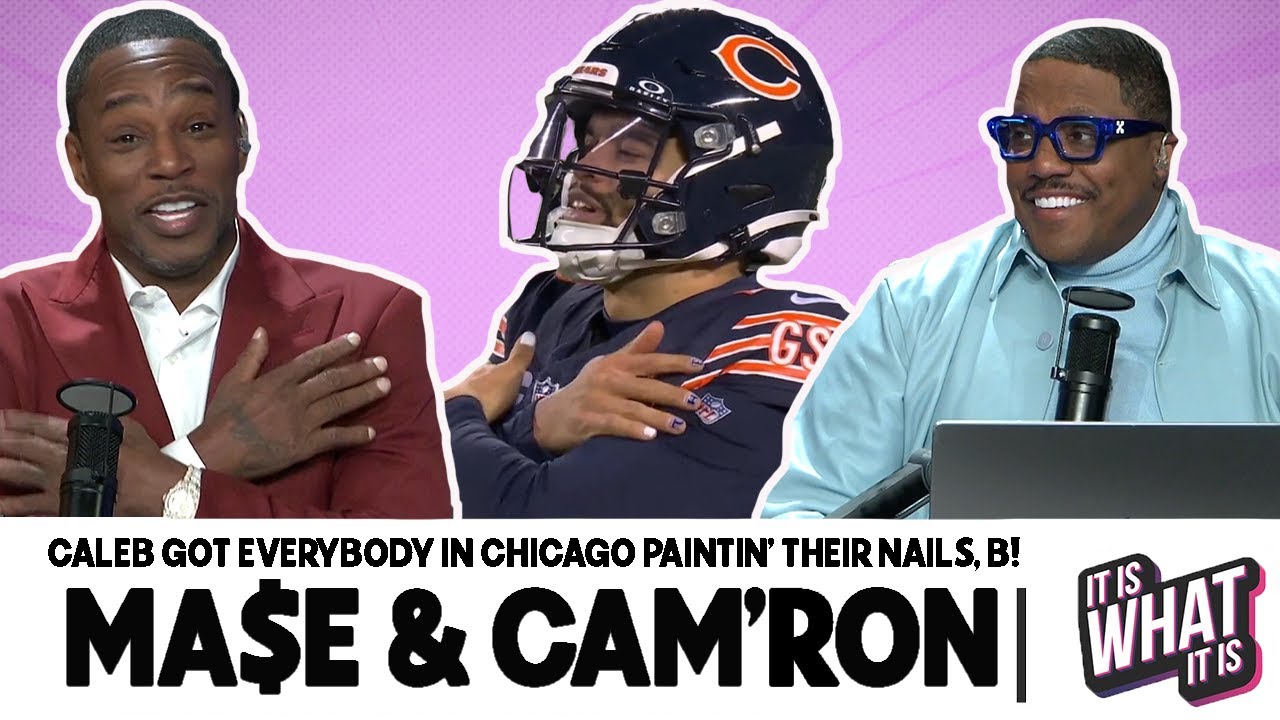
Josh Allen Going CRAZY in the Playoffs & Caleb Williams Got ALL Of Chicago Paintin' Their Nails!
"This episode dissects key NFL playoff upsets and standout performances, from the Eagles' implosion due to internal strife to Josh Allen's dominant playoff run and Caleb Williams' transformative leadership for the Bears, alongside a deep dive into the evolving landscape of college football recruitment."

PATREON EXCLUSIVE | The Human Experience (feat. Eric Benet and T.I) | The Joe Budden Podcast
"Eric Benét and T.I. offer candid insights into the evolving music industry, the challenges of maintaining authenticity, and their personal philosophies on career longevity, health, and societal changes."

The Pat McAfee Show Live | Tuesday June 23rd 2026
"Pat McAfee and guests dissect the seismic Giannis trade to Miami, the NFL's firm stance on gambling, Windham Clark's US Open triumph, and the USMNT's World Cup momentum, all while celebrating the Kachuk brothers' reunion."