
MSNBC Anchor SLOWLY DIES INSIDE As Democrat BACKSTABS Party Handing Them Embarrassing Defeat!
YouTube · _7KcMtg4zv4
Quick Read
Summary
Takeaways
- ❖Senator John Fetterman voted against a Democratic resolution to limit the President's military actions in Iran, defying his party's stance.
- ❖The Senate failed to advance the war powers resolution, marking a political defeat for Democrats attempting to 'castrate' the President's military operations.
- ❖The US military strategy in Iran involves destroying ballistic missile systems, degrading the navy, and eliminating leadership, leading to significant reductions in Iranian attacks.
- ❖Iran's allies, Russia and China, are described as 'ghosting' Iran, unwilling to intervene or provide substantial support, which undermines their global standing.
- ❖The host suggests the US is implementing a 'Venezuela model' of regime change in Iran: removing uncooperative leaders while maintaining the existing governmental structure to avoid full-blown civil war and nation-building.
- ❖Reports indicate Iran's Ministry of Intelligence reached out to the CIA for a ceasefire shortly after attacks began, signaling weakness and a desire for an 'off-ramp'.
Insights
1Senator Fetterman Defies Democrats on Iran War Powers
Senator John Fetterman voted against a Democratic-led resolution aimed at blocking the President from using further military force against Iran. This move was framed by the host as Fetterman being 'honest' and 'betraying the Democrat party's talking points,' leading to an 'embarrassing defeat' for Democrats.
The host states, 'John Federman who backstabbed Democrats in order to vote to not take away the president's ability to continue his military operation in Iran.' Fetterman himself said, 'I know I know probably the most toxic thing you can do as a Democrat is to agree with the president about anything anything at this point.'
2Senate Fails to Restrict President's Military Authority in Iran
The Senate failed to advance a war powers resolution introduced by Senator Tim Kaine, which would have required congressional approval for further military action in Iran. This outcome was seen as an inability of Democrats to 'castrate the president in the middle of the operation.'
The news report states, 'The Senate has failed to advance a war powers resolution aimed at blocking President Trump from using further military force against Iran.' It further notes, '53 senators voted against this war powers resolution.'
3US Military Strategy: Decapitation and Capability Degradation
The US military strategy in Iran focuses on systematically destroying Iran's ballistic missile systems, degrading its navy, and eliminating its leadership. This approach aims to prevent Iran from rebuilding combat capability and project power, leading to significant reductions in Iranian attacks.
The host quotes a military briefing: 'First, we are targeting and eliminating Iran's ballistic missile systems... Second, we are destroying the Iranian Navy... Third, we're ensuring Iran cannot rapidly rebuild or reconstitute its combat capability.' It's noted that 'Iran's theater ballistic missile shots fired are down 86%... and their one-way attack drone shots are down 73%.'
4Iran Seeks Off-Ramp Amidst Military Pressure
Despite public defiance, operatives from Iran's Ministry of Intelligence reportedly reached out to the CIA for a ceasefire shortly after the attacks began. This indirect offer, made through another country's spy agency, signals Iran's weakness and desire for an 'off-ramp' from the conflict.
The host reads from a New York Times story: 'A day after the attacks began, operatives from Iran's Ministry of Intelligence reached out indirectly to the CIA with an offer to discuss terms for ending the conflict.'
5China and Russia Abandon Iran, Exposing Weakness
Iran's key allies, China and Russia, have reportedly 'ghosted' Iran, providing no substantial military or diplomatic support beyond 'scolding messages.' This non-intervention is seen as exposing the weakness of their military technology and their unwillingness to stand up for allies against the US.
Pete Hegseth is quoted saying, 'all China's done is send some scolding messages. They haven't done a single thing to stand up for their allies.' The host adds, 'Russia and China they they've essentially abandoned Iran... They're not trying to get involved.'
Bottom Line
The perceived failure of China's advanced air defense capabilities, provided to Iran and subsequently destroyed by US/Israeli forces without shooting down a single plane, could significantly diminish China's military technology export market and influence among developing nations.
This event could lead to a re-evaluation by potential buyers of Chinese military hardware, shifting their preference towards Western technology. It also weakens China's geopolitical standing as a reliable military partner, especially for countries 'flirting with China'.
Western defense contractors and intelligence agencies could leverage this perceived technological superiority to strengthen alliances and expand market share, while the US could further isolate China by highlighting its inability to protect its allies.
Key Concepts
Venezuela Model of Regime Change
This model involves 'cutting off the head' (eliminating uncooperative leadership) while keeping the 'body intact' (maintaining the existing governmental structure). The goal is to replace leadership with compliant figures who will 'play ball' without triggering a full-blown collapse, civil war, or the need for extensive nation-building efforts, thereby avoiding the quagmires seen in Iraq or Afghanistan.
Modern Warfare vs. Conventional War
Modern warfare, as described, relies heavily on drones, technology, air power, and naval capabilities for targeted strikes and capability degradation, avoiding large-scale ground invasions and 'boots on the ground.' This approach is seen as more palatable in a democracy where conventional wars are highly unpopular, allowing for strategic objectives to be met with reduced direct human cost and political backlash.
Quotes
"I know I know probably the most toxic thing you can do as a Democrat is to agree with the president about anything anything at this point."
"I'm a pro Israel Democrat and it's unfortunate that's becoming more and more unfortunate as a Democrat."
"Most of the people we had in mind are dead. Pretty soon we're not going to know anybody."
Q&A
Recent Questions
Related Episodes

🚨 THEY F*CKED AROUND FOR THE LAST TIME 😭😭😭
"This episode unleashes a torrent of highly opinionated commentary on the US-Iran deal, Israel's role, and a scathing critique of 'leftist' policies and immigration, particularly highlighting the UK grooming gang report as evidence of Western societal decay."
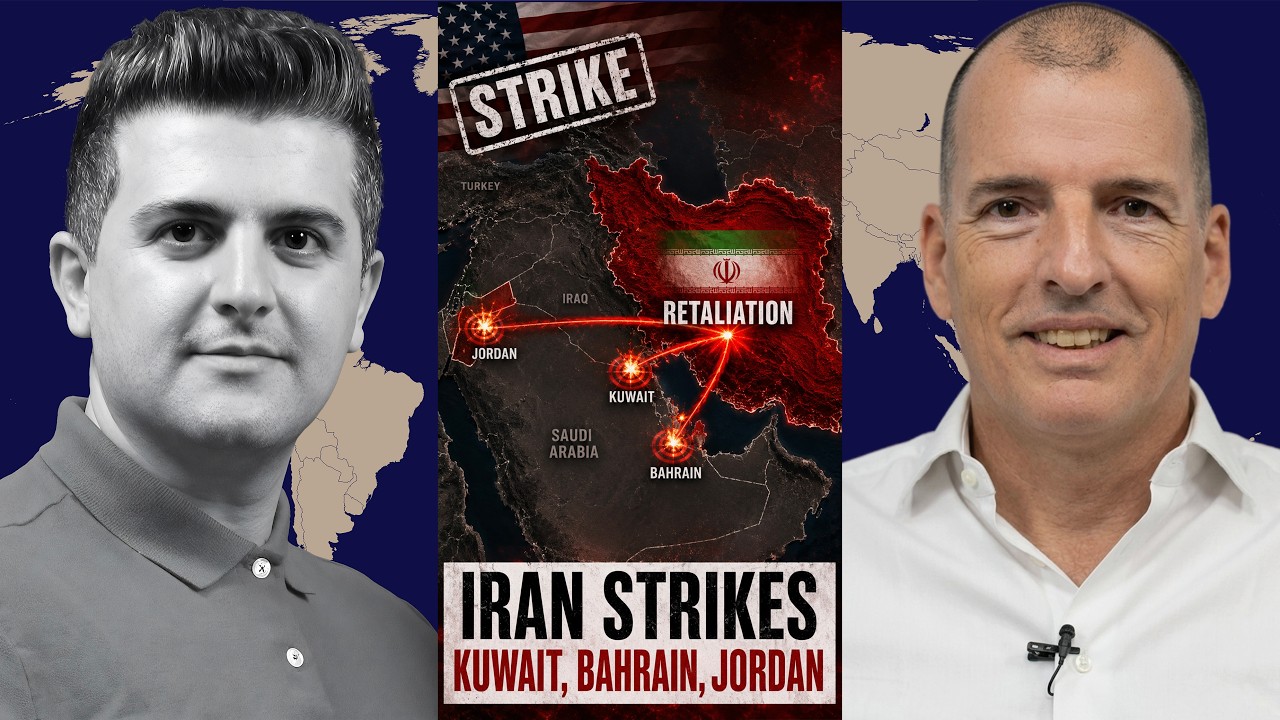
Alex Krainer: US STRIKES Iran – Iran RETALIATES Against Kuwait, Bahrain & Jordan!
"Amidst escalating US-Iran conflict and Iranian retaliation against regional US allies, this episode argues that US foreign policy is deeply controlled by an 'Anglo-Zionist conspiracy' led by the Rothschild banking dynasty, prioritizing Israeli interests over American ones."

Iran Update: Israel’s Newest Bombing Campaign, the Oncoming War With China and How to Avoid It
"Colonel Wilerson reveals how the US and Israel are actively bombing China's strategic infrastructure in Iran, escalating a covert economic war that Beijing intends to win without direct military conflict by dismantling the dollar's global dominance."

Patrick Henningsen: Hezbollah JUST Fired Back at Israel - Iran Vows to “Crush” All Attacks
"Patrick Henningsen argues that the US and Israel initiated an illegal war against Iran, driven by Trump's incompetence and Israeli influence, leading to an inevitable escalation with severe global economic repercussions."