
🚨 BREAKING: IRGC In Chaos As Iranian Fighter Jet CRASHES - Trump Approves War Plans
YouTube · _OI_iStMJEo
Quick Read
Summary
Takeaways
- ❖An Iranian F-4 Phantom fighter jet crashed near Hamadan, killing the instructor pilot, underscoring the Iranian Air Force's outdated equipment and training deficiencies.
- ❖President Trump has approved war plans against Iran, issuing a 10-15 day ultimatum, following Iran's public rejection of US demands for zero uranium enrichment.
- ❖The US White House is reportedly planning an initial limited military strike on Iran, designed to provoke retaliation and provide justification for a subsequent full-scale invasion aimed at toppling the leadership.
- ❖The Iranian Rial has completely collapsed, with $735 now equivalent to 1 billion Rial, signaling severe economic distress within the country.
Insights
1Iranian F-4 Phantom Crash
An Iranian F-4 Phantom fighter jet crashed during a nighttime training flight near the air base in Hamadan, killing the pilot, Mei Firus Mand, who was also a combat crew training squadron instructor. This highlights the age and potential unreliability of Iran's military equipment.
It was an F4 Phantom... an aircraft crashed during a nighttime training flight near the air base in Hamadon. Now, the pilot has been killed... Mei Firus Mand has been killed in the crash in Hamadon.
2Trump Approves War Plans & Ultimatum
President Donald J. Trump has approved plans for war against the IRGC and Ali Khamenei, issuing a 10-15 day deadline for Iran to make a deal, or 'bad things will happen.'
President Donald J. Trump, according to the White House, has now approved the plans for the war against the IRGC and Ali Kmin... 10 15 days that is the deadline.
3Iran Rejects US Demands
The Islamic Republic leadership has officially rejected US demands for zero uranium enrichment, stating they 'accept war instead.'
The Islamic Republic leadership have officially rejected uh the US demands over the zero enrichment of uranium and they have said that we accept war instead.
4US Strategy: Phased Military Action
The Trump administration is weighing an initial limited military strike on Iran to pressure them. If Iran retaliates, a full-scale attack would follow, targeting all facilities and toppling the leadership.
The Trump administration have now told the Wall Street Journal that President Trump is now weighing up a an an initial limited military strike on Iran... if it falls short, a fullscale attack would happen if the Islamic Republic retaliates... will be to end the regime, there will be a broad campaign against all facilities and toppling the leadership.
5US Unites Iranian Opposition
The US ambassador to the United Nations, Mike Waltz, sent a message to non-Pahlavi Iranian opposition groups, urging them to unite and present a viable option for a post-regime Iran, indicating US awareness of the regime's efforts to keep Iranians divided.
The US ambassador to the United Nations, Mike Waltz, earlier on sent a message to the opposition groups, primarily the nonpie opposition groups... saying there is a number of groups out there. This is a time to unite.
6Israeli Intelligence on Preemptive Attack
According to Israeli intelligence, a preemptive attack by Iran on Israel is becoming more likely, prompting a robust warning from the Israeli Prime Minister of an unimaginable response if attacked.
According to the Israeli intelligence, the possibility of a preemptive attack by Thran on Israel is actually becoming more likely than ever before... if the Ayatollah make a mistake and attack us, they will experience a response that they cannot even imagine.
7Iranian Rial Collapse
The Iranian Rial has completely collapsed, with $735 now worth 1 billion Rial, indicating severe economic instability.
The currency, the Iranian realale has now completely collapsed... $735 is now worth uh 1 billion in Iran 1 billion.
8US Military Hubs in Caucasus
President Trump engaged Armenia and Azerbaijan in conversations, leading to both countries, bordering Iran, becoming military hubs for the United States, facilitating easier penetration into Iranian territory.
Suddenly both Azaba and Armenia that are right on top of Iran right next door border are now military hubs for the United States. So they can easily penetrate the Iranian territory.
Bottom Line
The White House is strategically 'self-leaking' details of potential military action to the press (e.g., Wall Street Journal) to manage expectations and build international legitimacy for intervention.
This tactic aims to frame Iran as the aggressor by provoking a predictable retaliatory response to a limited strike, thereby justifying a full-scale invasion as a defensive measure.
Analysts can identify similar 'self-leak' patterns in future geopolitical crises to anticipate strategic escalations and narrative control efforts.
The US strategy creates a 'lose-lose' scenario for the Iranian regime: either accept a limited strike without retaliation and effectively surrender, or retaliate and trigger a full-scale invasion aimed at regime change.
This coercive strategy aims to dismantle the current Iranian leadership regardless of their immediate response, leaving them with no viable path to maintain power.
Understanding such coercive strategies can inform responses in other high-stakes international negotiations or conflicts where one party seeks to corner another.
The US facilitated conversations between Armenia and Azerbaijan, transforming them into military hubs, allowing for strategic access to Iranian territory without relying on traditional Middle Eastern allies.
This move demonstrates a clever geopolitical maneuver to diversify military staging points and reduce dependence on potentially volatile alliances in the Arab world, enhancing operational flexibility.
Observing shifts in military alliances and infrastructure development in bordering regions can signal impending geopolitical actions and changes in strategic priorities.
Key Concepts
Escalation Ladder / Deterrence Theory
The US strategy of a 'limited strike' followed by a 'full-scale attack if Iran retaliates' demonstrates a calculated use of escalation to achieve a desired outcome (regime change) while attempting to control the narrative and legitimacy.
Information Warfare / Expectation Management
The White House's 'self-leak' of military plans to the Wall Street Journal serves to manage international and domestic expectations, build legitimacy for military action, and corner the adversary into a predictable response.
Lessons
- Monitor official and leaked communications from major powers in geopolitical hotspots for strategic 'self-leaks' that signal impending military actions or shifts in diplomatic postures.
- Analyze the economic indicators, such as currency collapse, in target nations as a precursor to potential internal instability or external intervention.
- Observe the formation of new military alliances or the establishment of strategic military hubs in regions adjacent to potential conflict zones as indicators of shifting power dynamics and operational readiness.
The 'Legitimize Regime Change' Playbook
Issue Ultimatum & Demand Concessions: Publicly set a deadline for the target regime to comply with specific demands (e.g., zero uranium enrichment).
Provoke Rejection: Ensure the target regime publicly rejects demands, providing evidence of their unwillingness to negotiate.
Build International Legitimacy: Use diplomatic channels and 'self-leaks' to the press to frame the target as an imminent threat and demonstrate attempts at peaceful resolution failed.
Execute Limited Strike: Initiate a targeted military strike on key military/government facilities, designed to be provocative but limited in scope.
Force Retaliation: Anticipate and expect the target regime to retaliate, using this response as justification for further, more extensive military action.
Launch Full-Scale Invasion/Regime Change: Proceed with a broad campaign to dismantle the regime and facilities, aiming for leadership overthrow.
Notable Moments
The host's sarcastic tone and framing of the F-4 Phantom crash as a 'whoopsie' and evidence of Iranian military incompetence, even suggesting it makes their enemies 'terrified' (sarcastically).
Highlights the host's strong bias and use of humor to underscore his critical view of the Iranian regime's capabilities.
The host's description of his unmoderated live chat as a 'buffet of hate comments' and his commitment to 'free speech supremacy.'
Reveals the host's editorial stance on content moderation and the nature of his audience engagement, emphasizing an absolutist view on free speech.
Quotes
"We're going to make a deal or we're going to get a deal one way or the other. But when the military starts to wipe out their nuclear, I'm not going to talk to you about that. But uh we're either going to get a deal or it's going to be uh unfortunate for them."
"If the Ayatollah make a mistake and attack us, they will experience a response that they cannot even imagine."
"So, we're going to hit you. You should just not do anything and then obviously die. But if you do, if you try not to die, then we're going to kill you. It's a lose-lose scenario."
"I do not believe in moderation. I believe in a free speech supremacy. I'm a free speech absolutist."
Q&A
Recent Questions
Related Episodes

Patrick Henningsen: Hezbollah JUST Fired Back at Israel - Iran Vows to “Crush” All Attacks
"Patrick Henningsen argues that the US and Israel initiated an illegal war against Iran, driven by Trump's incompetence and Israeli influence, leading to an inevitable escalation with severe global economic repercussions."

Pentagon Prepares For EXTENDED War With Iran
"This episode dissects the geopolitical maneuvers surrounding potential US-Iran conflict, revealing strategic leaks, Netanyahu's diplomatic sabotage playbook, and the true intent behind economic sanctions."

BREAKING: Iran Threatens To END Talks; U.S. Vows Retaliation; Hezbollah Collapsing? | TBN Israel
"Iran is leveraging Hezbollah and the Strait of Hormuz to manipulate US negotiations, while Israel asserts its right to dismantle Hezbollah's eroding but still dangerous infrastructure in Lebanon, independent of international talks."
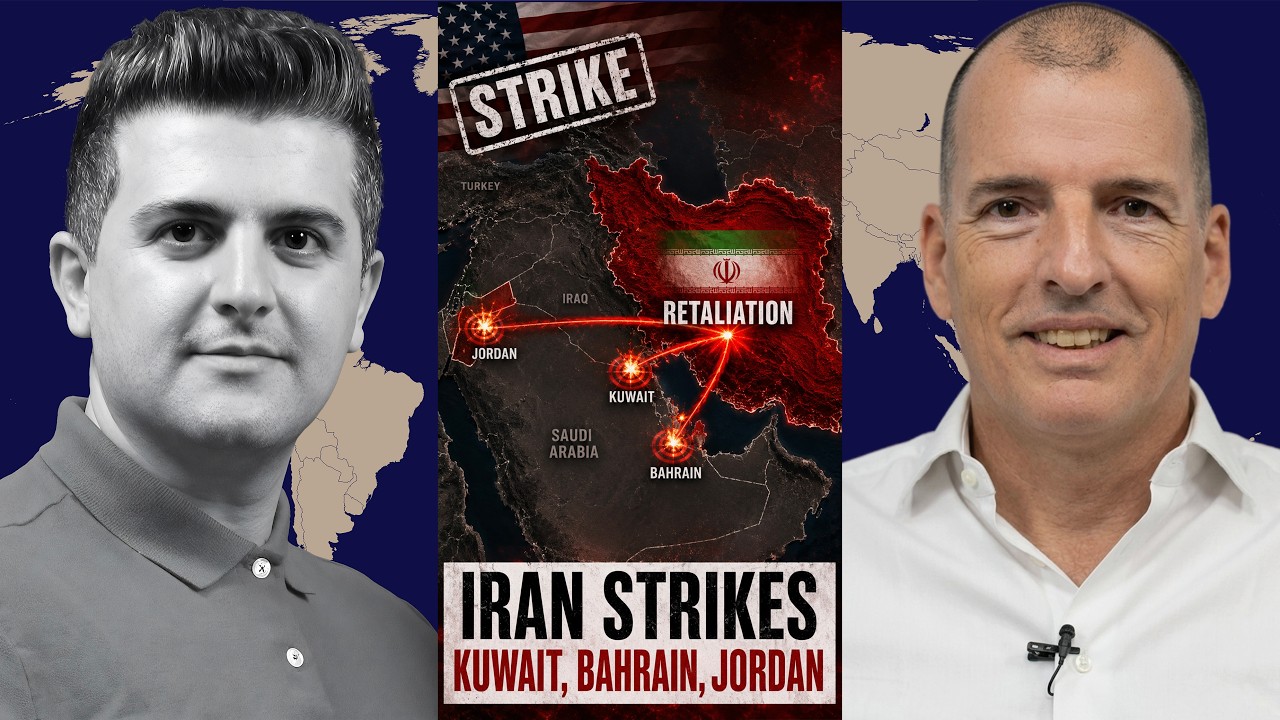
Alex Krainer: US STRIKES Iran – Iran RETALIATES Against Kuwait, Bahrain & Jordan!
"Amidst escalating US-Iran conflict and Iranian retaliation against regional US allies, this episode argues that US foreign policy is deeply controlled by an 'Anglo-Zionist conspiracy' led by the Rothschild banking dynasty, prioritizing Israeli interests over American ones."