
Secret Podcast Preview: Republicans Are Walking Into a Buzzsaw
YouTube · _TmeoNS5mjI
Quick Read
Summary
Takeaways
- ❖A special election in New Jersey's 11th district saw a progressive Democrat win by 19-20 points, significantly outperforming the previous Democratic incumbent's margin.
- ❖Democratic candidates are consistently out-raising their Republican counterparts, indicating high voter energy and individual candidate appeal over party apparatus funding.
- ❖The Democratic Party is navigating a 'big tent' coalition, with candidates running against the establishment from both moderate (anti-'woke DEI') and progressive (anti-'big money elites') angles, united by a focus on 'affordability' and 'material well-being'.
- ❖AIPAC's $2.3 million spending against a moderate pro-Israel Democrat in a primary led to the election of a 'harsh Israel critic,' demonstrating a miscalculation of Democratic voter sentiment.
- ❖Democratic voters are increasingly using a candidate's acceptance of AIPAC money as a litmus test, often voting against those who receive it.
- ❖The hosts contend that the Netanyahu administration actively worked to hurt Joe Biden politically to favor Donald Trump, suggesting an antagonistic stance towards American democracy.
- ❖JVL's 'Trump madman theory' posits that markets now price in chaos as normal, leading to muted reactions to disruptive events and positive reactions to any signs of normality.
- ❖Trump's erratic Truth Social posts regarding the 'Strait of Iran' and a 'naval blockade' highlight his chaotic communication style and potential disregard for international law and established definitions of warfare.
Insights
1Republican Electoral Weakness Evident in New Jersey Special Election
In New Jersey's 11th district, a special election resulted in a 19-20 point victory for progressive Democrat Anna Lily Mahia over Republican Joe Hathaway. This margin significantly exceeds the 15-point win of the previous Democratic incumbent, Mikey Sheryl, against a 'tomato can' Republican. This outcome serves as a strong data point indicating a challenging electoral environment for Republicans, even in seats that are blue but not 'super blue,' and suggests that shifting further left in candidate selection does not necessarily hurt Democrats.
Anna Lily Mahia, a progressive, won by 19-20 points in New Jersey 11, a seat Mikey Sheryl (incumbent Democrat) previously won by 15 points against a weak Republican. This occurred despite Mahia being a first-time, progressive candidate in a non-'commie' district.
2Democratic Fundraising Surge Reflects Voter Energy, Not Party Apparatus Strength
While the Democratic Party's infrastructure (DNC, Senate PACs) struggles with fundraising, individual Democratic candidates are 'blowing the doors off' their Republican counterparts in terms of money raised. This dynamic indicates that voter energy is high on the Democratic side, but it is directed more towards specific candidates and their platforms rather than the party qua party. This suggests a disconnect between the party brand and the appeal of individual candidates.
Democratic candidates like Tal Rico and Oaf are 'blowing the doors off their fundraising numbers,' totally out-raising Republicans. However, the DNC and Senate PACs are 'getting their butts kicked by the Republicans at the infrastructure level,' implying people prefer to give to individual candidates.
3AIPAC's Strategic Miscalculation in Democratic Primaries
In the New Jersey 11 Democratic primary, AIPAC spent $2.3 million against moderate candidate Tom Malinowski, who supported conditional military aid to Israel. This intervention inadvertently led to the victory of Anna Lily Mahia, a 'harsh Israel critic' and Palestinian activist who refers to the Gaza conflict as 'genocide.' This outcome suggests that AIPAC's efforts to influence Democratic primaries may backfire, pushing voters towards more anti-Israel candidates and highlighting a growing litmus test among Democratic voters regarding AIPAC funding.
AIPAC spent $2.3 million against Tom Malinowski, a 'perfectly friendly to Israel' moderate who merely questioned a 'blank check.' This resulted in the win of Anna Lily Mahia, a 'much more progressive' Palestinian activist and 'harsh Israel critic' who calls the Gaza war 'genocide.' Democratic voters in focus groups are using AIPAC funding as a litmus test.
4Netanyahu Administration's Perceived Interference in U.S. Democracy
The hosts argue that the Netanyahu administration actively worked to undermine Joe Biden politically during his presidency, aiming to facilitate Donald Trump's return to power. This behavior, despite Biden's strong support for Israel post-October 7th, is framed as an act of taking sides against American democracy. The implication is that a foreign government's perceived interference in U.S. elections, especially from a 'supplicant nation,' should prompt a re-evaluation of the U.S. relationship with that state.
The Netanyahu administration 'treated Joe Biden' poorly and 'worked to while Biden was president hurt him politically so that Donald Trump could wind up as president again,' despite Biden's strong support for Israel after October 7th. This is seen as taking 'sides against American democracy.'
5The 'Trump Madman Theory' and Market Behavior
JVL's theory suggests that under Trump's influence, markets have adapted to a baseline of chaos. Consequently, traditionally disruptive events, such as a major oil energy spike, are now priced in as normal and do not cause panic. Conversely, any hint of 'normality' becomes the unusual event, prompting markets to react positively and jump up. This explains seemingly contradictory phenomena, like record stock market highs amidst significant geopolitical instability.
In a world where Trump creates 'total chaos' and 'chaos is now the baseline assumption,' markets 'price chaos in as normal.' A 'chaotic event like the biggest oil energy spike in history becomes something that the markets go yeah like they don't freak out about it.' Conversely, 'anytime you get a single hint of normality the normality are the weird events and the markets react to those by jumping up.'
Key Concepts
The Democratic Big Tent Coalition
The Democratic Party is forming a broad coalition where candidates, from moderates to progressives, run against the establishment. Moderates distance themselves from 'woke DEI' narratives, while progressives target 'big money elites.' Both wings, however, find common ground by focusing on 'affordability' and improving the 'material well-being' of working-class voters, allowing for diverse candidates to succeed in different regions without internal conflict.
Lessons
- Republican strategists should urgently re-evaluate their electoral strategy, as recent special election results indicate a significant and growing enthusiasm gap favoring Democrats, even for progressive candidates in moderate districts.
- Democratic Party leadership needs to acknowledge and adapt to the decentralized nature of current Democratic voter energy, focusing on empowering individual candidates who resonate with specific voter concerns like 'affordability' rather than solely relying on traditional party apparatus funding.
- Advocacy groups like AIPAC should reassess their intervention strategies in Democratic primaries, as aggressive spending against moderate candidates may inadvertently lead to the election of more critical voices and alienate a growing segment of Democratic voters who scrutinize foreign influence in elections.
Quotes
"If I'm a just a Republican strategist doing X's and O's, I look at this and it's just one more like, holy [__] we're going to get our teeth kicked in."
"Democratic voters are looking at who Apac is funding and they are voting against that person."
"Baby Netanyahu wanted America to have Trump because he thought it was good for Israel, which means that he took sides against American democracy."
Q&A
Recent Questions
Related Episodes

Alex Krainer: US STRIKES Iran – Iran RETALIATES Against Kuwait, Bahrain & Jordan!
"Amidst escalating US-Iran conflict and Iranian retaliation against regional US allies, this episode argues that US foreign policy is deeply controlled by an 'Anglo-Zionist conspiracy' led by the Rothschild banking dynasty, prioritizing Israeli interests over American ones."

BREAKING: Iran Threatens To END Talks; U.S. Vows Retaliation; Hezbollah Collapsing? | TBN Israel
"Iran is leveraging Hezbollah and the Strait of Hormuz to manipulate US negotiations, while Israel asserts its right to dismantle Hezbollah's eroding but still dangerous infrastructure in Lebanon, independent of international talks."

🚨 THEY F*CKED AROUND FOR THE LAST TIME 😭😭😭
"This episode unleashes a torrent of highly opinionated commentary on the US-Iran deal, Israel's role, and a scathing critique of 'leftist' policies and immigration, particularly highlighting the UK grooming gang report as evidence of Western societal decay."
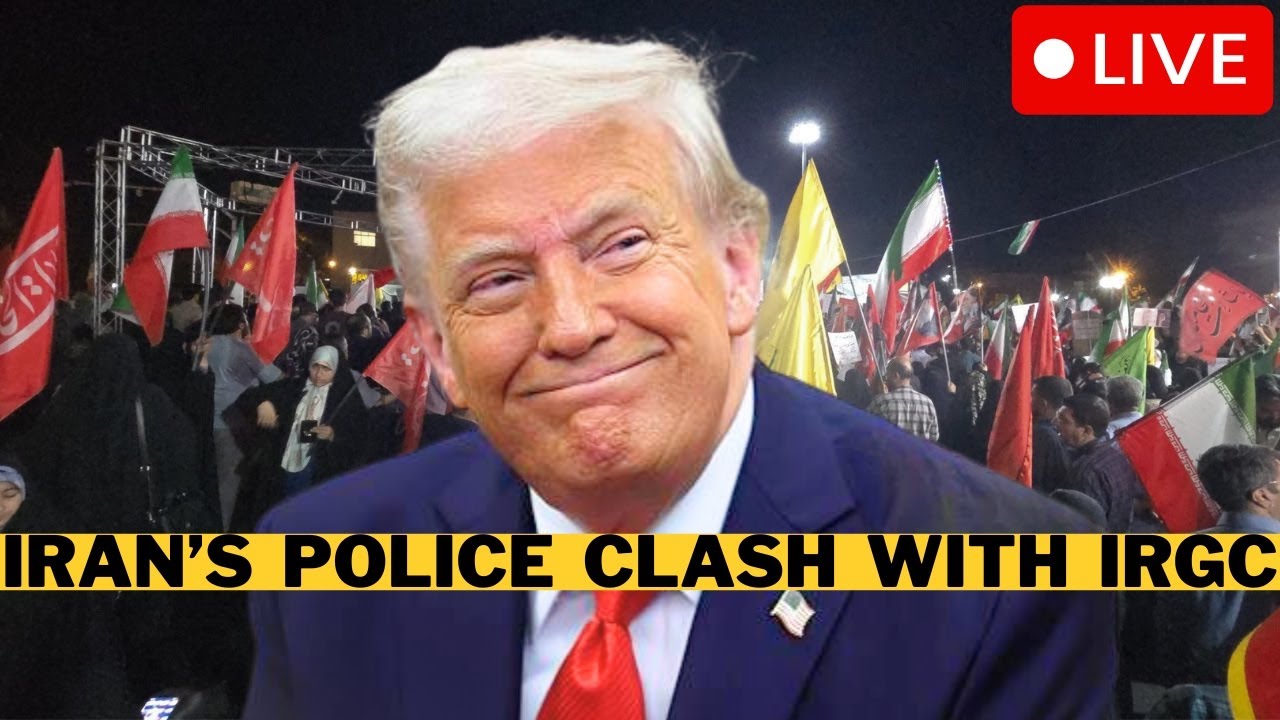
BREAKING: Protests ERUPT In Iran Over IRGC Surrendering To Trump - Infighting Clashes In Tehran
"Iran is experiencing severe internal infighting and protests as hardline IRGC elements clash with government figures over a perceived 'surrender' to the US, while mainstream Western media misrepresents the situation."