BREAKING: U.S. Holds MASSIVE Military Drill; Iran Threatens To IGNITE Regional War | TBN Israel
YouTube · _m5vxy9VPIE
Quick Read
Summary
Takeaways
- ❖The US is conducting massive military drills around Iran, but a direct strike is strategically delayed due to complex regional, political, and intelligence considerations.
- ❖Iran is actively engaging in psychological warfare, deploying anti-ship missiles, and activating proxies across the Middle East to prepare for a multi-front conflict.
- ❖The IDF has approved plans for a large-scale operation in Gaza to defeat Hamas, which resists disarmament and seeks to maintain control through integration into new governance structures.
Insights
1US Military Posture and Strategic Delay Against Iran
The United States military is conducting large-scale aerial and naval exercises in the Middle East, including the deployment of an aircraft carrier battle group and high-end signals intelligence aircraft (RC135 Rivet Joint). This demonstrates immediate response capability and readiness. However, a direct strike on Iran is being delayed. Analyst Mati Shosani explains this delay is a deliberate strategy, not a limitation, aimed at securing a stable regional roadmap, managing domestic political implications, and closing all intelligence gaps. The US is using the strike threat as leverage for a political outcome or to force Iran to 'blink first,' signaling both pressure and diplomacy.
United States Central Command announced an operational readiness exercise (). An American aircraft carrier and escorting warships are in the region (). The US pushed an RC135 Rivet Joint into the SenCom Zone (). Mati Shosani states the US is waiting for 'three things at the same time: a regional road map, a political map at home, and an operational map' (). President Trump's dual message of a 'fleet on the way' and 'hopes they make a deal' ().
2Iran's Multi-Front Response and Psychological Warfare
Iran is preparing a multi-front response to confuse the US and expand any potential conflict beyond a single arena. This includes deploying Revolutionary Guard units with anti-ship missiles along its southern coast, particularly around the Strait of Hormuz, to threaten vessels and block movement. Iran is also engaging in psychological warfare, circulating AI-simulated videos of attacks on US aircraft carriers and footage of drone carriers. Proxies in Iraq are calling for volunteers to fight alongside Iran, projecting strategic depth and the activation of an 'axis of resistance.'
Iran published footage of a drone carrier (). Iran escalated threats with a video simulating attacking aircraft carriers using AI (). Iran deployed Revolutionary Guards units with anti-ship missiles around the Strait of Hormuz (). Pro-Iranian militias in Iraq called to prepare for war and support Iran ().
3Regional Allies Limit US Operational Options
Key regional players like Saudi Arabia and the United Arab Emirates have conveyed messages that they will not allow their territory, airspace, or maritime space to be used for an attack on Iran. This significantly shapes US military options, forcing a heavier reliance on sea-based power, long-range aircraft, and a wider logistical chain, thereby slowing down war planning even when forces are ready.
Saudi Arabia and the Emiratis conveyed a message this week that they will not allow the use of their territory for an attack on Iran (). Mati Shosani notes this 'doesn't end US options, but it shapes them' ().
4Gaza Conflict: Hamas Disarmament and Future Governance
The IDF Chief of Staff has approved plans for a large-scale attack in Gaza to defeat Hamas, focusing on areas not yet operated in. The core issue for Israel is Hamas's disarmament and Gaza's demilitarization, which Prime Minister Netanyahu stated will happen 'the easy way or the hard way.' The US is expected to announce a deadline for Hamas to disarm and has detailed a plan for Gaza's transition period, including a 'peace council' and an international stabilization force. However, Hamas refuses to disarm, claiming its weapons are for self-defense, and is attempting to integrate its 10,000 police officers and 40,000 civilian servants into the new American-backed governance mechanism, which Israel views as an attempt to maintain control under new uniforms.
IDF Chief of Staff Aal Zamir approved plans for a large-scale attack in the Gaza Strip (). Hamas's senior official Husam Badran stated the demand for disarmament is meant to sabotage phase B (). Prime Minister Netanyahu's goals: Hamas's disarmament and Gaza's demilitarization (). The US is expected to announce a deadline for Hamas to disarm (). Hamas is working to integrate about 10,000 of its police officers into the new American-backed governance ().
5Christian Support for Israel Amidst Rising Antisemitism
Reverend Peter Fast, International CEO of Bridges for Peace, emphasizes the theological importance for Christians to support Israel, viewing the return of the Jewish people as prophetic fulfillment rather than merely a secular or Zionist movement. He highlights that Christian faith is rooted in Jewish heritage and that God has a unique plan for Israel, to which nations are attached. Fast notes a generational divide, with younger pastors less vocal due to the influence of social justice movements that often frame Israel negatively. He urges Christians to 'count the cost' and speak out for truth, despite rising global antisemitism and the overwhelming anti-Israel narrative online.
Reverend Peter Fast discusses the return of the Jewish people as prophecy being fulfilled (). He explains salvation comes from the Jews and Christians are 'grafted in' to Israel's heritage (). Fast notes the 'social justice movement is a massive one that has caused a lot of confusion' among younger pastors (). He urges people to 'count the cost for the sake of truth' ().
Bottom Line
The US delay in striking Iran is a sophisticated strategic maneuver, not a sign of weakness, aimed at shaping the entire geopolitical, economic, and diplomatic landscape before committing to military action.
This implies that any future US action will be highly calculated to achieve specific, long-term strategic objectives beyond just military impact, potentially leading to a more decisive, albeit delayed, outcome.
Analysts and policymakers should focus on identifying the 'conditions' the US is waiting for (regional stability, domestic political alignment, intelligence certainty) to predict potential windows for action and their broader implications.
Hamas's attempt to integrate its existing police and civilian administration into a new US-backed governance structure in Gaza represents a sophisticated strategy to maintain de facto control despite military defeat.
This poses a significant challenge to any post-conflict demilitarization and rehabilitation efforts, as it risks legitimizing Hamas's presence and undermining the stated goal of freeing Gaza from terror.
International bodies and stakeholders involved in Gaza's future must develop robust vetting and oversight mechanisms to prevent the infiltration of terror elements into new governance structures, potentially requiring a complete overhaul rather than integration of existing personnel.
Lessons
- Monitor global energy markets closely for volatility, as any escalation in the Middle East, particularly involving the Strait of Hormuz, could trigger significant economic shocks.
- Evaluate the long-term implications of regional alliances, noting how countries like Saudi Arabia and the UAE limiting US operational access reshape military strategies and logistical dependencies.
- For those engaged in advocacy or public discourse, understand the nuanced arguments surrounding Christian support for Israel and the historical context of antisemitism to effectively counter misinformation and 'social justice' narratives that mischaracterize the conflict.
Notable Moments
US Central Command announces a large-scale operational readiness exercise, simulating aircraft dispersal to emergency points across the Middle East.
This demonstrates a high level of US military preparedness and capability for sustained combat air power, sending a clear message of readiness to potential adversaries.
Saudi Arabia and the UAE declare they will not allow their territory to be used for an attack on Iran.
This significantly constrains US military options, forcing a greater reliance on sea-based power and long-range operations, complicating logistical planning for any potential strike.
IDF Chief of Staff approves plans for a large-scale attack in Gaza in areas not yet operated in, with the goal of defeating Hamas.
This signals a decisive shift in the Gaza conflict, indicating Israel's commitment to achieving its objectives of Hamas disarmament and demilitarization, potentially leading to intensified military operations.
Hamas attempts to integrate 10,000 of its police officers and 40,000 civilian servants into the new American-backed governance mechanism for Gaza.
This highlights Hamas's strategy to maintain control and legitimacy within any future administrative structure in Gaza, posing a significant challenge to demilitarization and the establishment of a terror-free governance.
Quotes
"The main risk is the morning after because this doesn't stay inside Iran or localized to Iran."
"When a president signals both pressure and diplomacy, it means the strike is being used as leverage, not as a mood, not as an emotion, as leverage to force a political outcome or at least to force Iran to blink first."
"Israel has only two goals. Hamas's disarmament and Gaza's demilitarization, adding that it will happen the easy way or the hard way."
"Every Christian is going to have a decision to make. And I believe the global church was split into three camps."
"It's not about Israel. It's not about me. It's not about you. It's about God first. We I love Israel like I do because I also want to love what God loves."
Q&A
Recent Questions
Related Episodes

The Fat Electrician Vs Tactically Acquired | Unsubscribe Podcast 267
"This episode features military content creators discussing current geopolitical hotspots, advanced weaponry, and the surprising psychological warfare tactics of modern conflict, alongside their personal journeys building online communities."
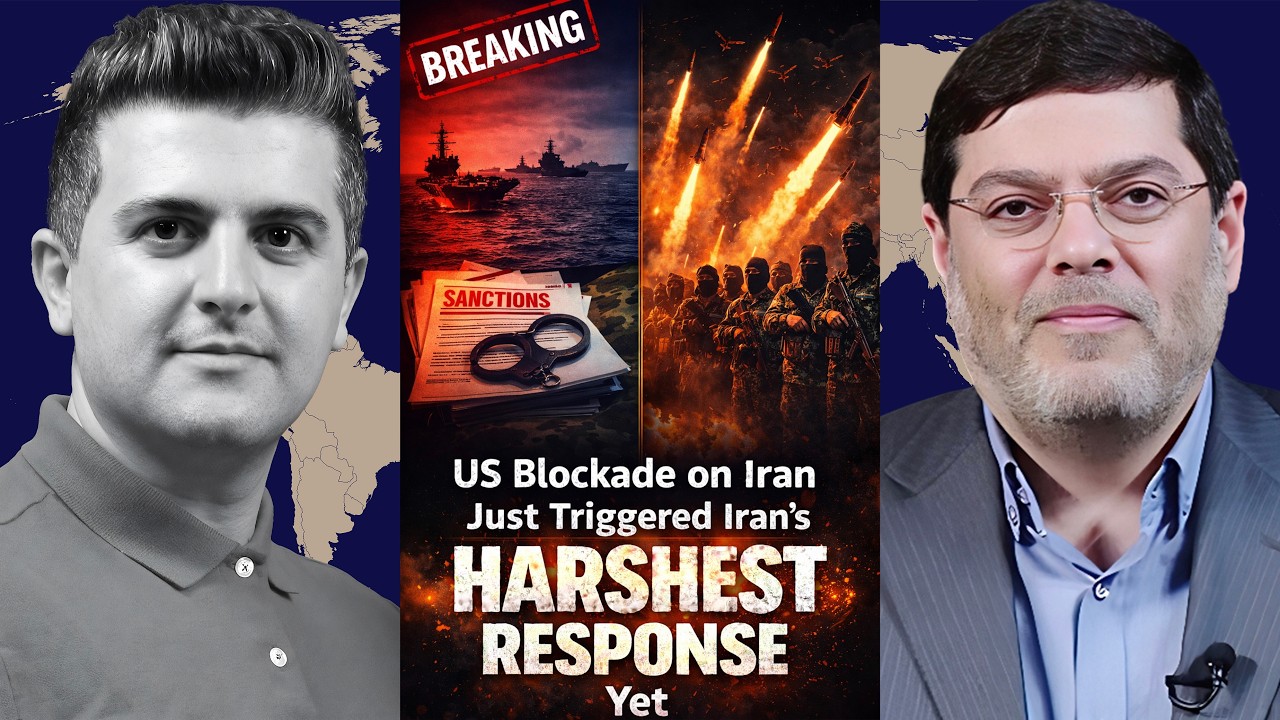
Seyed M. Marandi: US Blockade on Iran Just Triggered Iran’s HARSHEST Response Yet
"An Iranian professor details how US demands and an imposed blockade triggered Iran's harshest response, exposing American strategic missteps and the vulnerability of Gulf Arab states."

Pentagon Prepares For EXTENDED War With Iran
"This episode dissects the geopolitical maneuvers surrounding potential US-Iran conflict, revealing strategic leaks, Netanyahu's diplomatic sabotage playbook, and the true intent behind economic sanctions."

Mamdani CELEBRATES NYC Rent Freeze, This Will DESTROY The City | Timcast IRL
"New York City's rent freeze, celebrated by Mandami, is framed as a socialist 'land grab' that will devastate the city's housing market and economy, while a FIFA Pride Match in Seattle sparks outrage from conservative nations."