
The US Military’s Secret Fascist Influence | Jasper Craven | TMR
YouTube · aHxaKjIByIE
Quick Read
Summary
Takeaways
- ❖Early American leaders, despite skepticism of military imperialism, cultivated an image of founding fathers as 'prototypical Americans' through military service, laying groundwork for military-centric masculinity.
- ❖West Point's motto, 'God forgives, brothers don't,' was adopted from a white supremacist biker gang, highlighting a disturbing ideological overlap.
- ❖Sylvanus Thayer, an early West Point superintendent, stripped the curriculum of humanities to create 'pliant bodies' focused on technical skills and obedience.
- ❖The 'preparedness' movement, spearheaded by bankers and media moguls like JP Morgan and Teddy Roosevelt, used fear-mongering about invasion to push for US entry into WWI.
- ❖Bernarr Macfadden, a eugenicist and bodybuilding publisher, profoundly influenced the military's shift towards emphasizing physical strength and a 'roided out masculinity' before WWII, drawing parallels to fascist ideals.
- ❖Post-Vietnam, the military adopted a deeply evangelical and theocratic ideology to provide a 'moral center' for wars lacking tangible justification, fostering ego and a sense of superiority.
- ❖The modern military's loosening grip on culture has led to figures like Pete Hegseth attempting to reassert influence by blaming women and people of color for perceived military 'weakness,' appealing to non-serving individuals who adopt military aesthetics.
- ❖The mainstreaming of PTSD and traumatic brain injuries post-Iraq challenged the military's propagated image of invincible masculinity, contributing to the 'wokeness' backlash from conservative elements.
Insights
1Founding Fathers' Hypocrisy and the Birth of Military Masculinity
Despite initial skepticism towards military imperialism, early American leaders, many of whom were Revolutionary War veterans, paradoxically cultivated their own images as 'prototypical Americans' defined by strength and fearlessness. This self-aggrandizement at figures like George Washington's funerals, combined with practical needs to suppress indigenous populations and deter the British, led to the establishment of West Point and the cynical equating of manhood with military service to ensure a continuous supply of recruits.
Founding fathers 'nod to the need to keep military in check, to never elevate the soldier above the citizen,' yet 'elevate themselves' as 'prototypical Americans.' Washington's funeral had 'insane military honors equivalent to what Genghis Khan was sort of sent off into the afterworld with.' This was a 'cynical effort to ensure that there would always be young boys' for the system.
2West Point's Authoritarian Roots and Fascist Ideological Overlap
West Point's foundational structure was explicitly authoritarian, with proponents arguing it was necessary to secure democracy. This model involved dehumanization and intense abuse of new cadets (plebes) to instill unwavering obedience, rather than fostering critical thought or individual development. The adoption of the Aryan Brotherhood's omerta code, 'God forgives, brothers don't,' by the West Point football team, reportedly inspired by a white supremacist biker gang movie, suggests a disturbing ideological alignment with fascist principles.
West Point's structure was 'authoritarian, and people who championed this model argued that you needed an authoritarian fascist model to secure democracy.' The motto 'God forgives, brothers don't' was adopted by West Point football in 1996, after the Aryan Brotherhood used it as their omerta code in the 1980s, seemingly inspired by a movie about a white supremacist biker gang.
3The 'Preparedness' Movement: Manufacturing Consent for War
In the early 1900s, a movement called 'preparedness' was astroturfed by influential bankers, weapons manufacturers (DuPont, JP Morgan), media figures (Sulzbergers of NYT), and politicians (Teddy Roosevelt). This movement used saber-rattling and explicit propaganda about a 'coming invasion' to overcome public reluctance for foreign wars, particularly WWI. This strategy created a continuous demand for military engagement by fabricating external threats and ideologies that 'must be defeated.'
Bankers and weapons manufacturers (DuPont, JP Morgan, Guggenheim) and Teddy Roosevelt 'astroturf this idea, this movement called preparedness' to deal with the lack of 'immediate threat to the homeland.' They used 'saber-rattles against... a coming invasion' to push for entry into World War I.
4Fascist Eugenics and the Militarization of Physical Strength
World War II marked a crucial shift where the military, influenced by figures like eugenicist Bernarr Macfadden (a 'mercurial macho' early bodybuilding publisher who admired Mussolini and Hitler), dramatically revised its physical standards. This led to a national emphasis on 'hyperviolent, hyperaggressive, high testosterone' masculinity, promoting bare-knuckle boxing, strength, and bodybuilding. This 'roided out masculinity' was a direct response to and emulation of fascist ideals around the 'perfect body,' despite war becoming increasingly mechanized.
Bernarr Macfadden, a 'blatant eugenicist' who 'flirted with strong men like Mussolini and Hitler,' influenced the army to 'completely scrap its physical standards and rewrite new ones that are emphasizing fighting, you know, bare-knuckle boxing, strength, push-ups.' This was 'focused around trying to sort of meet the Hitlers and Mussolinis fascist ideals around like the perfect body.'
5Post-Vietnam Shift to Theocratic, Individualistic Violence
After the Vietnam War, the military, lacking a clear moral center for its engagements, increasingly fused its mission with 'big broad nebulous ideas around religion,' particularly evangelical theocracy, notably at the US Air Force Academy. This created a sense of 'salvation and sacrifice' and fostered 'incredible ego and a sense of superiority' among military members. This era also saw a shift towards an 'extremely individualistic' and 'mercenary soldier of fortune style warfare,' where violence became a virtue, exemplified by the 'Rambo' archetype and a focus on body counts.
Military brass understood that because they were 'no longer fighting a war with any sort of tangible moral center,' 'big broad nebulous ideas around religion were sort of crucial to fusing to the military mission.' This led to 'violence for violence's sake' and an 'extremely individualistic' conception of masculinity, where 'violence becomes a virtue.'
Lessons
- Critically examine the historical narratives surrounding military service and masculinity, particularly those that equate physical strength or unquestioning obedience with 'true' American manhood.
- Challenge propaganda that manufactures external threats to justify military expansion or intervention, recognizing the historical pattern of industrialists and politicians driving such narratives.
- Support initiatives that promote diverse and humanistic education within military institutions, counteracting historical trends of stripping away liberal arts to foster compliance.
Quotes
"Many people like to believe that service academies like West Point, Annapolis, etc. are sort of these like Ivy League level liberal arts enlightened places. They have forever relied on dehumanization."
"This sort of violent strong understanding of masculinity has sort of seeped into man at the genomic level just because all of our family trees include, you know, deep veins of military service."
"The military is always withholding complete validation or even really complete humanity. I mean, one old West Point cadet I spoke to compared the experience to like BDSM where you sort of have like rights and privileges meted out very slowly as you're sort of just getting like grinded down. I mean, it's cultish. There's indoctrination. It's about scrubbing away your humanity."
Q&A
Recent Questions
Related Episodes

Lindsey Graham Berated Denmark’s Prime Minister (w/ Frank Dikötter) | Shield of the Republic
"This episode exposes the fragility of US alliances under populist pressures and re-evaluates the true origins of the Chinese Communist Party's rise, challenging long-held Western narratives."

OCCUPY BAAL STREET: Iran, Albania, And The TPUSA Takeover. | Ep 347
"Candace Owens exposes alleged globalist plots, linking Ivanka Trump's Albanian island 'discovery' to Rothschild family control of strategic waterways and accusing US foreign policy of serving these interests, while also scrutinizing Turning Point USA's handling of Charlie Kirk's succession."
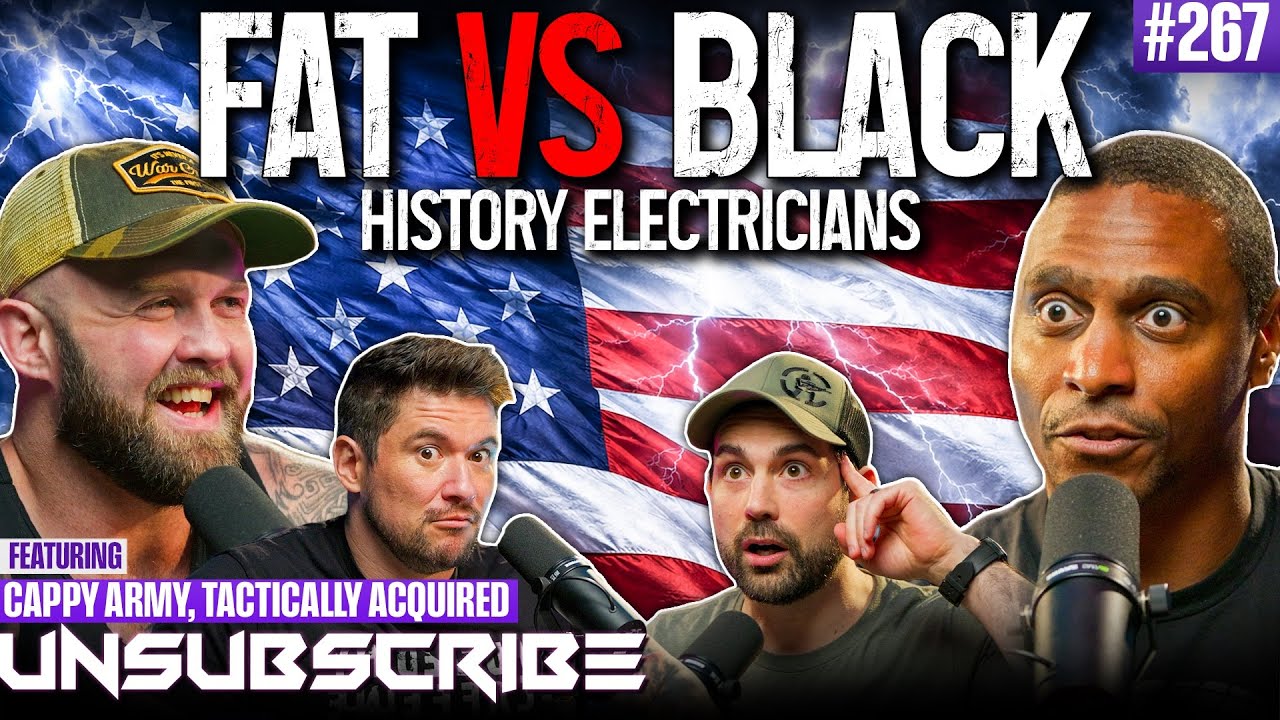
The Fat Electrician Vs Tactically Acquired | Unsubscribe Podcast 267
"This episode features military content creators discussing current geopolitical hotspots, advanced weaponry, and the surprising psychological warfare tactics of modern conflict, alongside their personal journeys building online communities."

LIVE: Trump HIDES FROM PUBLIC as US SOLDIER KILLED!!! 6/2/2026
"The host exposes alleged government cover-ups regarding military casualties, Trump's unexplained public absence, and questionable political appointments, arguing these reflect a 'regime of loser babies' and a failing foreign policy."