Trump GOBSMACKED by 9-0 Ruling at Supreme Court | Unprecedented
YouTube · aRNvKT9RA7s
Quick Read
Summary
Takeaways
- ❖The Supreme Court, in *Lovelace v. Lee*, ruled 6-3 against the use of nitrogen hypoxia as an execution method, citing Eighth Amendment concerns about cruel and unusual punishment.
- ❖The *FS Credit Opportunity v. Saba Capital* decision, 6-3, eliminated the private right of action under the 1940 Investment Company Act, meaning only the SEC can enforce its violations.
- ❖The *Abu-Hamu v. United States* case resulted in a unanimous 9-0 decision, authored by Justice Kagan, reaffirming that criminal venue must be established where the essential elements of the crime were committed.
- ❖This venue ruling is seen as a significant blow to attempts by political actors, like those associated with Donald Trump, to 'forum shop' for sympathetic judges or districts for politically motivated indictments.
- ❖The hosts criticize the Roberts Court for consistently limiting private citizens' ability to enforce laws, whether in business or civil rights, effectively closing courthouse doors.
- ❖The discussion highlights the historical and ongoing racial disparities in the application of the death penalty, with black Americans being disproportionately convicted and executed.
Insights
1Supreme Court Limits Cruel Execution Methods
In *Lovelace v. Lee*, the Supreme Court issued a 6-3 ruling against the use of nitrogen hypoxia as an execution method. This decision, while narrow, was surprising to the hosts given the Roberts Court's past record of allowing executions even in cases with strong claims of innocence or mental impairment, suggesting a rare moment of judicial compassion regarding the Eighth Amendment's prohibition against cruel and unusual punishment.
The defendant, convicted of murder, was willing to die by firing squad but objected to nitrogen hypoxia, which causes a longer, more uncertain death by suffocation. The Court sided with the defendant. Justice Gorsuch, Alito, and Thomas dissented.
2Erosion of Private Rights of Action in Business Law
The *FS Credit Opportunity v. Saba Capital* case saw the Supreme Court, in a 6-3 decision authored by Justice Amy Coney Barrett, rule that there is no private right of action under the 1940 Investment Company Act. This means that private citizens or businesses cannot sue for violations of this act; only the Securities and Exchange Commission (SEC) can. This decision is framed as part of a broader trend by the Roberts Court to limit access to courts for ordinary Americans and businesses, centralizing enforcement power with government agencies.
The case addressed whether a private citizen could sue for a counterparty's violation of the 1940 Investment Company Act. The majority ruled that Congress knows how to write a private right of action when it intends one, and its absence here means none exists. Justices Kagan, Sotomayor, and Jackson dissented, emphasizing the long-standing practice and legislative history that supported such private actions.
3Unanimous Venue Ruling Curbs Political Prosecutions
In *Abu-Hamu v. United States*, the Supreme Court delivered a unanimous 9-0 decision, penned by Justice Kagan, affirming that the proper venue for a criminal prosecution is where the essential elements of the crime were committed. This ruling is considered highly significant for its potential to dismantle politically motivated prosecutions that attempt to 'forum shop' for favorable jurisdictions or judges.
The case involved a former Twitter employee who fabricated an invoice to obstruct a federal investigation. He was indicted in San Francisco, where the investigation originated, but argued the act of fabrication occurred in Seattle where he resided. The Court clarified that the crime's 'essential conduct' dictates venue. Popok specifically highlights its relevance to the 'grand conspiracy' prosecution led by Trump-appointed officials in Florida, targeting figures like John O'Brennan, whose alleged actions occurred in DC, not Florida.
Bottom Line
The *Abu-Hamu* venue ruling creates a strong legal basis to challenge politically motivated indictments brought in 'friendly' jurisdictions rather than where the alleged crime actually occurred.
This directly impacts efforts by political actors, such as those associated with Donald Trump, to pursue perceived enemies (e.g., John O'Brennan, James Comey) in specific districts (like Judge Aileen Cannon's court in Florida) to secure favorable outcomes. It also applies to state-level attempts by states like Texas to prosecute individuals in other states for actions related to abortion or transgender care.
Defense attorneys in such cases now have a powerful, unanimous Supreme Court precedent to move to dismiss indictments for improper venue, potentially forcing prosecutors to bring cases in less politically advantageous or more appropriate jurisdictions, where the likelihood of indictment or conviction may be significantly lower.
The Roberts Court is systematically closing the courthouse doors to private citizens and businesses seeking to enforce laws, shifting power to government agencies and potentially limiting accountability.
This trend, exemplified by the *FS Credit* ruling and anticipated actions on the Voting Rights Act, means that individuals and smaller entities will increasingly rely on the political will of administrations to enforce laws, rather than having direct legal recourse. This can lead to selective enforcement and reduced oversight, especially when administrations are not actively supporting certain rights or regulations.
Advocacy groups and legal organizations must strategize new approaches to accountability, potentially focusing on legislative action to explicitly grant private rights of action or on pressuring administrative agencies to fulfill their enforcement duties, as judicial avenues become more restricted.
Lessons
- Understand that the Supreme Court's *Abu-Hamu* decision on criminal venue is a critical tool against politically motivated prosecutions, requiring charges to be brought where the crime's essential elements occurred.
- Recognize the broader trend of the Roberts Court limiting private rights of action, which means individuals and businesses may have fewer direct legal avenues to enforce laws, shifting power to government agencies.
- Be aware of the historical and ongoing racial disparities in the application of the death penalty, as highlighted by the discussion around the *Lovelace v. Lee* case, and consider its implications for justice system reform.
Notable Moments
The hosts express personal opposition to the death penalty, citing the risk of executing innocent people and the disproportionate impact on people of color.
This highlights a fundamental ethical and systemic critique of capital punishment within the American justice system, grounding the legal analysis in broader societal concerns about fairness and infallibility.
Michael Popok and Lisa Graves strongly criticize Judge Aileen Cannon, appointed by Donald Trump, for her perceived lack of judicial merit and her actions in cases involving Trump, framing her as a 'ringer' for his interests.
This provides specific context to the concerns about 'forum shopping' and the politicization of the judiciary, illustrating how judicial appointments can directly influence the outcome and fairness of high-profile cases.
Quotes
"I personally think that judges should not be able to overrule juries in terms of their recommendation of life in prison versus death."
"If you don't know, there is a terrible imbalance in our justice system and that people of color are convicted and executed at a higher rate than white people that do the exact same crimes, then you're not following the stats."
"This is about the broader effort by this Roberts court to close the courthouse door to ordinary Americans and American businesses and leave enforcement up to a government..."
"This case, if you if an indictment comes out of there, John O. Brennan's first move is to move to dismiss the indictment for improper venue, right?"
"I mean, my new response to people that say that any prosecutor can indict a ham sandwich is that Janine Piro couldn't indict somebody for having thrown one."
Q&A
Recent Questions
Related Episodes

Trump DOJ REACHES NEW LOW Trying to SAVE Trump
"Professor Aziz Huck dissects the foundational principles of the rule of law, revealing how modern political partisanship and the Justice Department's 'weaponization fund' challenge core constitutional mechanisms and legal predictability."

SCOTUS Hands Trump THIRD MASSIVE WIN | Timcast IRL w/ Brett Weinstein
"The Supreme Court's redistricting rulings and the Hantavirus narrative expose deep political hypocrisy and the dangers of unchecked power in media and medicine, highlighting the ongoing battle for truth and individual liberty."
DeSantis Map Sued in Florida. Tennessee Targets Black District. FBI Raids Louise Lucas
"This episode exposes aggressive Republican gerrymandering efforts in Florida and Tennessee, a politically charged FBI raid on a Virginia Democratic leader, and disproportionate death penalty sentences against Black individuals in Tarrant County, Texas, framing them as a systemic assault on Black political power and civil rights."
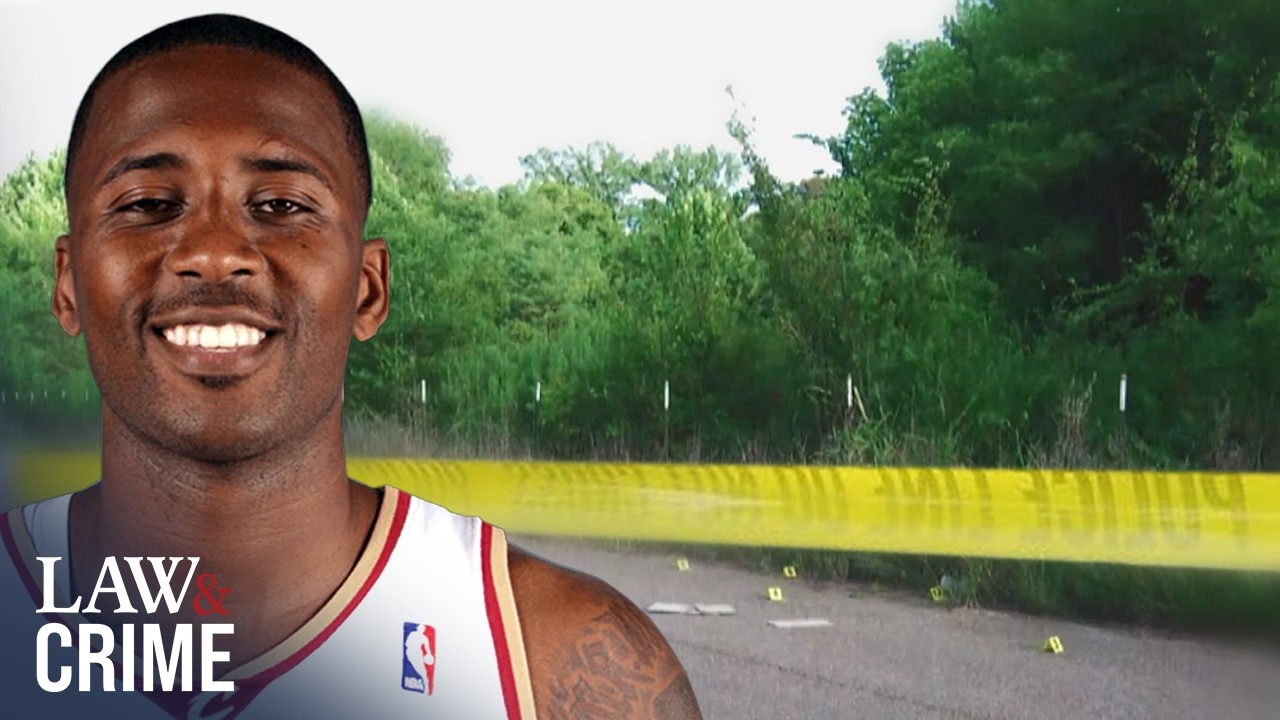
Killer Cases: NBA Star Lured to Execution In Rural Tennessee
"The decade-long cold case of NBA star Lorenzen Wright's murder was cracked through a persistent mother, a jailed informant, and a covert police operation that recovered the murder weapon from a lake and exposed a conspiracy driven by greed."